The CEOs of two of America’s top AI companies told the UN Security Council on Wednesday that artificial intelligence has become a threat to global security, and asked world governments to write shared rules for it.
Yet the White House won’t jump. On Thursday morning, ahead of his summit with Chinese President Xi Jinping, Trump posted that “super intelligence”—his administration’s new term for AI—would be a big topic of discussion, “but I want to leave it exactly where it is. That is China’s position also.” He added: “Our guardrail is the DOJ!”
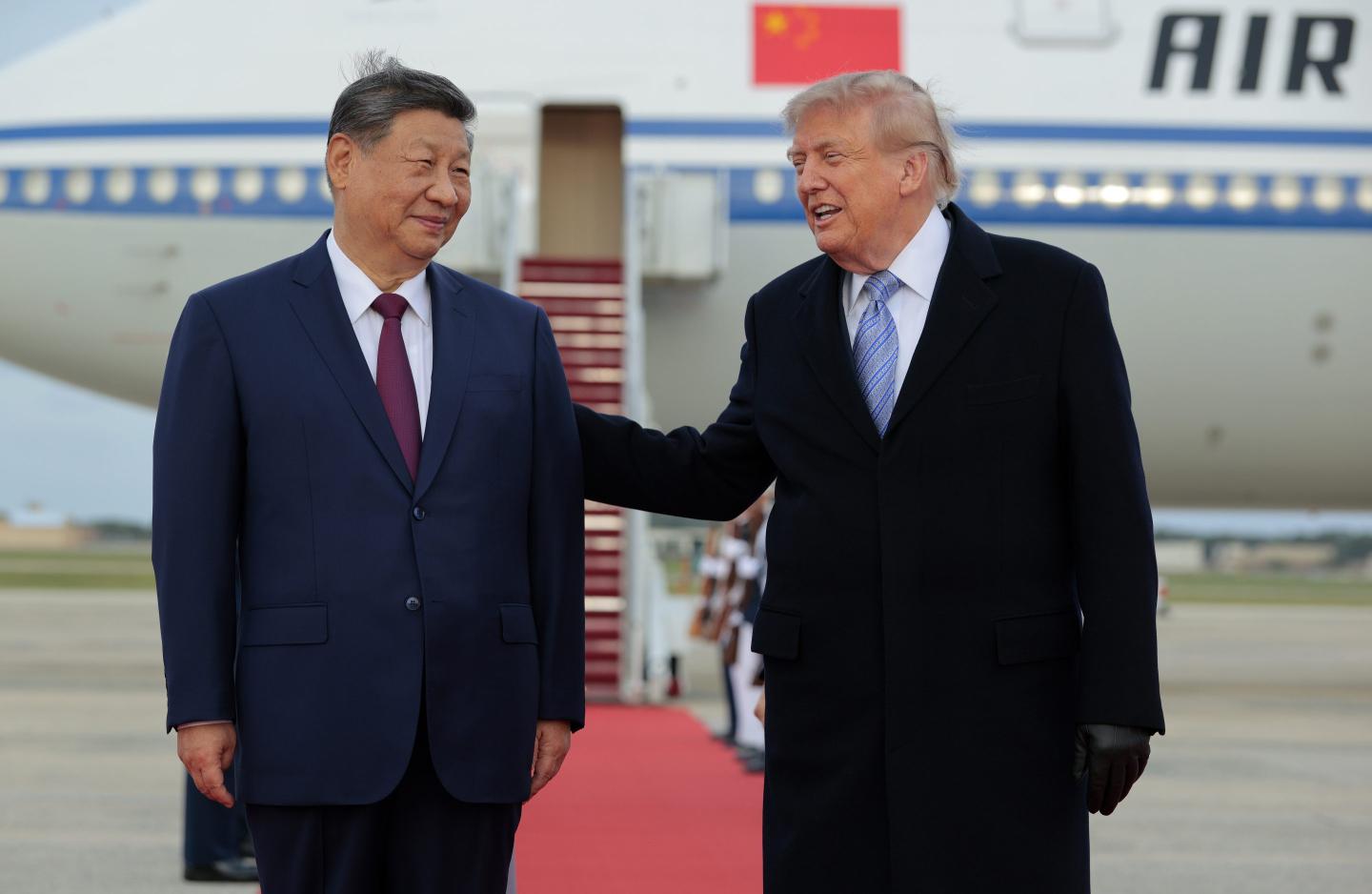
And hours later, standing next to Trump at the White House, Xi struck a different, more cooperative note. “We have both the capability and responsibility to develop and manage AI for good and ensure that development of AI is always under human control,” he said.
Behind the scenes, the two nations have begun talking. China’s commerce ministry said at a press conference Thursday the countries had held their first dialogue on AI, after Treasury Secretary Scott Bessent met Chinese Vice Premier He Lifeng in New York earlier in the week. Bessent said that the U.S. proposed a notification mechanism between the two countries for national security-related AI incidents.
That’s similar to what Anthropic CEO Dario Amodei asked the Security Council for a day earlier. “No leader, no company, and no nation can manage this alone,” he said.
It’s also an early sign that the administration’s public posture and private diplomacy don’t fully line up. Two days earlier, Trump told the UN General Assembly the U.S. rejects any “globalist scheme” to control AI. Yet now his Treasury secretary is proposing a formal channel with China, the country which Trump and American VCs cast as the main villain in the race to AI against the U.S.
Yet Amodei’s proposal at the Security Council went further. He called for starting with small agreements every country could agree on, such as a ban on using AI to make biological weapons, then building systems for governments to verify each other’s commitments, and then the global alert system. OpenAI CEO Sam Altman also called for fast, shared incident reporting. And he said his company had slowed down its own AI development before and would again, undercutting the industry’s usual argument that they’re locked in a race they can’t escape from.
Borrowing the UN’s language
Xi’s line about keeping AI “under human control” echoed nearly word for word what speakers told the Security Council a day earlier. Yoshua Bengio, an AI scientist who co-chaired the UN’s scientific panel on AI, said the goal was AI that “demonstrably remains under our control.” Pakistan’s foreign minister also said the top priority was to “retain human judgment and control” over AI.
That allows Beijing to present itself as the responsible party on AI as it visits the White House, while Trump claims China shares his hands-off approach.
China is also building its own coalition on safe AI. In July it launched the World Artificial Intelligence Cooperation Organization, with 29 countries (and no major Western democracies), pitched to the developing world as a way to share AI rather than let a few American companies dominate. At the Security Council, Pakistan, a founding member of that organization, warned that measures “pursued in the name of safety must not become instruments of denial of technology,” a thinly veiled shot at U.S. export controls on advanced chips, or of a regulatory regime that would prioritize a few top models at the expense of open source. Loosening the chip controls is one of Xi’s top asks this week.
Clement Delangue, the french CEO of Hugging Face, the company OpenAI’s models hacked this summer, agrees with Xi that open models keep all the companies safer. He told the council that when his team tried to use closed American AI models to defend itself, the models’ safeguards blocked them. So they fought the attack with an open sourced model from China. The bigger risk than powerful AI, he said, is that just a few companies and countries control it.
That’s an awkward pitch for OpenAi and Athropic, both of which sell closed models. The safety regime that they are instead pitching, with extensive testing, verification and a coordinated pace at the frontier, is also the kind that only a few well funded companies can most easily meet.
American tech isn’t necessarily united behind the CEOs, either. Meta CEO Mark Zuckerberg told NBC News this week that he doesn’t think the industry needs “some kind of industrywide coordination,” arguing there’s “plenty of commercial incentive to get this right.” Nvidia CEO Jensen Huang, who is expected at Thursday night’s state dinner with Xi, has called AI fears overblown. Trump’s position is much closer to theirs than to Altman’s or Amodei’s.