
Gen Z is not supposed to be the religious generation. Pollsters have spent two decades describing this cohort as the most secular in American history, the one that would finally break the chain of belief passed down from their grandparents. New Harris Poll data shared with this publication suggests otherwise: 33% of Gen Z identifies as religious, compared with 18% of Boomers, 22% of Gen X and 19% of Millennials—making Gen Z the most religious-identifying generation in the survey. Their “neither religious nor spiritual” rate, 19%, is the lowest of any generation measured, lower than Boomers at 23%.
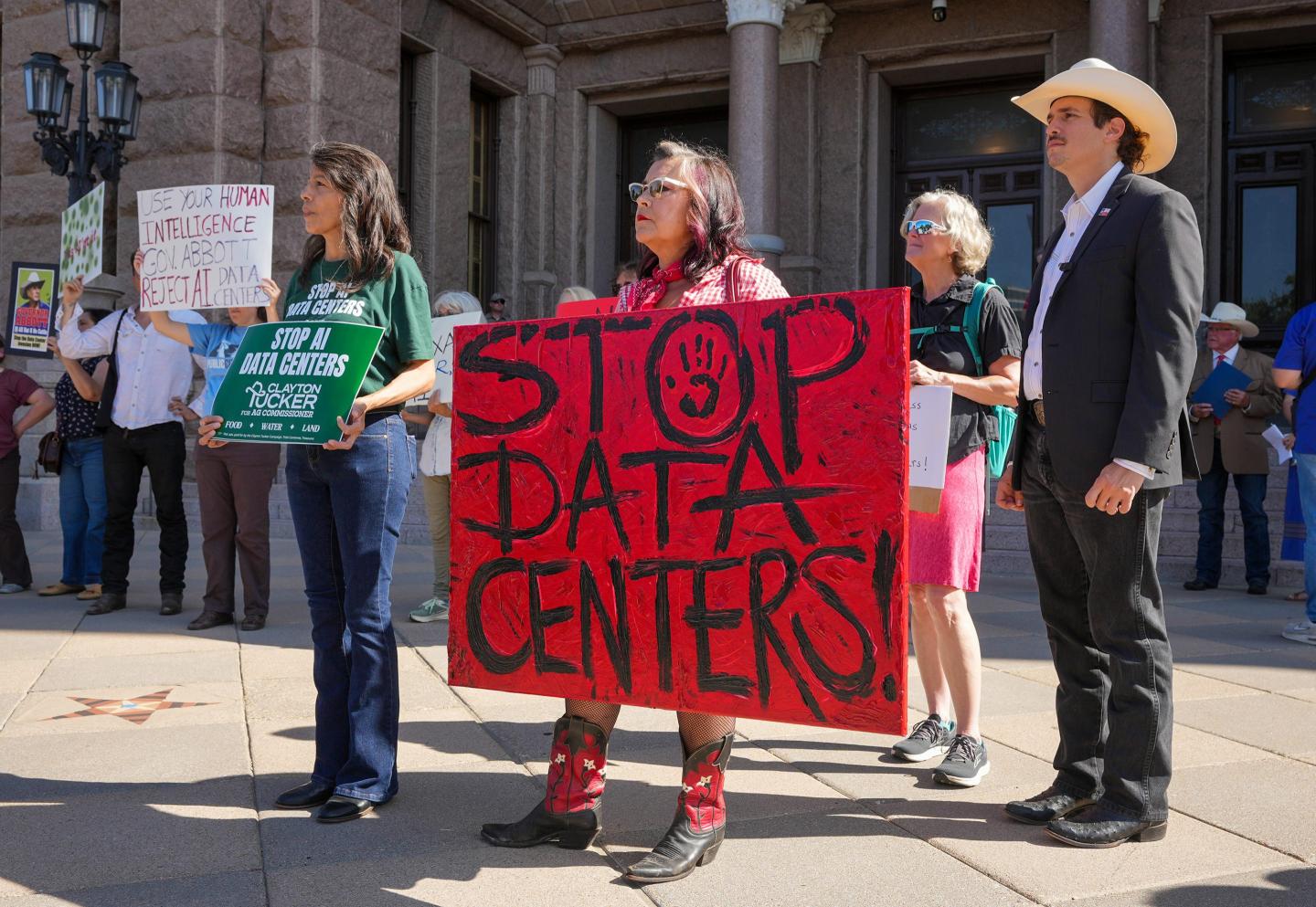
At the same time, Gen Z has become the organizing force behind a nationwide revolt against AI data centers, a movement that has blocked or delayed more than $228 billion in projects since the start of 2025, according to research group Data Center Watch. More than 500 localities across 39 states have now passed bans, moratoriums or other restrictions on data center construction, and 843 opposition groups are active in 49 states.
Libby Rodney, chief strategy officer at The Harris Poll, wasn’t sure at first when Fortune asked if these were flipsides of the same story, but when put in context with the craze for “analog” trends in the developing AI economy, she responded, “I think you’re onto something” and explained there’s a “control element” underlying a lot of these responses.
Rodney’s polling suggests the data center fight and the religious turn are not parallel trends but expressions of similar underlying needs. “There’s a control element,” she said of the religious data. “That’s the reason that they are spiritual—they’re looking for some sense of agency and control.” Her research found 57% of Gen Z say they turned to spirituality or manifestation practice specifically to feel greater control over their future, while 60% say they belong to more real world and in-person communities than they used to, and 70% say they want to belong to even more of them in the future.
“The real thing that you can see is there’s just no consent,” Rodney said in an interview. “This idea that the world—the narrative that’s out there from tech companies—is like this AI world is happening whether you like it or not. And so there’s this lack of consent.”
A Movement With Numbers Behind It
The scale of the data center backlash is a constant on the eve of America’s midterm elections. Local pushback blocked or delayed 45 projects worth $68 billion between April and June of this year alone, according to Data Center Watch, following an even larger $130 billion disruption in the first quarter — the largest single-quarter total on record. Gallup polling from March found seven in 10 Americans oppose data center construction near where they live and New York became the first state to impose a moratorium by executive order in July, pausing environmental permits for large facilities, with Pennsylvania and Texas following with their own restrictions. In California, officials in 15 cities and counties proposed or adopted moratoriums in a single month this fall.
Rodney pointed out that this is tangible, physical infrastructure, rather than technology in the abstract. “All the other AI things are happening in the private sector or the national government,” she said. “But this is something that happens at a local jurisdiction point of view. So the locality of it is huge. That is what makes people feel like they can have a difference.” Her research found 73% of Americans don’t want AI imposed on their community, and 68% say AI can be useful but “feels forced.”
None of this is happening in a vacuum of economic confidence. The same Harris Poll research finds 70% of Gen Z say the future they were promised hasn’t materialized, and 61% have skipped medical care because of cost. A companion finding from Harris Poll’s Milken Institute research this spring showed a 41-point gap between how business leaders and workers see AI’s financial upside: 68% of leaders expect to be better off in five years because of the technology, versus just 27% of workers. “They’re on two completely different journeys,” Rodney said, “and really no one’s been talking to the American worker.”
That gap, she argued, is what fills the space with fear rather than persuasion. “In this messaging void, the only things that they’re hearing are… you might lose your job. Humanity might die,” she said. “It’s very logical and rational to not be down with that.”
A generation learns to bowl together
Rodney agreed that Gen Z is acting out against the warnings of Robert Putnam’s sociological classic Bowling Alone, the seminal study of the collapse of American civic and associational life. When the Harris Poll works with universities, she said, alumni gatherings aren’t “fancy drinks and cocktails and nice dinners” anymore, but instead “they’re like, ‘It’s better to just put out chess boards and board games and cheap beer.'” It’s like they’re trying to bowl together after the long decline that Putnam charted in his book.
Seven in 10 Gen Zers in the survey said they’ve reached out for help or leaned on others in the past year — more than any other generation. “Religion is coming back because it’s a couple of things,” Rodney said, arguing that it’s perhaps the ultimate example of a Putnam-ian phenomenon. “It’s physical spaces, but it’s people who help and it’s community that comes together.”
That community-seeking impulse, she said, is the same one driving the infrastructure fights: “In this time of change, it’s like, ‘Okay, how can I reach for control?'” One answer, for many, is to protest data centers. “And then I’m going to go into spirituality.”
The contrast with millennials is stark, as the Patriot Act passed in 2001 amid many warnings—but little action—over loss of privacy, and while the Iraq War was much protested but ultimately ground on for years. Gen Z is finding a way to affect the conversation in a way that millennials did not, Rodney said.
Whether the data center fight becomes a durable political realignment or a moment-specific backlash is still unsettled—moratoriums can be reversed, and developers have already begun suing local jurisdictions over bans. But the polling, at least, tells a consistent story: the generation raised to be the most secular, atomized and politically disengaged in American history is instead the one showing up to church more than the Boomers who raised them, and organizing against a trillion-dollar buildout with more discipline than the generation before it ever managed.
For this story, Fortune journalists used generative AI as a research tool. An editor verified the accuracy of the information before publishing.