
A volcanologist working at the U.S. Geological Survey, Ezra Yacob made a career-defining leap in 2005 when he joined Houston oil producer EOG Resources and its geoscience team at the beginning of the shale revolution.
“It was this real acknowledgment that we’re opening up a new frontier in petroleum exploration,” Yacob said at a Hart Energy conference this week in Houston. “That really appealed to me”
Now as EOG’s chairman and CEO, Yacob continues to focus on frontier exploration, but it’s shifting internationally, specifically to the United Arab Emirates and Bahrain. While EOG remains huge in Texas and is leading a mini oil boom in Ohio, the 20-year-old U.S. shale industry is maturing—but not declining. The thrill of the big discovery in the U.S. is largely gone, so the oil and gas players are increasingly focused on international exploration again, including replicating shale drilling and fracking (hydraulic fracturing) techniques abroad.
“The international stuff is probably front of mind for everybody,” Yacob said. He said the Abu Dhabi shale rock geology is very comparable to South Texas’ Eagle Ford shale. EOG has brought a couple of wells online thus far. “It’s outperforming our expectations right now.” And everyone wants to “unlock the next new thing,” he said.
Despite the ongoing war in Iran, there’s bullishness the Middle East will rebound, and the countries increasingly want the help of American shale experts to tap into more oil and gas reserves. The same is true in several South American and African countries, as well as Australia and even domestically in Alaska. President Trump would like to extend the same sentiments to Greenland. If anything, the Iran war is pushing more countries to develop their own natural resources, both clean energy and fossil fuels.
While giants such as ExxonMobil and Chevron never left international developments, they did dramatically cut back on exploration. In recent years though, Exxon turned Guyana into an oil power, and Chevron has led Kazakhstan’s growth. Chevron also is poised to lead Venezuela’s potential rebound. Exxon and Chevron both are increasing the international portions of their capital budgets for projects in the Middle East and Africa.
After years of trimming their overseas assets to focus on domestic shale, other shale leaders such as ConocoPhillips, EOG, Occidental Petroleum, APA Corp., Murphy Oil, and others are again eyeing overseas opportunities–both onshore and offshore. The country’s top privately held, domestic producer, Harold Hamm’s Continental Resources, is now expanding in Argentina and dealmaking in Venezuela.
“I think international exploration is back in the game,” said Bobby Tudor, founder and CEO of the Artemis Energy Partners investment and consulting firm. “The desire to look outside the core U.S. conventional business has gone up, and it’s gone up meaningfully.”
Twilight to daybreak
If anyone knows the evolution of the shale industry, it’s Tudor. His investment firm, Tudor, Pickering, Holt & Co., helped fund much of the boom, successfully recognizing the direction of the oil and gas industry.
While the U.S. shale sector may not have quite entered it’s “twilight,” he said, there’s only room for so much more growth and it’s definitely not enough to fill the global demand gap that will rise again after the Iran war. The U.S. industry is in mature consolidation mode, not booming growth.
Tudor sees a lot more Western Hemisphere exploration rising from Alaska down to Argentina, and South American governments are trending more business friendly.
“The pull toward the Americas, especially in light of this war, is actually quite dramatic,” Tudor said, arguing the region can offer reliable and affordable energy to the world.
That said, Tudor noted, the industry is largely out of practice with frontier oil and gas after two decades of dramatically reduced exploration efforts. Many workers in oil and gas “have never drilled a dry hole,” he said. They’ve never done any real wildcatting.
“The exploration muscle memory of the U.S. got hollowed out and it got hollowed out pretty badly during the shale revolution,” Tudor said. “There’s a lot of muscle memory to rebuild in the industry.”
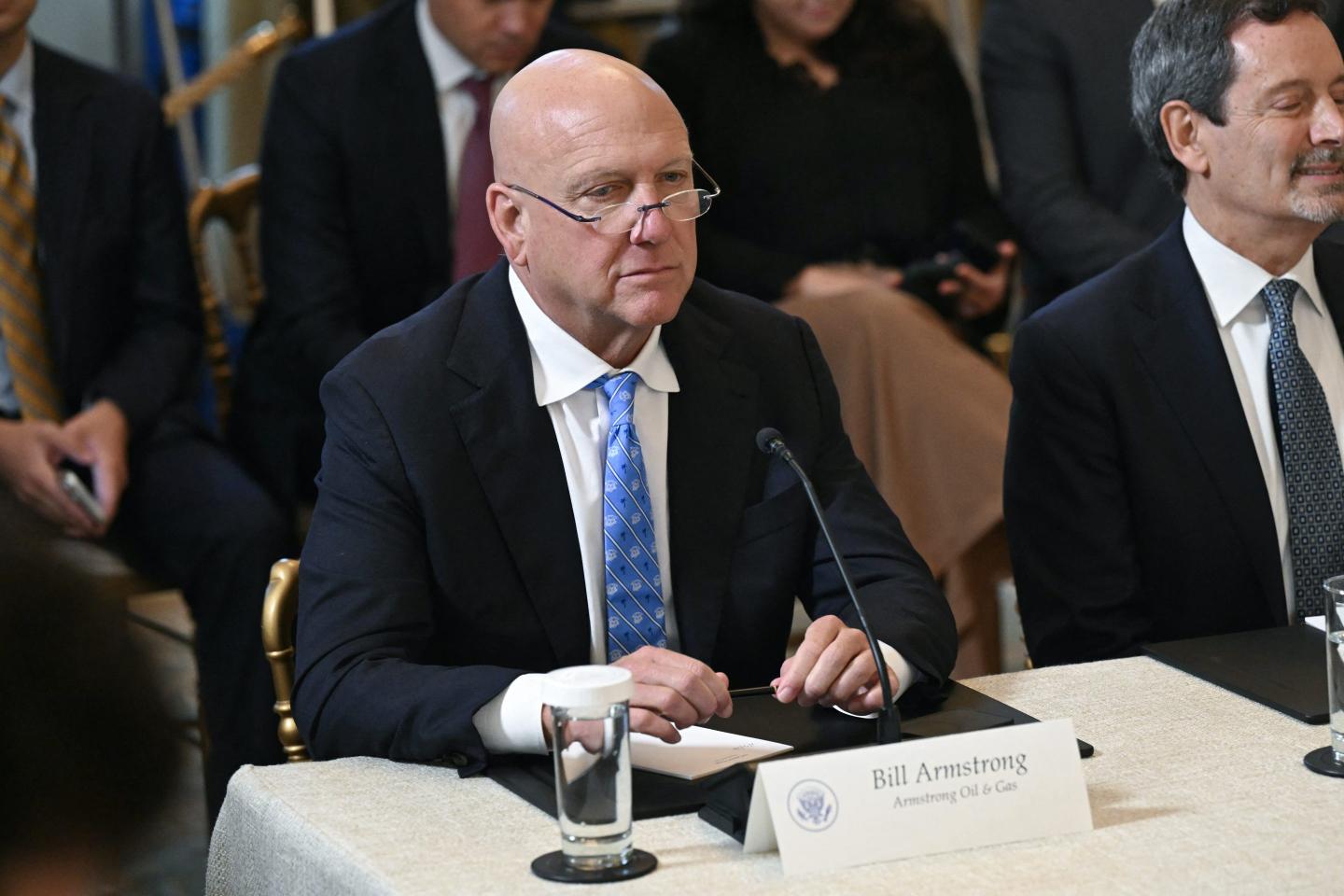
Bill Armstrong, 66, would agree. Armstrong, a geologist and the CEO of the eponymous Armstrong Oil & Gas, is a true wildcatter and pioneer of Alaska’s North Slope, making several big discoveries over the years, including the Pikka field that he remains bullish on. He compares it to the original East Texas oil field that boomed nearly a century ago.
“Hardly anyone does what I do anymore,” Armstrong said.
And he isn’t slowing down now. So much of the seismic geology in Alaska’s eastern Northern Slope is “gorgeous.” And he’s gearing up to drill new wells. “It’s like geo-porn,” he said of the seismic imagery. “There are tons of opportunities. There is essentially no fracking that’s been done in Alaska.”
Armstrong also has his sights set on Venezuela and offshore Aruba—adjacent to Venezuelan waters. From Alaska to Venezuela, these are areas being heavily pushed by the Trump administration.
“It is true wildcatting,” he said of Aruba, noting that only one other well has ever been drilled there.
The hunt for the next big thing is still what excites many in the industry, said EOG’s Yacob. And EOG is known as a shale technology innovator and trendsetter. Where EOG goes, others typically follow. Although not a household name, EOG is revered within the industry, considered a decade ago as the Apple of oil and gas.
Yacob said EOG wouldn’t target the UAE and Bahrain if they hadn’t done their due diligence and developed the adequate confidence. After all, he said, “Going international is not easy. Going to South Texas, that’s easy.”
But the chase for a discovery is his calling, he said, and what drew him to the industry.
“Think about what we get to do every day. You come in with a map and limited data sets, and you come up with an idea of something that’s 2 miles beneath the surface of the earth,” Yacob said. “You basically stick a straw down there and you get to test your idea, and you get pretty instantaneous results. It’s the most thrilling industry I could ever imagine.”