
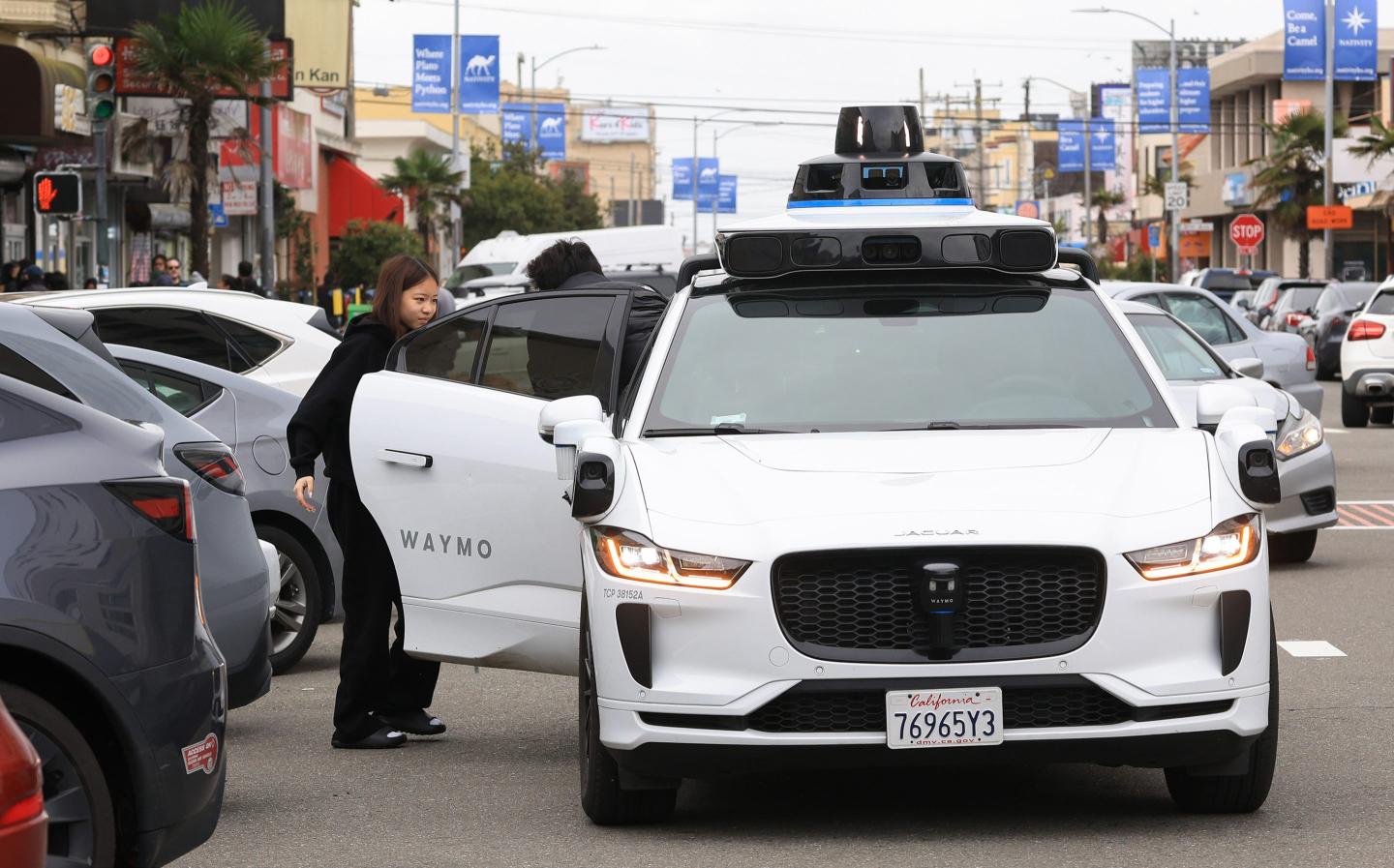
Passengers and rideshare drivers alike are growing nervous about the future of autonomous cars, and Minneapolis is the latest city to place guardrails on the vehicles over worker and safety concerns.
Four Minneapolis city councilors, nearly one-third of the body, proposed an ordinance that would prevent self-driving cars from operating on the road by themselves, instead requiring licensed drivers to serve as a “safety monitor” for the autonomous vehicles on the road. Those human drivers, who would have “immediate access to controls for steering, braking, and acceleration,” would be paid at least minimum wage. The City Council will have a public hearing for the measure on Sept. 22, and the ordinance, if passed, would go into effect next October.
No other city in the U.S. has proposed or passed a similar measure, despite lawmakers across 25 states introducing more than 65 bills to regulate self-driving technology. Major Jacob Frey has not endorsed the ordinance, instead saying he would take the lead of the state in introducing and expanding robotaxi adoption. There are currently no state laws regulating autonomous cars.
Alphabet-owned Waymo began testing its fleet in the Twin Cities in November 2025 with fewer than 10 cars, all of which have drivers in the front seat. The company has about 4,000 driverless vehicles across 15 cities, up from 700 in early 2025.
Though only a tiny fraction of the 298 million registered vehicles on the roads in the U.S., the robotaxi industry is expanding. Goldman Sachs projected that by 2030, robotaxis would make up about 8% of the U.S rideshare market, generating $7 billion in revenue. As of 2025, autonomous vehicles made up less than 1% of the market. Still, Americans are apprehensive about the vehicles, with 71% saying they would be at least somewhat uncomfortable riding in a self-driving car, according to a Pew Research Center poll conducted in February.
Council members argued unregulated automated cars could present safety concerns and disrupt traffic and public transportation, as well as displace thousands of gig workers. Last year, Waymo vehicles blocked San Francisco streets during a power outage when traffic lights were off, forcing the company to temporarily suspend service and raising questions about the cars’ ability to perform during regular traffic disruptions.
Adam Lane, Waymo’s state and local public policy manager, called the proposed framework a “de facto ban on autonomous vehicles,” adding the company is partnering with several local organizations to address the city’s safety and mobility gaps. A study from the Insurance Institute for Highway Safety published in July found Waymo’s vehicles have a lower crash involvement rate than human-operated cars.
“We remain committed to working with officials on a path forward that offers Minnesotans the option to choose fully autonomous transportation,” Lane told Fortune in a statement.
Why gig workers oppose Waymo
The new proposed measure is a flashpoint in a national conversation around the impact of autonomous vehicles not on road safety, but on the gig economy, which may already be vulnerable to the broader trends toward automation.
Unions representing rideshare drivers have argued the growing market share of self-driving cars is displacing those workers through lower trip demand while failing to make roads safer because these vehicles cannot navigate severe weather, road hazards, and disrupted traffic patterns. In February, New York Gov. Kathy Hochul withdrew a proposal to expand automated vehicles beyond New York City, with union leaders continuing to push to contain the expansion of the robotaxi fleets.
“Tens of thousands of New Yorkers proudly call driving their career, whether behind the wheel of a truck, bus, delivery van, taxi, Uber or other form of transit. These are real people earning real livings, supporting families, contributing to our economy and sharing a common goal: making our roads safer,” Mario Cilento, president of the New York State AFL-CIO representing 2.5 million workers, said in a statement at the time. “Yet their careers are being treated as collateral damage in a race toward automation. Why? Because it’s cheaper.”
Early projections suggest robotaxis do indeed present a threat to rideshare workers. A study analyzing 200,000 daily observations of taxi drivers and their income in Wuhan, China, found that the introduction of robottaxis slashed taxi drivers’ average daily income by nearly 11%, most likely because of reduced demand. A George Washington University-led study found using cost models that a shift from taxis to robotaxis would decrease frontline jobs by 57% to 76%. However, the number of total jobs would not decrease, and the growing autonomous vehicle industry would create additional manufacturing roles.
Waymo co-CEO Tekedra Mawakana, has maintained a similar opinion, previously rebuking that the increasing presence of robotaxis on the road would displace taxi and rideshare drivers and arguing self-driving cars would expand manufacturing. Waymo has offered scholarships to students in technical programs in community colleges to strengthen the pipeline of trade workers to fill these expected new roles.
“Now that we’ve been in a few markets for a few years, it’s great to be able to see that we haven’t eliminated jobs in those markets,” Mawakana told the New York Times in March. “Humans are still rotating those tires and working on those vehicles. We have fleet operators, we have fleet technicians. All of our fleets are fully electric. Those charging companies are building the infrastructure, putting them in city centers, pulling those wires from the utility company.”