
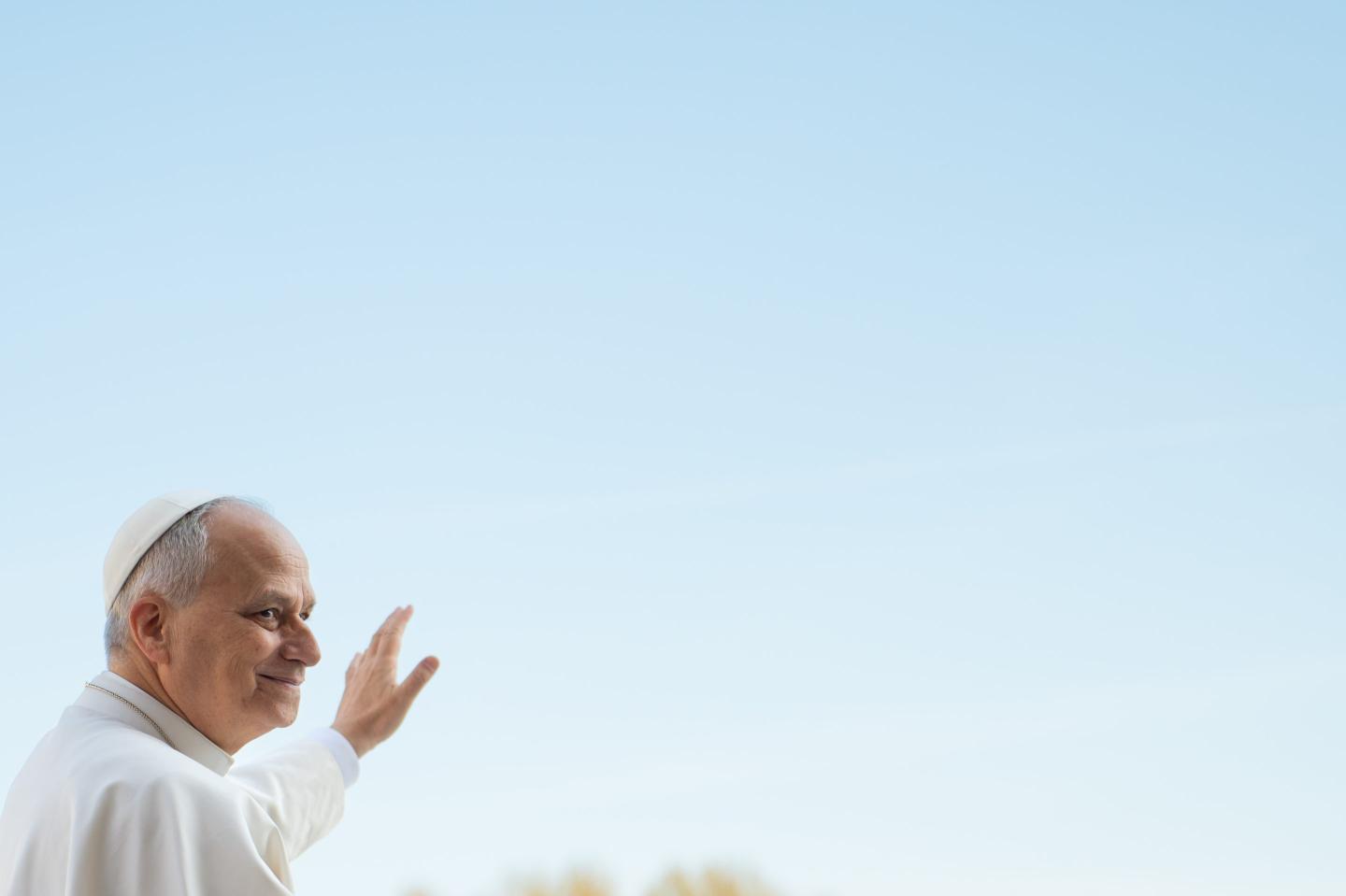
Pope Francis spent much of his papacy pushing the Catholic Church to treat climate change as a moral issue in addition to a scientific. Now, the Holy See’s plan is putting money behind that morality and looking to make the Vatican the world’s first carbon-neutral state.
Vatican City, which covers about 44 hectares, or 109 acres, will put roughly 100 million euros ($117 million) toward an agrivoltaic plant expected to power the microstate within two years, sources told Reuters.
The plan builds on what Pope Francis first ordered in 2024. Pope Leo has spent the past year moving it through the bureaucratic steps needed to build it by creating a foundation, a memorandum with an Italian utility, and a joint commission. What’s new is that this is the first time a dollar figure has been attached to the plan. And it also puts into context what we’re doing stateside.
The Vatican is roughly an eighth the size of Central Park. It’s smaller than a single data center campus like Meta’s Hyperion data center project in Louisiana, which is on track to draw as much as 5 gigawatts of power by 2030. Home to roughly 800 residents and nearly 3,000 commuting lay workers, it’s the smallest country on Earth by a wide margin.
It’s so small that the plant won’t fit within the country’s 109 acres: It’s being built on the roughly 1,050-to-1,100-acre Santa Maria di Galeria estate the Vatican owns outside Rome, land close in size to the campus for OpenAI’s Stargate data center in Abilene, Texas. But where Stargate’s footprint is built to support 1.2 gigawatts of AI computing, the Vatican’s similarly sized site is expected to generate just 80 to 90 megawatts of capacity, per Reuters, or roughly a dozen times less power on similar acreage. But that’s because it’s built to run a few hundred residents’ worth of lights and a radio transmitter, not racks of GPUs.
At risk of power shortages
A single large AI data center now consumes as much electricity as a city of 80,000 people, Khosla Ventures founder Vinod Khosla wrote in Fortune this year, and companies are building hundreds of them at once. Data centers accounted for roughly half of all new U.S. electricity demand in 2025, and globally, data center electricity use is projected to more than double by 2030 to around 945 terawatt-hours, equivalent to Japan’s entire current electricity consumption.
The buildout is reshaping the U.S. utility business, too. NextEra Energy’s $66.8 billion deal to acquire Dominion Energy in May was driven largely by AI data center demand clustered in Virginia, rather than residential growth. American Electric Power plans to spend $78 billion through 2030 to keep pace. Goldman Sachs projected the AI buildout will push US electricity costs up 6% between 2026 and 2027, with a further 3% increase by 2028, increasing neighboring homeowners’ utility bills. By contrast, the Vatican’s entire planned plant would generate less power than a single mid-sized AI campus, let alone the industry racing to build hundreds more.
The new plant would also dwarf what the Vatican currently produces. Its only existing solar installation—2,394 panels on the roof of the Paul VI Audience Hall, installed in 2008—generates about 300 megawatt-hours a year. The new plant’s 80- to 90-megawatt capacity alone is hundreds of times larger than that. The Vatican’s 2023 climate pledge to the UN sets a 20% emissions cut from 2011 levels by 2030 and a “zero emissions” goal by 2050.
Trump at odds with the Vatican
The Church’s position on climate traces to Francis’s 2015 encyclical “Laudato Si’,” which argued that wealthy nations bear disproportionate responsibility for emissions and called for a shift away from fossil fuels. Pope Leo XIV has continued holding that stance since Francis’s death, calling for “urgent” climate action at a UN conference this year and saying that God’s creation is “crying out.” He’s also labeled new technology, including AI, a moral concern: Leo has said he chose his papal name partly in reference to Pope Leo XIII, who wrote about protecting workers during the first Industrial Revolution, and is applying that same lens to AI’s effect on labor today.
That stance puts the Vatican at odds with the current U.S. administration: President Donald Trump has called climate change “the greatest con job ever perpetrated on the world,” and the U.S. skipped this year’s UN climate conference entirely. Trump and Leo have also clashed more publicly over Trump’s military actions in Venezuela and Iran and his administration’s immigration policies, with Trump at one point suggesting Leo’s election as pope was illegitimate. Fiscally, the U.S. ended a 2025 federal credit for residential solar as the EPA canceled a $7 billion low-income solar program in August. A BlueGreen Alliance tally found 223 clean-energy projects, worth $82.8 billion, canceled or stalled since the policy shift.
After Francis formalized the Vatican’s plan in a June 2024 letter called “Fratello Sole,” Leo kept it moving, visiting the site in June 2025 and calling it “a wonderful opportunity.” Italy agreed to the plan in July 2025, and the Vatican formalized ties with the Italian utility ACEA in June 2026 to build it jointly. Sources told Reuters the full build is expected to take 18 to 24 months.