
Radical opinions on the economy aren’t hard to come by right now: Tech titans, economists, Wall Street giants, and politicians have all suggested that AI will be transformative, but can’t agree on whether it will be for good or evil. Extreme divides in opinion are also appearing over policy—be it trade, immigration, interest rates, or national debt.
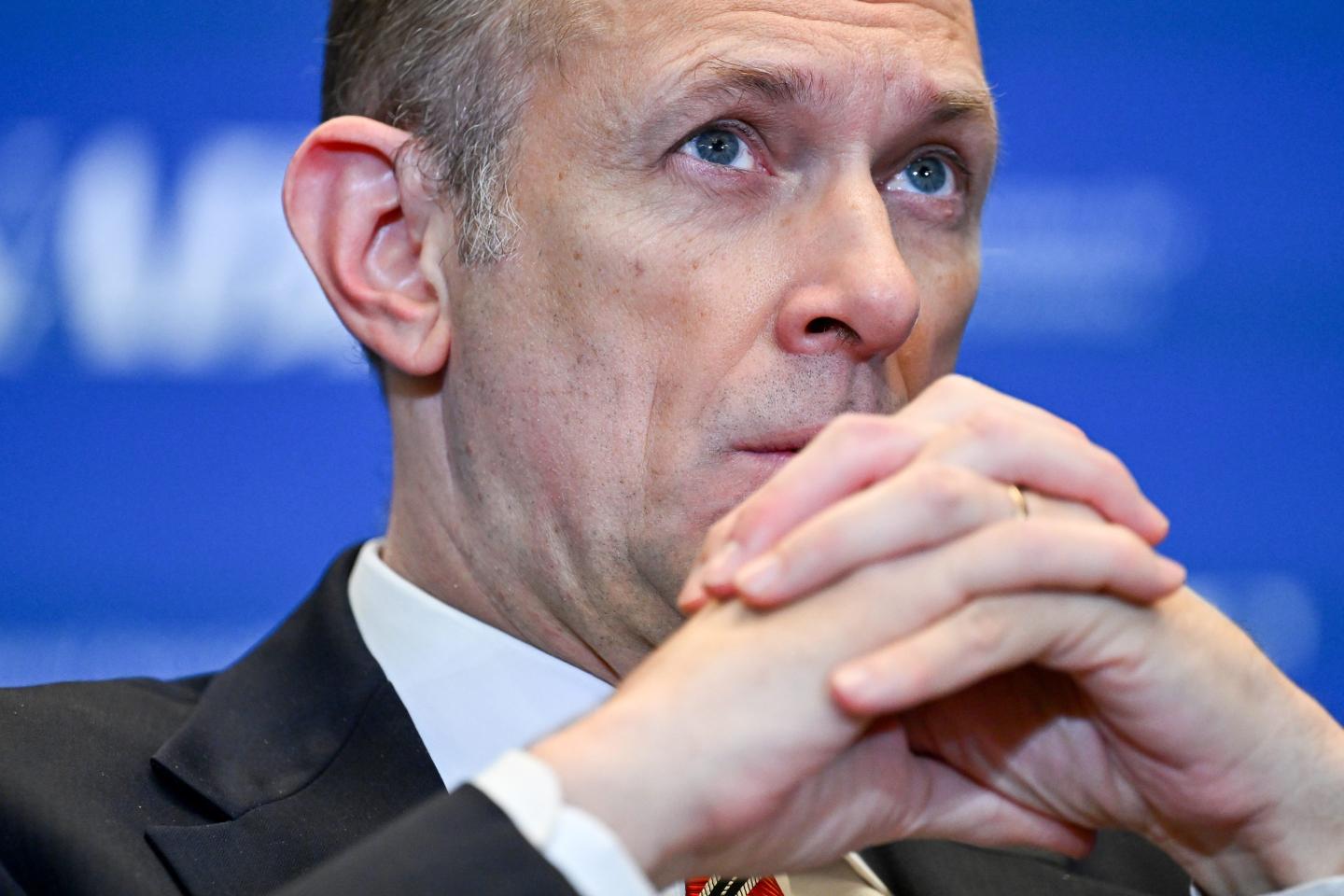
The Federal Reserve Bank of Chicago’s president and CEO, Austan Goolsbee, is less concerned with prophecies of chaos or prosperity—he’s more focused on the reality of American consumers, and the businesses they work for.
In a landmark Jackson Hole speech last week, new Federal Reserve Chairman Kevin Warsh said inflation was the sharpest focus, at present, for the rate-setting Federal Open Market Committee (FOMC), of which Goolsbee is a member. The reason: Price rises are comfortably ahead of the central bank’s mandated 2% target, pushed higher by supply-side shocks like the Middle East oil upset and tariffs.
Speaking exclusively to Fortune, Goolsbee agreed with the balance of concerns Warsh laid out: “On the real side, we’ve been stable, now inching toward dangers of overheat, and on the inflation side, after a couple of years of strong progress, it stalled out and started getting worse. But, we’ve had one encouraging report, one okay report, and now our challenge is … the inflation.”
The employment side of the Fed’s mandate looks relatively stable across data points such as the unemployment rate, vacancy rate, hiring rate, and the layoff rate, Goolsbee explained: “I think that’s been largely—not the result of AI data centers, for much ballyhoo—it’s the U.S. consumer. Broad-based consumer spending growth is the thing that has kept the economy solid and stable.”
And while everyone is closely watching AI’s impact on the labor market—be it layoffs, productivity gains, or demand for certain skills needed for infrastructure—Goolsbee is particularly concerned about potential economic overheating. He explained: “I would characterize the expansion of the data centers as very hot, but largely shoving other parts of the economy down.
“The rise has been stepping on others—they’re competing for the resources. When I’m touring around the Seventh District, people [are] saying: ‘We’re having to scale back our plans because getting construction workers is too expensive, you can’t get HVAC,’ etc. That implies a sector rebalance, that is different from an aggregate overheating, [but] that said, we’re not far from that turning into aggregate overheating.”
If the impact of data center build-outs spreads further through the economy—pushing up services inflation, for example—“that would make me more nervous,” said Goolsbee. The 10th president of the Chicago Fed explained he was comfortable with holding the base rate at the last FOMC meeting in July because the most contemporary inflation data had shown some improvement (the all-items CPI reading was down 0.4% in June, and a flat 0.1% in July) “so it makes sense to wait and see if this has legs, or is just a blip.”
Promises vs. reality
AI has produced some sparkling outlooks for the global economy: Nvidia CEO Jensen Huang believes that while there will be some labor disruption, the technology will be a net job creator “at a scale that we have never seen.” Tesla CEO Elon Musk said AI will make money essentially irrelevant and work a hobby, while Meta’s Mark Zuckerberg wrote that AI, in a healthily balanced economy, will see “overall productivity and innovation increase while employment levels remain high.”
Meanwhile, Goolsbee is thinking about the “grubby day job” of the Fed, saying the impact of AI on monetary policy depends on how expected the outcomes are.
“If the productivity lands on us in an unexpected way, inflation goes down, and rates can go down,” Goolsbee explained. “But the more expected it is, and the bigger the hype … it leads to just old-fashioned overheating in the short run, because equity values go up, and so the businesses launch massive capital investment in the here and now, people start spending out of their equity, well in the here and now, before the productivity bounty has arrived.
“It’s fun to engage in the academic exercise of dreaming [about] how AI will affect the long-term growth in the United States or the global economy, and we should think that through, but for the grubby day job of the Federal Open Market Committee, it’s not at all clear.”
There’s also the question of when these massive gains come to pass. In 1987, Nobel Prize–winning economist Robert Solow remarked: “You can see the computer age everywhere but in the productivity statistics.” This is the basis of the Solow Productivity Paradox, suggesting that productivity may slow—or at least lag expectations—with technological advancements.
In a July study, the Fed noted that while sectors with more exposure to AI have higher productivity growth, trends across organizations with low, medium, and high exposure levels remain consistent over time, “suggestive of micro-level productivity gains not adding up in aggregate.”
Goolsbee is mindful of this delay and, therefore, wary of applying it too swiftly to the current outlook. “It strikes me it’s a bunch of great technologists who are coming up with this, and they’re wanting to declare themselves economists, and you’ve already seen it not play out the way that they said,” Goolsbee added. “I would like them at least to acknowledge that in the last 10, 15 years—this may be the most extreme version—but they have declared numerous technologies were going to totally change the world and displace millions of jobs, and we’re still waiting for those ones to happen, whether from autonomous vehicles to NFTs and blockchain … we’ve had a series of those.
“It’s not to make light, it’s clear that in some sectors the adoption has been so rapid that they’re feeling the pinch, but I don’t believe that the low hiring rate is predominantly caused from AI.”
‘Traaaaansitory’ supply shocks
A more unexpected delay between theory and real-world data is emerging in the form of supply shocks. During the tenure of Jerome Powell, the previous Fed chairman, the FOMC was repeatedly urged to follow Econ 101 and “look through” inflationary pressures, as they stemmed from seemingly one-off supply shocks (such as tariffs or the Middle East conflict) rather than underlying trends pushing prices higher.
But Goolsbee argues that, particularly since the pandemic, supply shocks large enough end up being substantially more persistent than theoretical models suggest. One factor is that current supply shocks aren’t “one and done,” because they arise from ongoing issues like geopolitics. Another factor is that huge geopolitical supply chains take longer to fix than they did previously.
It is for the FOMC to balance the risk of reacting to transitory supply shocks (or, as Goolsbee describes them, “traaaaansitory” supply shocks that drag on) against the risk of enduring above-target inflation. This, ultimately, belies the biggest threat Goolsbee sees to the economy.
“In terms of public attention, it has shifted to data centers, and it feels like that’s all anyone wants to talk about, but I would like to shift it back,” Goolsbee said. “The thing in my mind that has made the economy stable and growing—despite a series of pretty intense shocks … is the unrelenting, continued consumer spending.
“If you go out here in the Midwest, prices are on everyone’s mind, and if there were going to be something that shook the consumers, it would shake the economy. If we hit a hiccup on consumer spending, to me, that is the biggest risk to continued stability and growth.”
Goolsbee advocated for attention focused on “old-school” economic barometers: “What’s consumer spending and is the consumer going to keep up this pace?”