
• Home
  • Latest
  • Fortune 500
  • Finance
  • Tech
  • Leadership
  • Lifestyle
  • Rankings
  • Multimedia

Trendingnow

1

Richard Branson double-booked his own job interview. The candidate stuck in traffic with him for 2.5 hours is now Virgin's CEO

2

The heiress of $10 billion Perdue Farms and the $12 billion Sheraton Hotels empire wore hand-me-downs, still rides the subway, and flies economy

3

IBM’s CEO disagrees with JPMorgan CEO Jamie Dimon’s disdain for texting in meetings: ‘Telling people they can't use their technology would be weird’

1

Richard Branson double-booked his own job interview. The candidate stuck in traffic with him for 2.5 hours is now Virgin's CEO

2

The heiress of $10 billion Perdue Farms and the $12 billion Sheraton Hotels empire wore hand-me-downs, still rides the subway, and flies economy

3

IBM’s CEO disagrees with JPMorgan CEO Jamie Dimon’s disdain for texting in meetings: ‘Telling people they can't use their technology would be weird’
AIEducation

It’s not just math and reading. Classroom devices deprive kids of skills needed in the AI future and how to be ‘fully human,’ education experts say

Jason Ma
By
Jason Ma
Jason Ma
Weekend Editor
Down Arrow Button Icon
Jason Ma
By
Jason Ma
Jason Ma
Weekend Editor
Down Arrow Button Icon
August 30, 2026, 4:01 PM ET
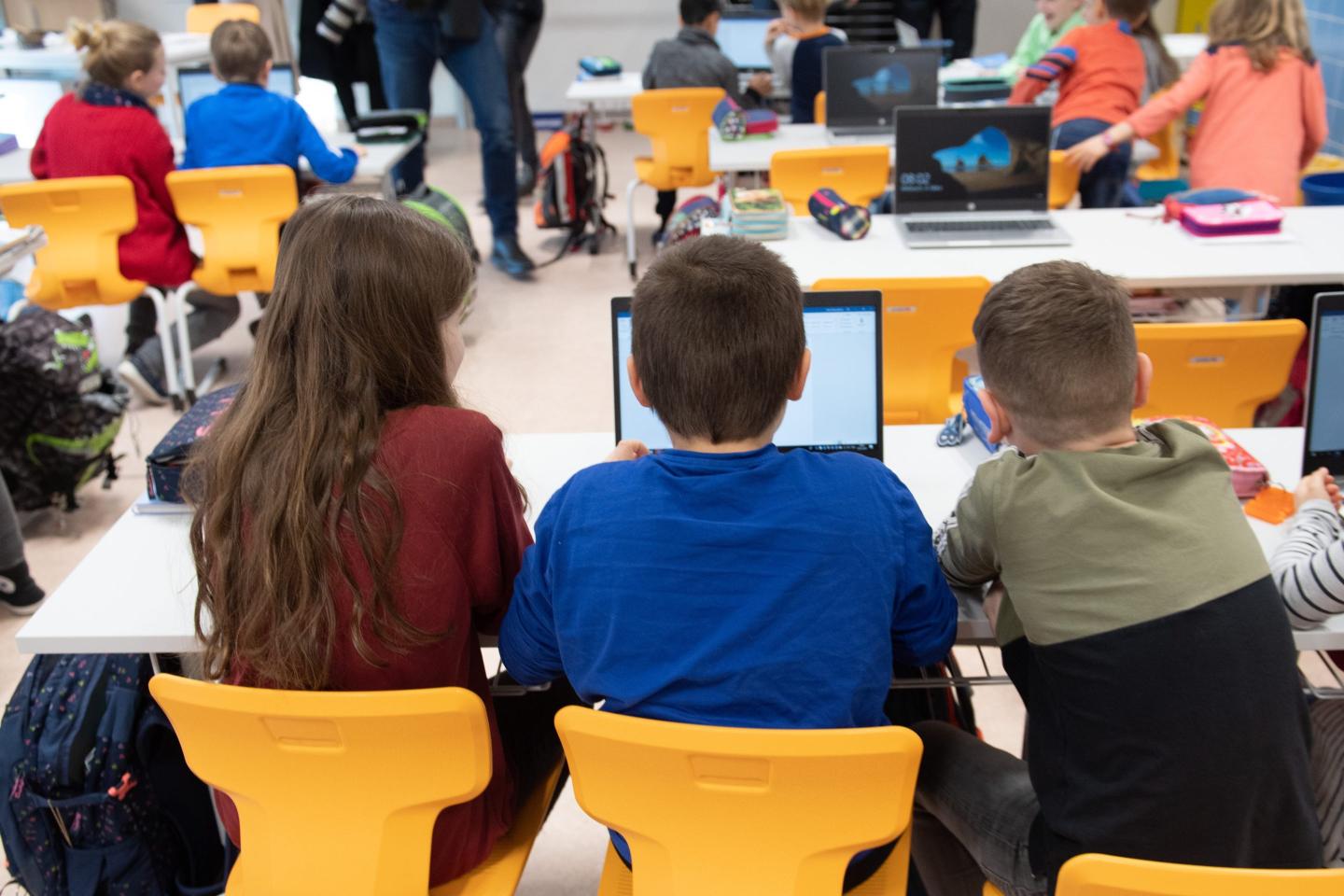
Pupils sit in front of a laptop during a press tour in a classroom of the Georgius Agricola Primary School.
Pupils sit in front of a laptop during a press tour in a classroom of the Georgius Agricola Primary School. Sebastian Kahnert/picture alliance via Getty Images
Add Fortune on Google for similar content.

As the new school year begins, the debate over digital versus analog learning rages on, while more school districts reconsider the role of devices in the classroom.

Recommended Video

That’s as test scores in math and reading tanked after schools ditched textbooks in favor of screens. But the effect of computers and tablets on education goes beyond the basics of the so-called three R’s.

“Elementary school always taught more than reading and mathematics. Children learned how to wait for someone else’s idea to be expressed before sharing their own, to negotiate disagreements and explain their thinking,” University of Pennsylvania Graduate School of Education professor Sarah Schneider Kavanagh and University of Portland School of Education professor Katie A. Danielson wrote in a Washington Post op-ed earlier this month.

Such lessons are actually a critical aspect of growing up, as children’s cognition has been shown to mature via person-to-person interactions, not just from receiving information, they added

But classroom computers and adaptive software now provide individualized instruction to many students. While that offers benefits, Kavanagh and Danielson warned there are also trade-offs.

For example, when students merely click through math lessons on their own instead of solving problems with classmates, they don’t hear different ways of thinking.

That kind of collective learning is especially important in the era of AI as distinctly human skills like attention span, curiosity, judgment, empathy and collaboration become more valuable, Kavanagh and Danielson argued.

“Children don’t need school to become more like the digital world,” the professors wrote. “They are already immersed in that world for much of the time outside school hours. They need a place designed for other aims, such as conversation instead of consumption and collaboration instead of personalization. That isn’t resisting the future; it’s preparing children to be fully human in it.”

Computers and online learning saw steadily expanded use in classrooms for decades, then they became essential during COVID-19 lockdowns. But rather than revert to pre-pandemic ways afterward, schools continued to relying heavily on them.

There’s now a growing backlash. According to one tally, lawmakers in at least 17 states had introduced or debated legislation related to devices or screens in classrooms as of July.

And earlier this year, the nation’s second largest school district, Los Angeles Unified, banned in-school screen use for students in preschool through first grade and curbed screen time for older students.

There’s growing evidence that devices not only hurt test scores but children’s ability to think.

Earlier this year, in written testimony before the U.S. Senate Committee on Commerce, Science, and Transportation, neuroscientist Jared Cooney Horvath said Gen Z is less cognitively capable than previous generations, despite its unprecedented access to technology.

He said Gen Z is the first generation in modern history to score lower on standardized tests than the previous one, citing a stark correlation in scores and time spent on computers in school.

While skills measured by these tests aren’t always indicative of intelligence, they are a reflection of cognitive capability, which Horvath said has been on the decline over the last decade or so.

“We’re facing challenges more complex and far-reaching than any in human history—from overpopulation to evolving diseases to moral drift,” he told Fortune‘s Sasha Rogelberg. “Now, more than ever, we need a generation able to grapple with nuance, hold multiple truths in tension, and creatively tackle problems that are stumping the greatest adult minds of today.”

Fortune Daily breaks the traditional barrier between audience and newsroom. The show transforms Fortune’s trusted reporting into actionable, conversational, and entertaining insights for an emerging class of business leaders. Watch here.
About the Author
Jason Ma
By Jason MaWeekend Editor

Jason Ma is the weekend editor at Fortune, where he covers markets, the economy, finance, and housing.

See full bioRight Arrow Button Icon
Add Fortune on Google for similar content.

Latest in AI


Most Popular

Fortune Secondary Logo
Rankings
  • 100 Best Companies
  • Fortune 500
  • Global 500
  • Fortune 500 Europe
  • Most Powerful Women
  • World's Most Admired Companies
  • See All Rankings
  • Lists Calendar
Sections
  • Finance
  • Fortune Crypto
  • Features
  • Leadership
  • Health
  • Commentary
  • Success
  • Retail
  • Mpw
  • Tech
  • Lifestyle
  • CEO Initiative
  • Asia
  • Politics
  • Conferences
  • Europe
  • Newsletters
  • Personal Finance
  • Environment
  • Magazine
  • Education
Customer Support
  • Frequently Asked Questions
  • Customer Service Portal
  • Privacy Policy
  • Terms Of Use
  • Single Issues For Purchase
  • International Print
Commercial Services
  • Advertising
  • Fortune Brand Studio
  • Fortune Analytics
  • Fortune Conferences
  • Business Development
  • Group Subscriptions
About Us
  • About Us
  • Press Center
  • Work At Fortune
  • Terms And Conditions
  • Site Map
  • About Us
  • Press Center
  • Work At Fortune
  • Terms And Conditions
  • Site Map
  • Facebook icon
  • Twitter icon
  • LinkedIn icon
  • Instagram icon
  • TikTok icon
  • YouTube icon

    Latest in AI


    Most Popular

    © 2026 Fortune Media IP Limited. All Rights Reserved. Use of this site constitutes acceptance of our Terms of Use and Privacy Policy | CA Notice at Collection and Privacy Notice | Do Not Sell/Share My Personal Information
    FORTUNE is a trademark of Fortune Media IP Limited, registered in the U.S. and other countries. FORTUNE may receive compensation for some links to products and services on this website. Offers may be subject to change without notice.