
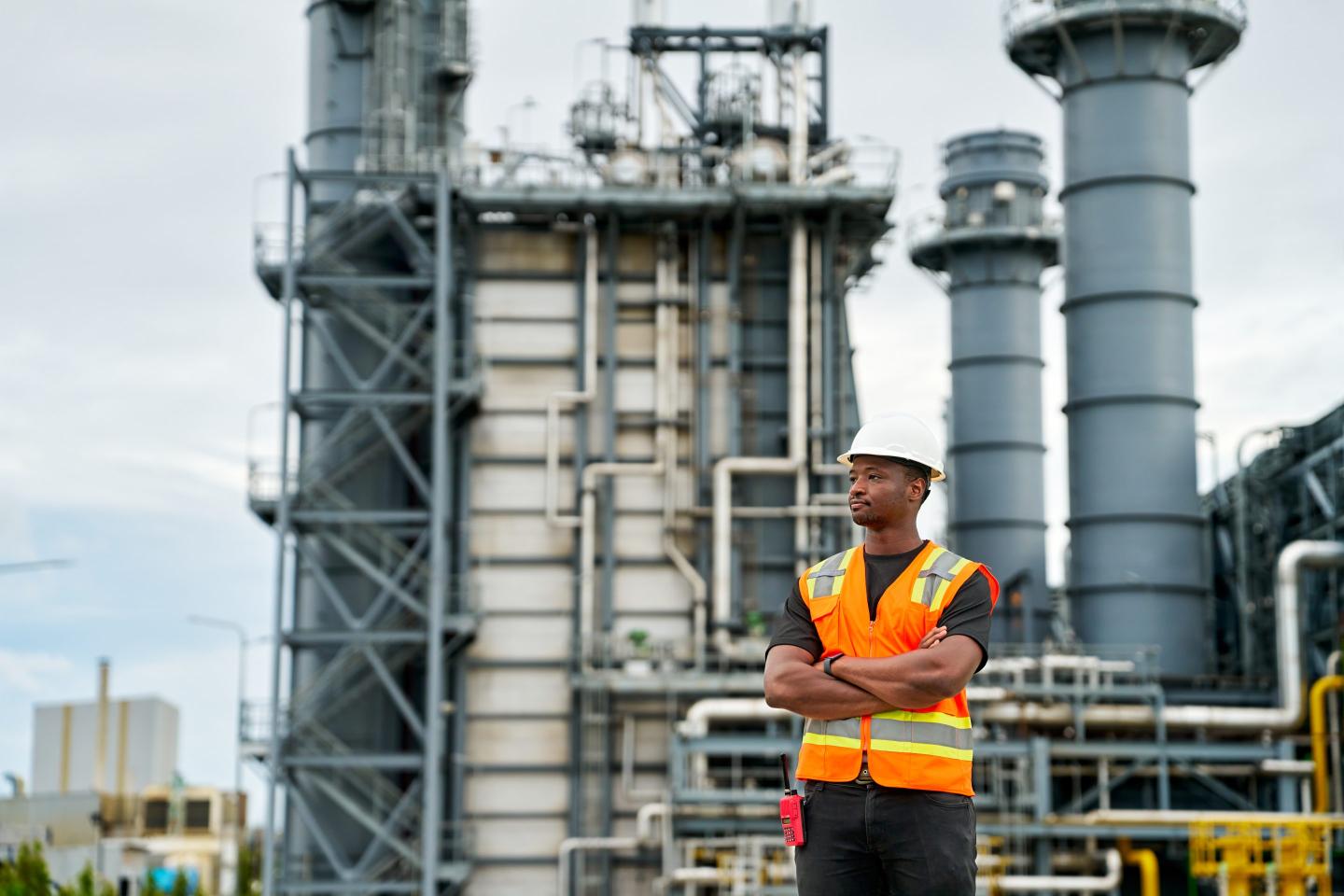
CEOs have warned that AI will wipe out white-collar and entry-level jobs, but demand for the tools is already creating new opportunities. America’s energy sector is thriving during the world’s latest tech transformation—but there aren’t enough workers to meet the demand.
The U.S. power and grid value chain will need around 500,000 additional workers by 2030, according to a recent report from Goldman Sachs. And seeing as these roles often require three to four years of training, it creates a years-long skilling obstacle in training up a workforce to meet growing demands.
The energy apprenticeship pipeline only had 45,000 entrants in 2024, but really needs 65,000 professionals flowing in yearly to close the labor supply gap. And increasing demand for AI—which necessitates an even greater pool of power—could widen the gap even further.
“Power is a critical bottleneck—but increasingly, the requisite labor presents a structural constraint of its own,” the report explains. “The technical workforce that constructs, wires, cools, and secures this infrastructure is in acute demand, and training cannot happen at the pace capital is being committed.”
America’s energy sector employed roughly 8.5 million workers as of 2024, who took home a median wage of $58,810 a year, according to the U.S. Department of Energy. However, there are more lucrative career opportunities on the table, like traditional fuel production paying an average salary of $65,400, or power plant operators, who take home around $103,600 annually. Plus, energy jobs often don’t require a costly college degree—specialized training and on-the-job experience are king.
But autonomous equipment and human-like robots might have to step in to help lighten the load if worker supply can’t keep up.
Around 1.4 million humanoid robots will hit the market by 2035
The image of robotic arms, drones, and autonomous vehicles taking over factory floors may be jarring to many workers. But Goldman Sachs points out that an increased interest in physical AI like humanoid robots “is centered on the need for labor.”
So long as people can’t fulfill demands, tech is another tool to help bridge the productivity gap.
America’s manufacturing sector has a higher number of available jobs than available workers, the study finds, with more than one million materials-handling roles sitting unfilled. And techy companions may be one way to alleviate the shortage.
Goldman’s investment research projects that the market for humanoids will grow from 20,000 in 2025 to 1.4 million in 2035—a 6,900% increase within the span of a decade. Some Chinese AI developers like Unitree and UBTECH are making headway with the robots, with widespread commercial deployment is expected between 2027 and 2029.
Other faceless autonomous equipment have already hit worksites with that strained labor-supply dynamic; take Deere’s field systems and Caterpillar’s mining platforms, as examples. Earlier this year Amazon also unveiled its autonomous mobile warehouse robot, Proteus. And EV giant Tesla has leveraged its own Optimus humanoid robots inside its manufacturing facilities, taking on early factory tasks and assembly line work.
However, human-like robots with blank faces and steel legs won’t be marching onto assembly lines anytime soon. Building robots and factories takes years, and requires a load of financing. Private equity firms and banks don’t have much historical financial data to confidently invest in these projects, and companies are still figuring out how to use humanoids at large scale.
Robot fleets are a few years away—but China’s energy sector is already deploying them
Humanoid robots have yet to take on a sizable amount of America’s blue-collar work, but experts say that the tech is on the up-and-up. Zornitza Todorova, head of thematic FICC research at Barclays, predicts that today’s humanoid market of around $3 billion will swell to $200 billion by 2035. Nvidia CEO Jensen Huang also believes in the potential of humanoid workers, but believes that the true unlock is still years away.
“I think we are at the cusp of a transformation, we’re just scratching the surface of what humanoid robots can do,” Todorova told CNBC earlier this year, “And as the technology matures, as the models get better and faster at reacting to things in real time, I think we’ll see a lot of applications in more services-oriented roles.”
Meanwhile, China already seems to be racing ahead of the U.S.; the country has deployed robots across several jobs in the energy sector.
In 2022, a robot completed the work of a maintenance professional by repairing power lines in the Wuhan province; and over at a power facility in Guangzhou, humanoid helpers have already taken over inspection duties usually completed by workers.
Earlier this year, China announced a $1 billion initiative through the State Grid Corporation of China to get around 8,500 AI-powered robots for national power grid inspection and maintenance.