Steve Hanke earned the moniker “Money Doctor” after advising governments around the globe on how to use currencies to get inflation under control.
The professor of applied economics at Johns Hopkins University is now helping Venezuela and has been named a special advisor to a leading member of the country’s National Assembly.
Hanke told Fortune’s Shawn Tully that his solution for Venezuela’s 400% inflation is full adoption of the U.S. dollar, meaning bolivars and the central bank would be abandoned. The idea is to remove the risk of a central bank printing money to help the government pay its bills, stoking higher prices.
“Taming inflation is the key to restoring stability in Venezuela, and all the other progress flows from that,” Hanke explained. “Stability isn’t everything, but without stability, which means stable prices, you have nothing. And there’s no better case study showing that’s true than Venezuela.”
He should know. The Money Doctor persuaded Montenegro in 1999 to dump the Yugoslav dinar for the deutsche mark. He also oversaw Ecuador’s switch from the sucre to the U.S. dollar in 2000, marking the first dollarization in Latin America since Panama a century earlier.
Then, in 2009, Hanke became an informal advisor to the prime minister of Zimbabwe, which dollarized and reined in inflation. But a new government ditched the dollar in 2013, and hyperinflation returned.
Hanke is now on his second attempt in Venezuela, after his plan for a currency board in the mid-1990s failed to win a majority in the National Assembly. This time, he sees 50%–80% odds that dollarization will be approved.
“It would be the biggest switch from domestic currencies to an alternative since the introduction of the euro in 1999,” he told Fortune’s Tully.
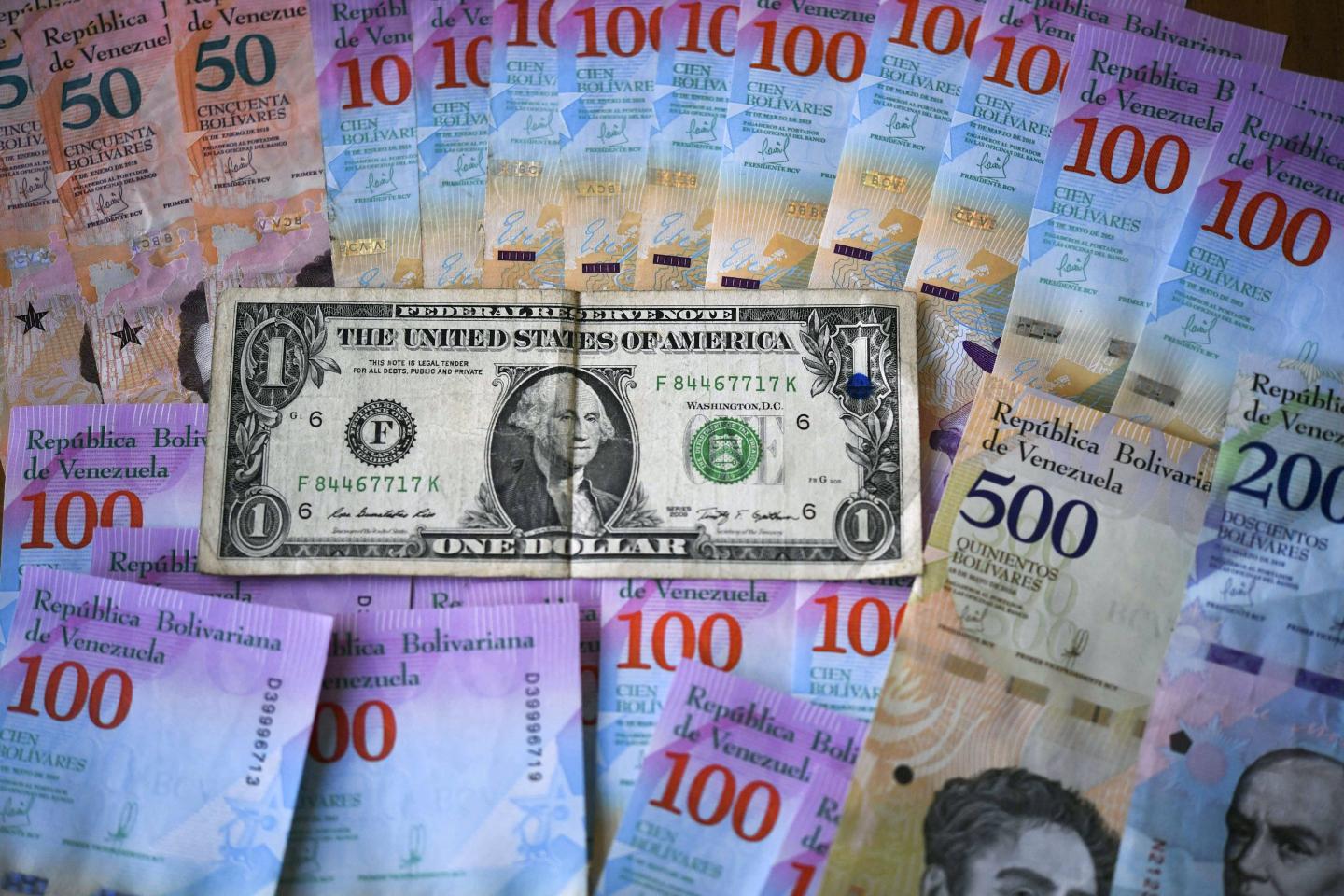
Despite the ambitious plans, the U.S. dollar is already an integral part of the Venezuelan economy. Due to the collapsing bolivar, which has tanked 78% against the greenback over the past year alone, most consumers buy virtually everything with dollars.
In fact, almost everyone not working for the government or receiving aid and pensions from the government uses dollars. Hanke said this “spontaneous dollarization” raises the chances of an official currency switch.
But the prospect of losing the central bank, which acts as a lender of last resort, and essentially handing over monetary policy to the Federal Reserve are still daunting obstacles.
Even Argentine President Javier Milei, who campaigned on dollarization, backed off the idea after he took office. While he helped cool inflation sharply by slashing subsidies and the budget deficit, the annual rate is still high.
Argentina must also continue defending the peso, which is pegged to the dollar. Regional elections last year that crushed Milei’s party sent the peso into a tailspin, and Treasury Secretary Scott Bessent came to the rescue with a currency swap line.
Still, Hanke sees dollarization as the key to unlocking Venezuela’s economy, which is highly dependent on oil exports. A currency switch would induce a surge of foreign investment into the oil sector, he predicted.
Then there’s the $250 billion in Venezuelan debt, which is equivalent to about 150% of GDP. Hanke said increased production would provide the dollars needed to pay the principal and interest.
The end of hyperinflation would also lower interest rates, encouraging a wave of borrowing by consumers and businesses. That would in turn ignite the housing market and drive domestic investment, he added.
“If it happens soon, Venezuela would take off from negative growth this year to positive growth next year,” Hanke said.