This is a conversation with Fortune Greece CEO Tasos Zachos, reprinted with permission.
The second act of artificial intelligence will not be judged by models alone. It will be judged by how economies manage to turn technology into real productivity. After almost two years of impressive demonstrations and incessant discussions around large language models, the global economy is entering a new phase. The question is no longer who has the most powerful AI tool, but which organizations — and which countries — have the skills, leadership and infrastructure to harness the technology at scale. That is, to become the region’s Frontier AI leaders.
In Southern Europe, this transition is already underway. Greece, Portugal, Italy and other markets in the region are trying to move from simply adopting AI tools to creating an ecosystem that combines human capital, universities, startups, the public sector and modern digital infrastructure.
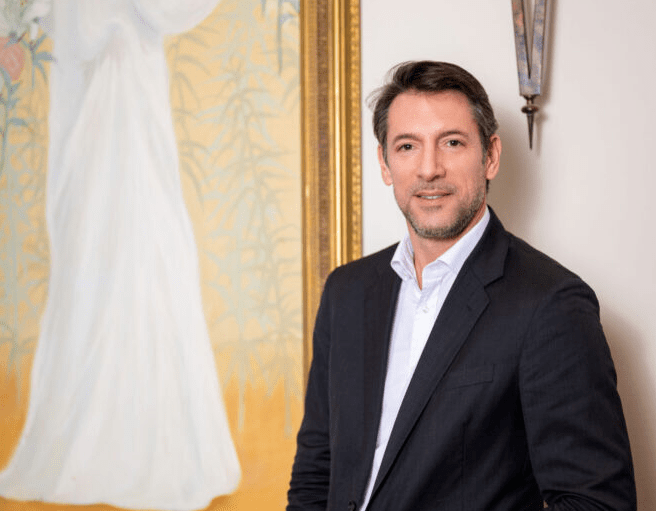
“I see Greece as more than a market; I see it as an innovation hub,” Charles Calestroupat, Microsoft’s Vice President for Southern Europe, told Fortune Greece. Responsible for 17 markets in the region, he believes that the country now has several of the ingredients needed to evolve into a regional AI hub: an increasingly mature innovation ecosystem, public digital initiatives such as mAigov, growing investments in cloud and data centers and, more importantly, people with the right skills.
If skills are the foundation of this transition, then the role of large organizations becomes decisive. In this context, Microsoft, through the GR for GRowth initiative, has already contributed to the training of 100,000 people — professionals in the public and private sectors, as well as students and unemployed — in digital skills, in pursuit of a transition that will be essentially inclusive. The aim, as highlighted by this strategy, is not only to accelerate the digital transformation, but also to ensure that no one is left behind. “Greece ranks 1st in terms of the use of AI by Gen Z in Europe,” says Charles Calestroupat, who also points out that everything will be determined by the ability of organizations to redesign the way they work, invest in the skills of their people, and build the required trust for AI to produce measurable business value.
From individual initiative to corporate infrastructure
The Work Trend Index Report for 2025 is indicative of the direction of change globally, but especially for Southern Europe. 46% of organizations worldwide automate workflows through AI agents and 82% of leaders plan to integrate them within 12-18 months. Despite this development, a hierarchical gap emerges, as 67% of executives claim that they are familiar with advanced AI tools, compared to only 40% of employees, highlighting the need for equal training and access. Especially for Southern Europe, the integration of AI agents is an opportunity for digital transformation and the bridging of the productivity gap, requiring the transition from experimentation to systematic use, especially for frontline employees. Success depends on investing in structural reskilling, transforming employees into managers of autonomous digital assistants.
“AI is not just an assistant. It is an enabler, in the sense that you can think of your work as if you were the boss of agents, which means there are three phases. The first phase is really about being assisted by AI to complete a task. The second phase is about using agents to accomplish specific end-to-end tasks. And the third phase is about creating teams of agents that remain under the control of a human, and you manage them. This is the best way to create value at the company level,” says Calestroupat.
Becoming a Frontier Firm
What successful organizations that want to be at the forefront of AI (Frontier Firms) do is, first, change the way they design their work, that is, change their processes to accommodate AI. They don’t just try to apply AI to previous processes – they change them. Second, they focus AI deployment on core business processes to make sure they get tangible business value from AI deployment. And finally, they organize data governance, which means that they deal with everything related to privacy, security, data protection and quality, in order to ensure that AI can be based on reliable data.
“Being successful means being able to measure tangible business outcomes. So, start with a vision and top-down strategy, and then focus on the top business priorities. And make sure you have solid AI governance with data protection compliance,” adds Microsoft’s Vice President for Southern Europe.
The obstacles that have to be overcome, and demand for AI skills
In the effort to integrate artificial intelligence to increase productivity, there are still significant obstacles. One of the most important is the transformation paradox, which is observed mainly in Europe.
Calestroupat commented: “65% of people are afraid of being left behind in terms of AI transformation … at the same time, 45% think that it is better for them to stay in a safe zone and not try to fail. And only 13% believe that their organization will value the fact that they adopt a learn – test – fail mentality. So, we really need to build cultures that will accelerate learning and a mindset of transformation.”
The paradox of transformation starts with the companies themselves and the structure of the market in Southern Europe, which mainly consists of SMEs. In some cases, these SMEs are looking for specific skills and cannot find them yet, in others the overall demand for new skills still remains low.
The above is already reflected in labor market data. According to Intellectica’s Skills Demand-Supply Intensity Index (SDSI), the largest skills shortages in Greece are currently found in Cloud & DevOps, cybersecurity, software engineering and AI. Although the demand for AI skills remains lower than in other European markets, such as Portugal and Cyprus, this picture mainly reflects the lower level of adoption of AI by Greek companies. Intellectica believes, however, that this lag can be turned into an advantage, giving workers and organizations time to invest in upskilling before demand increases significantly, especially with the support of a broader innovation ecosystem.
The infrastructure powering AI
The growth potential in the region remains significant. But skills alone are not enough. The AI economy also requires a new generation of high-performance, data storage and low-latency infrastructure – from data centers and cloud infrastructure to energy networks and international connectivity networks.
For Microsoft in particular, Athens is being upgraded to a central administrative hub for the whole of Southern Europe. The Greek office, which up until recently managed Greece, Cyprus and Malta, has taken over, under the leadership of Yanna Andronopoulou, the management of a total of 12 markets, including the entire Adriatic region and Bulgaria. This transforms Athens into a regional hub. In addition, an investment of €1 billion is underway to create a complex of three data centers in Eastern Attica, which will form the Azure Cloud Region Greece Central, the company’s first integrated cloud region in the country.
The presence of the American technology giant in Eastern Attica is one of the strongest signals of the region’s transition to a new digital infrastructure map for SE Europe. The geographical location of the region, the energy infrastructure and access to international telecommunications networks create the conditions for the formation of a new digital corridor, which includes investments from all over the world.
Among the most important investments is the new AI-ready data center of EDGNEX Data Centers, a joint venture of PPC Group and DAMAC from UAE. At the same time, US firm Digital Realty has already created the largest data center campus in Greece, with more than €400 million in investments and four facilities in Attica and Crete. The company positions Greece as a strategic hub connecting Europe with the Eastern Mediterranean, Asia and North Africa, using exclusively renewable energy sources.
Additionally, new international investors are entering the market. Apto, an investment vehicle of Pimco, in collaboration with Dromeus Capital, is planning the Data Center Olive hyperscale project, worth up to €770 million, which will add significant computing power to the Greek market over the next decade.
Taken together, these developments are creating the conditions for Southern Europe to move from AI ambition to AI execution. Βy creating organizations that can transform into Frontier Firms, incorporating predictive intelligence and autonomous digital assistants, investing in structural reskilling of staff so that employees can safely guide AI tools, and ensuring that investments in “local” data centers continue. In other words, by turning the theory of Frontier Transformation into direct business action.