
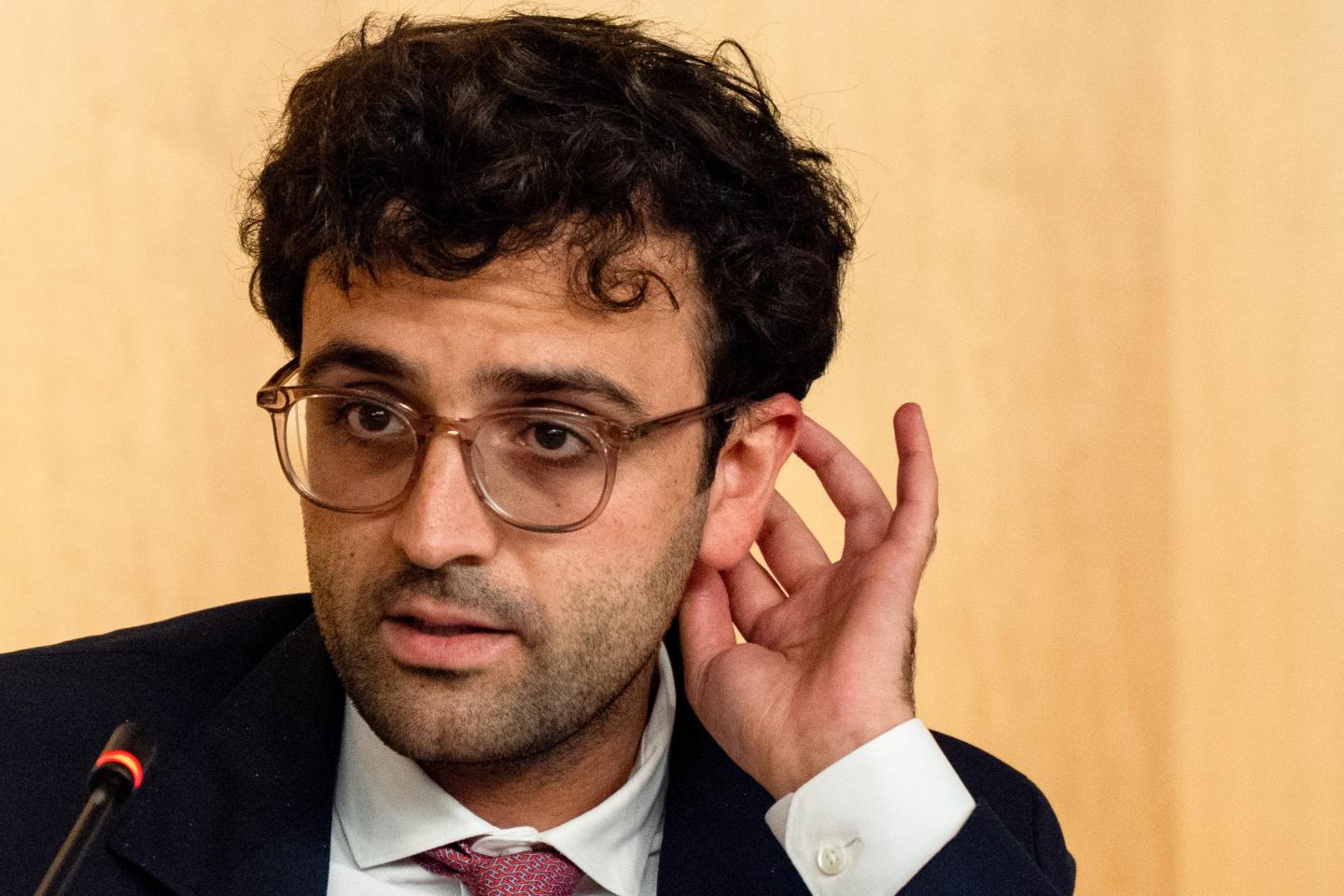
Prediction market Kalshi has exploded in recent years, reaching a $22 billion valuation. For the company’s 30-year-old CEO, Tarek Mansour, getting there hasn’t meant following the wisdom of business school professors or management gurus—it’s been ignoring advice altogether.
“The worst advice that most people get is that you should go and seek out a bunch of advice. There’s really no recipe to any of this stuff,” Mansour told The New York Times in a recent interview. “People are over-reliant on advice, and people love giving advice because it makes them feel smart and powerful. It’s usually mostly trash.”
Mansour’s skepticism of conventional founder wisdom is backed by his own track record: He and cofounder Luana Lopes Lara have built Kalshi into a platform with four million active users and became self-made billionaires, with estimated net worths of about $2.6 billion each.
And when it comes to his own business approach, Mansour said he’s largely learned by doing—opting to even ignore management books or podcasts.
“I have a lot of, I’m gonna make it up as I go,” he said on a Sequoia Capitol podcast last month.
“Both of us, we’re probably very sort of entrepreneurially illiterate,” Mansour said, referring to himself and his cofounder, Lopes Lara. “We haven’t read all the books, we haven’t watched all the podcasts.”
Kalshi’s cofounders went from MIT classmates to billionaire finance disruptors
Mansour and Lopes Lara met as classmates at MIT, and with companies like Goldman Sachs, Palantir, Citadel, and Bridgewater Associates on their collective resumes, they were likely headed down lucrative careers in tech and finance.
Instead, less than a year after graduating, they set out to build Kalshi in 2018—initially envisioning the company as a financial exchange where users could buy and sell contracts tied to the outcomes of real-world events. The early years, however, were anything but easy. Kalshi faced regulatory hurdles as it sought approval for its novel business model, and Mansour admitted there were countless times when he wanted to give up.
“Every day you wake up and you’re like, ‘What am I doing?’” he said.
By 2020, Kalshi was approved as a financial exchange by the Commodity Futures Trading Commission, and it won approval to offer contracts tied to U.S. election outcomes in 2024. Its growth since has been exponential. Kalshi was valued at $2 billion June 2025 before surging to $22 billion in May 2026. Earlier this summer, the Financial Times reported that the company was exploring a new funding round that could value it at $40 billion.
And if he had to give advice to other aspiring founders, Mansour’s message is simple: take risks.
“Try as much as you can to take as much risk as you can,” he said, but adding a caveat to his own disdain for advice: “don’t take my advice as gospel.”
For Kalshi, taking risk has a potential $36 billion price tag from New York
For all of Mansour’s skepticism about conventional wisdom—and being an industry disruptor—his willingness to take risks has put Kalshi in the crosshairs over allegations of insider trading and criticism that its contracts amount to gambling.
New York filed a lawsuit against Kalshi last week, alleging the company is operating an unlicensed gambling platform. The state is asking the court to impose civil penalties of $100,000 for each unauthorized sports‑betting offer, which the filing estimates could total about $36 billion.
Appearing on CNBC the day after the suit was filed, Mansour defended Kalshi and said the company operates under federal rules.
“I think the more interesting thing that’s at play here is that you have an industry, the prediction market industry, that is disruptive, that is growing fast, consumers are adopting it, and it’s threatening a legacy incumbent industry that is unhappy about that,” he said.
Kalshi declined Fortune’s request for further comment.