
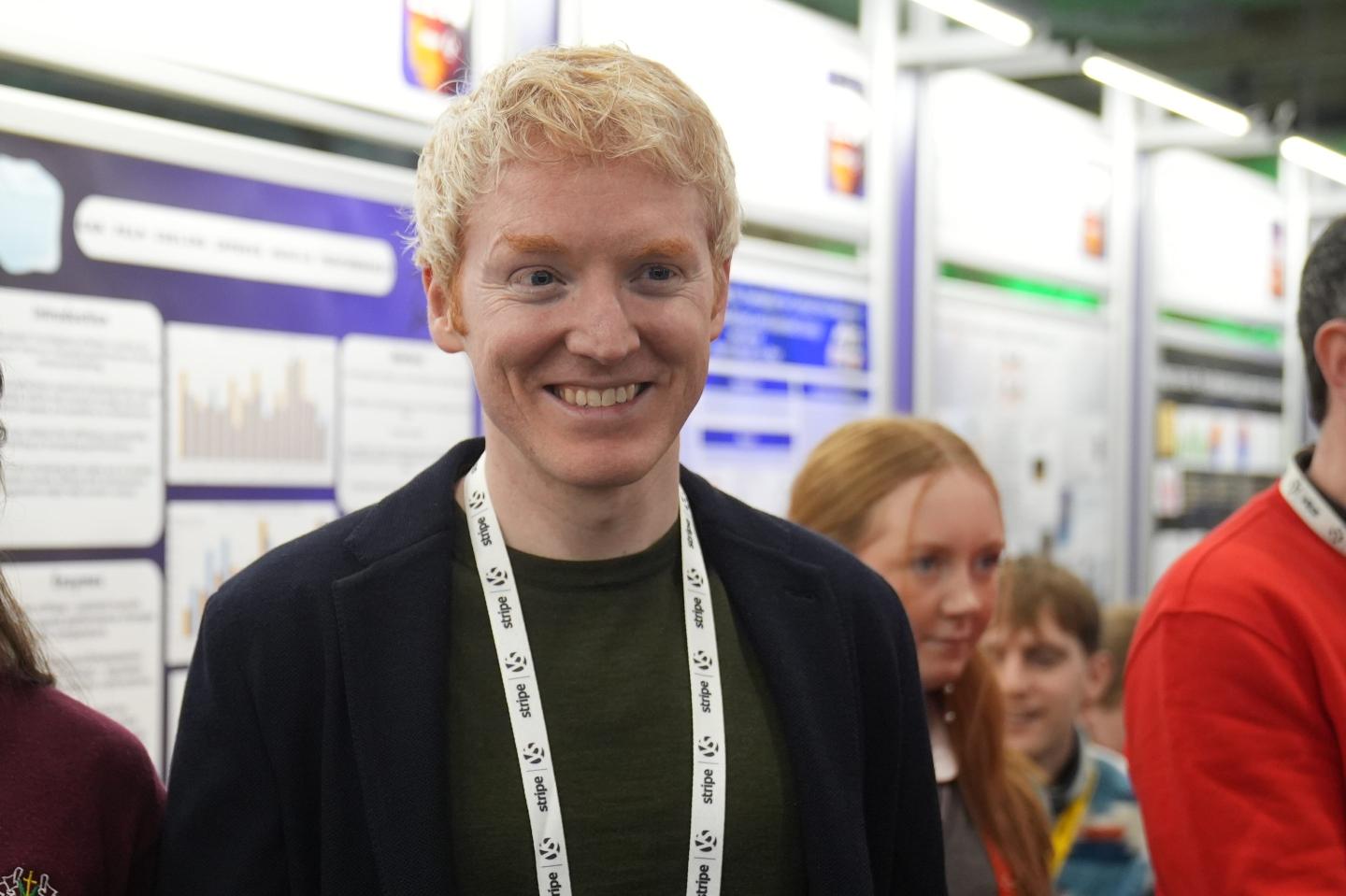
As artificial intelligence fuels a new startup boom, debate for students over whether to spend years—and potentially hundreds of thousands of dollars—earning a degree or dropping out to chase the next billion-dollar unicorn has intensified. But Patrick Collison, the billionaire cofounder and CEO of Stripe who dropped out of MIT (not once, but twice), recently told Gen Z they shouldn’t feel pressured to rush that decision.
“When I was dropping out, people thought it was super weird,” Collison said last week at Y Combinator’s Startup School. “I think, overall, if you enjoy college, I think there’s no harm in finishing. I felt this real sense of urgency, which I think, in hindsight, was a bit unnecessary.”
The Irish entrepreneur first enrolled at MIT at just 16 to study mathematics. But within months he left to launch Auctomatic, an e-commerce software company, with his brother, John.
After selling the startup for $5 million, he then returned to MIT to study mathematics and physics. But a year later, he left again to start Stripe, a payments company now valued at $159 billion. And looking back, Collison said much of his urgency came from an unfounded feeling that he needed to be in a “speedrun” mode.
“I thought that a bunch of the opportunities in startups and in Silicon Valley were ephemeral and fleeting, and if we didn’t build it then, it wouldn’t be possible to do it in three or four years, and maybe all the opportunities would be gone,” Collison, who has a net worth of $17.5 billion, said.
“In hindsight, I think that was a poor intuition. It’s been pretty robustly and reliably the case over many decades that Silicon Valley has a surfeit of opportunities.”
Fortune reached out to Stripe for further comment.
Jeff Bezos encourages Gen Z to consider staying enrolled in college because drop out success is the ‘exception’
One of Collison’s biggest takeaways was that students often think dropping out is an irreversible decision. In reality, he said, it’s much easier to change course than people fear.
“A lot of parents think that dropping out is very risky and will impugn your reputation for the rest of your life and so forth,” Collison said. “And as far as I can tell, nobody has ever cared. So I both think you don’t need to, but also the cost of doing so is diminutive.”
Collison encouraged young people to think of it as something they can return to if their plans change.
“It’s not totally a trapdoor,” Collison said. “You can drop out and in fact return.”
While some of the world’s most famous founders—including Mark Zuckerberg, Michael Dell, and Steve Jobs—built successful companies after leaving college early, many have also stressed that education and experience can be valuable. Jeff Bezos, for one, has argued that the traditional path may actually improve someone’s odds of entrepreneurial success.
“It is possible to be 18, 19, 20 years old, drop out of college and be a great entrepreneur,” Bezos said at Italian Tech Week last year. “We have famous examples of that working, Bill Gates, Mark Zuckerberg, etc. But these people are the exception.”
Bezos pointed to his own experience founding Amazon—now No. 1 on the Fortune 500—a little later in his career, rather than immediately after college, as evidence that time spent building skills and gaining perspective can be an advantage.
“I started Amazon when I was 30, not when I was 20, and I think that that extra 10 years of experience actually improved the odds that Amazon would succeed,” Bezos added. “So that would always be my advice, I finished college, and I think it’s been helpful to me.”
Mark Cuban and Jensen Huang echo Collison: AI is making entrepreneurship more accessible than ever
Whether students choose to finish college or not, Collison believes aspiring founders have one major advantage today: artificial intelligence has dramatically lowered the barriers to building a business.
Drawing on Stripe’s own data, he said the company is seeing an unprecedented surge in entrepreneurship, with nearly twice as many new businesses launching on the platform as a year ago. Moreover, those startups are performing better, with more reaching revenue milestones of $1 million, $5 million, and $10 million than in previous years.
“It seems to be a better time than ever to start a business,” Collison said.
Speaking at the same Y Combinator event, Jensen Huang said he is actually “jealous” of the opportunities available to today’s founders.
“This is absolutely the single greatest time to start a company,” he said.
“Let the suffering come to you a little bit at a time,” Huang added. “Don’t imagine how hard it’s going to be and let all of that turn into anxiety and not doing something about it. You want to imagine in your head, ‘How hard can it be?’”
Billionaire Mark Cuban has expressed a similar view, arguing that AI is making it cheaper and easier than ever to launch a business—potentially with little more than a single founder.
“We haven’t seen the best or the craziest of what [AI is] going to be able to do,” Cuban told the High Performance podcast in an episode published last summer. “And not only do I think it’ll create a trillionaire, but it could be just one dude in the basement. That’s how crazy it could be.”