Your doctor is probably looking up your symptoms on their phone.
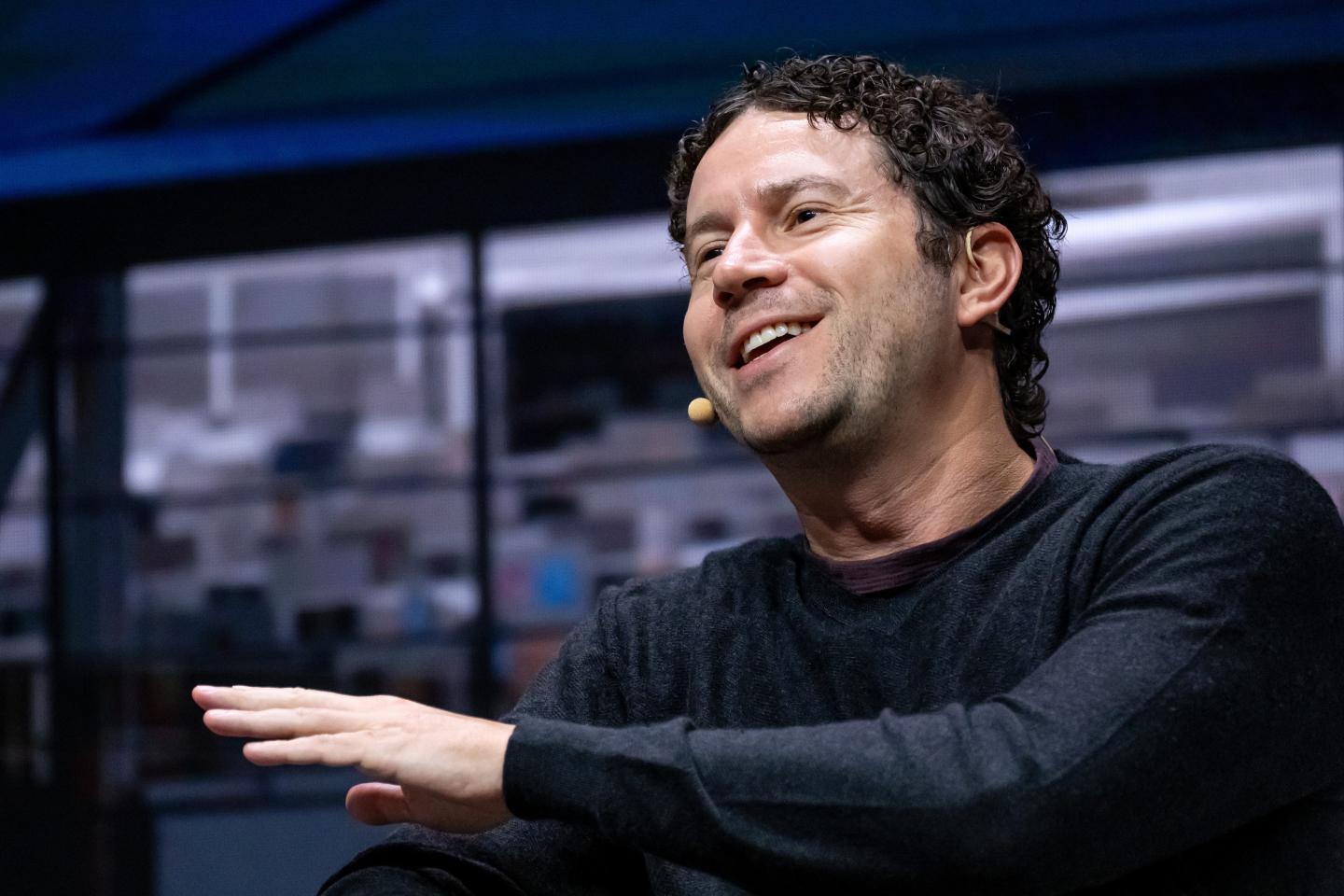
OpenEvidence, founded in 2021, is a free, ad-supported AI search engine for doctors that pulls answers straight from peer-reviewed medical journals at the point of care and labels how strong the evidence is. It’s become somewhat of the poster child of the medical AI boom.
In February, a Sequoia-led round valued the company at $1 billion. In the following months, that number grew to $3.5 billion by July with GV and Kleiner Perkins co-leading, $6 billion in October to $12 billion this January, in a round co-led by Thrive Capital and DST Global. That’s roughly $700 million raised in about a year.
Meanwhile, competitor Doximity has taken an enterprise approach. Best known as a professional networking platform for physicians, it now sells an AI assistant called Ask that helps doctors summarize patient notes, check drug interactions, and draft documentation. Ask is folded into paid, enterprise contracts with more than 150 health systems. Every answer runs through a human-review layer called PeerCheck, where physicians check AI output against the original sources it’s citing. Doximity posted $145.4 million in quarterly revenue this spring, up 5% year over year.
In mid-July, a new independent benchmark called NOHARM put both Doximity and OpenEvidence’s AI tools to the test, alongside OpenAI’s GPT-5.6 Sol and Anthropic’s Claude Fable 5. Built by researchers at Stanford, Harvard, and the ARISE network, it ran 1,100 real clinical cases through each model and collected roughly 13,000 physician annotations to score for patient harm. Doximity Ask came out on top. OpenEvidence contested the accuracy of Doximity’s score, however.
“We believe that a rigorous study methodology does not allow AIs with perfect memories to ask for ‘re-tests.’” CEO Daniel Nadler told me via email. “We suspect this would not pass peer review. To be clear, the NOHARM study is not even peer-reviewed—the basic table stakes requirement in medicine for even the flimsiest medical conclusions.”
But the finding isn’t really about who “won.” It’s that even the best-performing models still miss things. Across every AI system tested, 76.6% of harmful errors were omissions, meaning the AI left something out, not that it stated something factually wrong.
Eric Topol, cardiologist, Scripps Research scientist, and co-chair of Doximity’s PeerCheck program, has spent his career studying diagnostic error. He said that distinction is significant: “Errors of omission need to be brought as close to zero as possible,” he told me, adding that today’s models maintain an “illusion of readiness” that has followed medical AI even as it improves. (NOHARM still noted that doctors equipped with AI give better care compared to those without)
The regulatory backdrop makes NOHARM’s timing pointed. The FDA loosened its stance on AI-powered clinical decision-support tools this January, giving them more room to operate as long as doctors can independently check the AI’s reasoning. States have moved in the opposite direction, passing more than a dozen new laws in 2026 governing AI use in healthcare (most requiring a human to sign off before any AI-assisted decision reaches a patient). Malpractice law hasn’t caught up to either trend: courts are still untangling who’s liable, the doctor, the hospital, or the AI vendor, when a model’s suggestion turns out to be wrong.
That legal gray zone stands to be an early signal of what regulators, hospital systems, and the next wave of investors will start asking.
See you tomorrow,
Lily Mae Lazarus
X: @LilyMaeLazarus
Email: lily.lazarus@fortune.com
Submit a deal for the Term Sheet newsletter here.
Joey Abrams curated the deals section of today’s newsletter. Subscribe here.
VENTURE DEALS
- Fish Audio, a Palo Alto, Calif.-based developer of AI voice models for voice cloning and text-to-speech, raised $52 million in seed funding. Coreline Ventures and Capital Today led the round and were joined by 359 Capital, Play Time, HF0, Parable, Carya Venture Partners, Alphalist Partners, and angel investors.
- Harmony, a New York City-based AI platform that automates employee service requests, raised $34 million in funding. Lightspeed Venture Partners led the round and was joined by Hitachi Ventures, Fin Capital, Mercer Ventures, Operator Partners, and angel investors.
- Freehand, a San Francisco-based developer of a platform where AI agents manage supply-chain spend for companies, raised $75 million in seed funding. Battery Ventures led the round and was joined by Penny Pritzker, Nexus Venture Partners, and NewRoad Capital Partners.
- Act Security, a Tel Aviv, Israel-based cloud security company, raised $60 million in funding, including a $40 million in Series A round led by Notable Capital and a $20 million seed round led by Team8 and Bessemer Venture Partners.
- Greyparrot, a London, U.K.-based AI waste intelligence company, raised $27 million in Series B funding. Omar Mir led the round.
- Weave, a San Francisco-based platform that tracks engineering work and measures how much of it is done by AI versus human developers, raised $13.5 million in Series A funding. Standard Capital led the round and was joined by YCombinator, Moonfire, and others.
- Sent, a New York City-based API that lets software companies send SMS, WhatsApp, and RCS messages through a single integration, raised $12 million in Series A funding. Companyon Ventures led the round and was joined by Bessemer Venture Partners, UIF, CP Overture, and others.
- Antares Labs, a Chicago, Ill.-based developer of AI agents designed to automate real estate functions including sales, leasing, maintenance, collections, and customer communications, raised $7.3 million in seed funding. Fifth Wall led the round.
- Aurenar, a St. Louis, Mo.-based developer of a non-invasive device designed to reduce inflammation-related complications in ICU patients, raised $5.7 million in seed funding. Go Red for Women Venture Fund and Solas BioVentures led the round.
- Entravia, a Minneapolis, Minn-based developer of workflow software that modernizes PEO sales infrastructure, raised $2 million in seed funding. Matchstick led the round and was joined by M25 and others.
- Frenos, a Charlotte, NC, OT security company, raised $1.5 million in seed funding. Momenta and Exposition Ventures led the round.
PRIVATE EQUITY
- FTV Capital invested $30 million in COR, a San Francisco-based AI-powered project profitability platform built for agencies and professional services firms.
- Capitol Meridian Partners acquired a majority stake in RH Aero Systems, a Mason, Ohio-based provider of aviation support equipment and lifecycle services. Financial terms were not disclosed.
- Cyera, backed by Blackstone Growth, agreed to acquire Oasis Security, a New York City-based identity management company. Financial terms were not disclosed.
- Keller Williams, a portfolio company of Stone Point Capital, acquired The Jason Mitchell Group, a Scottsdale, Ariz.-based real estate brokerage. Financial terms were not disclosed.
- Micross Components, backed by Behrman Capital, acquired AEMtec, a Berlin, Germany-based provider of engineering and electronic manufacturing services specializing in complex micro- and optoelectronic modules and systems. Financial terms were not disclosed.
FUNDS + FUNDS OF FUNDS
- Align Ventures, a New York City-based venture capital firm, raised $125 million for its second Early-Stage Fund focused on beauty, personal care, health, wellness, pet, and home businesses.