
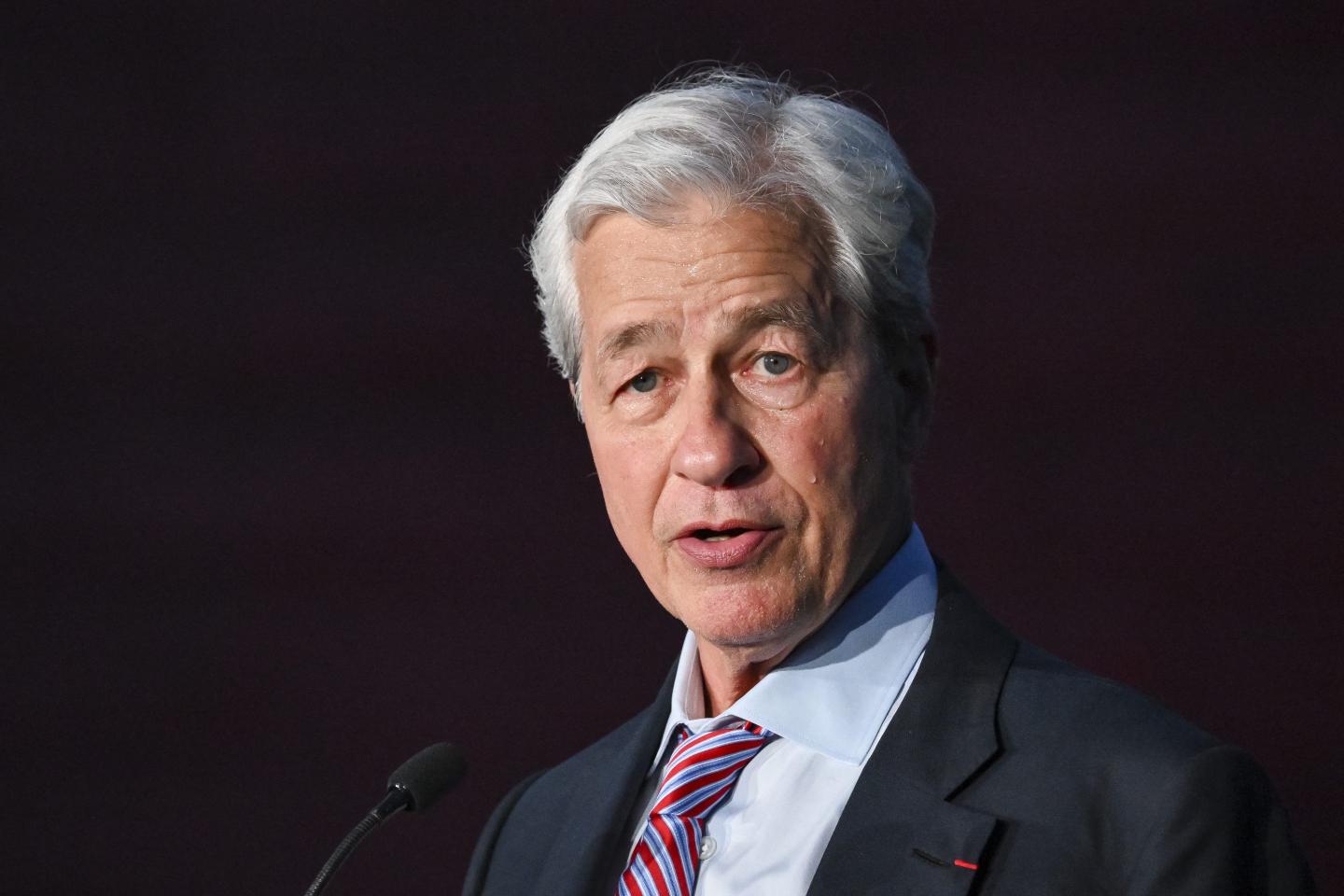
Jamie Dimon, one of the banking industry’s longest-serving CEOs, has thoughts on why some CEOs rise to the occasion while others flounder—and it has little to do with how much they know about business.
Dimon, who has served as CEO of JPMorgan Chase, the largest U.S. bank by market cap, for 20 years, said on the Master Investor Podcast in an interview published on Monday that, more than anything, insecurity is one of the biggest threats to a CEO’s career and their company’s success.
As Dimon puts it, when executives climb the corporate ladder, they often go from being an expert overseeing one area of the business they know well to a generalist responsible for other areas of the company of which they’re unfamiliar.
“The bigger job you get, the less you know—literally—about the job,” he told the podcast’s host Wildfred Frost.
Some CEOs handle that transition well, he said. They seek out people with expertise they lack and don’t get embarrassed when they don’t know something.
But for others, this change is a recipe for insecurity.
“It becomes PowerPoints, you know, make them look good, don’t tell them the bad news. And that is what causes the problem,” he said.
Dimon said this type of insecurity, more than arrogance, speaks to a deeper weakness in leadership that causes other issues. A CEO needs to be able to absorb criticism and turn it into a plan for improvement, especially when it comes to customer complaints, he said.
“You’re not going to hurt my feelings by telling me we have a crappy product,” he said. “If you’re right, I’m gonna thank you for letting me know.”
Dimon’s record gives his leadership advice added weight. During his tenure, he has turned JPMorgan into a $917 billion banking giant. His “fortress balance sheet” strategy, which emphasizes high liquidity and conservative risk management, was key to helping the bank survive the 2008 recession. Dimon has also helped grow the bank over the past two decades by acquiring competitors in turmoil, such as Bear Stearns in 2008 and, more recently, First Republic Bank in 2023.
His latest comments on insecurity are consistent with his previous warnings that “bureaucracy, complacency, and arrogance,” can take down otherwise successful companies.
In April, Dimon said the best way to tackle these problems is to “get rid of the jerks,” or bureaucratic managers who care more about the process than the outcome. Holding back information, as might happen with an insecure CEO, breeds “rope-a-dope politics,” which he has also said creates unnecessary debate and hinders results.
Dimon’s philosophy aligns with that of other successful current and former CEOs. Microsoft CEO Satya Nadella previously told Fortune he encouraged his employees to maintain a growth mindset rather than be content and complacent. He also tried to shift the company from a “know-it-all” culture to a “learn-it-all” culture where employees are encouraged to approach problems with curiosity. Ray Dalio, the founder and former CEO of Bridgwater Associates, also pushed for “radical transparency” during his tenure, encouraging employees to challenge one another openly and confront mistakes without defensiveness.
The JPMorgan CEO, who also serves as chairman of the board, practices what he preaches. For the past 20 years, he has stepped out of every board meeting to give board members time to discuss without the pressure of his “forceful” personality, he said.
He has previously said leaders like himself must earn the trust of their employees every day. Part of doing that, he argued, is being willing to admit mistakes without taking criticism personally.
“I’m not trying to do the thing that I want to do, I want to do the right thing for the company,” he said Monday.