
• Home
  • Latest
  • Fortune 500
  • Finance
  • Tech
  • Leadership
  • Lifestyle
  • Rankings
  • Multimedia

Trendingnow

1

26 Meta employees accuse Mark Zuckerberg of using AI to target 8,000 layoffs against workers on medical, parental or family leave

2

FedEx CEO says we are in the middle of the biggest supply chain shift he’s seen in 35 years: ‘We are the referendum’

3

He sold his last company to Palantir. Now he's betting $32 million that robots can fix construction's labor crisis

1

26 Meta employees accuse Mark Zuckerberg of using AI to target 8,000 layoffs against workers on medical, parental or family leave

2

FedEx CEO says we are in the middle of the biggest supply chain shift he’s seen in 35 years: ‘We are the referendum’

3

He sold his last company to Palantir. Now he's betting $32 million that robots can fix construction's labor crisis
Economysupply chains
Asia

Trump has tried to decouple from China, but ending U.S. reliance on the country would cost America nearly $14 trillion, EY warns

Sasha Rogelberg
By
Sasha Rogelberg
Sasha Rogelberg
Reporter
Down Arrow Button Icon
Sasha Rogelberg
By
Sasha Rogelberg
Sasha Rogelberg
Reporter
Down Arrow Button Icon
July 16, 2026, 11:59 AM ET
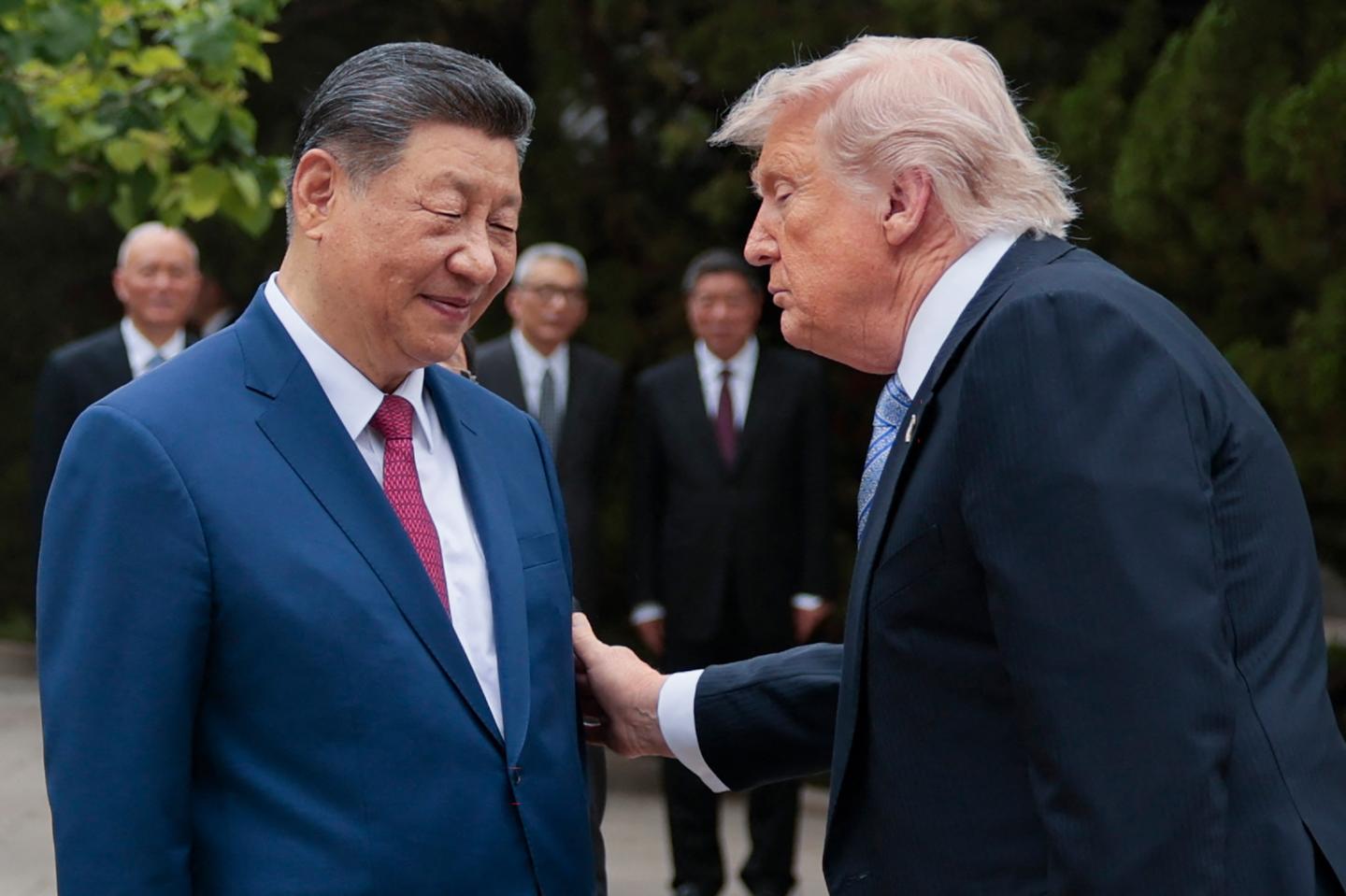
Donald Trump looks at Xi Jinping and puts a hand on his arm.
President Donald Trump has taken efforts, such as tariffs, to further decouple the U.S. from China.Evan Vucci/POOL/AFP—Getty Images
Add Fortune on Google for similar content.

As the Trump administration takes action to reduce its reliance on China, economists warn the cost for Europe and the U.S. to decouple from the country would be astronomical, and in some ways, completely unrealistic.

Recommended Video

A new EY-Parthenon analysis calculated that the U.S., Eurozone, and UK would need to collectively invest an additional $23.6 trillion over the next 25 years in order to effectively stop relying on China in highly exposed sectors. The U.S. alone would have to invest $13.7 trillion, more than half of that sum, which includes the costs to build infrastructure, as well as improve research and development, manufacturing, software, transportation networks, and workforce training.

President Donald Trump has intensified U.S. efforts to limit reliance on China, including a 10% import tax under Section 122, which expires later this month, as well as additional levies from 7.5% to 100% under Section 301, which allows for the implementation of tariffs for alleged unfair trade practices, such as forced labor. Those duties are on top of efforts that came before Trump’s second term to increase domestic manufacturing, such as former President Joe Biden’s CHIPS Act to spur America’s semiconductor chip industry.

Still, the U.S. heavily relies on China. The U.S. is the recipient of 14% of all of China’s exports.While this is down from 20% in 2017, America still received 45% of its smartphone and telephone equipment, worth $51.5 billion, and 76% of toys, worth $14.4 billion, from China in 2024, according to the United Nations Comtrade database. Last month, China’s export growth accelerated 27% from a year earlier, recovering from a double-digit year-over-year dip for most of the year, according to China customs data.

These new calculations are an eye-opener for just how difficult it is to adopt a protectionist ethos in a globalized world, said Mats Persson, EY-Parthenon UK macro and geostrategy leader. Localization efforts, such as the U.S. push for domestic manufacturing and export bans on AI hardware, help create economic independence at crucial times of uncertainty. But that mandate has always been balanced with the desire for economic expansion, which is boosted by, oftentimes, cheaper labor and manufacturing costs from importing goods overseas. While this has always been the case, the AI boom and geopolitical tensions have made balancing these two ideologies an urgent matter, Persson suggested.

“You have this dynamic, this dialect between these two forces, which has always been there for many hundreds of years in one way or another, but which is now so pronounced,” Persson told Fortune. 

Striking a balance between localization and globalization

For both the U.S. and Europe, a massive push toward localization—particularly through decoupling from China—is just plain unrealistic: Chinese factory prices for certain components are between 20% to 100% cheaper than in the West as a result of the scale of production and supply chain density, meaning that for countries like the U.S. to establish supply chains independent from China, inflation would become structurally higher, rising about 1% to 2%. 

Managing high prices in the U.S. would mean implementing the equivalent of an Inflation Reduction Act per year, Persson said, referring to the landmark 2022 law that authorized about $891 billion in investments toward clean energy production, lowering prescription drug prices, and addressing the federal deficit. In the European Union, if supply-chain and infrastructure changes were to come from taxpayer-funded sources, the EU budget would have to effectively double, according to EY-Parthenon.

“We’re not going to achieve these levels of investments,” Persson said.

Countries can still make realistic pushes toward localization, however. The U.S., in particular, is well-positioned to do so compared to Europe because of the depth of its capital markets, the power of the U.S. dollar as the global reserve currency, and greater energy independence compared to EU countries, according to Persson. While the U.S. has to depend on China for key resources like critical minerals that will limit the independence of its semiconductor supply chains, the country can improve its pipeline of supply-chain talent to increase manufacturing productivity. As a result of a skills gap in manufacturing enabled by decades of offshoring, a projected 2.1 million manufacturing jobs may be unfulfilled by 2030, according to Deloitte and The Manufacturing Institute.

There’s more outside of the U.S. and Europe’s control: China has long-term industrial policies that have made it incredibly efficient, and though less nimble, it has more experience than the U.S., and particularly the EU, in making policy decisions based on long-term cycles. The EU, in particular, faces challenges having to balance the democracies and policies of its 27-member coalition.

However, the world was also once more globalized than it is today in some ways. Prior to Russia being excluded from the G8 in 2014 following its annexation of Crimea, parts of Europe were directly dependent on Russia for oil and gas. Following Russia’s invasion of Ukraine, the West further distanced itself from Russia, which formed closer trade partnerships with China and India. It’s a testament to ever-changing trade dynamics and evidence massive supply chain changes aren’t always within a country’s control, Persson noted.

“It’s very hard to see a world in which we go back to that level of globalization within the next couple of decades, nor do I think this is in the way the end of globalization,” he said. “So it’s probably going to be a rather messy, non-linear type of globalization.”

Subscribe to Fortune Gulf Brief. Every Tuesday, this new newsletter delivers clear-eyed, authoritative intelligence on the deals, decisions, policies, and power shifts shaping one of the world’s most consequential regions, written for the people who need to act on it. Sign up here.
About the Author
Sasha Rogelberg
By Sasha RogelbergReporter
LinkedIn iconTwitter icon

Sasha Rogelberg is a reporter and former editorial fellow on the news desk at Fortune, covering retail and the intersection of business and popular culture.

See full bioRight Arrow Button Icon
Add Fortune on Google for similar content.

Latest in Economy

Finance
Lorem ipsum dolor sit amet, consectetur adipiscing elit, sed do eiusmod tempor incididunt ut labore et dolore magna aliqua. Ut enim ad minim veniam
By Fortune Editors
October 20, 2025
Finance
Lorem ipsum dolor sit amet, consectetur adipiscing elit, sed do eiusmod tempor incididunt ut labore et dolore magna aliqua. Ut enim ad minim veniam
By Fortune Editors
October 20, 2025
Finance
Lorem ipsum dolor sit amet, consectetur adipiscing elit, sed do eiusmod tempor incididunt ut labore et dolore magna aliqua. Ut enim ad minim veniam
By Fortune Editors
October 20, 2025
Finance
Lorem ipsum dolor sit amet, consectetur adipiscing elit, sed do eiusmod tempor incididunt ut labore et dolore magna aliqua. Ut enim ad minim veniam
By Fortune Editors
October 20, 2025
Finance
Lorem ipsum dolor sit amet, consectetur adipiscing elit, sed do eiusmod tempor incididunt ut labore et dolore magna aliqua. Ut enim ad minim veniam
By Fortune Editors
October 20, 2025
Finance
Lorem ipsum dolor sit amet, consectetur adipiscing elit, sed do eiusmod tempor incididunt ut labore et dolore magna aliqua. Ut enim ad minim veniam
By Fortune Editors
October 20, 2025

Most Popular

Finance
Lorem ipsum dolor sit amet, consectetur adipiscing elit, sed do eiusmod tempor incididunt ut labore et dolore magna aliqua. Ut enim ad minim veniam
By Fortune Editors
October 20, 2025
Finance
Lorem ipsum dolor sit amet, consectetur adipiscing elit, sed do eiusmod tempor incididunt ut labore et dolore magna aliqua. Ut enim ad minim veniam
By Fortune Editors
October 20, 2025
Finance
Lorem ipsum dolor sit amet, consectetur adipiscing elit, sed do eiusmod tempor incididunt ut labore et dolore magna aliqua. Ut enim ad minim veniam
By Fortune Editors
October 20, 2025
Finance
Lorem ipsum dolor sit amet, consectetur adipiscing elit, sed do eiusmod tempor incididunt ut labore et dolore magna aliqua. Ut enim ad minim veniam
By Fortune Editors
October 20, 2025
Finance
Lorem ipsum dolor sit amet, consectetur adipiscing elit, sed do eiusmod tempor incididunt ut labore et dolore magna aliqua. Ut enim ad minim veniam
By Fortune Editors
October 20, 2025
Finance
Lorem ipsum dolor sit amet, consectetur adipiscing elit, sed do eiusmod tempor incididunt ut labore et dolore magna aliqua. Ut enim ad minim veniam
By Fortune Editors
October 20, 2025
Fortune Secondary Logo
Rankings
  • 100 Best Companies
  • Fortune 500
  • Global 500
  • Fortune 500 Europe
  • Most Powerful Women
  • World's Most Admired Companies
  • See All Rankings
  • Lists Calendar
Sections
  • Finance
  • Fortune Crypto
  • Features
  • Leadership
  • Health
  • Commentary
  • Success
  • Retail
  • Mpw
  • Tech
  • Lifestyle
  • CEO Initiative
  • Asia
  • Politics
  • Conferences
  • Europe
  • Newsletters
  • Personal Finance
  • Environment
  • Magazine
  • Education
Customer Support
  • Frequently Asked Questions
  • Customer Service Portal
  • Privacy Policy
  • Terms Of Use
  • Single Issues For Purchase
  • International Print
Commercial Services
  • Advertising
  • Fortune Brand Studio
  • Fortune Analytics
  • Fortune Conferences
  • Business Development
  • Group Subscriptions
About Us
  • About Us
  • Press Center
  • Work At Fortune
  • Terms And Conditions
  • Site Map
  • About Us
  • Press Center
  • Work At Fortune
  • Terms And Conditions
  • Site Map
  • Facebook icon
  • Twitter icon
  • LinkedIn icon
  • Instagram icon
  • Pinterest icon

Latest in Economy

The global rich like Peter Thiel are eyeing the exit door. Argentina wants to be a ‘serious contender’ in the migration game
InvestingPeter Thiel
The global rich like Peter Thiel are eyeing the exit door. Argentina wants to be a ‘serious contender’ in the migration game
By Mia OsmonbekovJuly 16, 2026
37 minutes ago
Donald Trump looks at Xi Jinping and puts a hand on his arm.
Economysupply chains
Trump has tried to decouple from China, but ending U.S. reliance on the country would cost America nearly $14 trillion, EY warns
By Sasha RogelbergJuly 16, 2026
2 hours ago
lj
SuccessLeBron James
The $500 million LeBron James sweepstakes: 5 cities race for the right to boost their economy with the chosen one
By Joshua HongJuly 16, 2026
2 hours ago
Jamie Dimon surrounded by construction workers.
SuccessCareers
JPMorgan CEO Jamie Dimon says 300,000 workers are needed to rebuild American shipbuilding—with jobs paying $100,000 without a college degree
By Preston ForeJuly 16, 2026
2 hours ago
Europe optimized its supply chains for cost. Now it must pay for resilience  
Commentarysupply chains
Europe optimized its supply chains for cost. Now it must pay for resilience  
By Richard SaynorJuly 16, 2026
3 hours ago
US Federal Reserve Chair Kevin Warsh testifies during a Senate Banking Committee hearing titled "The Semiannual Monetary Policy Report to the Congress" on Capitol Hill in Washington, DC, on July 15, 2026.
EconomyBonds
Warsh’s Fed plan means it’s time to read the bond market backwards, says Morgan Stanley chief—and it could be great news for borrowers and homeowners
By Eleanor PringleJuly 16, 2026
4 hours ago

Most Popular

26 Meta employees accuse Mark Zuckerberg of using AI to target 8,000 layoffs against workers on medical, parental or family leave
Law
26 Meta employees accuse Mark Zuckerberg of using AI to target 8,000 layoffs against workers on medical, parental or family leave
By Barbara Ortutay, Alexandra Olson and The Associated PressJuly 15, 2026
1 day ago
FedEx CEO says we are in the middle of the biggest supply chain shift he’s seen in 35 years: ‘We are the referendum’
C-Suite
FedEx CEO says we are in the middle of the biggest supply chain shift he’s seen in 35 years: ‘We are the referendum’
By Fortune EditorsJuly 15, 2026
1 day ago
He sold his last company to Palantir. Now he's betting $32 million that robots can fix construction's labor crisis
Innovation
He sold his last company to Palantir. Now he's betting $32 million that robots can fix construction's labor crisis
By Lily Mae LazarusJuly 15, 2026
1 day ago
Jamie Dimon understands why people are anti-rich: 'We have, in fact, left the lower-income folks behind' and 'that's kind of annoying'
Economy
Jamie Dimon understands why people are anti-rich: 'We have, in fact, left the lower-income folks behind' and 'that's kind of annoying'
By Eleanor PringleJuly 15, 2026
1 day ago
MacKenzie Scott, Melinda French Gates, and Lauren Sánchez Bezos are rewriting the rules of billionaire giving—one quietly, one strategically, one very publicly
Newsletters
MacKenzie Scott, Melinda French Gates, and Lauren Sánchez Bezos are rewriting the rules of billionaire giving—one quietly, one strategically, one very publicly
By Sydney LakeJuly 14, 2026
2 days ago
After donating $48 billion to the Gates Foundation, Warren Buffett is quietly ending one of the biggest philanthropic relationships in history
North America
After donating $48 billion to the Gates Foundation, Warren Buffett is quietly ending one of the biggest philanthropic relationships in history
By Marco Quiroz-GutierrezJuly 14, 2026
2 days ago

© 2026 Fortune Media IP Limited. All Rights Reserved. Use of this site constitutes acceptance of our Terms of Use and Privacy Policy | CA Notice at Collection and Privacy Notice | Do Not Sell/Share My Personal Information
FORTUNE is a trademark of Fortune Media IP Limited, registered in the U.S. and other countries. FORTUNE may receive compensation for some links to products and services on this website. Offers may be subject to change without notice.