• Home
  • Latest
  • Fortune 500
  • Finance
  • Tech
  • Leadership
  • Lifestyle
  • Rankings
  • Multimedia

Trendingnow

1

Iran just crossed Trump's red line for resuming all-out war as fighting continues to escalate with no end in sight

2

Indeed chief economist: Aging Baby Boomers are America's real labor problem, not AI

3

U.S. companies have finally gotten $71 billion in tariff refunds, but they’re using it to offset inflation caused by the Iran war

1

Iran just crossed Trump's red line for resuming all-out war as fighting continues to escalate with no end in sight

2

Indeed chief economist: Aging Baby Boomers are America's real labor problem, not AI

3

U.S. companies have finally gotten $71 billion in tariff refunds, but they’re using it to offset inflation caused by the Iran war
EconomyIran

Trump’s U-turn on Iran sanctions would unravel decades of curbs

By
Daniel Flatley
Daniel Flatley
,
Magdalena Del Valle
Magdalena Del Valle
,
Jennifer A. Dlouhy
Jennifer A. Dlouhy
,
Jeff Mason
Jeff Mason
, and
Bloomberg
Bloomberg
Down Arrow Button Icon
By
Daniel Flatley
Daniel Flatley
,
Magdalena Del Valle
Magdalena Del Valle
,
Jennifer A. Dlouhy
Jennifer A. Dlouhy
,
Jeff Mason
Jeff Mason
, and
Bloomberg
Bloomberg
Down Arrow Button Icon
June 28, 2026, 2:44 PM ET
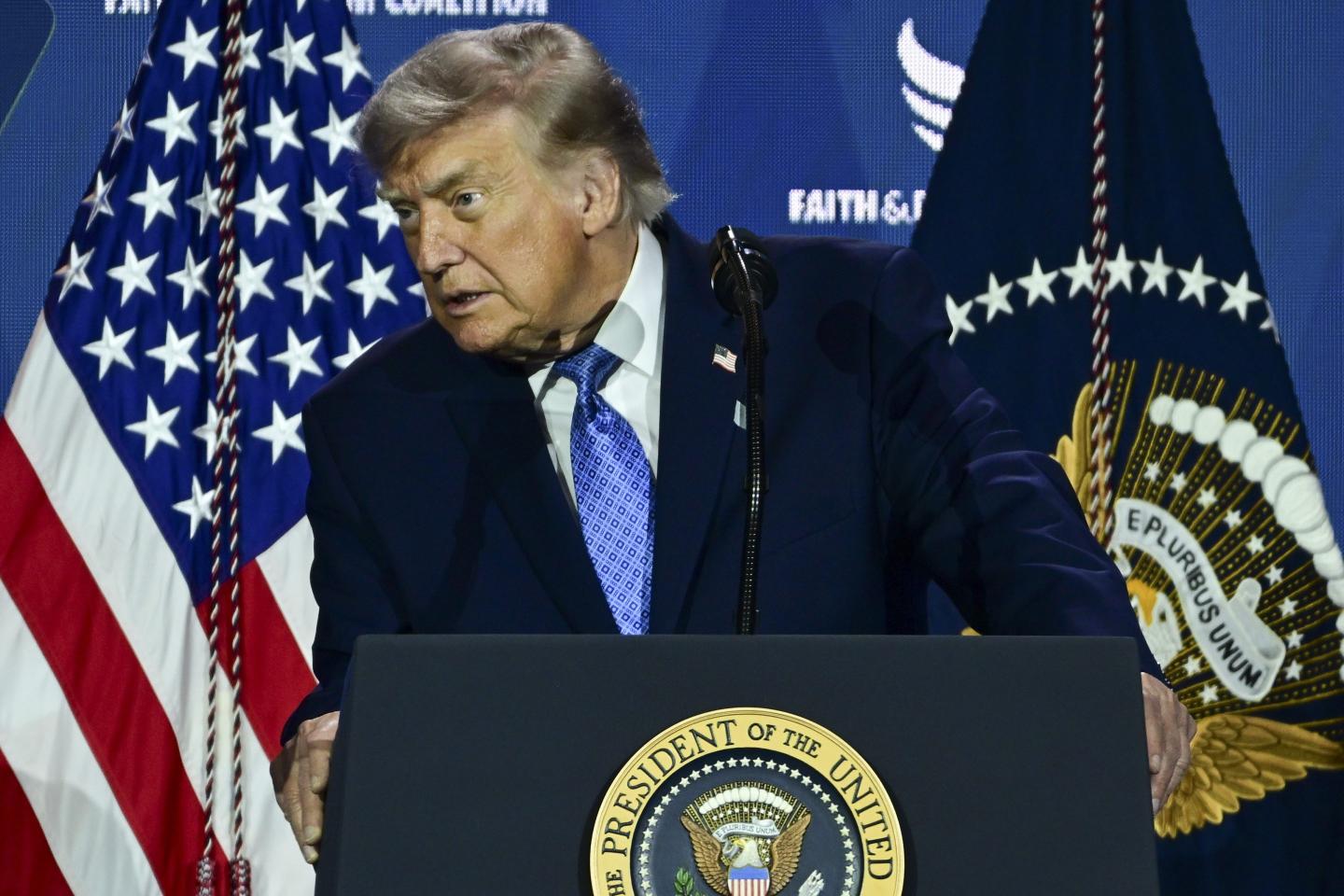
President Donald Trump at the Faith and Freedom Coalition's conference 2026 in Washington, DC, on June 26, 2026.
President Donald Trump at the Faith and Freedom Coalition's conference 2026 in Washington, DC, on June 26, 2026.Kyle Mazza/Anadolu via Getty Images
Add Fortune on Google for similar content.

The Trump administration’s effort to unwind decades of sanctions as part of a deal to end the war with Iran has created a head-spinning situation for governments, banks and other companies as they contemplate a shifting patchwork of new permissions and old restrictions.

Recommended Video

Following the revolution in 1979, Iran became one of the most sanctioned nations on Earth over its nuclear program and support for regional militias. But the White House is now orchestrating a stunning reversal as part of a broader deal to open the Strait of Hormuz, lower global energy prices and end its unpopular war.

It’s hardly been a linear process. On Friday, President Donald Trump accused Iran of violating a fragile ceasefire and US Central Command launched fresh strikes on Iranian targets. There’s also continuing disagreements that could unravel the deal. 

Still, the pace and scale of the effort has stunned longtime sanctions observers. The US has already authorized the sale of Iranian oil and fuels and pledged to unlock billions in frozen funds. 

The 14-point memorandum of understanding signed by Trump and Iranian President Masoud Pezeshkian on June 17 includes the removal of all US sanctions on Iran on “an agreed upon schedule.” It also directs the Treasury Department to issue waivers for existing sanctions for 60 days as technical negotiations unfold.

The disorienting change will be tricky to implement in a way that appeals to risk-averse US financial institutions and other firms, according to former Treasury officials, sanctions attorneys and industry sources monitoring the process.

“You want to be 100% sure that you’re within compliance,” said Adam Smith, a former senior adviser to the director of the Treasury’s Office of Foreign Assets Control, which oversees US sanctions. “One-off transactions that close within the 60 days could work but there may be challenges finding banks and other intermediaries willing to process transactions.” 

Amid the uncertainty, some Iran hawks are pushing the administration to shift from cash payments for Iranian oil sales to one requiring funds be placed in an escrow account where US officials can ensure it doesn’t go to proxy groups such as Hezbollah or Hamas, according to people familiar with the matter.

Read more: US Waives Iran Oil Sanctions as Peace Deal Brings Huge Shift

Trump has suggested publicly Iran’s money may go into escrow accounts controlled by the US, or that Tehran can only spend it on US farm goods — ideas that were not in the MOU and which Iran has mocked and rejected.

The idea of using the frozen funds to purchase US agricultural goods was first discussed about a month ago during an Oval Office meeting with Trump, Vice President JD Vance and other advisers on Iran, according to a person familiar with the matter. 

It was seen as a way to insulate the White House from the criticism Republicans leveled at the Obama administration for delivering Iran “pallets of cash,” the person said, adding they believed Iran had little choice but to accept such a mechanism.

Treasury Secretary Scott Bessent said on Wednesday Iran will invoice its oil sales in US dollars. The comments marked a departure from Washington’s longstanding goal of locking Tehran out of the US financial system.

To make that work, the US would need to enlist some of the biggest US or US-linked banks, which have been hesitant to handle any transactions that risk violating sanctions, according to a former Treasury official.

The first step came Monday when Treasury issued General License X, which allowed oil sales to be conducted in “US dollar-denominated funds.” 

Read more: Bessent Says Iran Talks Feature Shift to Dollar Invoicing

In addition to the license, companies are likely to request clear guidance from Treasury — such as comfort letters or fact sheets that are regularly issued for thorny cases — in order to reassure compliance departments it’s okay to participate in these sorts of transactions, according to a person with knowledge of the assurances the oil industry is planning to seek.

Firms are looking for the kind of guidance issued for Venezuela after the US captured then-president Nicolas Maduro in January, the person said.

“Financial institutions are typically more risk adverse than are their clients when we see sanctions programs unwind,” said Michael Huneke, a trade and national security lawyer at Morgan, Lewis & Bockius LLP. “I would expect them to be very cautious here as well.”

Rushing in and risking a possible violation is not an appealing gamble. BNP Paribas paid a nearly $1 billion settlement to the US in 2014 for allegedly violating sanctions on Iran and Sudan. Other banks also paid steep fines.

Successive US administrations, along with Congress, have levied hundreds of sanctions on Iran over the years, creating layers of restrictions designed to be difficult to remove in one fell swoop.

A 2015 law called the Iran Nuclear Agreement Review Act mandates that Congress review and approve any nuclear agreement reached with Iran. It was passed following the signing of the 2015 Joint Comprehensive Plan of Action, which was implemented during the administration of then-President Barack Obama — an agreement Trump repeatedly assailed before pulling out of it in 2018.

Some hawkish US lawmakers believe the administration may circumvent the law by saying the Iran MOU is not a nuclear agreement, even though it deals squarely with the issue, according to a person familiar with the matter.

If that happens, they are likely to place additional pressure on banks and companies doing business with Iran, reminding them of their obligations under US law, the person said, requesting anonymity to discuss internal deliberations.

The person pointed to a 2012 law called the Iran Threat Reduction and Syria Human Rights Act that requires companies that list on US stock exchanges to report certain Iran-related activities to the Securities and Exchange Commission, potentially exposing themselves to future congressional scrutiny should the deal fall apart.

“General License X is unprecedented in the relief it offers Iran,” said Chris Kennedy, economic statecraft lead at Bloomberg Economics. However, relying on waivers rather than new legislation means that “over the longer term, the Trump administration will face an uphill battle delivering on its promise to permanently remove sanctions on Iran.”

Subscribe to Fortune Gulf Brief. Every Tuesday, this new newsletter delivers clear-eyed, authoritative intelligence on the deals, decisions, policies, and power shifts shaping one of the world’s most consequential regions, written for the people who need to act on it. Sign up here.
About the Authors
By Daniel Flatley
See full bioRight Arrow Button Icon
By Magdalena Del Valle
See full bioRight Arrow Button Icon
By Jennifer A. Dlouhy
See full bioRight Arrow Button Icon
By Jeff Mason
See full bioRight Arrow Button Icon
By Bloomberg
See full bioRight Arrow Button Icon
Add Fortune on Google for similar content.

Latest in Economy

Finance
Lorem ipsum dolor sit amet, consectetur adipiscing elit, sed do eiusmod tempor incididunt ut labore et dolore magna aliqua. Ut enim ad minim veniam
By Fortune Editors
October 20, 2025
Finance
Lorem ipsum dolor sit amet, consectetur adipiscing elit, sed do eiusmod tempor incididunt ut labore et dolore magna aliqua. Ut enim ad minim veniam
By Fortune Editors
October 20, 2025
Finance
Lorem ipsum dolor sit amet, consectetur adipiscing elit, sed do eiusmod tempor incididunt ut labore et dolore magna aliqua. Ut enim ad minim veniam
By Fortune Editors
October 20, 2025
Finance
Lorem ipsum dolor sit amet, consectetur adipiscing elit, sed do eiusmod tempor incididunt ut labore et dolore magna aliqua. Ut enim ad minim veniam
By Fortune Editors
October 20, 2025
Finance
Lorem ipsum dolor sit amet, consectetur adipiscing elit, sed do eiusmod tempor incididunt ut labore et dolore magna aliqua. Ut enim ad minim veniam
By Fortune Editors
October 20, 2025
Finance
Lorem ipsum dolor sit amet, consectetur adipiscing elit, sed do eiusmod tempor incididunt ut labore et dolore magna aliqua. Ut enim ad minim veniam
By Fortune Editors
October 20, 2025

Most Popular

Finance
Lorem ipsum dolor sit amet, consectetur adipiscing elit, sed do eiusmod tempor incididunt ut labore et dolore magna aliqua. Ut enim ad minim veniam
By Fortune Editors
October 20, 2025
Finance
Lorem ipsum dolor sit amet, consectetur adipiscing elit, sed do eiusmod tempor incididunt ut labore et dolore magna aliqua. Ut enim ad minim veniam
By Fortune Editors
October 20, 2025
Finance
Lorem ipsum dolor sit amet, consectetur adipiscing elit, sed do eiusmod tempor incididunt ut labore et dolore magna aliqua. Ut enim ad minim veniam
By Fortune Editors
October 20, 2025
Finance
Lorem ipsum dolor sit amet, consectetur adipiscing elit, sed do eiusmod tempor incididunt ut labore et dolore magna aliqua. Ut enim ad minim veniam
By Fortune Editors
October 20, 2025
Finance
Lorem ipsum dolor sit amet, consectetur adipiscing elit, sed do eiusmod tempor incididunt ut labore et dolore magna aliqua. Ut enim ad minim veniam
By Fortune Editors
October 20, 2025
Finance
Lorem ipsum dolor sit amet, consectetur adipiscing elit, sed do eiusmod tempor incididunt ut labore et dolore magna aliqua. Ut enim ad minim veniam
By Fortune Editors
October 20, 2025
Fortune Secondary Logo
Rankings
  • 100 Best Companies
  • Fortune 500
  • Global 500
  • Fortune 500 Europe
  • Most Powerful Women
  • World's Most Admired Companies
  • See All Rankings
  • Lists Calendar
Sections
  • Finance
  • Fortune Crypto
  • Features
  • Leadership
  • Health
  • Commentary
  • Success
  • Retail
  • Mpw
  • Tech
  • Lifestyle
  • CEO Initiative
  • Asia
  • Politics
  • Conferences
  • Europe
  • Newsletters
  • Personal Finance
  • Environment
  • Magazine
  • Education
Customer Support
  • Frequently Asked Questions
  • Customer Service Portal
  • Privacy Policy
  • Terms Of Use
  • Single Issues For Purchase
  • International Print
Commercial Services
  • Advertising
  • Fortune Brand Studio
  • Fortune Analytics
  • Fortune Conferences
  • Business Development
  • Group Subscriptions
About Us
  • About Us
  • Press Center
  • Work At Fortune
  • Terms And Conditions
  • Site Map
  • About Us
  • Press Center
  • Work At Fortune
  • Terms And Conditions
  • Site Map
  • Facebook icon
  • Twitter icon
  • LinkedIn icon
  • Instagram icon
  • Pinterest icon

Latest in Economy

Looking back at the World Cup: Fans drank Boston dry, got permanent tattoos, sold out famous BBQ joints, and drove up small business revenue
RetailSports
Looking back at the World Cup: Fans drank Boston dry, got permanent tattoos, sold out famous BBQ joints, and drove up small business revenue
By Catherina GioinoJuly 19, 2026
29 minutes ago
A weak yen turned Tokyo into a steal. A strong shekel turned Tel Aviv into the world’s most expensive city to buy McDonald’s
EconomyIsrael
A weak yen turned Tokyo into a steal. A strong shekel turned Tel Aviv into the world’s most expensive city to buy McDonald’s
By Mia OsmonbekovJuly 19, 2026
3 hours ago
grocery
EconomyInflation
Agricultural economist explains why you’re paying 32% more for lettuce and 20% more for tomatoes — and why it will stay that way
By Elizabeth Canales and The ConversationJuly 19, 2026
5 hours ago
russia
PoliticsEconomics
Strong economies, strongman leaders: how China (and America’s) AI boom could create a new class of kowtowing elites
By José Kaire and The ConversationJuly 19, 2026
5 hours ago
Iran just crossed Trump’s red line for resuming all-out war as fighting continues to escalate with no end in sight
Middle EastIran
Iran just crossed Trump’s red line for resuming all-out war as fighting continues to escalate with no end in sight
By Jason MaJuly 18, 2026
14 hours ago
‘Dr. Doom’ Nouriel Roubini says we’re headed for universal basic income or ‘some form of socialism’ as AI revolutionizes work—He calls that optimistic
AIthe future of work
‘Dr. Doom’ Nouriel Roubini says we’re headed for universal basic income or ‘some form of socialism’ as AI revolutionizes work—He calls that optimistic
By Jason MaJuly 18, 2026
14 hours ago

Most Popular

Iran just crossed Trump's red line for resuming all-out war as fighting continues to escalate with no end in sight
Middle East
Iran just crossed Trump's red line for resuming all-out war as fighting continues to escalate with no end in sight
By Jason MaJuly 18, 2026
14 hours ago
Indeed chief economist: Aging Baby Boomers are America's real labor problem, not AI
Commentary
Indeed chief economist: Aging Baby Boomers are America's real labor problem, not AI
By Svenja GudellJuly 18, 2026
1 day ago
U.S. companies have finally gotten $71 billion in tariff refunds, but they’re using it to offset inflation caused by the Iran war
Economy
U.S. companies have finally gotten $71 billion in tariff refunds, but they’re using it to offset inflation caused by the Iran war
By Sasha RogelbergJuly 17, 2026
2 days ago
FedEx CEO says we are in the middle of the biggest supply chain shift he’s seen in 35 years: ‘We are the referendum’
C-Suite
FedEx CEO says we are in the middle of the biggest supply chain shift he’s seen in 35 years: ‘We are the referendum’
By Fortune EditorsJuly 15, 2026
4 days ago
'Dr. Doom' Nouriel Roubini says we're headed for universal basic income or 'some form of socialism' as AI revolutionizes work—He calls that optimistic
AI
'Dr. Doom' Nouriel Roubini says we're headed for universal basic income or 'some form of socialism' as AI revolutionizes work—He calls that optimistic
By Jason MaJuly 18, 2026
14 hours ago
Peter Thiel just gave the public its closest look yet at his 'Antichrist' theory—and it's a tech and climate regulator
Politics
Peter Thiel just gave the public its closest look yet at his 'Antichrist' theory—and it's a tech and climate regulator
By Nick LichtenbergJuly 18, 2026
1 day ago

© 2026 Fortune Media IP Limited. All Rights Reserved. Use of this site constitutes acceptance of our Terms of Use and Privacy Policy | CA Notice at Collection and Privacy Notice | Do Not Sell/Share My Personal Information
FORTUNE is a trademark of Fortune Media IP Limited, registered in the U.S. and other countries. FORTUNE may receive compensation for some links to products and services on this website. Offers may be subject to change without notice.