
Good morning. June 16 is a big day in tech.
It’s the founding date of both IBM (1911) and Oracle (1977), not to mention the day Kaspersky Lab announced its discovery of Cabir, the world’s first known mobile phone virus (for Symbian devices, of course).
I usually reserve a pop quiz for a Friday, but this one’s too good to pass up. So: Neither IBM nor Oracle were called those names upon their founding. What were the original names of these two tech titans?
Take your best guess, then find the answer below in “Endstop triggered.” —Andrew Nusca
P.S. Fortune’s third-ever Southeast Asia 500 is out, featuring familiar names including electronics maker Flex, Vinfast EV-maker parent Vingroup, and telecom giant Singtel.
P.P.S. A fascinating read from colleague Sharon Goldman about a $10 billion data center dividing two adjacent small towns in Texas.
Want to send thoughts or suggestions to Fortune Tech? Drop a line here.
U.S. cybersecurity leaders urge White House to lift ban on Anthropic Mythos, Fable
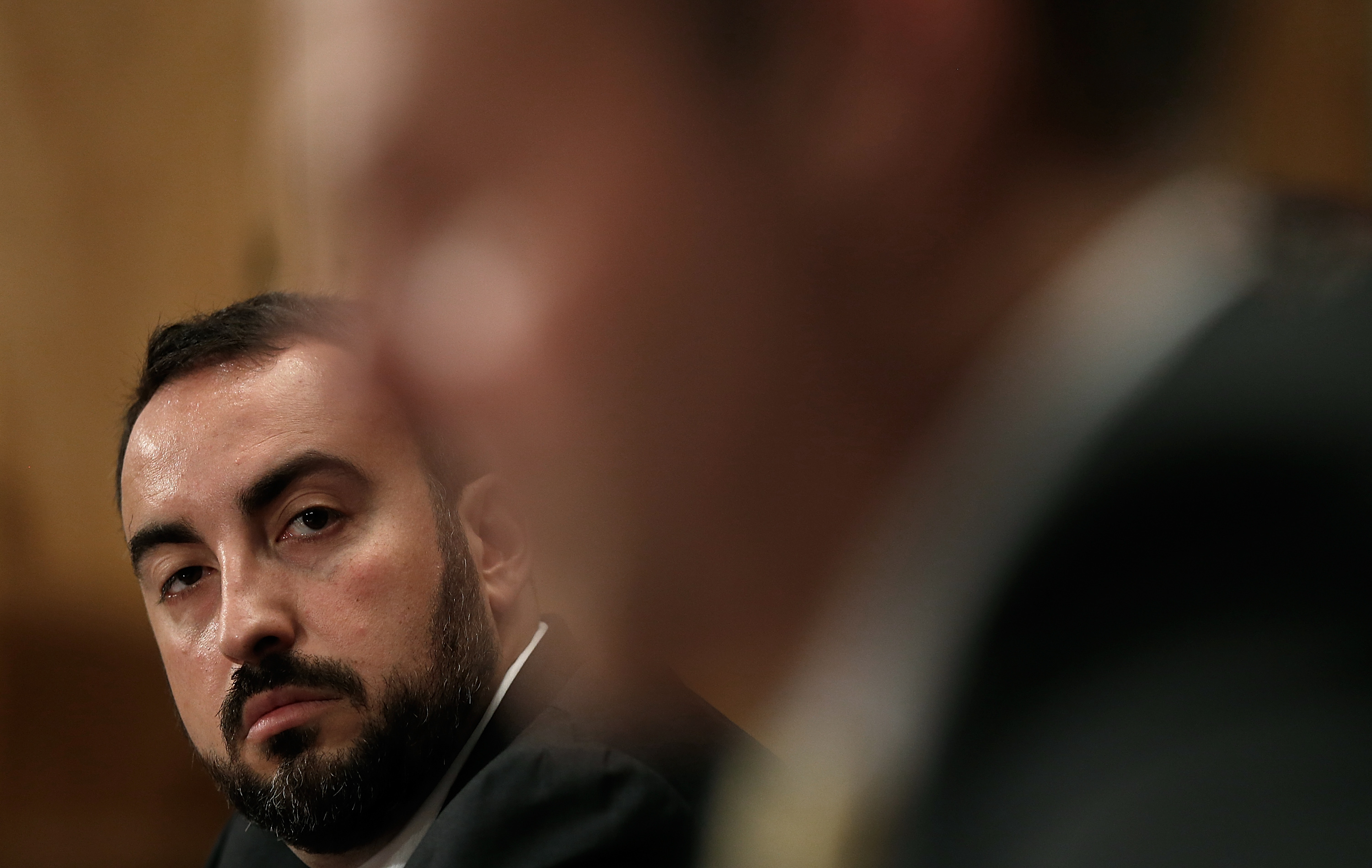
The drama continues. As reports emerge detailing missteps by both Anthropic and the Trump administration amid the sudden ban on the company’s new Mythos and Fable AI models—Anthropic can’t speak the same language as the White House; the White House gave Anthropic just 90 minutes to comply with a vague order—cybersecurity leaders are up in arms over political football that they say hurts everyone.
More than 125 such executives—including former Facebook security officer Alex Stamos, former NSA AI officer Vinh Nguyen, internet trailblazer Paul Vixie, famed cryptographer Bruce Schneier, and bug bounty pioneer Katie Moussouris—signed and published an open letter requesting that the White House lift its restrictions on Anthropic’s AI models.
“This action has taken the best models away from defenders, created market uncertainty, and risked America’s AI leadership without any real risk to justify it,” the executives wrote.
The authors argue that coders and security teams need access to the latest AI models so they can find and fix software flaws before adversaries do. Banning the AI models outright? Unhelpful.
“To pull the best capabilities away from defenders without a good reason when our adversaries are rapidly advancing is dangerous,” the executives wrote, adding that China’s AI models are mere months behind that of the U.S. in terms of development.
What’s more, the authors argued, the concerns that prompted officials to urgently ban Anthropic’s models “can be replicated on GPT-5.5, Opus, Sonnet and even Chinese models like Kimi 2.7”—implying that Anthropic was unfairly penalized. Besides, Anthropic’s existing safeguards for the new AI models “were so aggressive as to be the source of humor in the cyber community on launch day,” they wrote.
Next steps, according to the security leaders? A more democratic, data-driven, transparent, and minimally invasive regulatory process. Stay tuned. —AN
Fox will acquire Roku for about $25 billion
The New York media company known as Fox Corp., led by Lachlan Murdoch and purveyor of everything from The Simpsons to Fox & Friends, says it will buy Roku for some $25 billion.
It would be Fox’s largest-ever acquisition, which might explain why its shares closed down 15% to about $50.
Gulping down Anthony Wood’s pioneering streaming service, last valued on the Nasdaq just shy of $21 billion, gives Fox access to more than 100 million streaming households and an ad business that brought in an estimated $2.4 billion in 2025—not to mention a novel business licensing TV operating systems, found on sets made by TCL, Hisense, Sharp, JVC, RCA, Westinghouse, and the store brands for both Best Buy and Walmart.
A Fox acquisition also gives Roku a way out. Though the cord-cutter has admirably moved into numerous adjacent businesses, its stock price never quite recovered after its pandemic-era highs (more than $470 per share in July 2021; it’s now less than a third of that) as the industry evolved around its original value proposition to facilitate streaming media on TVs.
“Roku exists in a strange space in 2026,” the Hollywood Reporter wrote last week. “The company manufactures devices that act as a gateway to streaming, but newer televisions do not need that. In response to that reality, the company pivoted to making Smart TVs — or at least the operating systems within that allow users to access Netflix, Disney+ and the like. Roku has messed around with original programming, though it is not exactly a player in that space. Americans do watch The Roku Channel, however.”
As part of the deal, Wood will join Fox’s board of directors, which includes former Australian prime minister Tony Abbott, Agility Robotics CEO Peggy Johnson, and former House Speaker Paul Ryan. Coming up next on Roku TV? $400 million of “cost synergies.” —AN
Some embattled Xbox studios could go independent
As Microsoft’s Xbox division, née Microsoft Gaming, enters into a 100-day “reset” that almost certainly involves layoffs, a new report suggests that some of the company’s game studios are working to try to exit stage left.
Compulsion Games (South of Midnight), Double Fine (Psychonauts), and Ninja Theory (Hellblade) are among the studios “in active negotiations” to spin out from Xbox rather than close up shop, according to Bloomberg.
The studios span the globe—Compulsion is Canadian, Ninja Theory is English, and Double Fine is based in San Francisco.
“The studios may still have the opportunity to buy themselves back from Xbox and go independent, although many employees will likely lose their jobs as a result,” according to the report.
It’s not yet clear how deep Xbox’s cuts will go, but CEO Asha Sharma—who spoke at our Brainstorm Tech summit in Aspen last week—was unsparing in her week-ago memo about the coming reset, laying out “hard truths” including soaring hardware prices, an overly outsourced tech stack, and an “overextended” studio system for a low-margin division that contributes less than 10% of Microsoft’s revenue.
“Excluding Activision Blizzard King, over the past five years, we have spent over $20 billion on ongoing investments in our content, platform, and hardware subsidy, but our annual revenue has declined nearly half a billion during that time,” she wrote. “Going forward, this cannot continue.” —AN
More tech
—SpaceX shares closed up 19.6% yesterday, valuing the company at $2.5 trillion.
—The U.K. will ban social media for under-16s from spring 2027 to “give kids their childhood back.”
—Judge dismisses xAI lawsuit alleging OpenAI stole trade secrets for failing to demonstrate misappropriation.
—Salesforce will acquire Fin for $3.6 billion. The AI customer service company was once known as Intercom.
—Qualcomm may acquire Tenstorrent, the AI chip designer, for upwards of $10 billion.
—Japan’s largest IPO this year: Go. Shares of the taxi-hailing app rose 21% in its Tokyo debut, valuing the firm at almost $1.2 billion.
—Nuvei will acquire Payoneer for about $2.75 billion. The Canadian payments company expects its deal for the New York payments company to close next year.
Endstop triggered

A: IBM, a.k.a. International Business Machines Corporation, was founded as the Computing-Tabulating-Recording Company. CTR, as it was known, was formed via the merger of three discrete businesses: the Tabulating Machine Company, the International Time Recording Company, and the Computing Scale Company. The firm’s name changed to its current one in 1924 in an attempt to reflect its broadened ambitions. (Mission accomplished.)
Meanwhile Oracle Corporation was founded as Software Development Laboratories, or SDL. The startup’s first customer? None other than the CIA, who gave the fledgling company a $50,000 contract for a relational database inspired by the work of—irony alert—IBM computer scientist E.F. “Ted” Codd. Two years later, the firm was renamed to Relational Software Inc., or RSI; the moniker Oracle Systems Corporation came in 1983, inspired by the codename of that first CIA database project. —AN