
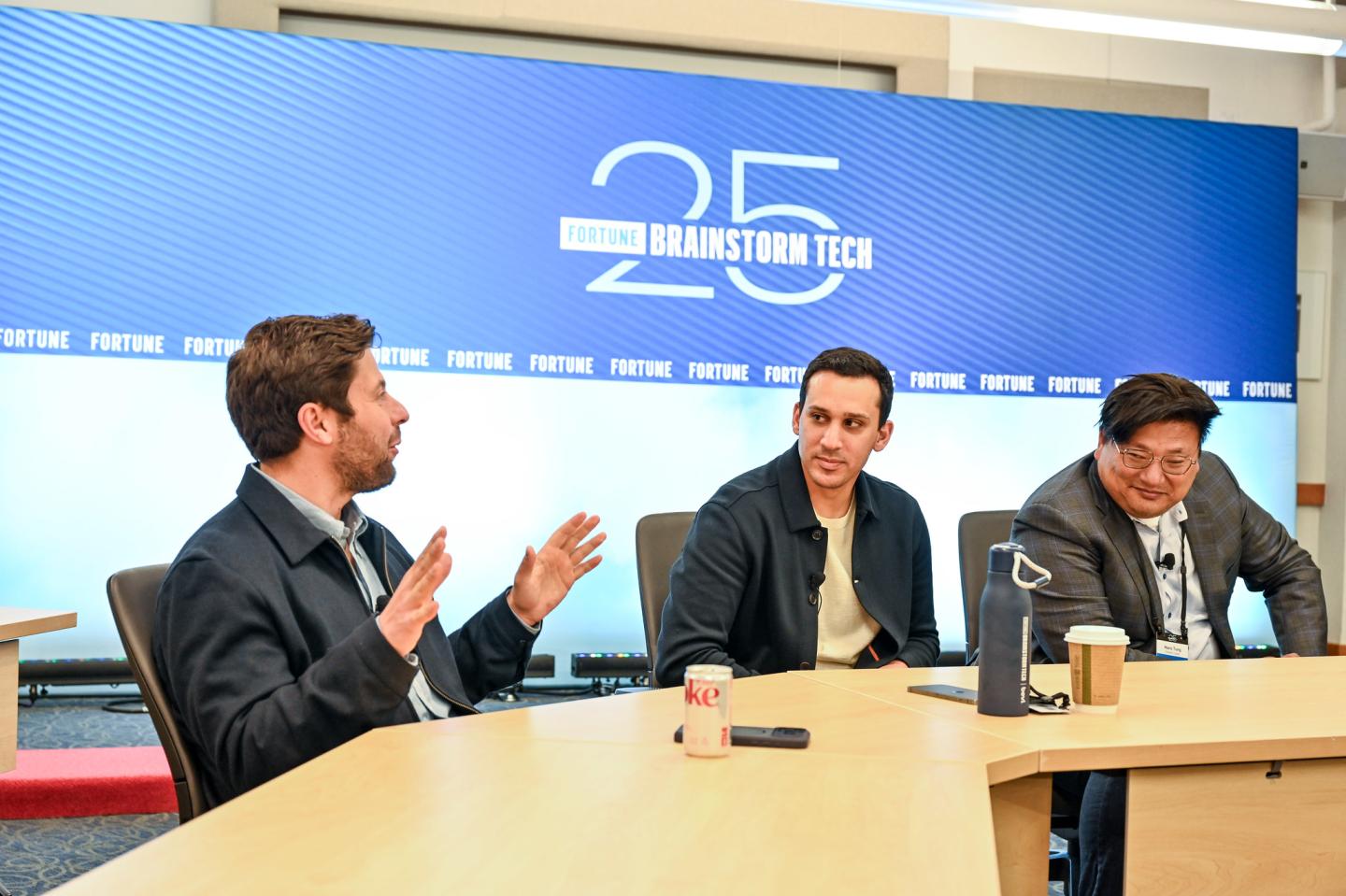
Good morning. It’s market debut day for SpaceX, which begins trading on the Nasdaq as SPCX.
At $135 per share, SpaceX’s IPO raised $75 billion and values Elon Musk’s rockets, satellites, and AI company at an astonishing $1.77 trillion, placing it among the world’s top 10 most valuable companies.
At Fortune Brainstorm Tech in Aspen this week, I spoke to several tech insiders about the SpaceX IPO. Their take? Expect a huge pop on Day 1 and a significant drop thereafter. Whether that happens on Day 2, Week 2, or Month 2, well, that’s the question.
More news below. Have a wonderful weekend. —Andrew Nusca
Want to send thoughts or suggestions to Fortune Tech? Drop a line here.
The SpaceX IPO is not the market savior it seems, execs say
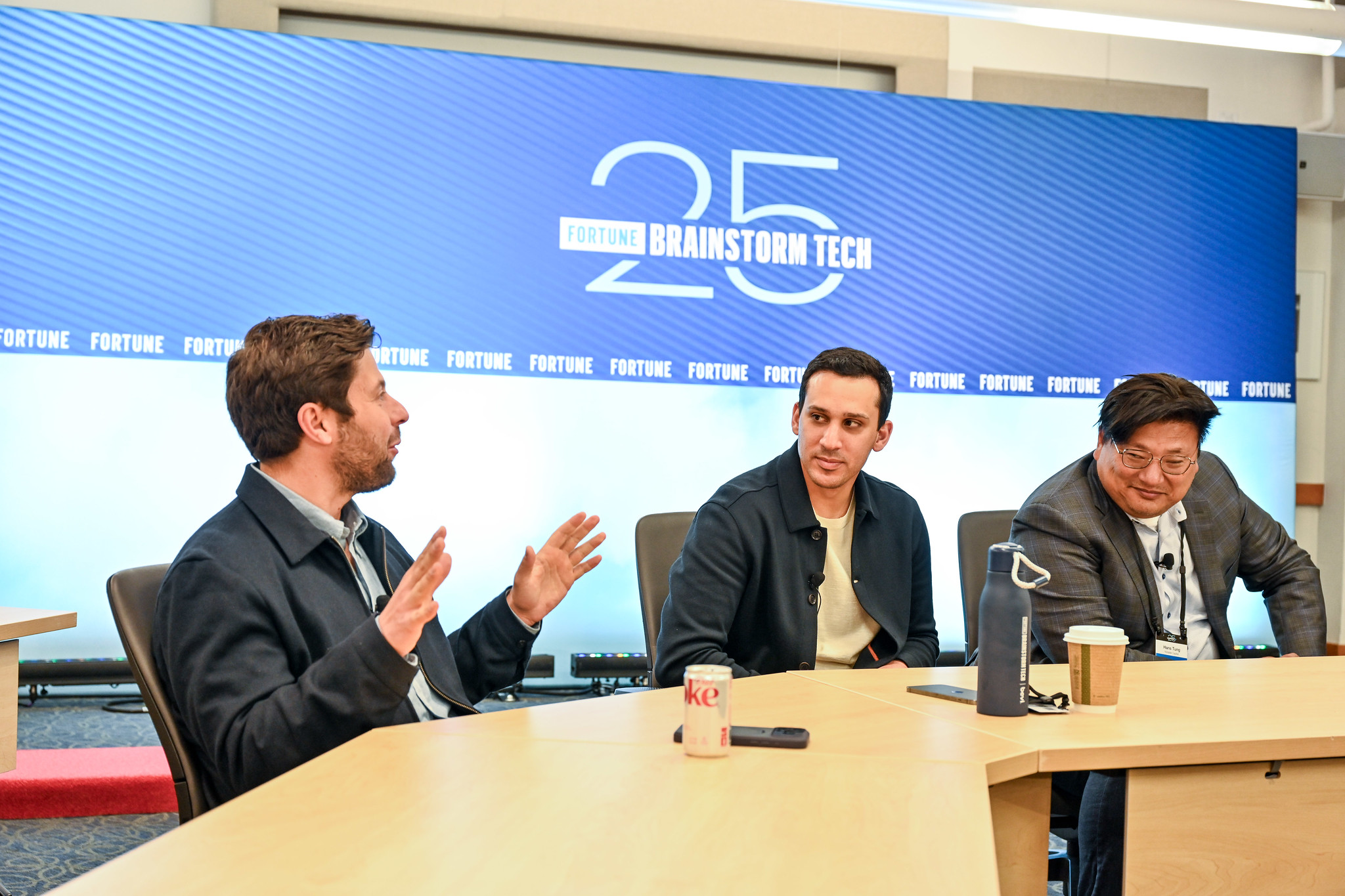
There’s lots of buzz about SpaceX’s IPO today. Given its $1.77 trillion IPO valuation—and the prospect of a total $5 trillion in value coming online after adding in Anthropic and OpenAI—you would be forgiven for thinking this summer means salvation for venture capital.
“There’s a narrative that this is the unleash,” said Nizar Tarhuni, executive VP of research and market intelligence at PitchBook, who spoke during the Term Sheet breakfast at Fortune Brainstorm Tech in Aspen this week. “That this is the savior of the venture market and locked-up liquidity. And I think it’s an important milestone, but it’s not necessarily a watershed moment.”
Tarhuni estimated that 80% of active VC are outside what looks to be one of the most significant liquidity events in history. His conclusion—alongside that of co-panelists CapitalG’s Mo Jomaa and Notable Capital’s Hans Tung—was that these companies are anomalies.
Since 2015, about $1.5 trillion in venture value has come to the capital markets. SpaceX is about to do that on its own, nevermind OpenAI and Anthropic, as its need for compute power outpaces what the private markets can properly nourish and feed.
According to Tung, the top tier of LPs that got into SpaceX, OpenAI, and Anthropic will want more direct access to the next three dozen AI names that matter, inevitably pushing capital toward a shrinking set of winners. He predicts a multi-year shakeout that will ripple through the markets all at once. Buyouts haven’t been adjusted for the AI impact, and the next decade will see plenty go through.
But “at the end of the day, investors buy stories, they don’t just buy stocks,” said Jomaa, a partner at Alphabet’s independent growth fund. “If you don’t have a really compelling narrative, investors are skeptical creatures and they will create a defensive one for you.” —Amanda Gerut
Tech leaders argue AI’s real future is task augmentation, not mass layoffs
The long-held fear that AI and robotics will entirely replace human workers may be hitting a wall of practical reality. Today’s cutting-edge of automation isn’t replacing the whole human but absorbing their most mundane tasks.
That is the consensus from Dave Bozeman, chief executive of third-party logistics giant C.H. Robinson, and Peggy Johnson, chief executive of Agility Robotics, speaking Tuesday at Fortune Brainstorm Tech in Aspen, Colorado. While both executives acknowledged deep societal anxiety around job displacement, they argued that the immediate future belongs to so-called task augmentation, allowing humans to move higher up the value chain.
“We will have humans doing contact with customers, solving customers’ problems, and going up the value stack to really get their minds to work,” Bozeman said. “Agents are doing a lot of that upfront work.”
C.H. Robinson has rebuilt itself as a tech organization serving logistics, Bozeman said. Its pivot from legacy machine learning to generative AI has yielded a fleet of more than 30 specialized AI agents that executed millions of shipping tasks over the past year.
Bozeman said C.H. Robinson has “gotten its swagger back” by embracing AI. He pointed to a coding agent the company has for transactional quoting. Human employees, he said, previously took up to 20 minutes to handle only 60% of quotes. The agent now handles 100% of quotes in around 30 seconds and does so at all times of the day.
Wall Street has rewarded C.H. Robinson for its high-tech transformation. Its stock is up more than 100% in the past year. But Bozeman insisted this isn’t tied to mass layoffs. Instead, he said automation is targeting entry-level operational roles that historically suffer from high turnover rates.
Johnson, meanwhile, said the deployment of Agility’s humanoids may aid a U.S. labor shortage. Its robot is designed to step into the roles people actively avoid, she said.
“If that’s part of someone’s job, they say ‘that’s a part I don’t like doing,’ ” she said. “It’s repetitive. It’s mind-numbing. It’s injury-prone.” —Sebastian Herrera
Olympic champion Shaun White says AI is ‘leveling the playing field’ for professional athletes
Olympic snowboarder Shaun White said he came from “pretty humble beginnings” without the same advantages as his rivals. The San Diego native didn’t live in the snowy mountains, and it was expensive to afford lift tickets, lodging, and food for a family of five growing up.
“You’re seeing athletes there with full-time coaches,” White told Fortune’s Andrew Nusca at Brainstorm Tech in Aspen this week. “I didn’t have that kind of access.”
But the emergence of new technologies, especially AI, has helped make it easier for athletes to have similar access to important resources to improve performance, even if some don’t have a full-time coaching team.
“It is leveling the playing field in a way,” White said. “This is really going to be accessible for everyone…It’ll give a lot of information to athletes that wouldn’t have had this type of access before, and that’s really the hope.”
AI has already made it into the world of sports analytics. MLB debuted its Automatic Ball-Strike (ABS) system that allows players to challenge and overturn an umpire’s call at home plate. Similar automated line and boundary calls and Semi-Automated Offside Technology (SAOT) have been implemented in tennis and soccer, respectively. For athletes, AI can pair with wearable biosensors to record movements and suggest improvements to form.
The International Olympic Committee has outlined an AI agenda with the intention of integrating the technology into judging. During the 2026 Milano Cortina Winter Olympics, ski jumpers used high-speed video and motion analysis to dissect their takeoff timing, aerodynamics, and in-run speed.
While snowboarders, skiers, and skaters of older generations previously enlisted friends or parents to take videos of their runs, AI can now provide nearly real-time feedback with specific metrics to improve performance, according to Granville Valentine, vice president of growth and demand for Google Cloud, who also spoke at Brainstorm Tech. He said Google’s Gemini can generate world models down to the hundredth of a millimeter and can identify where an athlete’s skeletal structure is, as well as their center of gravity.
“Not only can we collect tremendous amounts of data—all that velocity, speed, rotation, all that useful data for our athletes—but [we’re] making sense of it, collating it, and giving it back as really easy human-level coach ups in between runs in real time,” Valentine said. —Sasha Rogelberg
More tech
—Europol dismantles AudiA6 crypto mixing service, which allegedly laundered $389 million between 2022 and 2025.
—Waymo launches a $30-per-month membership program with perks like skipping the line, 10% cashback, and five free ride cancellations per month.
—Silicon Valley insiders warn that the U.S. defense supply chain is unprepared for modern warfare.
—Project Prometheus raises $12 billion, valuing Jeff Bezos’ physical AI startup at $41 billion.
—Meta operationally splits with Manus. No more data sharing, according to Bloomberg, as the smaller firm explores a buyback.
—The real hurdle to enterprise AI isn’t fixing productivity KPIs. It’s ‘unlearning’ old habits, experts say.
—Citigroup offers tokenized shares of private firms for wealthy and institutional clients via a blockchain-based platform.