
The boomer-millennial war was supposed to stay online.
It was meant to be a safe, stupid argument about avocado toast and home equity, memes about “OK boomer” and lectures about grit—not a double homicide in Brentwood and a son accused of killing the parents whose fortune was supposed to set him up for life.
In Los Angeles, that abstract generational fight now exists as a crime scene and a court petition. Rob Reiner, the boomer director who turned This Is Spinal Tap, Stand by Me, A Few Good Men and When Harry Met Sally… into one of Hollywood’s most durable careers, left behind an estate widely estimated at around $200 million when he and his wife, photographer and producer Michele Singer Reiner, were stabbed to death in their home on Dec. 14. Their 32‑year‑old son Nick was arrested hours later and has pleaded not guilty to two counts of murder; prosecutors say the case is eligible for the death penalty, though the district attorney has not yet decided whether to seek it.
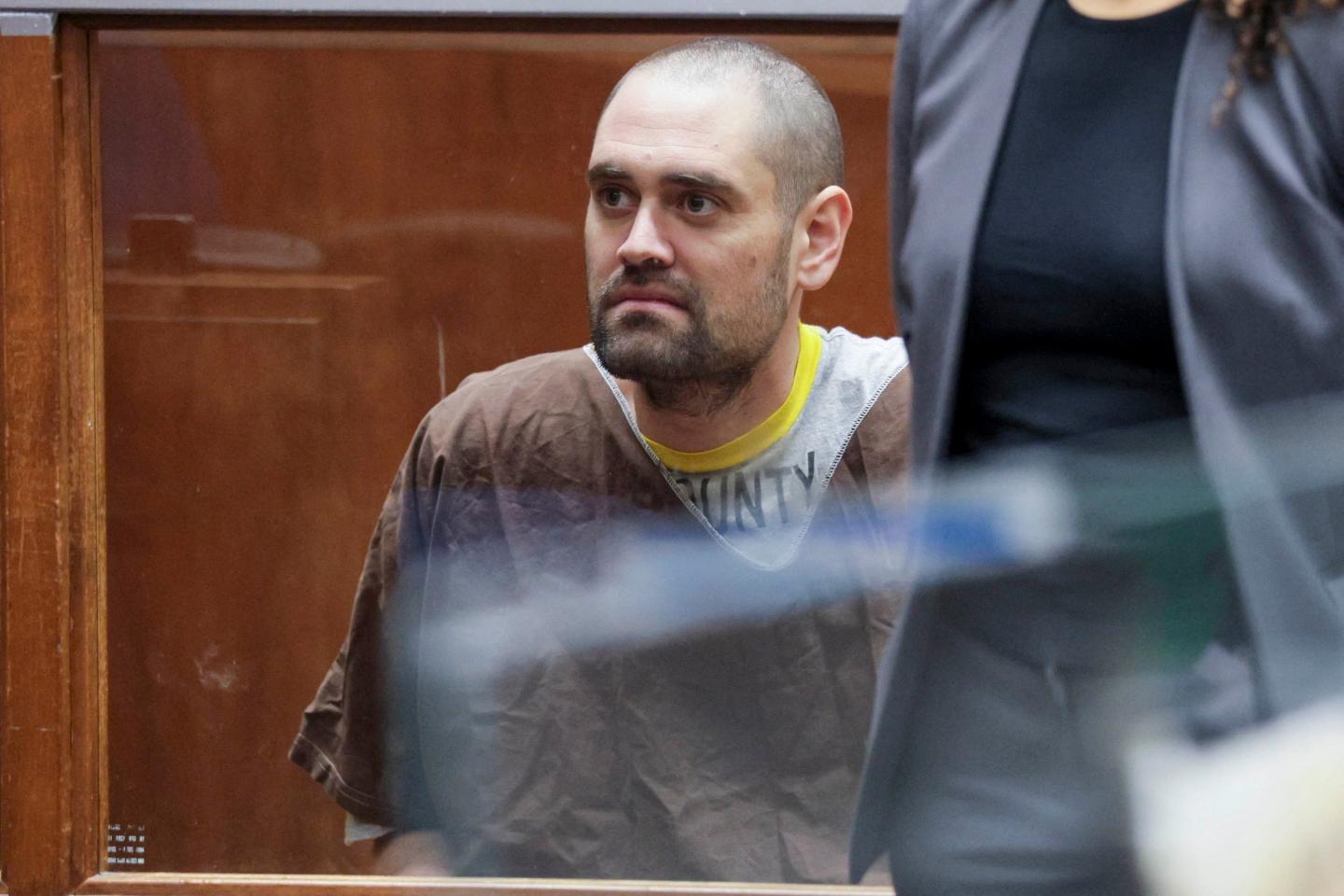
Now, before he ever faces a jury, Nick is trying to force open one very specific piece of that fortune: a $1.5 million trust his parents set up for him when he was a baby. In a petition filed this week in Los Angeles County court, his lawyers say the trustees have “unjustly” refused to distribute money he was already entitled to receive and that he needs those funds immediately “to mount his defense” and pay for “basic necessities” in jail.
“Nick loved his parents, and he is devastated by their deaths,” the petition says. “Like anyone accused of a crime, Nick is presumed innocent, and he is entitled to mount his defense with the resources that are lawfully his own.”
It is a disturbing, real‑world manifestation of the caricature: a boomer-built fortress of wealth; a millennial heir whose life has been defined by rehab, instability, and now a capital murder case; and a fight over whether the money the older generation locked away for him will ever actually arrive.
The boomer project
Rob Reiner is a nearly perfect example of the cohort that has dominated America’s balance sheet for half a century. He even played the archetypal boomer on the classic Norman Lear sitcom All in the Family, the liberal Michael, nicknamed “Meathead” by his conservative father-in-law, Archie Bunker, tussling with the older generation over his antiwar politics and social liberalism.
Baby boomers control more than half of U.S. household wealth and an outsize share of housing and financial assets. Analysts estimate that across the country, roughly $124 trillion in assets will move from older Americans to their heirs and charities by 2048, with boomers at the center of that transfer. One widely cited breakdown projects about $79 trillion flowing from the Silent Generation and boomers down the line—and about $46 trillion eventually landing with millennials.
For decades, Reiner did what those numbers describe in miniature. He went from sitcom actor to one of Hollywood’s most bankable directors during a studio boom, collected residuals from films that still stream endlessly, and bought into the Los Angeles real estate market early enough to ride it up.
His estate planning looked like the sophisticated end of the Great Wealth Transfer. Beyond a larger family trust that has not yet become a public point of contention, filings say Rob and Michele created smaller individual trusts for each of their children, including one established for Nick in 1993. According to the new petition, the document left “unambiguous instructions”: Half was to be paid out when Nick turned 30, the remaining half at 35. No behavior clauses. No sobriety benchmarks. Just dates.
The theory was classic boomer risk management. Rather than hand a troubled kid an open checkbook, you treat him as a “future 30‑ and 35‑year‑old” and lock his inheritance behind the idea that those ages will arrive predictably, no matter how messy his twenties become. The trust would do the talking.
Except, Nick says, it didn’t. According to the filing, he never received the distribution that should have arrived when he turned 30—years before his parents were killed. Since February, control of his trust has been in the hands of attorney Paul R. Kanin, who, the petition claims, has offered “a shifting series of excuses and justifications” for keeping the money locked up, including raising questions about Nick’s mental competence that, his lawyers argue, have no bearing on a payout they insist is “mandatory.” The filing says the trust holds at least $1.5 million but alleges Kanin has refused to disclose the exact value of its assets.
Kanin has not publicly explained his reasoning.
The millennial heir
If Rob and Michele embody the boomer storyline—build, accumulate, protect—Nick’s life has traced the darkest version of the millennial caricature. He has described starting to abuse drugs in his mid‑teens, cycling through rehab again and again, and periods of homelessness. Some accounts put his number of stints in treatment near 20. With his father, he cowrote the film Being Charlie, a fictionalized portrayal of a wealthy Hollywood family trying to save a son from addiction.
Addiction counselors point to his experience as proof that money and access to care don’t guarantee recovery: You can have unlimited treatment budgets and still not fix the problem. Critics see something else layered in: a child of privilege cushioned by a safety net his parents kept repairing. The truth, as in most families, is tangled: Rob and Michele seem to have built their son both emotional lifelines and financial scaffolding, a mix of rehab admission forms and trust documents.
For a while, that scaffolding extended to his defense. After his arrest, Nick hired high‑profile former prosecutor Alan Jackson as his lawyer; his siblings Jake and Romy initially agreed to help cover Jackson’s fees. Within weeks, they pulled back. Jackson withdrew from the case, citing reasons he couldn’t share. Outside court, he bluntly told cameras that “pursuant to the laws of California, Nick Reiner is not guilty of murder,” but he left anyway. Nick now has a public defender.
In a declaration attached to the trust petition, Jackson says his firm “stands ready, willing, and able to resume representation” if Nick gains access to his trust. The petition itself makes the connection explicit: It says Nick wants the money not just for commissary—soap, snacks, phone calls—but to rehire Jackson and mount the kind of capital defense a public defender’s budget rarely allows.
The wall between generations
On social media, the boomer-millennial fight is framed as a personality clash: older people hoarding houses and jobs, younger people posting about being frozen out of the middle class and consoling themselves with memes. The economic data is blunter. Analysts note that boomers own a disproportionate share of large homes, stocks, and businesses; one recent series resurrected the 1970s metaphor of the generation as a “pig in the python,” a 76‑million‑person bulge that has distorted wages, housing, and now retirement and inheritance as it moves through the system. Boomers stayed in the workforce longer than expected, retired later, and held on to big houses as starter homes disappeared beneath them.
Nick’s trust is one of those structures. The problem at the heart of the Reiner case is what happens when that engineering collides with reality—and with tragedy.
Wealth managers and psychologists who work with ultrawealthy families warn that the biggest risk to a smooth handoff of money isn’t a stock market crash or a bad lawyer. It’s the fact that parents and children don’t actually talk about what the money is for. In one recent survey of heirs to large fortunes, more than three‑quarters said they felt “informed” about their family’s assets, but far fewer said they understood the purpose behind those assets or the conditions under which they would gain control. They knew the numbers; they didn’t know the why.
Nearly half of respondents said their families had no structured process at all for discussing wealth transfer. The conversation had been outsourced to binders, boardroom‑style family meetings, or, often, to trusts written decades earlier and revisited only with accountants.
Even with guilt entirely unresolved, the estate has already done what contested estates do—pitted sibling against sibling, frozen a fortune, summoned trustees and probate lawyers and a centuries-old statute about killers and inheritance. Multiply the dynamic, strip out the famous name, and you have a preview of the next two decades of American probate court: trillions of dollars changing hands inside families that don’t always agree on who deserves what, refereed by trust documents drafted in a more hopeful past.
For this story, Fortune journalists used generative AI as a research tool. An editor verified the accuracy of the information before publishing.