
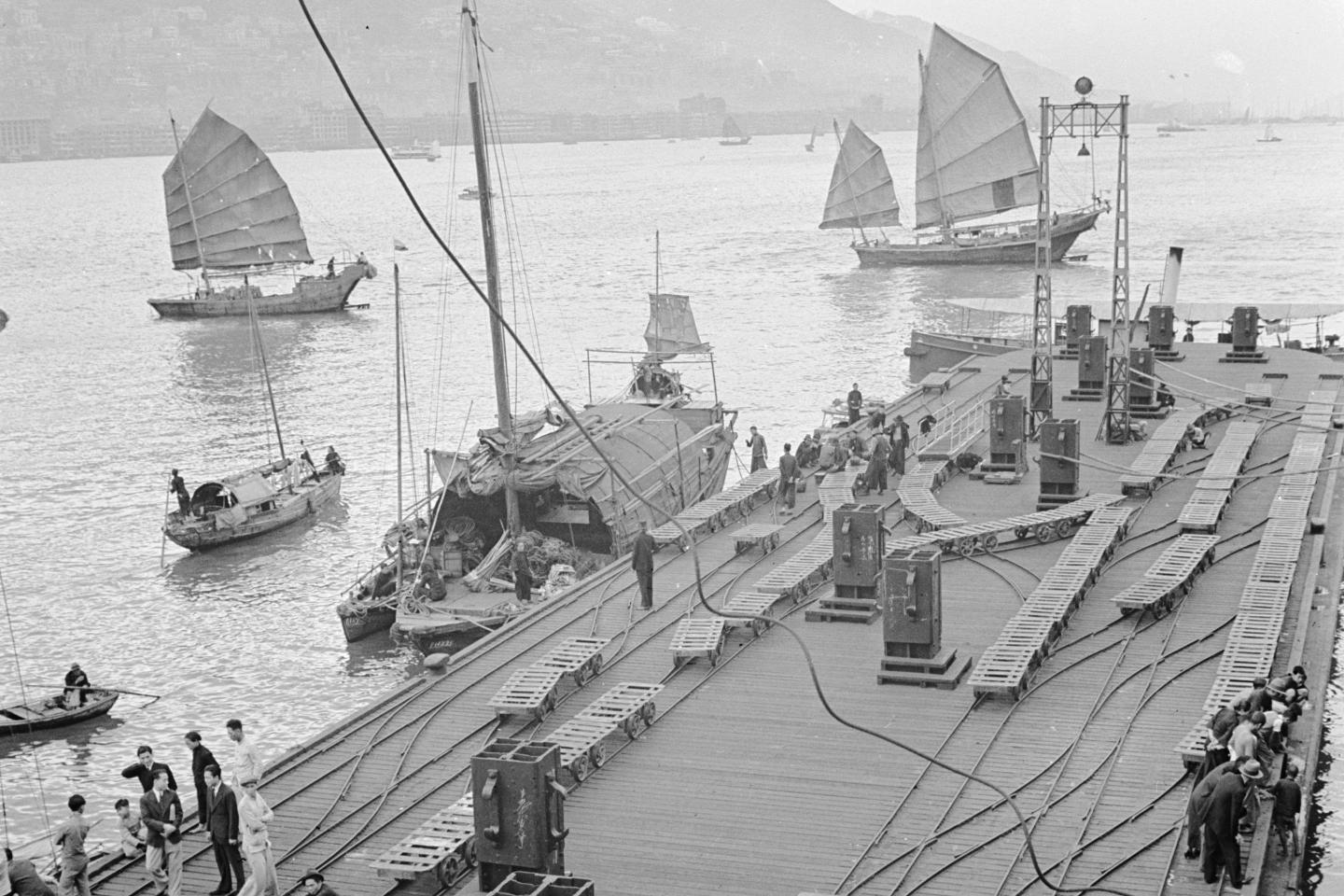
“Hong Kong means trade,” Fortune wrote in 1947, soon after the British retook control of the city from Japanese occupation.
“New business is crowding into the two-by-three-block central district: Chinese wealth from the mainland—perhaps as much as $50 million (U.S.)—has taken refuge in Hong Kong, swelling the volume of bank deposits, pushing up the values of real estate and Hong Kong company shares, and financing scores of one-room trading houses that are cashing in on the demand for Western imports,” the writer of the unbylined piece continues. “Two hundred and twenty-eight Shanghai concerns, preferring to do business as British companies rather than incorporate under Chinese law, have shifted registry to Hong Kong, now an Asiatic Delaware.”
Today, that business district remains the heart of the city, home to superprime offices, luxury retail, and the stock exchange, now the world’s fourth-largest by market value. And the district’s largest commercial landlord is Hongkong Land, a 137-year-old property developer.
Hongkong Land was founded by Paul Chater, an Armenian-heritage, Calcutta-born business tycoon, in 1889. Chater founded not just Hongkong Land, but also Hongkong Electric Company, Dairy Farm, and Wharf, which all still exist today.
“Paul Catchick Chater is responsible, more than any other single individual, for dragging Hong Kong into the twentieth century,” Vaudine England, author of Fortune’s Bazaar: The Making of Hong Kong, told me.
Hongkong Land is now owned by Jardine Matheson, the Global 500 Hong Kong conglomerate that Fortune called the “first and oldest” of the city’s trading houses.
Hong Kong’s economy has taken a battering in recent years as it continues to recover from its years of COVID-zero controls. But Hongkong Land CEO Michael Smith is still bullish on Central, pointing to the city’s AI IPO boom and a rebound in luxury retail. “A lot of people are making money on IPOs, on trading, on everything else. It’s just a greater degree of confidence.”
And he’s still upbeat about Hong Kong’s Central business district: “This is the center of Hong Kong island. Whether it’s high net worth individuals or CEOs of companies, this is the place where people are going to be,” he says.