• Home
  • Latest
  • Fortune 500
  • Finance
  • Tech
  • Leadership
  • Lifestyle
  • Rankings
  • Multimedia

Trendingnow

1

As CEO of the $96 billion Sam’s Club, Latriece Watkins is testing her mettle at the warehouse retailer that produced CEOs for Walmart, Target, and Walgreens

2

As AI slashes white-collar jobs, Salesforce CEO Marc Benioff says almost no one is being hired—except in sales

3

Jeff Bezos wants the bottom half of earners to pay zero income tax—he says nurses making just $75K should save $12K a year

1

As CEO of the $96 billion Sam’s Club, Latriece Watkins is testing her mettle at the warehouse retailer that produced CEOs for Walmart, Target, and Walgreens

2

As AI slashes white-collar jobs, Salesforce CEO Marc Benioff says almost no one is being hired—except in sales

3

Jeff Bezos wants the bottom half of earners to pay zero income tax—he says nurses making just $75K should save $12K a year
Environmentpower grid

The U.S. power grid isn’t one big machine — it’s three. That’s a problem for blackout season

By
Sufan Jiang
Sufan Jiang
,
Fangxing Fran Li
Fangxing Fran Li
, and
The Conversation
The Conversation
Down Arrow Button Icon
By
Sufan Jiang
Sufan Jiang
,
Fangxing Fran Li
Fangxing Fran Li
, and
The Conversation
The Conversation
Down Arrow Button Icon
May 30, 2026, 8:04 AM ET
grid
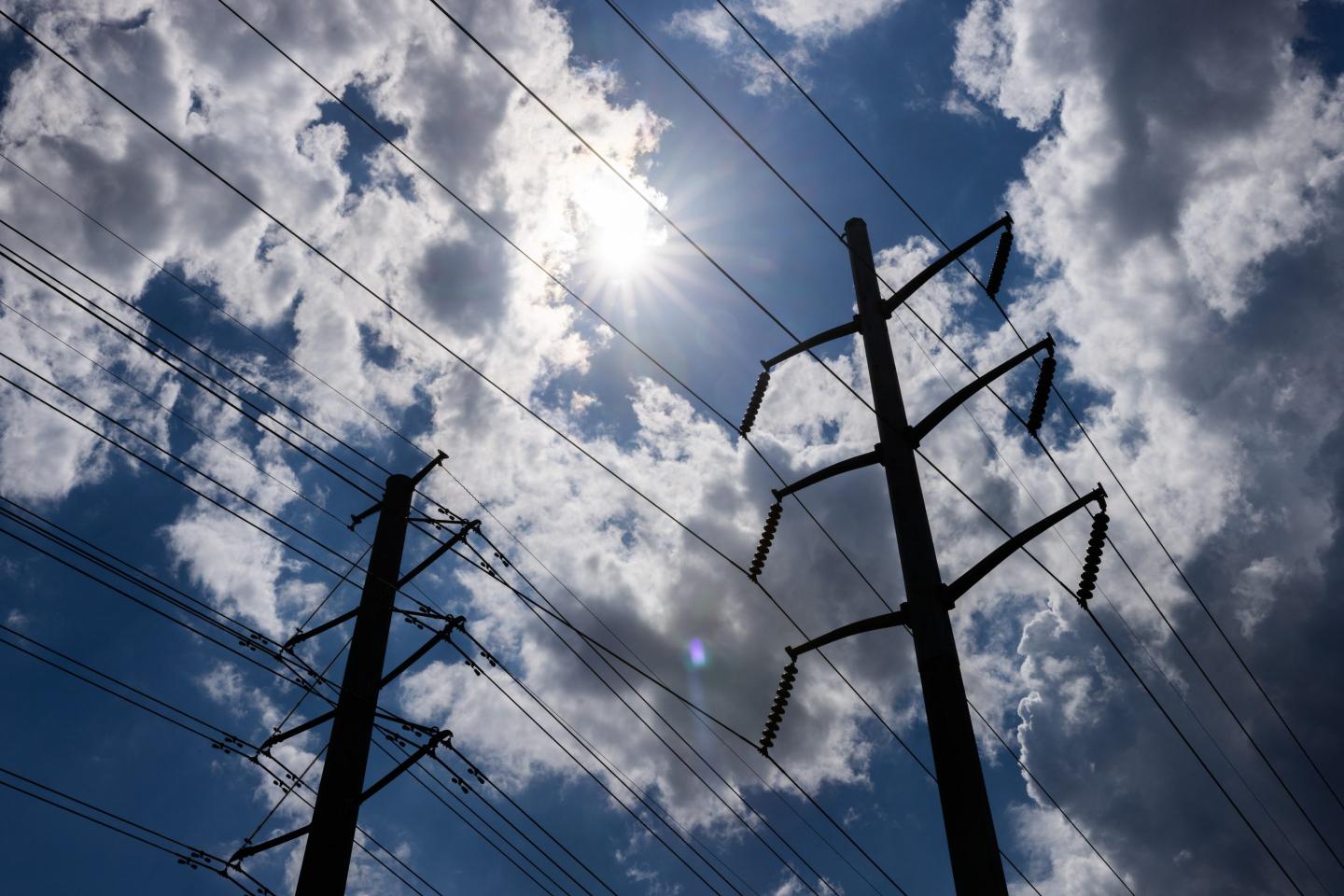
Where do your power lines go?Sam Wolfe/Bloomberg via Getty Images

Extreme weather is posing a growing threat to the power supplies Americans rely on.

Recommended Video

In 2021, a fierce winter storm left millions of Texans without electricity and water for days. Hurricane Helene in 2024 knocked out power to about 5 million customers across the U.S. Southeast.

Beyond the immediate human and economic toll, major blackouts like these often leave behind the same unsettling contrast: One region goes dark while nearby places still have power.

This raises a question: If electricity is still available somewhere nearby, why can’t it be sent where it is needed most?

Two satellite images show how much of the Atlanta area lost power in Hurricane Helene.
Hurricane Helene left much of Georgia in the dark for several days starting in late September 2024. The satellite image on the left is a normal August night in the Atlanta region. The one on the right shows the same area on Sept. 28, 2024. Lauren Dauphin/NASA Earth Observatory

There has to be a wire into the crisis

The U.S. bulk power system is not one seamless national grid, but three major grid regions known as interconnections – the Eastern, Western and ERCOT – Electric Reliability Council of Texas – systems. There are very few transmission lines between them, so if one has too little power, the others may not be able to help much.
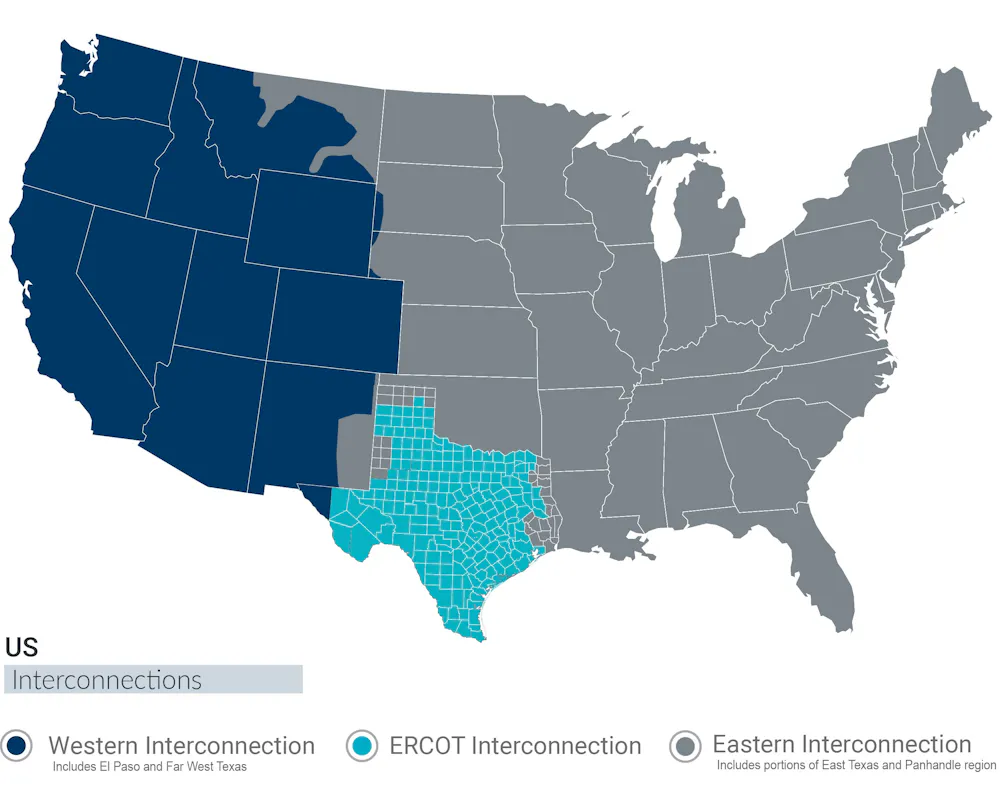
Map shows three regions
There are few links between the U.S. Eastern, Western and ERCOT interconnections. ERCOT

That limited connectivity made the 2021 Texas blackout far more severe: As the storm knocked out gas lines and power generators, ERCOT was forced into the largest deliberate electricity shutoff in U.S. history. Operators cut power to millions of customers to avoid a total grid collapse.

More than 4.5 million Texans lost power, and hospitals across the state struggled with electricity and water shortages. At that time, the total power ERCOT was able to import from the neighboring systems could cover only about 6% of the demand.

Today, there are proposals to build more transfer capacity between Texas and neighboring grids. The Southern Spirit Transmission project, announced by the Department of Energy in 2024, would include a 320-mile transmission line connecting Texas with Louisiana and Mississippi. According to the DOE, the project could improve the Texas grid’s resilience during periods of high demand and extreme weather. If this line had existed in 2021, it could have reduced the scale of the power losses by roughly 15%, enough to keep electricity flowing to 600,000 additional Texas homes during peak demand.

A map shows a line from Mississippi to the Texas border.
Pattern Energy is developing the 320-mile Southern Spirit Transmission line to connect Texas’ power grid and the Southeastern transmission grids for power sharing. Pattern Energy

The wire has to survive the disaster

That physical constraint on where power can flow begins with how the U.S. grid is organized.

At the broadest level, it is divided into the three independent interconnections. Within those larger networks, multiple regional grids can share power with one another. But moving electricity across them still depends on the availability of transmission paths.

A map shows the regional power system operators and three regions without a formal power market structure.
Seven major regional grid operators within the U.S. interconnections help manage power flows, electricity markets and reliability, typically across multistate regions, but they don’t cover all of the area. In large parts of the Northeast, Southwest and Southeast, independent utilities generate and transmit their own power without a formal power market structure. Federal Energy Regulatory Commission

Extreme weather can damage transmission lines and substations, making it impossible to bring in additional electricity.

Hurricane Ida showed why this matters.

In August 2021, all eight transmission lines feeding New Orleans were damaged by the storm and knocked out of service. That left the whole city without normal grid power and set the stage for a recovery that took weeks in some of the hardest-hit areas. Across the wider network, the storm also disabled 216 substations and more than 2,000 miles of transmission lines. When the main lines for electricity are broken, nearby power cannot flow in.

A large transmission tower lies on its side, twisted, after a hurricane.
Hurricane Ida crumpled a huge transmission tower carrying high-voltage power lines into New Orleans in August 2021. AP Photo/Gerald Herbert

The answer to bolstering power grids is not just to build more high-voltage transmission lines. It is also important to harden the transmission corridors that already exist so they can withstand extreme weather and be restored more quickly after a disaster.

In New Orleans, that is already shaping investment. Entergy New Orleans, the city’s main electric utility, has an accelerated grid-hardening plan that aims to replace existing utility poles with more fortified poles to withstand higher winds and selectively move some lines underground in high-risk areas. The first phase, scheduled through 2026, covers about 63 miles of power lines at a cost of $100 million.

At the federal level, the Federal Energy Regulatory Commission has required transmission providers to report how they assess risks to transmission assets, how those risks affect system operations and how they plan to reduce them, including under extreme heat and cold.

The hidden regulatory rules for sharing power

When the power goes out in one area, a nearby grid may look fine and keep its own lights on, but that does not mean its surplus power can be easily shared. Federal standards require transmission providers to have enough electricity available in reserve to serve their own local homes and businesses safely. In plain terms, only excess electricity above that safety threshold can realistically be treated as power available to help neighboring grids during an outage.

Decisions also have to be made quickly, and the logistics for sending power from one company have to be arranged before the blackout begins. The grid facing power shortages must know which sources will send extra power, which lines can carry it and what to do if the transfer creates overloads elsewhere.

The emergency operations manual used by PJM, which coordinates electricity flows across large parts of the Midwest and mid-Atlantic region, says operators are expected to act immediately when their power demand exceeds the supply to stabilize the grid. If the shortage lasts too long, protective systems begin disconnecting parts of the grid to stop a wider collapse. Once those systems are disconnected, even power that arrives later may no longer reach the areas where it is needed most.

Neighboring grids to the rescue

In early September 2022, a brutal heat wave pushed California’s power grid to the brink. On Sept. 6, the state hit an all-time record power demand of 52,061 megawatts.

That same evening, when the system was most strained, a crucial lifeline of about 8,000 MW of electricity flowed in from neighboring areas. This massive external support met 12.5% of the local demand, successfully maintaining the power supply for millions.

Analyses after the heat wave confirmed what had averted the crisis. The California Independent System Operator, or CAISO, concluded that “imported electricity from neighboring balancing authorities played a key role in maintaining system reliability” during those critical hours.

Crucially, this rescue relied on established sharing agreements. Beyond prescheduled transfers, CAISO reported that power generators in the Western Energy Imbalance Market – a system launched in 2014 to help Western power systems share electricity in emergencies – dynamically delivered an extra 1,000 MW of emergency power.

That event proved how having real-time, cross-regional coordination mechanisms already in place can ultimately save a grid under siege. Similar arrangements already exist elsewhere in the United States. PJM and MISO, the Midcontinent Independent System Operator, have a process for scheduling electricity flows when the regions know help will be needed. Utilities in the Southeast use an exchange platform to trade power closer to the time it is needed.

While different regions use different designs, the broader lesson is the same: Outside help is most likely to work when the grid has a usable transmission path, spare electricity to share and a system for moving that power before the emergency begins.

Yan Wen, a postdoctoral research scientist in electrical engineering at the University of Tennessee, contributed to this article.

Sufan Jiang, Research Scientist, University of Tennessee; Nanyang Technological University and Fangxing Fran Li, Professor of Electrical Engineering, University of Tennessee

This article is republished from The Conversation under a Creative Commons license. Read the original article.

The Conversation

Subscribe to Fortune Gulf Brief. Every Tuesday, this new newsletter will deliver clear-eyed, authoritative intelligence on the deals, decisions, policies, and power shifts shaping one of the world’s most consequential regions, written for the people who need to act on it. Sign up here.
About the Authors
By Sufan Jiang
See full bioRight Arrow Button Icon
By Fangxing Fran Li
See full bioRight Arrow Button Icon
By The Conversation
See full bioRight Arrow Button Icon

Latest in Environment

Finance
Lorem ipsum dolor sit amet, consectetur adipiscing elit, sed do eiusmod tempor incididunt ut labore et dolore magna aliqua. Ut enim ad minim veniam
By Fortune Editors
October 20, 2025
Finance
Lorem ipsum dolor sit amet, consectetur adipiscing elit, sed do eiusmod tempor incididunt ut labore et dolore magna aliqua. Ut enim ad minim veniam
By Fortune Editors
October 20, 2025
Finance
Lorem ipsum dolor sit amet, consectetur adipiscing elit, sed do eiusmod tempor incididunt ut labore et dolore magna aliqua. Ut enim ad minim veniam
By Fortune Editors
October 20, 2025
Finance
Lorem ipsum dolor sit amet, consectetur adipiscing elit, sed do eiusmod tempor incididunt ut labore et dolore magna aliqua. Ut enim ad minim veniam
By Fortune Editors
October 20, 2025
Finance
Lorem ipsum dolor sit amet, consectetur adipiscing elit, sed do eiusmod tempor incididunt ut labore et dolore magna aliqua. Ut enim ad minim veniam
By Fortune Editors
October 20, 2025
Finance
Lorem ipsum dolor sit amet, consectetur adipiscing elit, sed do eiusmod tempor incididunt ut labore et dolore magna aliqua. Ut enim ad minim veniam
By Fortune Editors
October 20, 2025

Most Popular

Finance
Lorem ipsum dolor sit amet, consectetur adipiscing elit, sed do eiusmod tempor incididunt ut labore et dolore magna aliqua. Ut enim ad minim veniam
By Fortune Editors
October 20, 2025
Finance
Lorem ipsum dolor sit amet, consectetur adipiscing elit, sed do eiusmod tempor incididunt ut labore et dolore magna aliqua. Ut enim ad minim veniam
By Fortune Editors
October 20, 2025
Finance
Lorem ipsum dolor sit amet, consectetur adipiscing elit, sed do eiusmod tempor incididunt ut labore et dolore magna aliqua. Ut enim ad minim veniam
By Fortune Editors
October 20, 2025
Finance
Lorem ipsum dolor sit amet, consectetur adipiscing elit, sed do eiusmod tempor incididunt ut labore et dolore magna aliqua. Ut enim ad minim veniam
By Fortune Editors
October 20, 2025
Finance
Lorem ipsum dolor sit amet, consectetur adipiscing elit, sed do eiusmod tempor incididunt ut labore et dolore magna aliqua. Ut enim ad minim veniam
By Fortune Editors
October 20, 2025
Finance
Lorem ipsum dolor sit amet, consectetur adipiscing elit, sed do eiusmod tempor incididunt ut labore et dolore magna aliqua. Ut enim ad minim veniam
By Fortune Editors
October 20, 2025
Fortune Secondary Logo
Rankings
  • 100 Best Companies
  • Fortune 500
  • Global 500
  • Fortune 500 Europe
  • Most Powerful Women
  • World's Most Admired Companies
  • See All Rankings
  • Lists Calendar
Sections
  • Finance
  • Fortune Crypto
  • Features
  • Leadership
  • Health
  • Commentary
  • Success
  • Retail
  • Mpw
  • Tech
  • Lifestyle
  • CEO Initiative
  • Asia
  • Politics
  • Conferences
  • Europe
  • Newsletters
  • Personal Finance
  • Environment
  • Magazine
  • Education
Customer Support
  • Frequently Asked Questions
  • Customer Service Portal
  • Privacy Policy
  • Terms Of Use
  • Single Issues For Purchase
  • International Print
Commercial Services
  • Advertising
  • Fortune Brand Studio
  • Fortune Analytics
  • Fortune Conferences
  • Business Development
  • Group Subscriptions
About Us
  • About Us
  • Press Center
  • Work At Fortune
  • Terms And Conditions
  • Site Map
  • About Us
  • Press Center
  • Work At Fortune
  • Terms And Conditions
  • Site Map
  • Facebook icon
  • Twitter icon
  • LinkedIn icon
  • Instagram icon
  • Pinterest icon

Latest in Environment

grid
Environmentpower grid
The U.S. power grid isn’t one big machine — it’s three. That’s a problem for blackout season
By Sufan Jiang, Fangxing Fran Li and The ConversationMay 30, 2026
2 hours ago
Asia is already grappling with a fuel crisis. A ‘Super El Nino’ threatens to make things worse
Environmentclimate change
Asia is already grappling with a fuel crisis. A ‘Super El Nino’ threatens to make things worse
By Angelica AngMay 28, 2026
2 days ago
r
Environmentwater use and conservation
The river that supplies 40 million Americans is down to 23% — and about to make a $25 million bet on one fish
By Dorany Pineda, Brittany Peterson and The Associated PressMay 27, 2026
3 days ago
a
EnergyCorporate Governance
BP ousts chairman months into his tenure, citing ‘important governance standards, oversight and conduct’ concerns
By Michelle Chapman and The Associated PressMay 26, 2026
4 days ago
As the U.S. and Europe pull back from global climate aid, can Asian funders fill the gap?
Asiaphilanthropy
As the U.S. and Europe pull back from global climate aid, can Asian funders fill the gap?
By Angelica AngMay 25, 2026
5 days ago
g
North Americawater use and conservation
America’s largest oil export hub is so starved of water that it’s been illegal to have a green lawn for 2 years
By Michelle Hummel and The ConversationMay 25, 2026
5 days ago

Most Popular

As CEO of the $96 billion Sam’s Club, Latriece Watkins is testing her mettle at the warehouse retailer that produced CEOs for Walmart, Target, and Walgreens
Magazine
As CEO of the $96 billion Sam’s Club, Latriece Watkins is testing her mettle at the warehouse retailer that produced CEOs for Walmart, Target, and Walgreens
By Emma HinchliffeMay 27, 2026
3 days ago
As AI slashes white-collar jobs, Salesforce CEO Marc Benioff says almost no one is being hired—except in sales
Success
As AI slashes white-collar jobs, Salesforce CEO Marc Benioff says almost no one is being hired—except in sales
By Emma BurleighMay 28, 2026
2 days ago
Jeff Bezos wants the bottom half of earners to pay zero income tax—he says nurses making just $75K should save $12K a year
Success
Jeff Bezos wants the bottom half of earners to pay zero income tax—he says nurses making just $75K should save $12K a year
By Preston ForeMay 21, 2026
9 days ago
Current price of oil as of May 29, 2026
Personal Finance
Current price of oil as of May 29, 2026
By Joseph HostetlerMay 29, 2026
1 day ago
UBS says Ron DeSantis has a problem with his plan to help 92% of homeowners save on property taxes: His own state's data
Personal Finance
UBS says Ron DeSantis has a problem with his plan to help 92% of homeowners save on property taxes: His own state's data
By Nick LichtenbergMay 28, 2026
2 days ago
Jamie Dimon tells Gen Z to 'learn how to think, learn how to earn respect' as he describes 'great meeting' with Zohran Mamdani
Success
Jamie Dimon tells Gen Z to 'learn how to think, learn how to earn respect' as he describes 'great meeting' with Zohran Mamdani
By Nick LichtenbergMay 29, 2026
22 hours ago

© 2026 Fortune Media IP Limited. All Rights Reserved. Use of this site constitutes acceptance of our Terms of Use and Privacy Policy | CA Notice at Collection and Privacy Notice | Do Not Sell/Share My Personal Information
FORTUNE is a trademark of Fortune Media IP Limited, registered in the U.S. and other countries. FORTUNE may receive compensation for some links to products and services on this website. Offers may be subject to change without notice.