• Home
  • Latest
  • Fortune 500
  • Finance
  • Tech
  • Leadership
  • Lifestyle
  • Rankings
  • Multimedia

Trendingnow

1

Current price of oil as of June 15, 2026

2

Team USA star Ricardo Pepi grew up in a trailer in El Paso—and his parents pawned their car title to fuel his soccer dream. Now, he’s in the World Cup

3

Hundreds of Stanford students walked out of their grad ceremony to protest Google CEO’s commencement speech. It wasn’t all about AI

1

Current price of oil as of June 15, 2026

2

Team USA star Ricardo Pepi grew up in a trailer in El Paso—and his parents pawned their car title to fuel his soccer dream. Now, he’s in the World Cup

3

Hundreds of Stanford students walked out of their grad ceremony to protest Google CEO’s commencement speech. It wasn’t all about AI
AIdisruption

Nela Richardson has a rare window into how AI is changing work. Her 3 takeaways should make you excited—or very frightened

Nick Lichtenberg
By
Nick Lichtenberg
Nick Lichtenberg
Business Editor
Down Arrow Button Icon
Nick Lichtenberg
By
Nick Lichtenberg
Nick Lichtenberg
Business Editor
Down Arrow Button Icon
May 29, 2026, 3:05 AM ET
nela
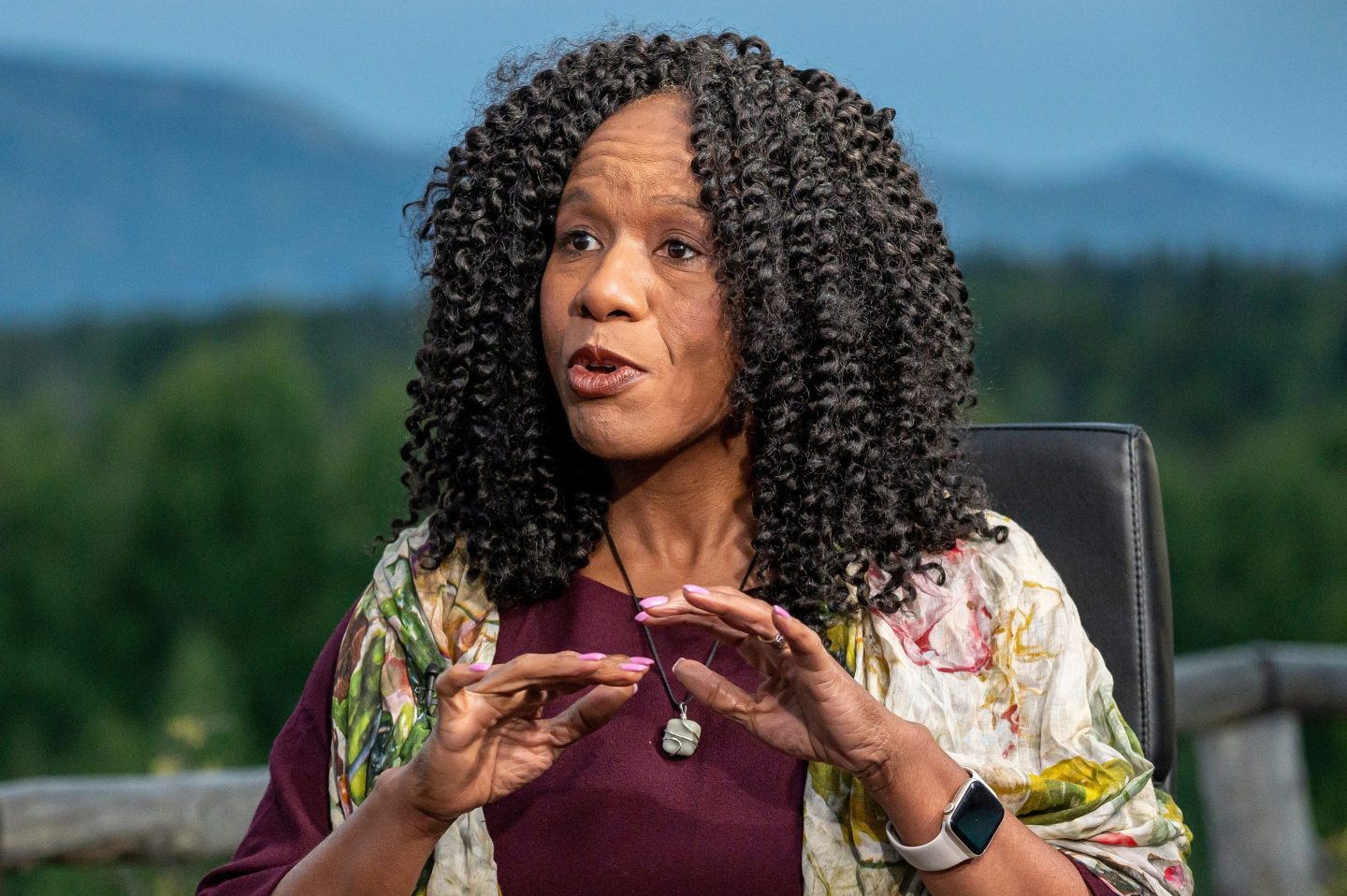
Nela Richardson, chief economist at Automatic Data Processing Inc. (ADP), during a Bloomberg Television interview at the Jackson Hole economic symposium in Moran, Wyoming, US, on Friday, Aug. 25, 2023. David Paul Morris/Bloomberg via Getty Images
Add Fortune on Google for similar content.

The debate about what AI is doing to white-collar work has been loud, contentious, and — if you talk to Nela Richardson — almost entirely about the wrong thing.

Recommended Video

Richardson is ADP’s chief economist, which means she sits atop one of the most complete real-time pictures of American work that exists — payroll data, job postings, and wage records, covering roughly one in six U.S. workers. She is also running what she calls “the great job unbundling,” a project launched this past January at Davos in partnership with the Stanford Digital Economy Lab and its resident AI thought leader, Erik Brynjolfsson.

“In the age of AI,” as Richardson has written, “work won’t be defined by job titles. It will be defined by what people actually do.” This is why her project seeks to measure the labor market not by job creation and destruction — the traditional economist’s scorecard — but by the creation and destruction of individual tasks within jobs. ADP has collected millions of job postings going back years and using natural language processing, Richardson’s team extracts specific work activities from the text of those postings and maps them against O*NET, the Department of Labor’s catalog of occupational tasks.

From there, the team compares the similarity of tasks across wildly different job categories. If a software developer and marketing director are doing the same tasks because AI makes that possible, Richardson doesn’t group those under two different occupations as the old framework would have. To her, they share transferable value. Then the team assigns a wage value to each discrete task by cross-referencing ADP’s payroll data. The result, when complete, will be something that doesn’t yet exist anywhere: a real-time map of which specific activities are becoming more valuable as AI advances, and which are being absorbed — priced toward zero.

When I sat down with Richardson recently, she laid out three conclusions that follow from that research. Depending on where you sit, they should make you either very excited or very frightened.

The first: white-collar work is going away

The dream of the second half of the 20th century and the early 21st century was the office job. Millions of Americans treated college not as a rarity, but as a natural stepping stone into the world of cubicles and six-figure salaries. As many others have noted, including Fortune contributor Bhaskar Chakravorti, dean of global business at the Tufts Fletcher School, this is now structurally unwinding, rather than slowly eroding.

To Richardson, this is not primarily because of AI, which is the story most people are telling. It’s going away because the historical accident that created it is over.

“No one ever promised a 50-year cycle for white-collar work,” Richardson told me. “This has really taken off with the expansion of the internet,” she said, which created so many “digital jobs” that people could do in front of a computer. But just because that’s true, it won’t necessarily stay the case, she pointed out. “I think there was this embedded assumption that these jobs would just keep going on and on forever. Really what started with the boomer generation would just be handed down through millennials into Gen Z. But that was never a guarantee.”

The explosion of office jobs — lawyers, accountants, analysts, editors, managers of managers — was a product of specific technologies: the personal computer, the internet, the spreadsheet. Those tools conjured a kind of cognitive labor into existence that hadn’t existed at scale before them. And somewhere along the way, the people doing that labor mistook a technology-driven historical moment for a birthright. They assumed the jobs their parents handed them would compound forward, generation after generation. That the white-collar compact —

Richardson’s ADP data makes visible in real time how the white-collar compact of weekends off, autonomy, and a career that lived in your head rather than your hands increasingly looks like an accident of timing. Professional and business services grew from 14.9% of U.S. private employment in 2000 to a record 17.6% in 2022, and then began to contract. Beneath that headline, the composition was already shifting — administrative and support roles fell from 47.5% of the supersector in 2020 to 39.5% by 2025, while highly skilled technical and scientific roles grew to fill the gap. The category was hollowing from the bottom long before the current AI panic arrived.

The dread moving through professional offices right now is the sound of that assumption collapsing. These jobs exist because we earned them was always the comforting version. These jobs exist because technology created them was always more honest.

The second: knowledge work is going everywhere

This is where Richardson’s analysis gets surprising, cutting across the next embedded assumption everyone makes about work.

If you follow the task-level logic of what AI actually does, Richardson told me, the end state isn’t fewer knowledge workers, but many more of them. Automating the routine layer of any job — the retrieval, the scheduling, the mechanical assembly — leaves behind work that requires judgment, creativity and autonomy. By definition, that is knowledge work. “If you give people more autonomy, that’s associated with more productivity and more engagement,” Richardson said. “That’s what our research shows. Decades of research.” (ADP referred Fortune to this research in particular from November 2024.)

The project with Stanford is also pointing in this direction, she said: as AI absorbs the slog of work, the remaining tasks across nearly every occupation start to look more like what we used to reserve for the corner office. To Richardson, autonomy is the defining aspect of knowledge work — “people may tell you what to do, but they don’t tell you how to do it.” Once AI and robotics advance to the point where autonomy is much more central to each job, then knowledge work will be everywhere in the economy, she predicted.

Richardson cited her own blog post on “the rise — and rise — of knowledge work,” where she noted that most employment declines in these industries are coming in support roles, not, as management guru Peter Drucker noted, the jobs where people “think for a living.”

This is, in the end, what Richardson and a handful of economists — among them University of Chicago behavioral economist Alex Imas and George Mason’s Tyler Cowen — are converging on. The popular fear is that AI automates 90% of a job, leaving a person with 10% of their former worth. Richardson’s prediction is the opposite: “I think it would stretch out and stretch wide.” Jobs will expand directionally, she said, absorbing adjacent tasks and finding new value in things that were always there but buried under the slog. You don’t end up with a fraction of a job. You end up with a different one — one that looks more like knowledge work, even if you didn’t see yourself as that kind of worker.

The third: companies are just learning to make conscious choices

This is the most unsettling conclusion, because it’s the most contingent. The first two are directional. This one is a race.

Richardson’s point is that the pandemic trained companies to change fast but never taught them to change deliberately. “The pandemic taught companies that they can change really quickly, and so every company is trying to change for AI,” she said. “What it didn’t teach, though, is that change is actually a choice.”

How do you change? Why do you change? What is worth adopting? What is not? That’s something the corporate sector is only building now, Richardson said. She’s hopeful her research can be part of the process. “We want a project that can help companies and workers transition — if AI is going to impact work, then what is work? ADP knows, we have the data, let’s break work apart and help people navigate it.”

The tools arrived before the wisdom. AI is being deployed within organizations that are only now developing the infrastructure to ask the right questions about it — not what this can do, but what problem we are solving for the people doing the work. That gap between the speed of adoption and the deliberateness of purpose is where most of the current damage is occurring. And closing it is not a technology problem. It’s a change-management problem that most companies are solving in real time without a blueprint.

Whether that’s exciting or frightening probably depends on how much you trust the organizations making those choices — and how much of your job was already the part that was supposed to matter.


Subscribe to Fortune Gulf Brief. Every Tuesday, this new newsletter delivers clear-eyed, authoritative intelligence on the deals, decisions, policies, and power shifts shaping one of the world’s most consequential regions, written for the people who need to act on it. Sign up here.
About the Author
Nick Lichtenberg
By Nick LichtenbergBusiness Editor
LinkedIn icon

Nick Lichtenberg is business editor and was formerly Fortune's executive editor of global news.

See full bioRight Arrow Button Icon
Add Fortune on Google for similar content.

Latest in AI

Finance
Lorem ipsum dolor sit amet, consectetur adipiscing elit, sed do eiusmod tempor incididunt ut labore et dolore magna aliqua. Ut enim ad minim veniam
By Fortune Editors
October 20, 2025
Finance
Lorem ipsum dolor sit amet, consectetur adipiscing elit, sed do eiusmod tempor incididunt ut labore et dolore magna aliqua. Ut enim ad minim veniam
By Fortune Editors
October 20, 2025
Finance
Lorem ipsum dolor sit amet, consectetur adipiscing elit, sed do eiusmod tempor incididunt ut labore et dolore magna aliqua. Ut enim ad minim veniam
By Fortune Editors
October 20, 2025
Finance
Lorem ipsum dolor sit amet, consectetur adipiscing elit, sed do eiusmod tempor incididunt ut labore et dolore magna aliqua. Ut enim ad minim veniam
By Fortune Editors
October 20, 2025
Finance
Lorem ipsum dolor sit amet, consectetur adipiscing elit, sed do eiusmod tempor incididunt ut labore et dolore magna aliqua. Ut enim ad minim veniam
By Fortune Editors
October 20, 2025
Finance
Lorem ipsum dolor sit amet, consectetur adipiscing elit, sed do eiusmod tempor incididunt ut labore et dolore magna aliqua. Ut enim ad minim veniam
By Fortune Editors
October 20, 2025

Most Popular

Finance
Lorem ipsum dolor sit amet, consectetur adipiscing elit, sed do eiusmod tempor incididunt ut labore et dolore magna aliqua. Ut enim ad minim veniam
By Fortune Editors
October 20, 2025
Finance
Lorem ipsum dolor sit amet, consectetur adipiscing elit, sed do eiusmod tempor incididunt ut labore et dolore magna aliqua. Ut enim ad minim veniam
By Fortune Editors
October 20, 2025
Finance
Lorem ipsum dolor sit amet, consectetur adipiscing elit, sed do eiusmod tempor incididunt ut labore et dolore magna aliqua. Ut enim ad minim veniam
By Fortune Editors
October 20, 2025
Finance
Lorem ipsum dolor sit amet, consectetur adipiscing elit, sed do eiusmod tempor incididunt ut labore et dolore magna aliqua. Ut enim ad minim veniam
By Fortune Editors
October 20, 2025
Finance
Lorem ipsum dolor sit amet, consectetur adipiscing elit, sed do eiusmod tempor incididunt ut labore et dolore magna aliqua. Ut enim ad minim veniam
By Fortune Editors
October 20, 2025
Finance
Lorem ipsum dolor sit amet, consectetur adipiscing elit, sed do eiusmod tempor incididunt ut labore et dolore magna aliqua. Ut enim ad minim veniam
By Fortune Editors
October 20, 2025
Fortune Secondary Logo
Rankings
  • 100 Best Companies
  • Fortune 500
  • Global 500
  • Fortune 500 Europe
  • Most Powerful Women
  • World's Most Admired Companies
  • See All Rankings
  • Lists Calendar
Sections
  • Finance
  • Fortune Crypto
  • Features
  • Leadership
  • Health
  • Commentary
  • Success
  • Retail
  • Mpw
  • Tech
  • Lifestyle
  • CEO Initiative
  • Asia
  • Politics
  • Conferences
  • Europe
  • Newsletters
  • Personal Finance
  • Environment
  • Magazine
  • Education
Customer Support
  • Frequently Asked Questions
  • Customer Service Portal
  • Privacy Policy
  • Terms Of Use
  • Single Issues For Purchase
  • International Print
Commercial Services
  • Advertising
  • Fortune Brand Studio
  • Fortune Analytics
  • Fortune Conferences
  • Business Development
  • Group Subscriptions
About Us
  • About Us
  • Press Center
  • Work At Fortune
  • Terms And Conditions
  • Site Map
  • About Us
  • Press Center
  • Work At Fortune
  • Terms And Conditions
  • Site Map
  • Facebook icon
  • Twitter icon
  • LinkedIn icon
  • Instagram icon
  • Pinterest icon

Latest in AI

Anthropic CEO Dario Amodei speaking into a microphone.
NewslettersEye on AI
Decision on Anthropic’s Fable and Mythos models means the U.S. has a licensing regime for frontier AI—it just doesn’t want to admit it
By Jeremy KahnJune 16, 2026
2 hours ago
‘Making China the elephant in the room’: The G7 confronts its reliance on U.S. AI and Chinese energy supply chains, experts say
EuropeAnthropic
‘Making China the elephant in the room’: The G7 confronts its reliance on U.S. AI and Chinese energy supply chains, experts say
By Mia OsmonbekovJune 16, 2026
3 hours ago
elon musk poses while wearing a suit
AISpaceX
SpaceX’ surging stock paid for the $60 billion Cursor acquisition in just a few hours of trading—and it reveals Elon Musk’s new power
By Lily Mae LazarusJune 16, 2026
5 hours ago
Anthropic’s Fable fiasco leaves the door open for open-source AI, particularly cheaper models from China
AsiaAnthropic
Anthropic’s Fable fiasco leaves the door open for open-source AI, particularly cheaper models from China
By Nicholas GordonJune 16, 2026
7 hours ago
Dario Amodei, co-founder and chief executive officer of Anthropic, during the World Economic Forum (WEF) in Davos, Switzerland, on Tuesday, Jan. 20, 2026.
AIAnthropic
Anthropic’s IPO pitch has a new problem: the government can shut it down
By Eva RoytburgJune 16, 2026
7 hours ago
Dario Amodei, co-founder and chief executive officer of Anthropic, at Bloomberg House
AIAnthropic
The shutdown of Anthropic’s Mythos model sparks a global scramble for sovereign AI
By Beatrice NolanJune 16, 2026
8 hours ago

Most Popular

Current price of oil as of June 15, 2026
Personal Finance
Current price of oil as of June 15, 2026
By Joseph HostetlerJune 15, 2026
1 day ago
Team USA star Ricardo Pepi grew up in a trailer in El Paso—and his parents pawned their car title to fuel his soccer dream. Now, he’s in the World Cup
Success
Team USA star Ricardo Pepi grew up in a trailer in El Paso—and his parents pawned their car title to fuel his soccer dream. Now, he’s in the World Cup
By Preston ForeJune 15, 2026
1 day ago
Hundreds of Stanford students walked out of their grad ceremony to protest Google CEO’s commencement speech. It wasn’t all about AI
Big Tech
Hundreds of Stanford students walked out of their grad ceremony to protest Google CEO’s commencement speech. It wasn’t all about AI
By Tristan BoveJune 15, 2026
1 day ago
Current price of silver as of Monday, June 15, 2026
Personal Finance
Current price of silver as of Monday, June 15, 2026
By Joseph HostetlerJune 15, 2026
1 day ago
Current price of oil as of June 16, 2026
Personal Finance
Current price of oil as of June 16, 2026
By Joseph HostetlerJune 16, 2026
9 hours ago
Current price of gold as of June 15, 2026
Personal Finance
Current price of gold as of June 15, 2026
By Danny BakstJune 15, 2026
1 day ago

© 2026 Fortune Media IP Limited. All Rights Reserved. Use of this site constitutes acceptance of our Terms of Use and Privacy Policy | CA Notice at Collection and Privacy Notice | Do Not Sell/Share My Personal Information
FORTUNE is a trademark of Fortune Media IP Limited, registered in the U.S. and other countries. FORTUNE may receive compensation for some links to products and services on this website. Offers may be subject to change without notice.