
Good morning. As AI reshapes how companies operate, CFOs are increasingly becoming the executives responsible for ensuring AI actually delivers value across the enterprise.
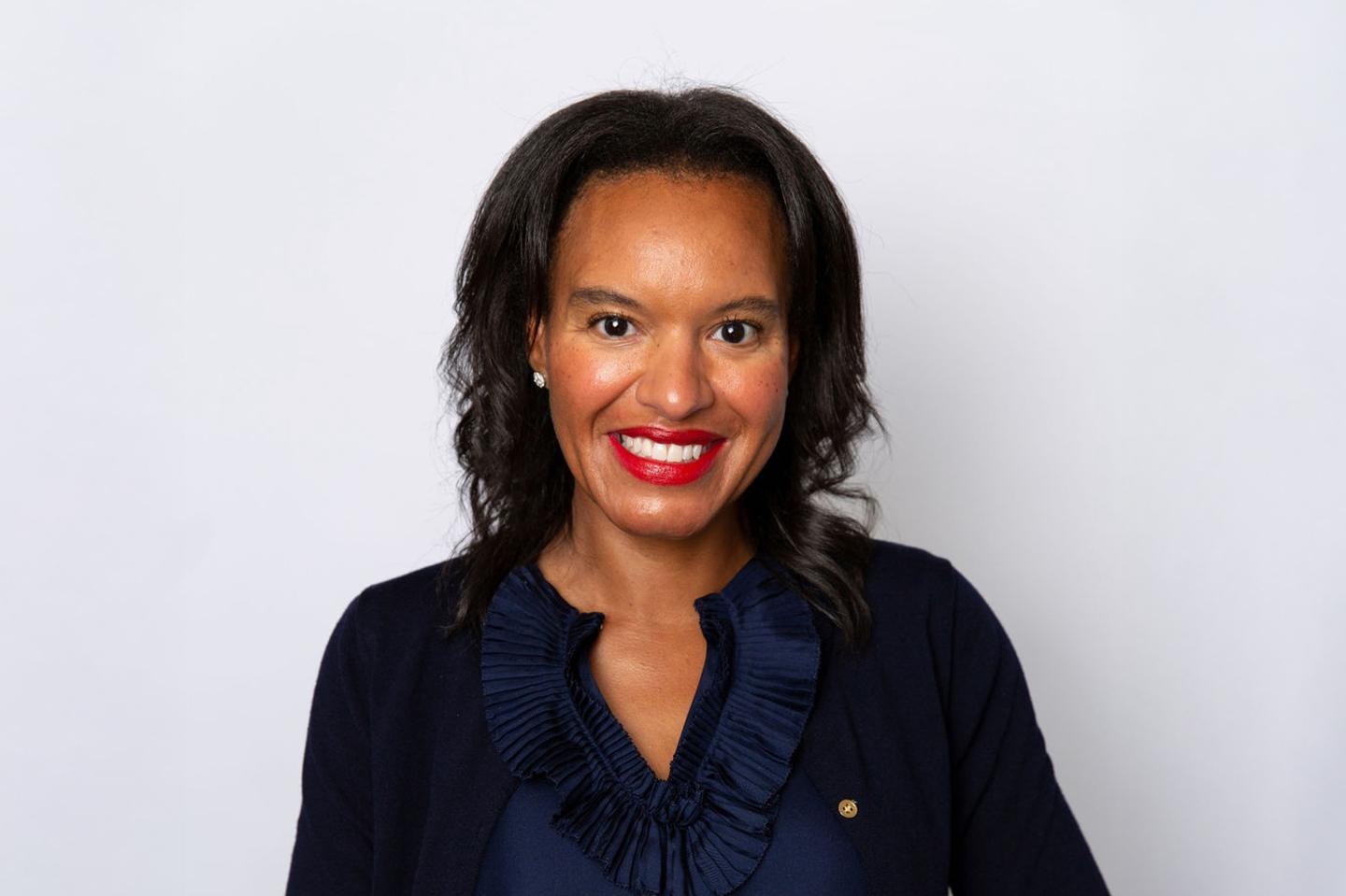
I recently spoke with Mandy Fields, who has spent seven years as CFO of e.l.f. Beauty, steering the cosmetics company through a solid run of growth. Now she has a new mandate: overseeing the company’s AI strategy.
Ekta Chopra was promoted from chief digital officer to the newly created role of chief technology and AI officer, in April, and is now part of Fields’ organization. It’s a structural shift that reflects a broader evolution in the CFO role, in which finance chiefs are no longer just stewards of the balance sheet but architects of enterprise-wide technology strategy.
“Now I have more of an enterprise perspective on how we’re going to leverage AI as a company,” Fields told me.
That perspective has crystallized into three priorities, she said. The first is governance. Fields is clear that she doesn’t want a free-for-all. “We don’t want this to be the Wild West, where there are just agents floating around everywhere,” she quipped, adding, “We want to be able to monitor what is being used in the company.” A cross-functional committee which spans finance, accounting, legal, and marketing—is the vehicle for establishing guardrails.
The second priority is readiness for agentic commerce. The company is working to ensure its direct-to-consumer sites are prepared for AI-driven shopping experiences, with backend upgrades slated for completion this summer, Fields said.
The third is enterprise efficiency. Fields pointed to the company’s SAP implementation, which began last July, as a model. A new phase is planned that will lean into AI capabilities for forecasting and accounts payable, pulling AI deeper into the close process.
Fields herself uses AI regularly, she said, including as a sounding board and for planning a team offsite, for example. “AI just helps you be more efficient overall,” Fields said.
Growth continues
The AI buildout is unfolding against a backdrop of continued financial momentum. For the quarter ended March 31, e.l.f. recently reported adjusted diluted EPS of 32 cents and net sales of $449.3 million, which is a 35% year-over-year increase that topped Wall Street expectations. It marked the company’s 29th consecutive quarter of net sales growth and seventh consecutive year of annual growth, Fields said.
E-commerce surged 63% for the year, driven by e.l.f.’s own dot-com properties, Amazon, and the addition of Rhode Skin. Retail channels grew 16%, buoyed by Sephora emerging as a top retail partner, a relationship that includes Rhode’s expansion into the EU this fall.
On tariffs, Fields said the company expects to pay an average tariff rate of roughly 35%, down from about 55% last year, and expects gross margins to remain roughly flat year over year. While the company faces potential $15 million to $20 million headwinds from rising costs, it expects to receive $55 million to $58.5 million in tariff refunds, which it plans to reinvest to lower retail prices and keep margins flat.
Marketing as a growth center
On the marketing front, Fields sees cultural relevance as a competitive edge—from the brand’s Coachella activation, which she described as an “e.l.f. Beauty takeover,” to its partnership with Survivor’s milestone 50th season. These efforts keep the brand in the conversation with Gen Z, millennials, and a growing Gen X cohort.
Kory Marchisotto, longtime e.l.f. Beauty CMO, whom Fields worked with closely, was promoted to the newly created role of president of e.l.f. Brands. New CMO, Oshiya Savur, joined about a month ago, and Fields said she has already spent considerable time with her—a sign that the CFO-CMO relationship, long a hallmark of e.l.f.’s strategy, is going strong.
Have a good weekend.
Sheryl Estrada
sheryl.estrada@fortune.co
Upcoming event: Join the Fortune Emerging CFO webinar, The Upskilling Imperative: Building Finance Teams for the Future, in partnership with Workday, on Tuesday, June 23, 11 a.m.–noon ET.
AI and automation are reshaping finance—but competitive advantage comes from how CFOs evolve their teams alongside the tech. This conversation digs into the skills gap to close now, where AI creates new openings, and where human judgment still wins. Leading CFOs will share what’s actually working. Subject matter expert: Casey Caram, Principal, Deloitte
Panelists: Jessica Ross, CFO, GitLab; Marie Myers, CFO, Hewlett Packard Enterprise; and Tim Arndt, CFO,Prologis.
You can register here.
Leaderboard
Notable moves this week:
Anna T. Chew, EVP, CFO and treasurer of UMH Properties, Inc. (NYSE: UMH), a real estate investment trust, will retire effective June 1. Chew has spent 35 years with the company, including over 31 years as CFO. She will remain in an advisory role for a transition period, and will remain a member of the company’s board of directors. Kevin S. Miller will succeed Chew as CFO. Miller has been serving as CFO of the UMH OZ Fund, LLC, since October 2022. Miller previously served as the CFO of Monmouth Real Estate Investment Corporation.
Siddharth "Sid" Thacker was appointed CFO of Peloton Interactive (Nasdaq: PTON), effective June 22. Thacker was previously CFO at Rent the Runway, where he led a financial and operational turnaround over three years in the role. Before becoming CFO, he served as SVP of finance and head of data science. Prior to Rent the Runway, he spent two decades as a public-markets investor. Thacker succeeds interim CFO Saqib Baig, who will remain the company's chief accounting officer. Baig was appointed in March when former CFO Liz Coddington stepped down to pursue another opportunity.
Milan Rao, global chief operating officer and CFO at SS Innovations International (Nasdaq: SSII), a surgical robotics company, is stepping down effective May 25. Rao informed the company on May 18 that he intended to step down, according to an SEC filing. SS Innovations has begun a search for a permanent successor in the CFO role. The filing didn't include reasons for Rao's departure. He joined the company in January. Previously, he was chief operating officer and chief revenue officer at MarketsandMarkets, a research and consulting firm.
William W. Harkins was promoted to EVP and CFO of Rollins, Inc. (NYSE: ROL), a global consumer and commercial services company, effective June 15. Harkins will succeed Kenneth D. Krause, who is resigning to join another company. Krause will advise the company during a transition period. Harkins has over 20 years of financial and accounting leadership experience. He joined Rollins in 2025 as chief accounting officer. He was previously chief accounting officer and corporate controller at Mohawk Industries, Inc. He also held leadership positions with Mars, Incorporated and The Coca-Cola Company.
Ash Walia was appointed CFO of Six Flags Entertainment Corporation (NYSE: FUN), North America’s largest regional amusement park operator, effective June 17. Walia has more than 20 years of experience. He has served as CFO of Hot Topic since 2021. Before Hot Topic, Walia was CFO of 99 Cents Only Stores. He has also held various senior leadership roles at Starbucks Corporation, including SVP of corporate finance. Earlier in his career, he spent seven years in supply chain financial roles at Kellogg’s, eventually serving as VP of finance, global supply chain.
Big Deal
Finance chiefs risk falling behind “breakaway firms” that are already generating outsized gains from AI by changing how they invest, govern, organize data and enable their teams, according to Gartner Inc.
At the Gartner Finance Symposium/Xpo 2026 this week, analysts Clement Christensen and Tamara Shipley explained that CFOs should pull together all AI investments across the enterprise and evaluate them as a portfolio. Finance leaders should ask whether each investment accelerates future AI deployment, supports top-line growth or builds reusable assets such as knowledge, governance and data products.
“The system that finance leaders build to empower people and machines to work better together is just as important as the machines themselves,” Christensen said. “In short, CFOs need to build a factory on purpose.”
Going deeper
Here are four Fortune weekend reads:
"Costco CEO Ron Vachris says tech is ‘elevating’ workers,’ not replacing them—as IBM and Delta bosses make the same bet on humans" —Preston Fore
"Big Four consulting has 2 AI nightmares. KPMG’s answer to both is the same" —Nick Lichtenberg
"A Google engineer is facing federal charges after allegedly using his employer’s confidential data to pocket $1.2 million on Polymarket" —Marco Quiroz-Gutierrez
"Warren Buffett says ‘you’re giving up your potential’ if you don’t have this one skill—and it has nothing to do with the stock market" —Sydney Lake
Overheard
"When a hamburger becomes a headline, it’s worth pausing to ask what that reveals. Not about the burger itself, but about the brands behind it."
—Pete Suerken, president, U.S., The Wendy’s Company, writes in a Fortune opinion piece, "The CEO burger battles exposed a truth every brand leader needs to hear."