• Home
  • Latest
  • Fortune 500
  • Finance
  • Tech
  • Leadership
  • Lifestyle
  • Rankings
  • Multimedia

Trendingnow

1

Analysts expected oil to surge above $200 but China has quietly kept prices half of that—and can’t for much longer

2

Marc Lore’s robots make 500 burrito bowls an hour. A human can make 45

3

Pentagon accuses Alibaba, Baidu and BYD, three of China's biggest companies, of supporting the Chinese military

1

Analysts expected oil to surge above $200 but China has quietly kept prices half of that—and can’t for much longer

2

Marc Lore’s robots make 500 burrito bowls an hour. A human can make 45

3

Pentagon accuses Alibaba, Baidu and BYD, three of China's biggest companies, of supporting the Chinese military
CommentaryTraining

We gave our 5,000 employees a week to do nothing but learn AI. We learned the biggest blockers are human ones 

By
Rob Giglio
Rob Giglio
Down Arrow Button Icon
By
Rob Giglio
Rob Giglio
Down Arrow Button Icon
May 28, 2026, 7:45 AM ET

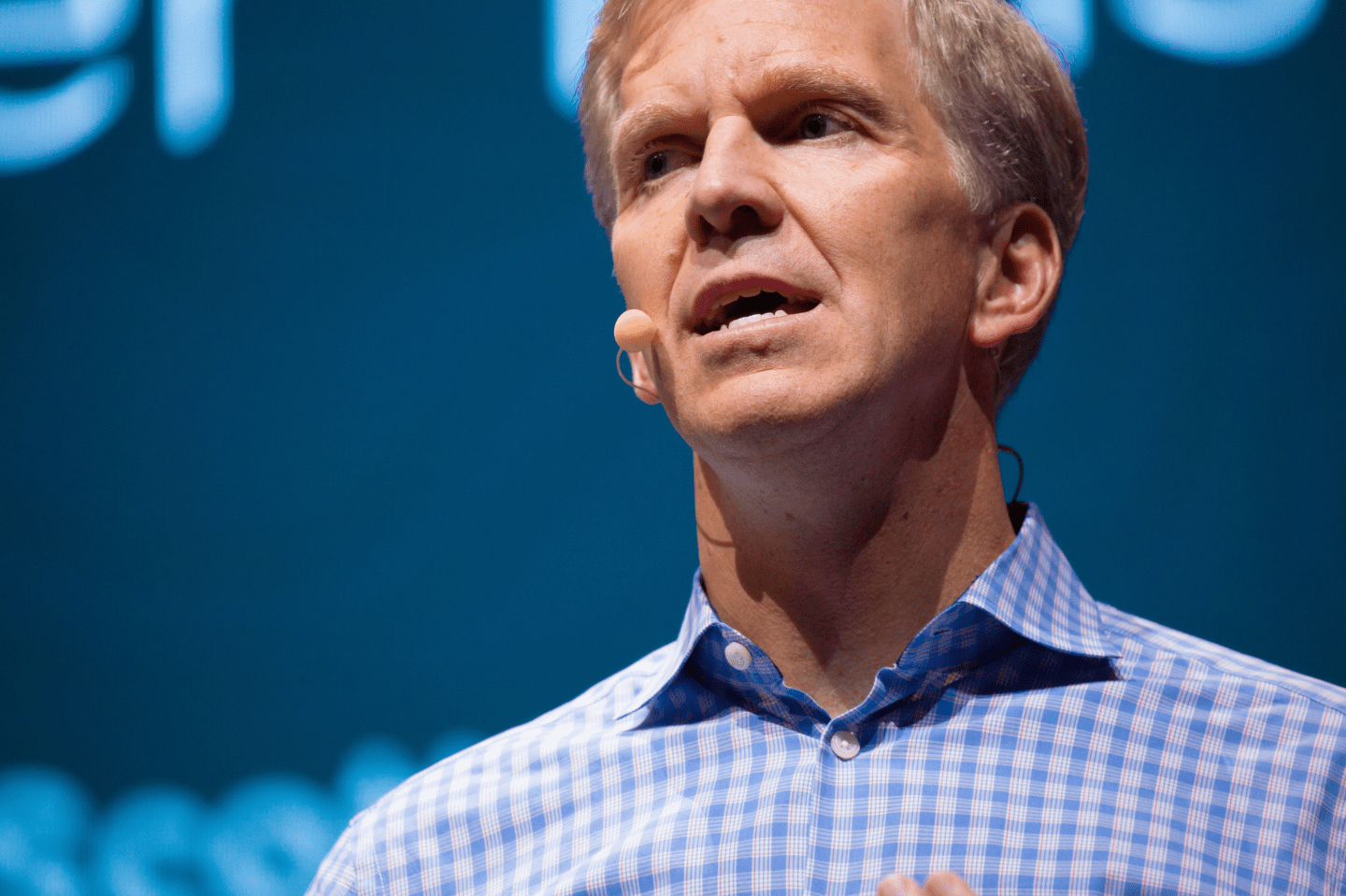
Rob Giglio is Chief Customer Officer at Canva.

g
Rob Giglio is Chief Customer Officer at Canva.courtesy of Canva

I’ll be honest about what we expected: give 5,000 smart, motivated people a full week with the best AI tools in the world, and watch transformation happen. What we actually discovered was more useful — and more humbling. The bottleneck wasn’t the technology. It was us.

Recommended Video

People didn’t know how to give themselves permission to experiment. They felt guilty stepping away from their inboxes. They defaulted to the use cases they already knew rather than exploring ones that might change how they worked. The tools were ready. The humans weren’t — not because they lacked capability, but because we hadn’t built the conditions for genuine exploration. That realization shaped everything we did next.

And it isn’t just a Canva problem. I see it in conversations with customers every day. Every company I talk to has bought the tools, rolled out the policies, maybe even mandated usage — and six months later, not much has changed. Adoption is flat. Teams revert to old habits. Leadership starts wondering why the investment isn’t translating into behavior change. The issue usually isn’t the technology. It’s the assumption that giving people access automatically changes how they work.

A few years ago, employees came to us saying they wanted dedicated time and access to tools to really explore what AI could do for their work. Pockets of teams were already making breakthroughs on their own. So we decided to clear the calendar for 5,000+ employees and give everyone a full week dedicated to exploring AI. What we’ve learned from doing this for two years has shaped how we help customers solve the same problem.

The Problem Most Organizations Are Facing

When I talk to customers, the frustration is consistent. You can put a tool in front of every person on the team and see almost nothing change. Deploying isn’t the same as enabling. Whether it’s a 500-person marketing team or a global enterprise, the pattern is the same. People need time to experiment and find the use case that actually clicks for their specific role. That doesn’t happen in a single lunch-and-learn. It doesn’t happen in the margins of an already packed workday. And as AI moves from simple question-and-answer prompts to agentic systems that can run entire workflows autonomously, the learning curve is only getting steeper.

The missing ingredient is almost always the same: people need actual time to experiment without feeling like they’re falling behind on their real job. Teams are under more pressure than ever to produce more, faster, at scale. Carving out space to learn feels like a luxury. Ironically, it’s probably the highest-leverage investment a company can make right now.

What We Tried

That insight is what AI Discovery Week became for us. Internally, it’s helped accelerate adoption across the company — and now over 90% of Canva employees are weekly if not daily users of AI assistants. Externally, it’s shaped how we think about enabling customers going through the exact same transition.

The entire program was designed around one idea: meet people where they are. For go-to-market teams specifically, that meant three things:

  • Deeply learning Canva AI so they could better support customers
  • Improving how they used their broader AI tool stack internally
  • Creating space for play-and-build sessions where teams could prototype apps, content systems, and workflows that made their work better

From there, we layered in guided sessions, role-specific workshops, and leadership panels. We brought in teams from across Canva, Anthropic, OpenAI, and Google so employees could get hands-on with the tools shaping the industry in real time. We closed with a two-day hackathon where teams across the business submitted ideas.

The results were striking. One B2B growth marketer built a 7-agent workflow that pulls from Slack, sales calls, customer reviews, and online forums to automatically generate digital ad formats — saving 60 working days and freeing the creative team to focus on higher-impact formats like motion and video. My Chief of Staff built a full end-to-end app for Cannes Lions that coordinates scheduling across 20+ executive diaries, manages the Canva Cabana program, and pipes lead interactions directly into our CRM. By the end, as a company, we’d logged 26,000 hours of hands-on exploration.

What We Learned About AI Training That Actually Works

A few things became clear quickly.

First: most AI training fails because it’s too centralized. Use cases vary wildly across functions. A designer, a marketer, a salesperson, and an engineer are all going to use these tools differently. You can’t hand everyone the same playbook and expect behavior change.

Second: community accelerates adoption faster than formal enablement ever will. The hackathon operates as a friendly competition, with the best ideas celebrated in team meetings and shared across the company. Some of the most interesting projects came from people who wouldn’t normally work together — engineers pairing with marketers, salespeople collaborating with designers to solve a shared problem.

Third: you’re trying to create the moment where someone goes, “Wait — this actually works.” Once that happens, adoption becomes self-sustaining. People stop seeing AI as a trend and start treating it as part of their workflow.

What This Means for How You Hire

Alongside the training question, I’m often asked: “How do we hire for this?”

Most companies are approaching this the wrong way. The instinct is to screen entry-level candidates on AI familiarity. It’s the wrong question at the wrong level. Early in my career, a senior executive once asked me if I knew how to use Microsoft Word. He got a yes-or-no answer and learned nothing. Asking a recent grad whether they use AI is basically the modern version of that question. The answer tells you almost nothing.

The gap that actually matters is one, two, three levels up — the leaders shaping how their teams work. I recently spent close to 30% of a senior marketing leadership interview probing on this. A flat answer sounds like “I’d use ChatGPT to rewrite the brief.” What I was actually looking for was someone who could clearly articulate how they’d redesign workflows, rethink team output, and deploy emerging agentic tools in a practical way. That’s what modern leadership looks like now.

When you hire for AI fluency at the leadership level, you signal that it matters. When you train for it company-wide, you prove it.

Sustaining Momentum Is the Harder Work

A learning week is a catalyst, but what comes after is the real test.

We built ongoing infrastructure to sustain it: an AI Hub with self-paced courses, toolkits, and templates; fortnightly AI Forums to surface practical use cases from across the business; a network of AI Exemplars who lead regular roadshows on emerging tools and breakthroughs from inside the company. We also run an AI Show & Tell where product and research teams showcase the latest developments — keeping the whole company current.

For other leaders, the takeaway isn’t that you need to replicate this exact model. The specific format — the week, the hackathon, the hub — isn’t the point. The point is making AI adoption part of your culture, not just part of mandatory training.

The conversation around AI is still overly focused on tools. Most organizations don’t have a technology gap anymore — they have a behavior gap. The challenge now is helping teams build enough confidence and fluency to actually change how they work. That takes more than access and more than a week. It takes an honest reckoning with the human habits, anxieties, and organizational pressures that make real behavior change so difficult. The AI was never the hard part. We are.

The opinions expressed in Fortune.com commentary pieces are solely the views of their authors and do not necessarily reflect the opinions and beliefs of Fortune.

About the Author
By Rob Giglio
See full bioRight Arrow Button Icon

Latest in Commentary

Finance
Lorem ipsum dolor sit amet, consectetur adipiscing elit, sed do eiusmod tempor incididunt ut labore et dolore magna aliqua. Ut enim ad minim veniam
By Fortune Editors
October 20, 2025
Finance
Lorem ipsum dolor sit amet, consectetur adipiscing elit, sed do eiusmod tempor incididunt ut labore et dolore magna aliqua. Ut enim ad minim veniam
By Fortune Editors
October 20, 2025
Finance
Lorem ipsum dolor sit amet, consectetur adipiscing elit, sed do eiusmod tempor incididunt ut labore et dolore magna aliqua. Ut enim ad minim veniam
By Fortune Editors
October 20, 2025
Finance
Lorem ipsum dolor sit amet, consectetur adipiscing elit, sed do eiusmod tempor incididunt ut labore et dolore magna aliqua. Ut enim ad minim veniam
By Fortune Editors
October 20, 2025
Finance
Lorem ipsum dolor sit amet, consectetur adipiscing elit, sed do eiusmod tempor incididunt ut labore et dolore magna aliqua. Ut enim ad minim veniam
By Fortune Editors
October 20, 2025
Finance
Lorem ipsum dolor sit amet, consectetur adipiscing elit, sed do eiusmod tempor incididunt ut labore et dolore magna aliqua. Ut enim ad minim veniam
By Fortune Editors
October 20, 2025

Most Popular

Finance
Lorem ipsum dolor sit amet, consectetur adipiscing elit, sed do eiusmod tempor incididunt ut labore et dolore magna aliqua. Ut enim ad minim veniam
By Fortune Editors
October 20, 2025
Finance
Lorem ipsum dolor sit amet, consectetur adipiscing elit, sed do eiusmod tempor incididunt ut labore et dolore magna aliqua. Ut enim ad minim veniam
By Fortune Editors
October 20, 2025
Finance
Lorem ipsum dolor sit amet, consectetur adipiscing elit, sed do eiusmod tempor incididunt ut labore et dolore magna aliqua. Ut enim ad minim veniam
By Fortune Editors
October 20, 2025
Finance
Lorem ipsum dolor sit amet, consectetur adipiscing elit, sed do eiusmod tempor incididunt ut labore et dolore magna aliqua. Ut enim ad minim veniam
By Fortune Editors
October 20, 2025
Finance
Lorem ipsum dolor sit amet, consectetur adipiscing elit, sed do eiusmod tempor incididunt ut labore et dolore magna aliqua. Ut enim ad minim veniam
By Fortune Editors
October 20, 2025
Finance
Lorem ipsum dolor sit amet, consectetur adipiscing elit, sed do eiusmod tempor incididunt ut labore et dolore magna aliqua. Ut enim ad minim veniam
By Fortune Editors
October 20, 2025
Fortune Secondary Logo
Rankings
  • 100 Best Companies
  • Fortune 500
  • Global 500
  • Fortune 500 Europe
  • Most Powerful Women
  • World's Most Admired Companies
  • See All Rankings
  • Lists Calendar
Sections
  • Finance
  • Fortune Crypto
  • Features
  • Leadership
  • Health
  • Commentary
  • Success
  • Retail
  • Mpw
  • Tech
  • Lifestyle
  • CEO Initiative
  • Asia
  • Politics
  • Conferences
  • Europe
  • Newsletters
  • Personal Finance
  • Environment
  • Magazine
  • Education
Customer Support
  • Frequently Asked Questions
  • Customer Service Portal
  • Privacy Policy
  • Terms Of Use
  • Single Issues For Purchase
  • International Print
Commercial Services
  • Advertising
  • Fortune Brand Studio
  • Fortune Analytics
  • Fortune Conferences
  • Business Development
  • Group Subscriptions
About Us
  • About Us
  • Press Center
  • Work At Fortune
  • Terms And Conditions
  • Site Map
  • About Us
  • Press Center
  • Work At Fortune
  • Terms And Conditions
  • Site Map
  • Facebook icon
  • Twitter icon
  • LinkedIn icon
  • Instagram icon
  • Pinterest icon

Latest in Commentary

Three ways that Asia’s enterprises are adopting AI—and where they are falling behind
CommentaryOracle
Three ways that Asia’s enterprises are adopting AI—and where they are falling behind
By Garrett IlgJune 11, 2026
5 hours ago
gordon
CommentaryVenture Capital
Gordon Ritter: I predicted AI’s learning loop a decade ago. The doomers are still measuring the wrong thing
By Gordon RitterJune 11, 2026
14 hours ago
bessent
CommentarySocial Security
Social Security and Medicare are heading toward insolvency. Congress has 6 years to act
By Steve H. Hanke and David M. WalkerJune 11, 2026
16 hours ago
Digital sovereignty isn’t the same thing as digital isolation. Asia’s governments should be careful
Commentarydata sovereignty
Digital sovereignty isn’t the same thing as digital isolation. Asia’s governments should be careful
By Leonard LimJune 10, 2026
1 day ago
tim
CommentaryAirline industry
Merlin CTO: autonomy can rebuild the foundation of aviation — and national security
By Tim BurnsJune 9, 2026
3 days ago
dewar
CommentaryLeadership
I founded McKinsey’s CEO practice: Here’s why operational excellence is a liability right now
By Carolyn DewarJune 9, 2026
3 days ago

Most Popular

Analysts expected oil to surge above $200 but China has quietly kept prices half of that—and can’t for much longer
Energy
Analysts expected oil to surge above $200 but China has quietly kept prices half of that—and can’t for much longer
By Sasha RogelbergJune 10, 2026
1 day ago
Marc Lore’s robots make 500 burrito bowls an hour. A human can make 45
Innovation
Marc Lore’s robots make 500 burrito bowls an hour. A human can make 45
By Amanda GerutJune 9, 2026
2 days ago
Pentagon accuses Alibaba, Baidu and BYD, three of China's biggest companies, of supporting the Chinese military
Asia
Pentagon accuses Alibaba, Baidu and BYD, three of China's biggest companies, of supporting the Chinese military
By Kate O'Keeffe and BloombergJune 8, 2026
3 days ago
Corporate America has been draining the world's water. Matt Damon's new campaign calls on Gap, Starbucks, and Amazon to help give it back
Environment
Corporate America has been draining the world's water. Matt Damon's new campaign calls on Gap, Starbucks, and Amazon to help give it back
By Catherina GioinoJune 9, 2026
3 days ago
Current price of oil as of June 11, 2026
Personal Finance
Current price of oil as of June 11, 2026
By Joseph HostetlerJune 11, 2026
13 hours ago
Costco CEO Ron Vachris rose from forklift driver to the C-suite without a college degree: ‘Don’t chase a title’ is the career advice that got him there
Success
Costco CEO Ron Vachris rose from forklift driver to the C-suite without a college degree: ‘Don’t chase a title’ is the career advice that got him there
By Preston ForeJune 8, 2026
3 days ago

© 2026 Fortune Media IP Limited. All Rights Reserved. Use of this site constitutes acceptance of our Terms of Use and Privacy Policy | CA Notice at Collection and Privacy Notice | Do Not Sell/Share My Personal Information
FORTUNE is a trademark of Fortune Media IP Limited, registered in the U.S. and other countries. FORTUNE may receive compensation for some links to products and services on this website. Offers may be subject to change without notice.