
• Home
  • Latest
  • Fortune 500
  • Finance
  • Tech
  • Leadership
  • Lifestyle
  • Rankings
  • Multimedia

Trendingnow

1

As CEO of the $96 billion Sam’s Club, Latriece Watkins is testing her mettle at the warehouse retailer that produced CEOs for Walmart, Target, and Walgreens

2

As AI slashes white-collar jobs, Salesforce CEO Marc Benioff says almost no one is being hired—except in sales

3

Current price of oil as of May 29, 2026

1

As CEO of the $96 billion Sam’s Club, Latriece Watkins is testing her mettle at the warehouse retailer that produced CEOs for Walmart, Target, and Walgreens

2

As AI slashes white-collar jobs, Salesforce CEO Marc Benioff says almost no one is being hired—except in sales

3

Current price of oil as of May 29, 2026
AILabor

‘The gains will be substantial’: The AI shock is looking a lot like the China shock, and a top economist says that’s actually good news

Sasha Rogelberg
By
Sasha Rogelberg
Sasha Rogelberg
Reporter
Down Arrow Button Icon
Sasha Rogelberg
By
Sasha Rogelberg
Sasha Rogelberg
Reporter
Down Arrow Button Icon
May 10, 2026, 6:30 AM ET
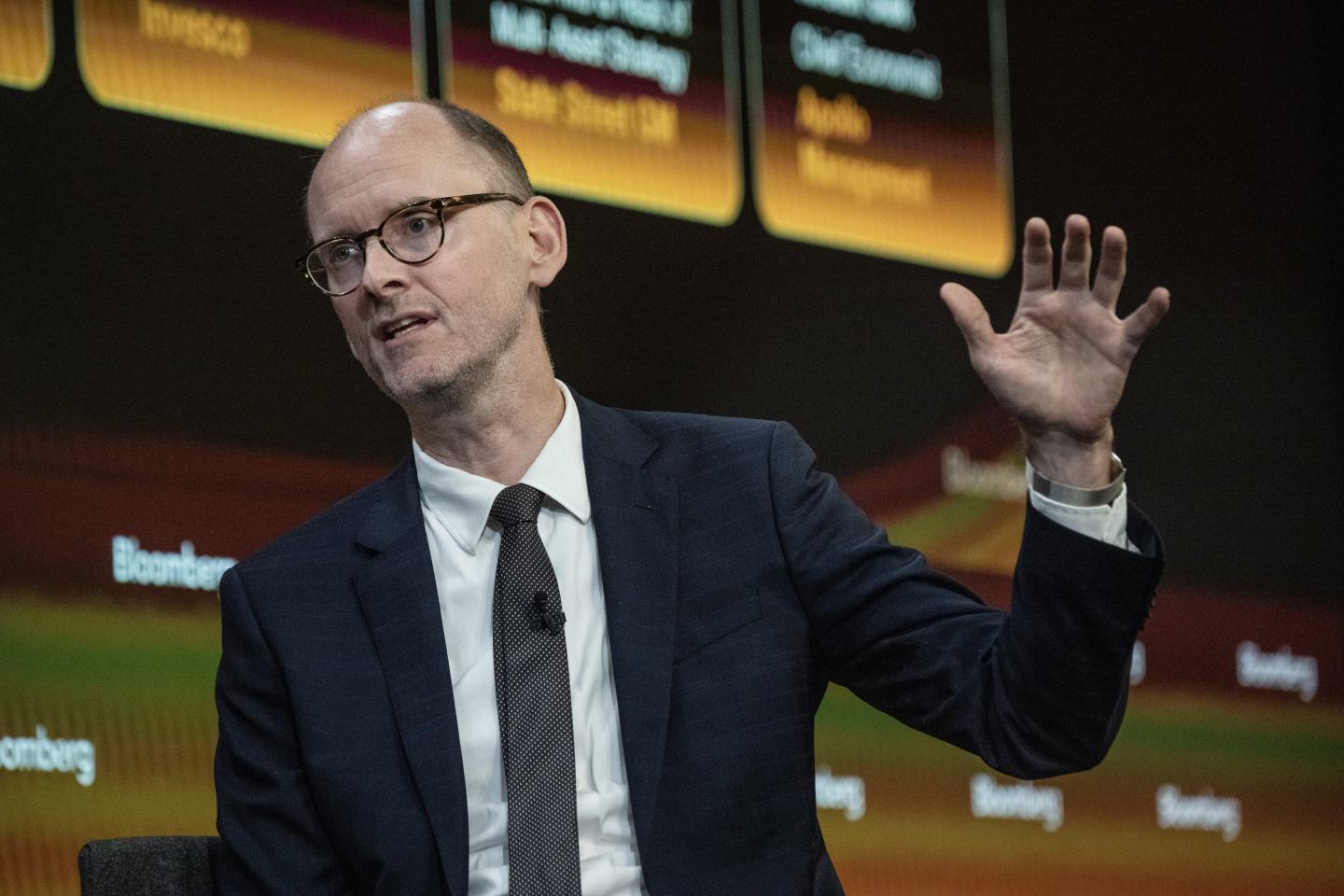
Torsten Slok, wearing a suit, speaks on a stage with a gold and black background.
Apollo chief economist Torsten Slok likened today's AI boom to the China shock of the early 2000s.Victor J. Blue/Bloomberg—Getty Images

In 2001, China joined the World Trade Organization, sparking a manufacturing surge for the country. China became the “world’s factory,” and its export rate grew 30% each year from 2001 to 2006, more than double the growth rate from the previous five years.

Recommended Video

While the U.S. reaped the benefits of cheap imports from its new normalized trade partner, the American manufacturing sector took a beating: China’s production explosion accounted for 59.3% of all U.S. manufacturing job losses between 2001 until 2019—about 4 million jobs. Economists David Autor, David Dorn, and Gordon Hanson coined this phenomenon the “China shock.”

A quarter of a century later, some economists have compared this industrial transformation and today’s rise of AI. Like the China shock, AI growth has been associated with a shift in labor: Despite many economists seeing little evidence, so far, of mass job displacement as a result of AI, tech companies have used the technology to justify laying off thousands of workers. Last month, Snap CEO Evan Spiegel announced the reduction of about 1,000 roles at the company, 16% of its staff. Klarna CEO Sebastian Siemiatkowski anticipates AI shrinking the company’s white-collar workforce by one-third by 2030.

“The AI shock is following the same playbook,” Apollo chief economist Torsten Slok said in a blog post this past week. “The displacement force is different this time, impacting cognitive and white-collar work rather than factory floors. But every other element of the structure is remarkably familiar.”

China shock vs. AI shock

According to Slok, the shared themes of labor market upheaval between the AI and the China shocks may not be a bad thing. Following China’s WTO entry, overall U.S. unemployment remained low. As for manufacturing, the sector’s share of the labor market was already in decline well before the China shock as the U.S. transitioned to a service-oriented economy.

Meanwhile, cheaper intermediary goods from China helped boost manufacturing productivity, resulting in a 50% increase in real manufacturing value added from 2001 to 2024.

Slok sees similar trends in productivity and labor in the AI future.

“If history is any guide, the gains will be substantial,” he said. “Just as cheaper Chinese inputs helped U.S. businesses grow and hire, AI is already accelerating business formation and productivity gains across the economy.”

Slok has previously invoked Jevons paradox to explain why AI will actually create more jobs overall, despite some employers attributing layoffs to the technology. In 1965, economist Willian Stanley Jevons observed that following the invention of the Watt steam engine that improved the efficiency of the coal fired engine, coal consumption actually increased significantly as coal-powered energy became cheaper, incentivizing greater coal use.

Similarly, Slok argued in a blog post last month, as AI makes some white-collar work more efficient, the market for those positions expands, creating more jobs. This paradox can be seen in real time in radiology: AI has been able to automate parts of the imaging process, but the number of active radiologists in the U.S. over the past decade has grown by about 10%.

In in latest post, Slok said AI has the potential to shift concentrations of jobs in different areas or create new jobs altogether, similar to how the rise of Chinese manufacturing cemented the U.S.’s service economy while growing its productivity in manufacturing.

“The bottom line is that we have seen this before,” he concluded. “Just as the China shock gave way to new industries and stronger businesses, AI will drive productivity gains and create opportunities that will more than replace jobs lost today.”

The case against a China shock redux

Autor, the economist who helped coin the term “China shock,” isn’t as convinced of the parallels. In an episode of the Possible podcast hosted by LinkedIn co-founder Reid Hoffman, he said AI “will not be, in any sense, a repeat of the China trade shock.”

Unlike Slok, Autor argued AI will displace jobs, and will do so differently than the China shock did. He suggested AI will target job functions, not specific industries or regional geographies, increasing the likelihood of AI creating even greater labor changes—though not wiping out any one profession.

How these labor changes are perceived will also be different than the early 2000s, Autor said. 

“The China trade shock was experienced by U.S. firms as a pure negative competitive shock,” he said. “All of a sudden, they couldn’t charge the prices they were charging. Someone else was charging much less. And so from a firm perspective, this was all bad.”

AI, however, has the potential to drive up productivity and lower prices, Autor argued, making it appealing from a business perspective, but potentially more disruptive to labor.

“AI will be experienced by many firms as productivity increases, so it may still lead to displacement of workers,” Autor said. “In fact it will, I don’t want to suggest it will not. But it will have a very different texture.”

In 2001, Fortune first convened the smartest people we know, bringing together CEOs and founders, builders and investors, thinkers and doers. Since then, Fortune Brainstorm Tech has been the place where bold ideas collide. From June 8–10, we will return to Aspen—where it all began—to mark 25 years of Brainstorm. Register now.
About the Author
Sasha Rogelberg
By Sasha RogelbergReporter
LinkedIn iconTwitter icon

Sasha Rogelberg is a reporter and former editorial fellow on the news desk at Fortune, covering retail and the intersection of business and popular culture.

See full bioRight Arrow Button Icon

Latest in AI

Finance
Lorem ipsum dolor sit amet, consectetur adipiscing elit, sed do eiusmod tempor incididunt ut labore et dolore magna aliqua. Ut enim ad minim veniam
By Fortune Editors
October 20, 2025
Finance
Lorem ipsum dolor sit amet, consectetur adipiscing elit, sed do eiusmod tempor incididunt ut labore et dolore magna aliqua. Ut enim ad minim veniam
By Fortune Editors
October 20, 2025
Finance
Lorem ipsum dolor sit amet, consectetur adipiscing elit, sed do eiusmod tempor incididunt ut labore et dolore magna aliqua. Ut enim ad minim veniam
By Fortune Editors
October 20, 2025
Finance
Lorem ipsum dolor sit amet, consectetur adipiscing elit, sed do eiusmod tempor incididunt ut labore et dolore magna aliqua. Ut enim ad minim veniam
By Fortune Editors
October 20, 2025
Finance
Lorem ipsum dolor sit amet, consectetur adipiscing elit, sed do eiusmod tempor incididunt ut labore et dolore magna aliqua. Ut enim ad minim veniam
By Fortune Editors
October 20, 2025
Finance
Lorem ipsum dolor sit amet, consectetur adipiscing elit, sed do eiusmod tempor incididunt ut labore et dolore magna aliqua. Ut enim ad minim veniam
By Fortune Editors
October 20, 2025

Most Popular

Finance
Lorem ipsum dolor sit amet, consectetur adipiscing elit, sed do eiusmod tempor incididunt ut labore et dolore magna aliqua. Ut enim ad minim veniam
By Fortune Editors
October 20, 2025
Finance
Lorem ipsum dolor sit amet, consectetur adipiscing elit, sed do eiusmod tempor incididunt ut labore et dolore magna aliqua. Ut enim ad minim veniam
By Fortune Editors
October 20, 2025
Finance
Lorem ipsum dolor sit amet, consectetur adipiscing elit, sed do eiusmod tempor incididunt ut labore et dolore magna aliqua. Ut enim ad minim veniam
By Fortune Editors
October 20, 2025
Finance
Lorem ipsum dolor sit amet, consectetur adipiscing elit, sed do eiusmod tempor incididunt ut labore et dolore magna aliqua. Ut enim ad minim veniam
By Fortune Editors
October 20, 2025
Finance
Lorem ipsum dolor sit amet, consectetur adipiscing elit, sed do eiusmod tempor incididunt ut labore et dolore magna aliqua. Ut enim ad minim veniam
By Fortune Editors
October 20, 2025
Finance
Lorem ipsum dolor sit amet, consectetur adipiscing elit, sed do eiusmod tempor incididunt ut labore et dolore magna aliqua. Ut enim ad minim veniam
By Fortune Editors
October 20, 2025
Fortune Secondary Logo
Rankings
  • 100 Best Companies
  • Fortune 500
  • Global 500
  • Fortune 500 Europe
  • Most Powerful Women
  • World's Most Admired Companies
  • See All Rankings
  • Lists Calendar
Sections
  • Finance
  • Fortune Crypto
  • Features
  • Leadership
  • Health
  • Commentary
  • Success
  • Retail
  • Mpw
  • Tech
  • Lifestyle
  • CEO Initiative
  • Asia
  • Politics
  • Conferences
  • Europe
  • Newsletters
  • Personal Finance
  • Environment
  • Magazine
  • Education
Customer Support
  • Frequently Asked Questions
  • Customer Service Portal
  • Privacy Policy
  • Terms Of Use
  • Single Issues For Purchase
  • International Print
Commercial Services
  • Advertising
  • Fortune Brand Studio
  • Fortune Analytics
  • Fortune Conferences
  • Business Development
  • Group Subscriptions
About Us
  • About Us
  • Press Center
  • Work At Fortune
  • Terms And Conditions
  • Site Map
  • About Us
  • Press Center
  • Work At Fortune
  • Terms And Conditions
  • Site Map
  • Facebook icon
  • Twitter icon
  • LinkedIn icon
  • Instagram icon
  • Pinterest icon

Latest in AI

Matt Rogers
Commentarystart-ups
I worked with Steve Jobs at Apple, where every OS update killed startups. AI founders are about to face the same thing
By Matt RogersMay 30, 2026
4 hours ago
tape
AILaw
AI is already helping people plan mass shootings. The law is barely paying attention
By Anat Lior and The ConversationMay 30, 2026
5 hours ago
p
AIPope
Two popes, two industrial revolutions — and one warning for Big AI
By Nick Lichtenberg, Nathan Schneider and The ConversationMay 30, 2026
5 hours ago
sam
CommentaryChips
The AI economy could crash on mounting chip costs — and those token costs won’t help
By Rakesh KumarMay 30, 2026
5 hours ago
pope
Commentaryregulation
The Pope and Anthropic agree: AI Companies cannot govern this alone
By Shlomit WagmanMay 30, 2026
7 hours ago
Dan Rogers speaking on stage.
AIAsana
Asana was battered by the AI boom. Now it’s betting its future on humans and agents working together.
By Beatrice NolanMay 29, 2026
21 hours ago

Most Popular

As CEO of the $96 billion Sam’s Club, Latriece Watkins is testing her mettle at the warehouse retailer that produced CEOs for Walmart, Target, and Walgreens
Magazine
As CEO of the $96 billion Sam’s Club, Latriece Watkins is testing her mettle at the warehouse retailer that produced CEOs for Walmart, Target, and Walgreens
By Emma HinchliffeMay 27, 2026
3 days ago
As AI slashes white-collar jobs, Salesforce CEO Marc Benioff says almost no one is being hired—except in sales
Success
As AI slashes white-collar jobs, Salesforce CEO Marc Benioff says almost no one is being hired—except in sales
By Emma BurleighMay 28, 2026
2 days ago
Current price of oil as of May 29, 2026
Personal Finance
Current price of oil as of May 29, 2026
By Joseph HostetlerMay 29, 2026
1 day ago
UBS says Ron DeSantis has a problem with his plan to help 92% of homeowners save on property taxes: His own state's data
Personal Finance
UBS says Ron DeSantis has a problem with his plan to help 92% of homeowners save on property taxes: His own state's data
By Nick LichtenbergMay 28, 2026
2 days ago
Jeff Bezos wants the bottom half of earners to pay zero income tax—he says nurses making just $75K should save $12K a year
Success
Jeff Bezos wants the bottom half of earners to pay zero income tax—he says nurses making just $75K should save $12K a year
By Preston ForeMay 21, 2026
9 days ago
Surging Treasury yields expose a brutal truth: America has no margin for error on its $39 trillion debt
Economy
Surging Treasury yields expose a brutal truth: America has no margin for error on its $39 trillion debt
By Shawn TullyMay 30, 2026
9 hours ago

© 2026 Fortune Media IP Limited. All Rights Reserved. Use of this site constitutes acceptance of our Terms of Use and Privacy Policy | CA Notice at Collection and Privacy Notice | Do Not Sell/Share My Personal Information
FORTUNE is a trademark of Fortune Media IP Limited, registered in the U.S. and other countries. FORTUNE may receive compensation for some links to products and services on this website. Offers may be subject to change without notice.