• Home
  • Latest
  • Fortune 500
  • Finance
  • Tech
  • Leadership
  • Lifestyle
  • Rankings
  • Multimedia
CommentaryAntitrust

I litigated the JetBlue-Spirit merger. A few thoughts on the future of antitrust in the airline industry

Nick Lichtenberg
By
Nick Lichtenberg
Nick Lichtenberg
Business Editor
Down Arrow Button Icon
Nick Lichtenberg
By
Nick Lichtenberg
Nick Lichtenberg
Business Editor
Down Arrow Button Icon
May 7, 2026, 4:00 AM ET
moore
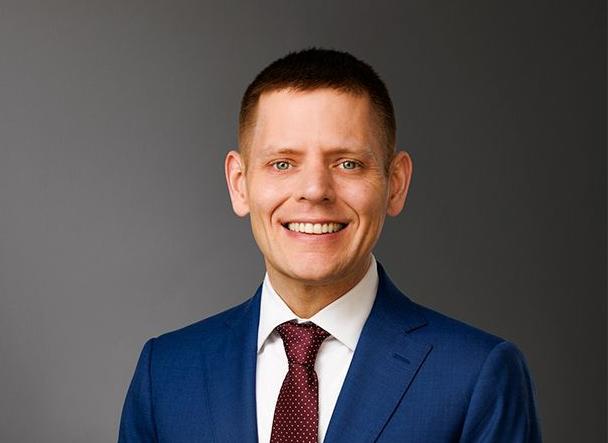
James "Jimmy" Moore is a partner at Axinn.courtesy of Axinn

Spirit Airlines’ collapse, like its launch more than three decades ago, will impact consumers and the airline industry—and the Antitrust Division’s airline-enforcement program—for years to come.

Recommended Video

Spirit’s limited leg space and ancillary fees sparked endless complaints and memes. But each time Spirit marketed a low fare, it changed the competitive dynamics on the routes it served. Sometimes, consumers—like the student traveling to her friend’s bachelorette party, or spring breakers heading to Vegas—chose Spirit. Even when customers chose a competitor, though, Spirit influenced the fares those rivals offered. That “Spirit Effect” is nearly universally accepted.

So how did we get here, watching flight NK1833 land in Dallas and close out the history of this once-promising airline? Some who questioned the Biden Administration’s decision to challenge JetBlue’s acquisition of Spirit have called this outcome a direct result of failed antitrust policy. As one of the Division attorneys who brought that case, I offer a few observations about why this outcome was not necessarily predictable at the time or unavoidable.

First, Spirit had another option on the table for which its management lobbied until shareholders chose JetBlue: Frontier. Also, during the investigation and ensuing litigation, no one—including the merging parties—suggested Spirit would liquidate without the merger. Spirit executives testified about plans for a return to profitability on a standalone basis. Lastly, airlines have unexpectedly been hit hard by soaring oil prices stemming from the Iranian conflict. Spirit’s model succeeded by minimizing its cost structure; when that strategy became untenable, so did the airline itself.

Regardless of whether the decision was right in 2023, a major U.S. airline has failed. Humility is necessary to ensure antitrust is calibrated for the industry of today, not the past. Below are some reflections on what Spirit’s demise means for antitrust moving forward.

Combining complementary networks can benefit consumers. Airlines operate distribution networks. Combining networks that serve different destinations, whether by merger or codeshare, can create more options for consumers. Regulators have sometimes argued that merging airlines do not need the merger to expand and serve new routes, including those served by their merger partner. That is true in some cases, but airlines have scarce resources. Boeing, Airbus, and Embraer produce only so many planes. Only so many pilots enter the workforce each year. In a world of constrained options, airlines often play to their strengths rather than expand into markets where they have little brand recognition. Allowing combinations of airlines with different hubs unlocks new itineraries that are real, not hypothetical. When pitching a deal, airlines should highlight complementarity and explain why their profit-maximizing incentive is to expand network options.

Local competitors still matter. While the benefits of mergers are relevant, the Division will continue to scrutinize city-pair routes where merging airlines compete. Transactions most likely to trigger scrutiny are those combining competitors with overlapping hubs, generating the largest number of overlaps. The number of overlaps matters, too. As seen in the Division’s decisions not to challenge Alaska/Hawaiian or Allegiant/Sun Country, a small number of overlaps may not doom a transaction, but as overlaps grow, so does the length of the review.

To persuade Division staff to close their investigations, parties should explain why competitors not currently serving the overlaps would do so following the transaction. Historical evidence of service is most useful. In its absence, parties should examine competitors’ networks to show regulators that serving the overlaps would align with competitors’ network strategy. That is even more critical when the proposed fix is a divestiture. Staff will ask why divestiture buyers would serve the overlaps routes rather than deploying assets elsewhere. But even when the divestitures will not guarantee entry on the overlaps, the Division has previously (and could again) credit divestitures that provide broader industry benefits, as it did in US Airways/American.

Don’t oversell, or undersell, the weakened competitor and failing firm defenses. As these defenses grow more common, so does skepticism from staff. On the weakened competitor defense, too much focus has been placed on financials and too little on real-world practicalities. This defense was never meant to be an accounting exercise. Both the antitrust agencies and parties can point to various financial metrics that tell a story about a company on its last legs or one in a turnaround; no one metric tells the whole story. Rather than poring over ledgers, agencies and parties are better served by asking what are the assets necessary to compete, and will they be available to the weakened company in the future. For airlines, consider planes, gates, and slots. Can the weakened competitor access these assets? If not, why not? Could an infusion of capital solve the problem?

On the failing firm defense, financials are necessary to the elements of proof.  But courts will also consider alternatives to the deal—both those that materialized during the bidding process and those that are available when the case comes before a federal judge. The failing company needs to show its work: a good-faith effort to explore viable options, even those with less value to shareholders. 

Scale matters, and government can support organic growth. Spirit failed, and JetBlue faces headwinds today, in part because they lack the scale, cost structure, loyalty programs, and credit card partnerships that are so lucrative for their larger peers. Consumer demand for travel has now surpassed pre-pandemic levels, but the supply must follow to keep prices low.

Federal, state, and local policymakers have several tools to encourage organic growth. Investments in new U.S. aircraft manufacturing could address the years-long backlog in order books. Enhanced funding for FAA inspectors could accelerate the return of grounded aircraft to service. A strategy to recruit and retain air-traffic controllers would increase operating capacity at airports and serve both competition and safety. Building additional airport infrastructure, including gates, ticket counters, and baggage areas, would let airlines serve demand they currently cannot. And improving public transit can ease pressures on airports that have exceeded their capacity. For example, here in Washington, DC, the expansion of the Metro system’s Silver Line to Dulles has made that airport a more viable alternative for consumers, thereby easing the traffic crunch at slot-constrained Reagan National.  


We can all learn from the events of the past few years. The path to a more competitive airline industry runs through both programs supporting organic growth and careful adaptation of antitrust policy to today’s realities—goals that serve airlines and their customers alike.

The opinions expressed in Fortune.com commentary pieces are solely the views of their authors and do not necessarily reflect the opinions and beliefs of Fortune.

Join us at the Fortune Workplace Innovation Summit May 19–20, 2026, in Atlanta. The next era of workplace innovation is here—and the old playbook is being rewritten. At this exclusive, high-energy event, the world’s most innovative leaders will convene to explore how AI, humanity, and strategy converge to redefine, again, the future of work. Register now.
About the Author
Nick Lichtenberg
By Nick LichtenbergBusiness Editor
LinkedIn icon

Nick Lichtenberg is business editor and was formerly Fortune's executive editor of global news.

See full bioRight Arrow Button Icon

Latest in Commentary

Finance
Lorem ipsum dolor sit amet, consectetur adipiscing elit, sed do eiusmod tempor incididunt ut labore et dolore magna aliqua. Ut enim ad minim veniam
By Fortune Editors
October 20, 2025
Finance
Lorem ipsum dolor sit amet, consectetur adipiscing elit, sed do eiusmod tempor incididunt ut labore et dolore magna aliqua. Ut enim ad minim veniam
By Fortune Editors
October 20, 2025
Finance
Lorem ipsum dolor sit amet, consectetur adipiscing elit, sed do eiusmod tempor incididunt ut labore et dolore magna aliqua. Ut enim ad minim veniam
By Fortune Editors
October 20, 2025
Finance
Lorem ipsum dolor sit amet, consectetur adipiscing elit, sed do eiusmod tempor incididunt ut labore et dolore magna aliqua. Ut enim ad minim veniam
By Fortune Editors
October 20, 2025
Finance
Lorem ipsum dolor sit amet, consectetur adipiscing elit, sed do eiusmod tempor incididunt ut labore et dolore magna aliqua. Ut enim ad minim veniam
By Fortune Editors
October 20, 2025
Finance
Lorem ipsum dolor sit amet, consectetur adipiscing elit, sed do eiusmod tempor incididunt ut labore et dolore magna aliqua. Ut enim ad minim veniam
By Fortune Editors
October 20, 2025

Most Popular

Finance
Lorem ipsum dolor sit amet, consectetur adipiscing elit, sed do eiusmod tempor incididunt ut labore et dolore magna aliqua. Ut enim ad minim veniam
By Fortune Editors
October 20, 2025
Finance
Lorem ipsum dolor sit amet, consectetur adipiscing elit, sed do eiusmod tempor incididunt ut labore et dolore magna aliqua. Ut enim ad minim veniam
By Fortune Editors
October 20, 2025
Finance
Lorem ipsum dolor sit amet, consectetur adipiscing elit, sed do eiusmod tempor incididunt ut labore et dolore magna aliqua. Ut enim ad minim veniam
By Fortune Editors
October 20, 2025
Finance
Lorem ipsum dolor sit amet, consectetur adipiscing elit, sed do eiusmod tempor incididunt ut labore et dolore magna aliqua. Ut enim ad minim veniam
By Fortune Editors
October 20, 2025
Finance
Lorem ipsum dolor sit amet, consectetur adipiscing elit, sed do eiusmod tempor incididunt ut labore et dolore magna aliqua. Ut enim ad minim veniam
By Fortune Editors
October 20, 2025
Finance
Lorem ipsum dolor sit amet, consectetur adipiscing elit, sed do eiusmod tempor incididunt ut labore et dolore magna aliqua. Ut enim ad minim veniam
By Fortune Editors
October 20, 2025
Fortune Secondary Logo
Rankings
  • 100 Best Companies
  • Fortune 500
  • Global 500
  • Fortune 500 Europe
  • Most Powerful Women
  • World's Most Admired Companies
  • See All Rankings
  • Lists Calendar
Sections
  • Finance
  • Fortune Crypto
  • Features
  • Leadership
  • Health
  • Commentary
  • Success
  • Retail
  • Mpw
  • Tech
  • Lifestyle
  • CEO Initiative
  • Asia
  • Politics
  • Conferences
  • Europe
  • Newsletters
  • Personal Finance
  • Environment
  • Magazine
  • Education
Customer Support
  • Frequently Asked Questions
  • Customer Service Portal
  • Privacy Policy
  • Terms Of Use
  • Single Issues For Purchase
  • International Print
Commercial Services
  • Advertising
  • Fortune Brand Studio
  • Fortune Analytics
  • Fortune Conferences
  • Business Development
  • Group Subscriptions
About Us
  • About Us
  • Press Center
  • Work At Fortune
  • Terms And Conditions
  • Site Map
  • About Us
  • Press Center
  • Work At Fortune
  • Terms And Conditions
  • Site Map
  • Facebook icon
  • Twitter icon
  • LinkedIn icon
  • Instagram icon
  • Pinterest icon
James (“Jimmy”) Moore is an antitrust partner based in Axinn's Washington, DC office. Before joining the firm, Jimmy served as a Trial Attorney in the U.S. Department of Justice Antitrust Division, where he litigated merger challenges and conduct cases and led significant merger investigations. Jimmy is an active member of the antitrust bar and regularly contributes to the work of the American Bar Association Antitrust Law Section, where he currently serves as Vice Chair of the Trial Practice Committee. He began his legal career as a law clerk to the Honorable Daniel P. Jordan III of the U.S. District Court for the Southern District of Mississippi, and he previously externed with the Federal Trade Commission’s Bureau of Competition.

Latest in Commentary

moore
CommentaryAntitrust
I litigated the JetBlue-Spirit merger. A few thoughts on the future of antitrust in the airline industry
By Nick LichtenbergMay 7, 2026
57 minutes ago
ben
CommentaryFood and drink
Magnum owns Ben & Jerry’s. Now it’s destroying what made the brand worth buying
By David Bronner, Michael Bronner and Ryan GellertMay 7, 2026
2 hours ago
anis
CommentaryVenture Capital
AI, robotics, climate tech: How VCaaS helps corporations enter deep tech safely
By Anis UzzamanMay 6, 2026
19 hours ago
mckinsey
CommentaryProductivity
The U.S. leads in 14 of 18 industries shaping the future economy — but the lead isn’t guaranteed
By Kevin Russell, Chris Bradley and Kweilin EllingrudMay 6, 2026
20 hours ago
EQ
CommentaryPsychology
EQ training is failing leaders in the AI era. Here’s the brain science concept that can replace it
By David RockMay 6, 2026
21 hours ago
melania
CommentaryEducation
Teachers union chief: Melania Trump’s robot reveals what this administration really thinks of children
By Randi WeingartenMay 6, 2026
23 hours ago

Most Popular

A Michigan farm town voted down plans for a giant OpenAI-Oracle data center. Weeks later, construction began
Magazine
A Michigan farm town voted down plans for a giant OpenAI-Oracle data center. Weeks later, construction began
By Sharon GoldmanMay 6, 2026
1 day ago
Tokyo is throwing out its strict office dress code and asking workers to wear shorts amid the war in Iran energy crisis
Success
Tokyo is throwing out its strict office dress code and asking workers to wear shorts amid the war in Iran energy crisis
By Emma BurleighMay 5, 2026
2 days ago
Economists have found an answer to slowing cognitive decline: avoid retiring early, study finds
Economy
Economists have found an answer to slowing cognitive decline: avoid retiring early, study finds
By Sasha RogelbergMay 5, 2026
2 days ago
Mark Zuckerberg once gave a Facebook engineer startup advice at 2 a.m. while 'hanging out with all the interns'—she quit and raised millions after
Success
Mark Zuckerberg once gave a Facebook engineer startup advice at 2 a.m. while 'hanging out with all the interns'—she quit and raised millions after
By Orianna Rosa RoyleMay 6, 2026
15 hours ago
Dario Amodei spent last year warning of an AI white-collar bloodbath. Now he's changing the narrative
Economy
Dario Amodei spent last year warning of an AI white-collar bloodbath. Now he's changing the narrative
By Nick LichtenbergMay 5, 2026
2 days ago
AI could solve America's $39 trillion debt crisis—but only if Washington abandons displaced workers, Yale Budget Lab warns
Economy
AI could solve America's $39 trillion debt crisis—but only if Washington abandons displaced workers, Yale Budget Lab warns
By Jake AngeloMay 6, 2026
16 hours ago

© 2026 Fortune Media IP Limited. All Rights Reserved. Use of this site constitutes acceptance of our Terms of Use and Privacy Policy | CA Notice at Collection and Privacy Notice | Do Not Sell/Share My Personal Information
FORTUNE is a trademark of Fortune Media IP Limited, registered in the U.S. and other countries. FORTUNE may receive compensation for some links to products and services on this website. Offers may be subject to change without notice.