• Home
  • Latest
  • Fortune 500
  • Finance
  • Tech
  • Leadership
  • Lifestyle
  • Rankings
  • Multimedia
EnergyGlobal business

‘Take the money and run’: Johns Hopkins economist Steve Hanke on why the UAE quit OPEC

Shawn Tully
By
Shawn Tully
Shawn Tully
Senior Editor-at-Large
Down Arrow Button Icon
Shawn Tully
By
Shawn Tully
Shawn Tully
Senior Editor-at-Large
Down Arrow Button Icon
April 29, 2026, 3:00 AM ET
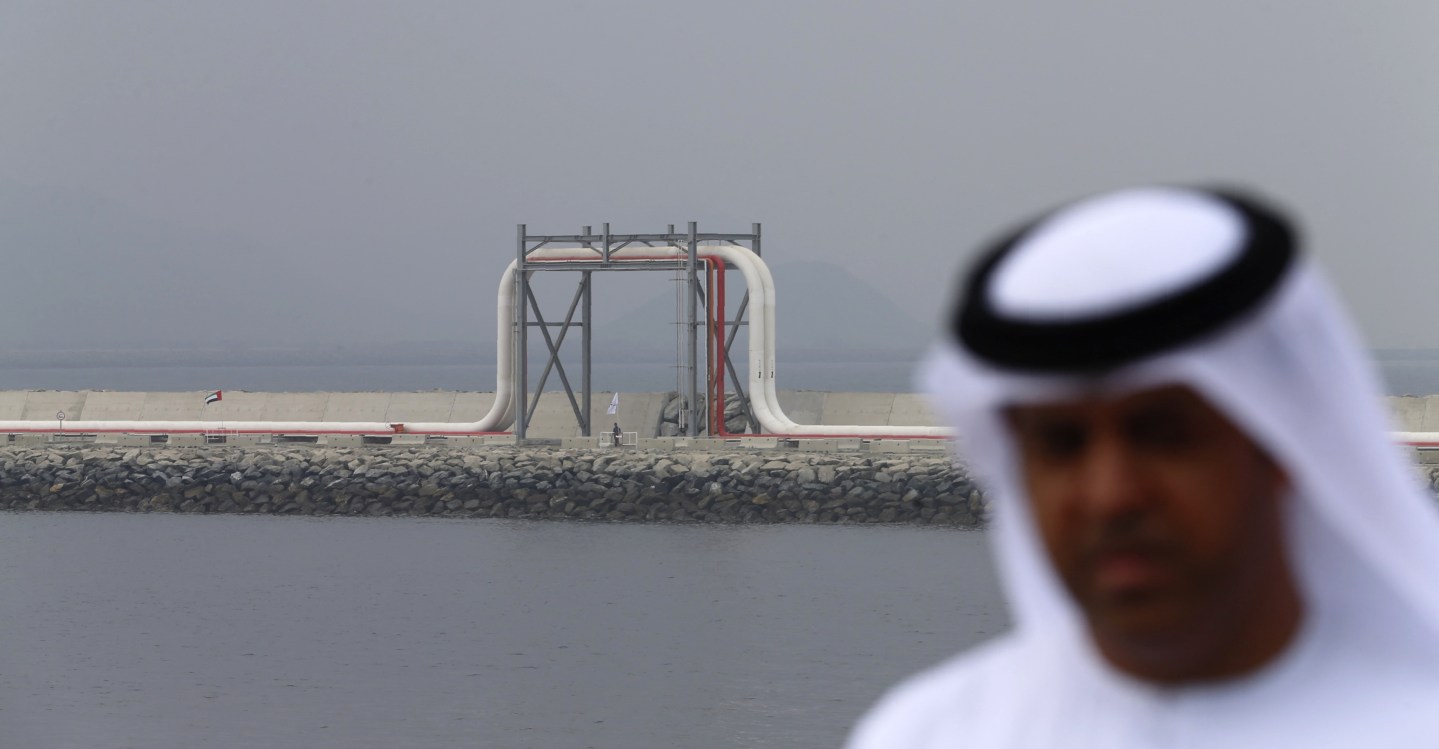
A pipeline in the UAE. The country announced it would be leaving OPEC in a surprise move.
A pipeline in the UAE. The country announced it would be leaving OPEC in a surprise move. KARIM SAHIB—AFP/Getty Images

The decision was shocking. But the announcement April 28 that the United Arab Emirates was leaving OPEC caps years of tension where the desert state chafed under the cartel’s quotas, and recently, encountered severe strain in its relationship with Saudi Arabia, the group’s most potent force by far. Though it had felt strains before, it was the war in Iran that pushed the UAE over the edge. “The war suddenly made job one for the UAE: ‘Take the money and run,’” says Steve H. Hanke, professor of applied economics at Johns Hopkins University. “First, OPEC stood partially in the way. Now, the Iran war poses a much bigger danger for a long time to come.”

Recommended Video

The UAE didn’t mention the Gulf conflict in its public announcement. Its press release stated: “The decision reflects the UAE’s long-term strategic and economic vision and evolving energy profile, including accelerated investment in domestic energy production.” Included was a confirmation that the UAE seeks to lift production beyond OPEC strictures—framed by understatement apparently designed to avoid freaking out the oil market. The UAE pledged to bring “additional production to the market in a gradual and measured manner, aligned with demand and market conditions.”

One observer the move didn’t surprise was Hanke, who served on the UAE’s Financial Advisory Council from 2008 to 2014. Years earlier, he had developed an economic model that addressed how fast an oil-rich nation should produce assuming different rates of decline in the “real,” or inflation-adjusted, price of crude. That projection specified the rising “discount rates” at which the reserves lost value the longer they stayed in the ground. The faster the projected decline in the dollars a barrel fetched on the world market, the quicker a nation should pump to maximize its profits. Hanke shared his work with the UAE’s economic leaders. “The system showing those optimal pumping rates made sense to them,” says Hanke. “If you think future prices are going higher, you slow down and wait to produce. If you think they’re going lower, you ramp up fast.”

Starting around 2021, the UAE began pushing hard for a much higher share of OPEC’s output. For Hanke, the reason was obvious: Its Abu Dhabi–based government was increasingly concerned about the rise in green energy that threatened a long-running slide in “real” fossil fuel prices. In fact, sustainable technologies looked so promising to the UAE that it invested heavily in projects ranging from solar farms to sustainable aircraft fuel to low-emission hydrogen. “That led to the strategy of ‘pump like hell today,’” says Hanke. In that vein, the UAE greatly accelerated its oil investments, and sought to put all that new capacity to work by pressing OPEC to lift its limit around 50% to roughly 5 million barrels per day. Those demands soured its relations with Saudi Arabia, and the two nations also clashed in their support of warring sides in both Yemen and Sudan. The UAE’s tacit recognition of Somaliland, and its role in moving Israel towards being the first nation to officially take that stance, have further antagonized the Saudis.

The haymaker, however, landed when fellow OPEC member Iran unleashed its drones and missiles on UAE’s oil and gas complex, an offensive that seemed unimaginable before the U.S.-Israeli attacks—even though the Emirates had antagonized Iran by courting both nations, and joining the Abraham Accords in 2020. Iran inflicted severe damage on at least five major UAE facilities, including a drone strike that ignited fires at Ruwais, one of the world’s largest refineries, and another at the key Port of Fujairah oil export hub. While the UAE still manages significant shipments via its pipeline to the Gulf of Oman, the war has crippled its freedom for moving crude and gas from its wells to world markets.

“The problem’s gone from a long-term decline in the real price, to the possibility that in the future, they won’t be able to sell all, or can only sell much less, because Iran controls the Strait of Hormuz, or periodically takes out part of its infrastructure,” says Hanke. The upshot: The UAE’s discount rate soared overnight. The new math dictates that the “present value” of oil produced in the future will be much lower than before the war. In other words, any opportunity to go, go like hell. “The UAE now has a big incentive to tilt oil production towards the present and away from the future,” says Hanke. Leaving OPEC and its quotas opens that door. This war is full of unforeseen consequences. None bigger than the bombshell on April 28 that this OPEC stalwart for nearly 60 years is bolting.
The Fortune 500 Innovation Forum will convene Fortune 500 executives, U.S. policy officials, top founders, and thought leaders to help define what’s next for the American economy, Nov. 16-17 in Detroit. Apply here.
About the Author
Shawn Tully
By Shawn TullySenior Editor-at-Large

Shawn Tully is a senior editor-at-large at Fortune, covering the biggest trends in business, aviation, politics, and leadership.

See full bioRight Arrow Button Icon

Latest in Energy

Finance
Lorem ipsum dolor sit amet, consectetur adipiscing elit, sed do eiusmod tempor incididunt ut labore et dolore magna aliqua. Ut enim ad minim veniam
By Fortune Editors
October 20, 2025
Finance
Lorem ipsum dolor sit amet, consectetur adipiscing elit, sed do eiusmod tempor incididunt ut labore et dolore magna aliqua. Ut enim ad minim veniam
By Fortune Editors
October 20, 2025
Finance
Lorem ipsum dolor sit amet, consectetur adipiscing elit, sed do eiusmod tempor incididunt ut labore et dolore magna aliqua. Ut enim ad minim veniam
By Fortune Editors
October 20, 2025
Finance
Lorem ipsum dolor sit amet, consectetur adipiscing elit, sed do eiusmod tempor incididunt ut labore et dolore magna aliqua. Ut enim ad minim veniam
By Fortune Editors
October 20, 2025
Finance
Lorem ipsum dolor sit amet, consectetur adipiscing elit, sed do eiusmod tempor incididunt ut labore et dolore magna aliqua. Ut enim ad minim veniam
By Fortune Editors
October 20, 2025
Finance
Lorem ipsum dolor sit amet, consectetur adipiscing elit, sed do eiusmod tempor incididunt ut labore et dolore magna aliqua. Ut enim ad minim veniam
By Fortune Editors
October 20, 2025

Most Popular

Finance
Lorem ipsum dolor sit amet, consectetur adipiscing elit, sed do eiusmod tempor incididunt ut labore et dolore magna aliqua. Ut enim ad minim veniam
By Fortune Editors
October 20, 2025
Finance
Lorem ipsum dolor sit amet, consectetur adipiscing elit, sed do eiusmod tempor incididunt ut labore et dolore magna aliqua. Ut enim ad minim veniam
By Fortune Editors
October 20, 2025
Finance
Lorem ipsum dolor sit amet, consectetur adipiscing elit, sed do eiusmod tempor incididunt ut labore et dolore magna aliqua. Ut enim ad minim veniam
By Fortune Editors
October 20, 2025
Finance
Lorem ipsum dolor sit amet, consectetur adipiscing elit, sed do eiusmod tempor incididunt ut labore et dolore magna aliqua. Ut enim ad minim veniam
By Fortune Editors
October 20, 2025
Finance
Lorem ipsum dolor sit amet, consectetur adipiscing elit, sed do eiusmod tempor incididunt ut labore et dolore magna aliqua. Ut enim ad minim veniam
By Fortune Editors
October 20, 2025
Finance
Lorem ipsum dolor sit amet, consectetur adipiscing elit, sed do eiusmod tempor incididunt ut labore et dolore magna aliqua. Ut enim ad minim veniam
By Fortune Editors
October 20, 2025
Fortune Secondary Logo
Rankings
  • 100 Best Companies
  • Fortune 500
  • Global 500
  • Fortune 500 Europe
  • Most Powerful Women
  • World's Most Admired Companies
  • See All Rankings
  • Lists Calendar
Sections
  • Finance
  • Fortune Crypto
  • Features
  • Leadership
  • Health
  • Commentary
  • Success
  • Retail
  • Mpw
  • Tech
  • Lifestyle
  • CEO Initiative
  • Asia
  • Politics
  • Conferences
  • Europe
  • Newsletters
  • Personal Finance
  • Environment
  • Magazine
  • Education
Customer Support
  • Frequently Asked Questions
  • Customer Service Portal
  • Privacy Policy
  • Terms Of Use
  • Single Issues For Purchase
  • International Print
Commercial Services
  • Advertising
  • Fortune Brand Studio
  • Fortune Analytics
  • Fortune Conferences
  • Business Development
  • Group Subscriptions
About Us
  • About Us
  • Press Center
  • Work At Fortune
  • Terms And Conditions
  • Site Map
  • About Us
  • Press Center
  • Work At Fortune
  • Terms And Conditions
  • Site Map
  • Facebook icon
  • Twitter icon
  • LinkedIn icon
  • Instagram icon
  • Pinterest icon

Latest in Energy

A group of people wait by a gap pump with their motorcycles.
EnergyOil
One economist’s ‘radical idea’ to solve the biggest energy crisis in history: a reverse OPEC
By Sasha RogelbergMay 2, 2026
5 hours ago
pakistan
CommentaryIran
Asia is being hammered by the Iran conflict’s economic fallout. The U.S. has the playbook to help—and every reason to
By Wendy Cutler and Jane MellsopMay 2, 2026
5 hours ago
In this handout photo provided by U.S. Central Command, U.S. forces patrol the Arabian Sea near M/V Touska on April 20, 2026, after firing upon the Iranian-flagged vessel that the U.S. accused of attempting to violate the U.S. naval blockade of Iranian ports near the Strait of Hormuz. (Handout Photo by the U.S. Navy via Getty Images)
PoliticsIran
The Iran war has turned the world’s shipping straits into a chessboard—and the U.S. aims to box out China from the Panama Canal to the Malacca Strait
By Jordan BlumMay 2, 2026
7 hours ago
ExxonMobil CEO Darren Woods, far right, listens as U.S. President Donald Trump,left, speaks during a meeting with oil company executives in the East Room of the White House on Jan. 9. President Trump is aiming to convince oil executives to support his plans in Venezuela, a country whose energy resources he says he expects to control for years to come. US forces seized Venezuelan president Nicolas Maduro in a sweeping military operation on January 3, with Trump making no secret that control of Venezuela's oil was at the heart of his actions.
EnergyIran
Exxon Mobil CEO sees ‘more to come’ on price spikes from Iran war as Exxon, Chevron beat on earnings despite plunging profits
By Jordan BlumMay 1, 2026
17 hours ago
male engineer working under pylon
EnergyElectricity
Utility CEOs pocket $626 million as American energy bills hit record highs
By Tristan BoveMay 1, 2026
20 hours ago
Current price of oil as of May 1, 2026
Personal FinanceOil
Current price of oil as of May 1, 2026
By Joseph HostetlerMay 1, 2026
1 day ago

Most Popular

Scott Bessent on financial literacy: 'it drives me crazy' to see young men in blue-collar construction jobs playing the lottery
Personal Finance
Scott Bessent on financial literacy: 'it drives me crazy' to see young men in blue-collar construction jobs playing the lottery
By Fatima Hussein and The Associated PressMay 1, 2026
1 day ago
China dominates the world's lithium supply. The U.S. just found 328 years' worth in its own backyard
North America
China dominates the world's lithium supply. The U.S. just found 328 years' worth in its own backyard
By Jake AngeloApril 30, 2026
2 days ago
The U.S. economy is booming — just not where 50 million Americans live
Commentary
The U.S. economy is booming — just not where 50 million Americans live
By Derek KilmerMay 1, 2026
1 day ago
Current price of oil as of May 1, 2026
Personal Finance
Current price of oil as of May 1, 2026
By Joseph HostetlerMay 1, 2026
1 day ago
A Chick-fil-A worker got fired and then showed up behind the register to allegedly refund himself over $80,000 in mac and cheese
Law
A Chick-fil-A worker got fired and then showed up behind the register to allegedly refund himself over $80,000 in mac and cheese
By Catherina GioinoMay 1, 2026
21 hours ago
Apple cofounder Ronald Wayne—whose stake would be worth up to $400 billion had he not sold it in 1976—says that at 91, he has no regrets
Success
Apple cofounder Ronald Wayne—whose stake would be worth up to $400 billion had he not sold it in 1976—says that at 91, he has no regrets
By Preston ForeApril 27, 2026
5 days ago

© 2026 Fortune Media IP Limited. All Rights Reserved. Use of this site constitutes acceptance of our Terms of Use and Privacy Policy | CA Notice at Collection and Privacy Notice | Do Not Sell/Share My Personal Information
FORTUNE is a trademark of Fortune Media IP Limited, registered in the U.S. and other countries. FORTUNE may receive compensation for some links to products and services on this website. Offers may be subject to change without notice.