• Home
  • Latest
  • Fortune 500
  • Finance
  • Tech
  • Leadership
  • Lifestyle
  • Rankings
  • Multimedia

Trendingnow

1

Bolt CEO says he let go of his entire HR team for creating problems that didn’t exist: ‘Those problems disappeared when I let them go’ 

2

Despite a $500 million net worth, Shaq just finished his fourth degree. He warns graduates: 'Your character will take you further than your resume'

3

Meet a 21-year-old community college student who's going to China as the first American woman welder in the trades Olympics

1

Bolt CEO says he let go of his entire HR team for creating problems that didn’t exist: ‘Those problems disappeared when I let them go’ 

2

Despite a $500 million net worth, Shaq just finished his fourth degree. He warns graduates: 'Your character will take you further than your resume'

3

Meet a 21-year-old community college student who's going to China as the first American woman welder in the trades Olympics
AIProductivity
Europe

AI is changing who gets to be an expert. Are your colleagues ready to become ‘directors of intelligence’?

By
Bruce Broussard
Bruce Broussard
Down Arrow Button Icon
By
Bruce Broussard
Bruce Broussard
Down Arrow Button Icon
April 29, 2026, 5:24 AM ET

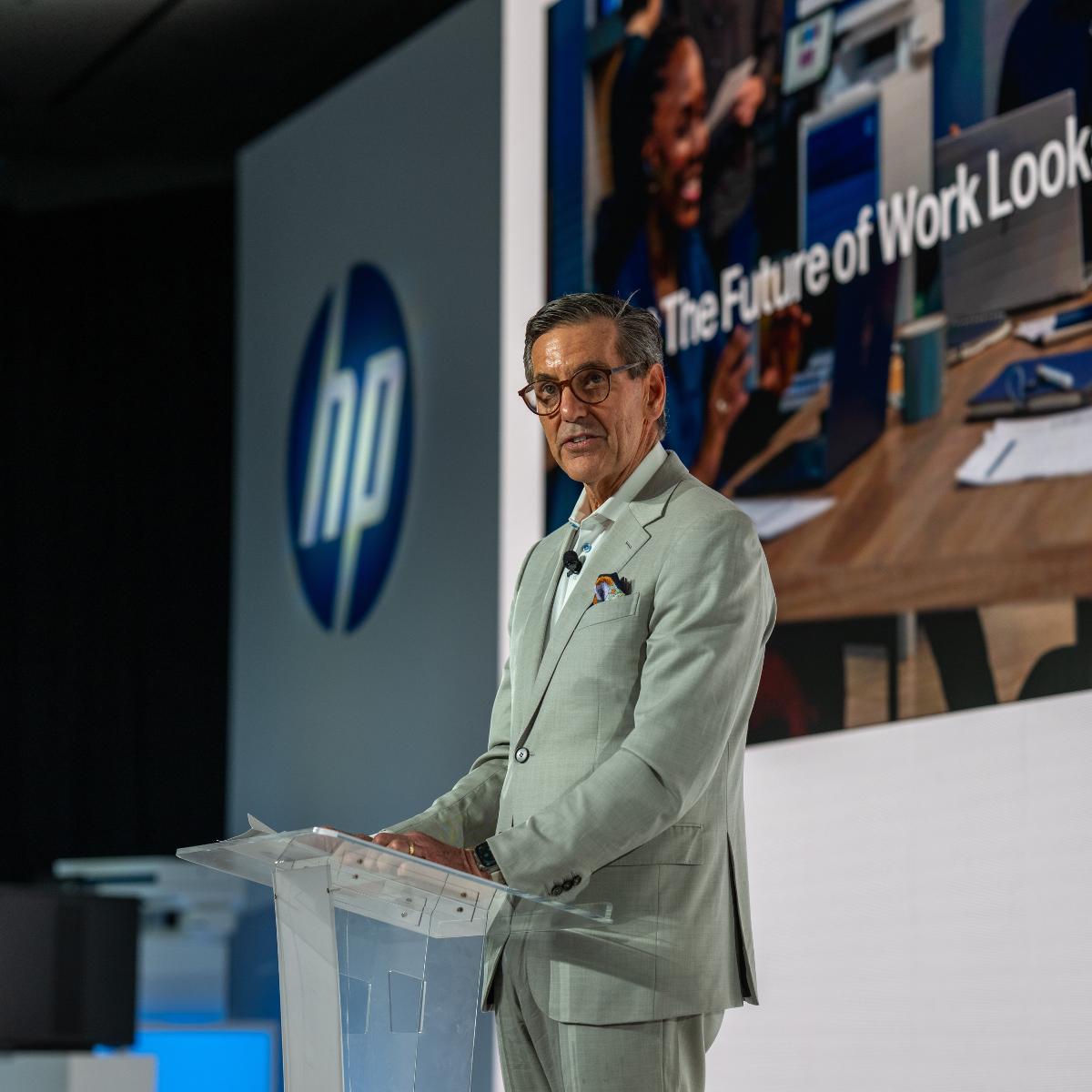
Bruce Broussard is the interim CEO of HP Inc.

Bruce Broussard, HP CEO
HP INC.

For most of human history, knowledge wasn’t something you could access instantly. It was scarce, slow to move, and often held by institutions built to store and interpret it. Universities, libraries, and professional guilds played that role for generations. If you wanted to learn something, you turned to a trusted source—such as a teacher, a textbook, or an encyclopedia—and worked through it over time.

Recommended Video

The times today are very different. The shift from encyclopedias to artificial intelligence isn’t just a technology upgrade, it’s a fundamental change in how we interact with knowledge. It’s reshaping how we work, how organizations operate, and how opportunity gets distributed. That’s why AI is becoming such a defining force in this next chapter of work and life.

The evolution of knowledge tools

If you look back, there’s a clear progression in how we access knowledge. In the encyclopedia era, information was static and curated. It was reliable, but finding and interpreting it took time.

The search engine era changed speed and access. You could type a question and get thousands of results instantly but the responsibility still sat with the individual to evaluate, synthesize, and decide the relevance.

Then came the platform and data era. Software organized information into dashboards and workflows, giving people real-time visibility. Decisions became more informed, but humans still had to interpret the data and turn it into action.

Now we’re entering the AI era. These systems not only retrieve information but also help make sense of it, including analyzing, summarizing and, increasingly, doing. Instead of spending hours searching, you can ask a question and get a structured answer, a recommendation, or even a draft of the work.

Across these stages, the role of the individual has evolved from being a researcher to a navigator to a data-driven decision-maker, and now to a director of intelligent systems. It’s been a subtle shift, but an extraordinary one in terms of how work gets done.

What this means for work

Healthcare is a good example of this shift, especially given how high the stakes are.

Not long ago, physicians relied on training, textbooks, and journals. As information and knowledge expanded, staying current required a significant investment of their time. While the internet made information more accessible, it also made it more overwhelming. Doctors still had to sift through large volumes of information to find what mattered.

Electronic health records centralized data and added digital support, though this digitization also introduced an administrative burden that often pulled physicians away from patients.

AI has the potential to reverse all of that. Clinical copilots can summarize histories, identify patterns, suggest diagnoses, and handle documentation in the background. When this works well, it gives physicians back what they value most: their time and attention to focus on judgment, trust, and patient care.

More broadly, this shift is about more than just productivity gains. When people spend less time on tasks that drain them and more time on parts of their work that require human judgment and connection, work becomes more meaningful. It brings them closer to why they chose their profession in the first place.

This isn’t just a nice idea, it shows up in the data. The HP Work Relationship Index finds that, when people have access to the right tools and technology, they’re five times more likely to have a healthy relationship with work, and 69% say they’re excited about how technology will improve their work experience.

The rise of the individual enterprise

One of the most interesting aspects of AI is how it expands what an individual can do. Historically, organizations existed to bring together different types of expertise. Complex work required teams of people with varied backgrounds, such as analysts, researchers, and operators, because no one person had all the capabilities and expertise.

AI lowers that barrier. People can now access tools that support research, analysis, writing, planning, and execution. In many ways, it allows all of us to operate more like small enterprises, supported by intelligent systems.

You can see this in practice. A physician can reduce administrative time and spend more time with patients. A small-business owner can run marketing and analytics without a large team. An entrepreneur can launch and scale with far less infrastructure.

The productivity gains are enormous, but just as important is the sense of agency this creates. People have more control over how they work, what they focus on, and how they bring ideas to life. And with that comes a greater sense of ownership and fulfillment in the work itself.

Implications for society

When access to knowledge changes, opportunity tends to follow.

The printing press expanded literacy.
The internet expanded information.
AI has the potential to expand expertise.

For the first time, people almost anywhere can access capabilities once limited to large organizations. That’s powerful—but the benefits won’t be evenly distributed.

AI will likely widen the gap between those who learn to use these tools well and those who don’t. Skills such as judgment, creativity, communication, and ethical reasoning will become even more important as information is easier to generate.

Today, that gap is already emerging. While nearly half of business leaders report using AI tools daily, only about a quarter of knowledge workers do. Access and adoption will be just as important as the technology itself.

Education will need to adapt. The focus can’t just be on memorization. It needs to shift toward problem-solving, critical thinking, and learning how to work alongside intelligent systems. It becomes less about what you know and more about how you apply it.

The human element

With all the attention on AI, it’s easy to lose sight of something simple: technology works best when it supports people, not replaces them.

AI can process information faster and at greater scale than humans can. It can surface insights we might miss. But it doesn’t build trust, show empathy, or navigate complex human situations with judgment and care. Those remain uniquely human strengths and they matter even more in this environment.

What this shift really changes is where we spend our time. Instead of focusing on finding and organizing information, we can focus more on understanding it, applying it, and making better decisions.

If we navigate this thoughtfully, AI can make people more capable, organizations more effective, and society more innovative. It can also make work more fulfilling, giving people greater agency, more room to focus on what matters, and a stronger connection to the impact they have. The tools are changing, but the goal isn’t. It’s still about expanding what people can do and what we can achieve together.

The opinions expressed in Fortune.com commentary pieces are solely the views of their authors and do not necessarily reflect the opinions and beliefs of Fortune.

In 2001, Fortune first convened the smartest people we know, bringing together CEOs and founders, builders and investors, thinkers and doers. Since then, Fortune Brainstorm Tech has been the place where bold ideas collide. From June 8–10, we will return to Aspen—where it all began—to mark 25 years of Brainstorm. Register now.
About the Author
By Bruce Broussard
See full bioRight Arrow Button Icon

Latest in AI

Finance
Lorem ipsum dolor sit amet, consectetur adipiscing elit, sed do eiusmod tempor incididunt ut labore et dolore magna aliqua. Ut enim ad minim veniam
By Fortune Editors
October 20, 2025
Finance
Lorem ipsum dolor sit amet, consectetur adipiscing elit, sed do eiusmod tempor incididunt ut labore et dolore magna aliqua. Ut enim ad minim veniam
By Fortune Editors
October 20, 2025
Finance
Lorem ipsum dolor sit amet, consectetur adipiscing elit, sed do eiusmod tempor incididunt ut labore et dolore magna aliqua. Ut enim ad minim veniam
By Fortune Editors
October 20, 2025
Finance
Lorem ipsum dolor sit amet, consectetur adipiscing elit, sed do eiusmod tempor incididunt ut labore et dolore magna aliqua. Ut enim ad minim veniam
By Fortune Editors
October 20, 2025
Finance
Lorem ipsum dolor sit amet, consectetur adipiscing elit, sed do eiusmod tempor incididunt ut labore et dolore magna aliqua. Ut enim ad minim veniam
By Fortune Editors
October 20, 2025
Finance
Lorem ipsum dolor sit amet, consectetur adipiscing elit, sed do eiusmod tempor incididunt ut labore et dolore magna aliqua. Ut enim ad minim veniam
By Fortune Editors
October 20, 2025

Most Popular

Finance
Lorem ipsum dolor sit amet, consectetur adipiscing elit, sed do eiusmod tempor incididunt ut labore et dolore magna aliqua. Ut enim ad minim veniam
By Fortune Editors
October 20, 2025
Finance
Lorem ipsum dolor sit amet, consectetur adipiscing elit, sed do eiusmod tempor incididunt ut labore et dolore magna aliqua. Ut enim ad minim veniam
By Fortune Editors
October 20, 2025
Finance
Lorem ipsum dolor sit amet, consectetur adipiscing elit, sed do eiusmod tempor incididunt ut labore et dolore magna aliqua. Ut enim ad minim veniam
By Fortune Editors
October 20, 2025
Finance
Lorem ipsum dolor sit amet, consectetur adipiscing elit, sed do eiusmod tempor incididunt ut labore et dolore magna aliqua. Ut enim ad minim veniam
By Fortune Editors
October 20, 2025
Finance
Lorem ipsum dolor sit amet, consectetur adipiscing elit, sed do eiusmod tempor incididunt ut labore et dolore magna aliqua. Ut enim ad minim veniam
By Fortune Editors
October 20, 2025
Finance
Lorem ipsum dolor sit amet, consectetur adipiscing elit, sed do eiusmod tempor incididunt ut labore et dolore magna aliqua. Ut enim ad minim veniam
By Fortune Editors
October 20, 2025
Fortune Secondary Logo
Rankings
  • 100 Best Companies
  • Fortune 500
  • Global 500
  • Fortune 500 Europe
  • Most Powerful Women
  • World's Most Admired Companies
  • See All Rankings
  • Lists Calendar
Sections
  • Finance
  • Fortune Crypto
  • Features
  • Leadership
  • Health
  • Commentary
  • Success
  • Retail
  • Mpw
  • Tech
  • Lifestyle
  • CEO Initiative
  • Asia
  • Politics
  • Conferences
  • Europe
  • Newsletters
  • Personal Finance
  • Environment
  • Magazine
  • Education
Customer Support
  • Frequently Asked Questions
  • Customer Service Portal
  • Privacy Policy
  • Terms Of Use
  • Single Issues For Purchase
  • International Print
Commercial Services
  • Advertising
  • Fortune Brand Studio
  • Fortune Analytics
  • Fortune Conferences
  • Business Development
  • Group Subscriptions
About Us
  • About Us
  • Press Center
  • Work At Fortune
  • Terms And Conditions
  • Site Map
  • About Us
  • Press Center
  • Work At Fortune
  • Terms And Conditions
  • Site Map
  • Facebook icon
  • Twitter icon
  • LinkedIn icon
  • Instagram icon
  • Pinterest icon

Latest in AI

Anu Madgavkar, a partner at the McKinsey Global Institute
AIWorkplace Innovation Summit
McKinsey partner says up to 50% of work hours could be transformed within the next 5 years
By Emma BurleighMay 21, 2026
1 hour ago
allbirds
AILayoffs
Allbirds’ 600% stock surge says a lot about how ‘AI washing’ became the new ‘greenwashing’
By Suvrat Dhanorkar and The ConversationMay 21, 2026
4 hours ago
Ex-Facebook exec Sheryl Sandberg tells Gen Z the 10-year career plan is dead thanks to AI:  ‘Don’t script your career when the future is uncertain’
Successcareer
Ex-Facebook exec Sheryl Sandberg tells Gen Z the 10-year career plan is dead thanks to AI:  ‘Don’t script your career when the future is uncertain’
By Orianna Rosa RoyleMay 21, 2026
10 hours ago
Microsoft lost its way in the AI race. Can Copilot get it back on course?
MagazineMicrosoft
Microsoft lost its way in the AI race. Can Copilot get it back on course?
By Jeremy KahnMay 21, 2026
10 hours ago
Jensen Huang, chief executive officer of Nvidia
AINvidia
Nvidia tells skeptical investors that AI is ready to go mainstream
By Ian King and BloombergMay 20, 2026
19 hours ago
Pay transparency is exposing a bigger problem: Most companies can’t explain why they pay what they pay
Workplace CultureWorkplace Innovation Summit
Pay transparency is exposing a bigger problem: Most companies can’t explain why they pay what they pay
By Sydney LakeMay 20, 2026
21 hours ago

Most Popular

Bolt CEO says he let go of his entire HR team for creating problems that didn’t exist: ‘Those problems disappeared when I let them go’ 
Workplace Culture
Bolt CEO says he let go of his entire HR team for creating problems that didn’t exist: ‘Those problems disappeared when I let them go’ 
By Preston ForeMay 19, 2026
2 days ago
Despite a $500 million net worth, Shaq just finished his fourth degree. He warns graduates: 'Your character will take you further than your resume'
Success
Despite a $500 million net worth, Shaq just finished his fourth degree. He warns graduates: 'Your character will take you further than your resume'
By Preston ForeMay 20, 2026
1 day ago
Meet a 21-year-old community college student who's going to China as the first American woman welder in the trades Olympics
Future of Work
Meet a 21-year-old community college student who's going to China as the first American woman welder in the trades Olympics
By Mike Householder and The Associated PressMay 17, 2026
4 days ago
Pay transparency is exposing a bigger problem: Most companies can't explain why they pay what they pay
Workplace Culture
Pay transparency is exposing a bigger problem: Most companies can't explain why they pay what they pay
By Sydney LakeMay 20, 2026
21 hours ago
Dr. Bernice King on why companies that walked back DEI were never truly committed: 'If you retreat that quick…that reveals who you really are'
Workplace Culture
Dr. Bernice King on why companies that walked back DEI were never truly committed: 'If you retreat that quick…that reveals who you really are'
By Preston ForeMay 19, 2026
2 days ago
A 'proudly autistic' workplace expert says putting neurodivergent employees in a typical office is like dropping a polar bear in Austin, Texas
Conferences
A 'proudly autistic' workplace expert says putting neurodivergent employees in a typical office is like dropping a polar bear in Austin, Texas
By Tristan BoveMay 20, 2026
21 hours ago

© 2026 Fortune Media IP Limited. All Rights Reserved. Use of this site constitutes acceptance of our Terms of Use and Privacy Policy | CA Notice at Collection and Privacy Notice | Do Not Sell/Share My Personal Information
FORTUNE is a trademark of Fortune Media IP Limited, registered in the U.S. and other countries. FORTUNE may receive compensation for some links to products and services on this website. Offers may be subject to change without notice.