
• Home
  • Latest
  • Fortune 500
  • Finance
  • Tech
  • Leadership
  • Lifestyle
  • Rankings
  • Multimedia
EconomyAirline industry

How Spirit Airlines’ business model collapsed

Shawn Tully
By
Shawn Tully
Shawn Tully
Senior Editor-at-Large
Down Arrow Button Icon
Shawn Tully
By
Shawn Tully
Shawn Tully
Senior Editor-at-Large
Down Arrow Button Icon
April 23, 2026, 3:00 AM ET
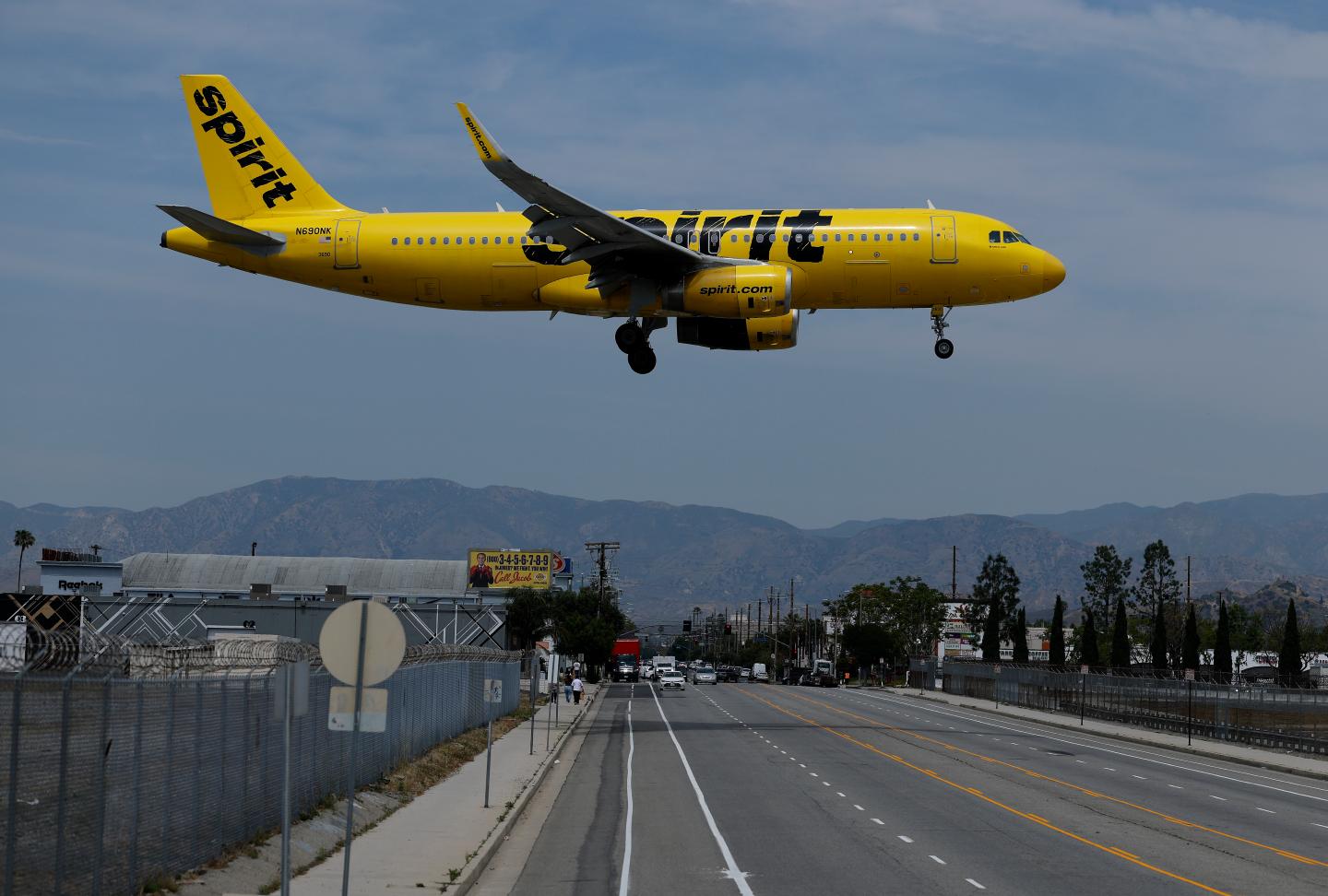
A Spirit Airlines plane lands at Hollywood Burbank Airport, April 16, 2026.
A Spirit Airlines plane lands at Hollywood Burbank Airport, April 16, 2026.Justin Sullivan—Getty Images

During a CNBC interview on April 21, President Trump for the first time hatched the possibility of an administration-led rescue plan for stricken Spirit Airlines. “Spirit’s in trouble,” declared the POTUS. “Maybe the federal government should help out on that one … It’s 14,000 jobs.” Prior to Trump’s statement, few if any were speculating about such a solution. Indeed, though the U.S. propped up a broad swath of carriers post–9/11 and during COVID, we’ve never seen a Washington bailout designed for an individual airline. From Trump’s surprise salvo, things moved fast. By the next day, the secretaries of Transportation and Commerce were reportedly mulling a $500 million package of loans in exchange for warrants that could give the U.S. a substantial equity stake in Spirit. The reports tagged Commerce Secretary Howard Lutnick as the chief proponent of the ownership strategy.

Recommended Video

Spirit’s tailspin, of course, is partly of Trump’s making. The Middle East conflict has ignited an explosion in jet fuel prices, a line item that in average times amounts to 20% to 30% of airlines’ pretax, noninterest costs. Spirit has been operating under bankruptcy protection since August, and just two weeks after the war began, presented an already-fragile reorganization plan in the Southern District of New York. The blueprint projected jet fuel in the $2.20 a gallon range for this year and 2027, and even at those historically low prices, foresaw super-thin operating margins of 0.5%. Now, airlines are paying around $4.20, almost double the prewar sticker and Spirit’s forecast. A study by J.P. Morgan posits that owing to the fuel hit, Spirit is set to lose 20 cents for each dollar of revenue, and add $360 million in operating costs, an amount equal to its cash cushion.

It’s clear that Spirit can’t keep flying—unless Trump indeed orders a huge cash refill from the government. Clearly, keeping America’s leisure and business flyers as happy as possible under the circumstances is the best possible outcome for Trump. And that means maintaining the greatest possible frequency of service, and the best ticket prices considering the inevitable fuel surcharges. The problem: Salvaging Spirit is just a short-term fix that could do more harm than good. It would create subsidized competition for JetBlue and Frontier, potentially forcing those budget rivals, also stressed by punishing fuel costs, into slashing flights to dodge a financial tailspin. That shrinking capacity could stoke higher fares and lengthen times between takeoffs, especially to prized vacation spots that folks plan on visiting this summer.

How Spirit got in so much trouble

Famed for its bright-yellow planes, Spirit thrived during the 2010s by offering low-price, no-frills service primarily to destinations in the Southeast and Caribbean. Then, as now, it boasted a strong presence in such metros as Orlando, Fort Lauderdale, and destinations in the Caribbean, providing north-south service from New York, as well as Las Vegas, and surprisingly, Detroit. Around the turn of the decade, the player so reliant on low flying and overhead costs made some risky moves. In 2019, Spirit spent $10 billion to $11 billion on a fleet of brand-new Airbus A320neo jets, and the following year broke ground on a sumptuous, 500,000-square-foot campus on 12 acres in Dania Beach, Fla.

In early 2022, Spirit and Frontier—both pounded by COVID—announced merger plans to create a super ultra-low-cost carrier or ULCC. But months later, JetBlue shattered the proposed union by capturing Spirit on a $3.7 billion, all-cash bid. The two then endured a long process seeking regulatory approvals over strong opposition from the Biden administration. In January of 2024, a federal court sided with the Department of Justice and blocked the tie-up. That March, JetBlue and Spirit abandoned the quest. But its legacy badly damaged the target. “Spirit was in limbo for almost two years, where they didn’t make hard decisions,” says Savanthi Syth, an analyst at Raymond James. “They’d be in a better place today if they’d been able to spend less time without a direction and more time moving in the right direction.”

The upshot: In November of 2024, Spirit declared bankruptcy for the first time. It emerged in March of last year brandishing a new game plan. It sold a number of its pricey new planes, relied far more on older models that it owned or leased, and drastically downsized its total fleet to just 76 planes. It also axed such far-flung destinations as Oakland and San Diego to focus on core markets in Florida, New York, and Detroit. Most of all, Spirit moved upmarket. It remained a low-fare player, but positioned itself above the ULCCs by offering a number of perks including free Wi-Fi, extra legroom in premium cabins, and special check-in lanes. “They were moving into JetBlue territory,” observes Syth.

The plan failed, in part because Spirit had a reputation for mediocre customer service at best. “What they offered wasn’t enough to offset that historical brand deficit and get the extra revenue,” says Syth. Plus, big rivals Delta and United also offered low-price options in their economy cabins, and won loyalty for their gracious treatment of fliers. Plus, United in particular targeted Spirit’s Florida strongholds deploying bigger planes and more flights.

In August of 2025, Spirit sought bankruptcy protection in New York court, for the second time in under two years. According to Syth, the reorganization plan was too optimistic from the start, and would have courted danger even if the war never happened. It relies on concessions from the unions that decline over time, and assumes that the premium strategy will work this time, greatly boosting revenues. “In addition, they’d gone with older airplanes, but they’d need to replace them at market rates. Overall, it seemed like a short-term plan. And it couldn’t withstand the oil shock, which to be fair, no one back in January would imagine coming.” Citibank, which heads the lender group providing the revolving credit facility, states that Spirit is already in default on part of the agreement, and skewers the airline for failing to show in the plan how it would perform if fuel prices remain elevated.

To make matters worse, if that’s possible, Spirit is heading into the slow, pre-summer May season when the industry’s bookings and revenues fall. “Summer sales haven’t started, and they’re in a lull period,” says Syth. “Even before the war, we thought it was highly likely they’d have to liquidate in the May time frame.” She adds that a bailout would keep Spirit airborne, but “make the futures of JetBlue and Frontier more precarious.” And that, she says, could make things worse for the people Trump is trying to protect, the flying public.

As for a “redux” deal where either of those two rivals buy Spirit, it’s a long shot. Neither JetBlue nor Frontier harbor balance sheets strong enough to absorb the heavy debt baggage Spirit is carrying. For Syth, the best solution would be that the administration forgo a bailout, and persuade rival airlines to honor Spirit tickets on their own flights. Then, they will eagerly lease and purchase its planes in a supertight market for jets, claim its routes, and hire its pilots and flight attendants.

Losing a low-cost competitor is unfortunate and would, at least for a while, increase concentration in a business where sundry routes offer just one or two competitors. But the best flight path is letting the market work.

Subscribe to Fortune Gulf Brief. Every Tuesday, this new newsletter will deliver clear-eyed, authoritative intelligence on the deals, decisions, policies, and power shifts shaping one of the world’s most consequential regions, written for the people who need to act on it. Sign up here.
About the Author
Shawn Tully
By Shawn TullySenior Editor-at-Large

Shawn Tully is a senior editor-at-large at Fortune, covering the biggest trends in business, aviation, politics, and leadership.

See full bioRight Arrow Button Icon

Latest in Economy

Finance
Lorem ipsum dolor sit amet, consectetur adipiscing elit, sed do eiusmod tempor incididunt ut labore et dolore magna aliqua. Ut enim ad minim veniam
By Fortune Editors
October 20, 2025
Finance
Lorem ipsum dolor sit amet, consectetur adipiscing elit, sed do eiusmod tempor incididunt ut labore et dolore magna aliqua. Ut enim ad minim veniam
By Fortune Editors
October 20, 2025
Finance
Lorem ipsum dolor sit amet, consectetur adipiscing elit, sed do eiusmod tempor incididunt ut labore et dolore magna aliqua. Ut enim ad minim veniam
By Fortune Editors
October 20, 2025
Finance
Lorem ipsum dolor sit amet, consectetur adipiscing elit, sed do eiusmod tempor incididunt ut labore et dolore magna aliqua. Ut enim ad minim veniam
By Fortune Editors
October 20, 2025
Finance
Lorem ipsum dolor sit amet, consectetur adipiscing elit, sed do eiusmod tempor incididunt ut labore et dolore magna aliqua. Ut enim ad minim veniam
By Fortune Editors
October 20, 2025
Finance
Lorem ipsum dolor sit amet, consectetur adipiscing elit, sed do eiusmod tempor incididunt ut labore et dolore magna aliqua. Ut enim ad minim veniam
By Fortune Editors
October 20, 2025

Most Popular

Finance
Lorem ipsum dolor sit amet, consectetur adipiscing elit, sed do eiusmod tempor incididunt ut labore et dolore magna aliqua. Ut enim ad minim veniam
By Fortune Editors
October 20, 2025
Finance
Lorem ipsum dolor sit amet, consectetur adipiscing elit, sed do eiusmod tempor incididunt ut labore et dolore magna aliqua. Ut enim ad minim veniam
By Fortune Editors
October 20, 2025
Finance
Lorem ipsum dolor sit amet, consectetur adipiscing elit, sed do eiusmod tempor incididunt ut labore et dolore magna aliqua. Ut enim ad minim veniam
By Fortune Editors
October 20, 2025
Finance
Lorem ipsum dolor sit amet, consectetur adipiscing elit, sed do eiusmod tempor incididunt ut labore et dolore magna aliqua. Ut enim ad minim veniam
By Fortune Editors
October 20, 2025
Finance
Lorem ipsum dolor sit amet, consectetur adipiscing elit, sed do eiusmod tempor incididunt ut labore et dolore magna aliqua. Ut enim ad minim veniam
By Fortune Editors
October 20, 2025
Finance
Lorem ipsum dolor sit amet, consectetur adipiscing elit, sed do eiusmod tempor incididunt ut labore et dolore magna aliqua. Ut enim ad minim veniam
By Fortune Editors
October 20, 2025
Fortune Secondary Logo
Rankings
  • 100 Best Companies
  • Fortune 500
  • Global 500
  • Fortune 500 Europe
  • Most Powerful Women
  • World's Most Admired Companies
  • See All Rankings
  • Lists Calendar
Sections
  • Finance
  • Fortune Crypto
  • Features
  • Leadership
  • Health
  • Commentary
  • Success
  • Retail
  • Mpw
  • Tech
  • Lifestyle
  • CEO Initiative
  • Asia
  • Politics
  • Conferences
  • Europe
  • Newsletters
  • Personal Finance
  • Environment
  • Magazine
  • Education
Customer Support
  • Frequently Asked Questions
  • Customer Service Portal
  • Privacy Policy
  • Terms Of Use
  • Single Issues For Purchase
  • International Print
Commercial Services
  • Advertising
  • Fortune Brand Studio
  • Fortune Analytics
  • Fortune Conferences
  • Business Development
  • Group Subscriptions
About Us
  • About Us
  • Press Center
  • Work At Fortune
  • Terms And Conditions
  • Site Map
  • About Us
  • Press Center
  • Work At Fortune
  • Terms And Conditions
  • Site Map
  • Facebook icon
  • Twitter icon
  • LinkedIn icon
  • Instagram icon
  • Pinterest icon

Latest in Economy

250
Commentary250 Years of Innovation
For 250 years, America didn’t just invent the future—it built it. That connection is breaking. Here’s how to restore it
By Eric Kutcher, Shubham Singhal, Olivia White and Scott BlackburnMay 13, 2026
2 hours ago
Four ways to create a lasting cost advantage from AI
Future of WorkCommentary
Four ways to create a lasting cost advantage from AI
By Paul GoydanMay 13, 2026
2 hours ago
frazier
Commentaryaging
Your grandma should be using AI. really
By Kevin FrazierMay 13, 2026
3 hours ago
President Trump’s Golden Dome will cost $1.2 trillion, the CBO says, five times more than initially expected
EnergyMarkets
President Trump’s Golden Dome will cost $1.2 trillion, the CBO says, five times more than initially expected
By Eleanor PringleMay 13, 2026
4 hours ago
Photo: Young woman spending day outside in residential area in city.
AITech
Wells Fargo: AI is a ‘euphoric’ bubble and investors should ride it until it pops
By Jim EdwardsMay 13, 2026
4 hours ago
Michael Burry, Paul Tudor Jones, and a Nobel-winner all see the same thing: A stock market reckoning
InvestingFinance
Michael Burry, Paul Tudor Jones, and a Nobel-winner all see the same thing: A stock market reckoning
By Shawn TullyMay 13, 2026
8 hours ago

Most Popular

The Bezos family just donated $100 million to help achieve one of Mayor Zohran Mamdani’s top campaign promises
Politics
The Bezos family just donated $100 million to help achieve one of Mayor Zohran Mamdani’s top campaign promises
By Jake AngeloMay 12, 2026
19 hours ago
Nearly 50,000 Lake Tahoe residents have to find a new power source after their energy source looks to redirect lines to data centers
Travel & Leisure
Nearly 50,000 Lake Tahoe residents have to find a new power source after their energy source looks to redirect lines to data centers
By Catherina GioinoMay 12, 2026
22 hours ago
U.S. hotels are calling the World Cup a 'non-event' and 80% warn bookings are falling short of expectations, report finds
North America
U.S. hotels are calling the World Cup a 'non-event' and 80% warn bookings are falling short of expectations, report finds
By Sasha RogelbergMay 12, 2026
1 day ago
Forget U.S. debt, China's total borrowing is in 'a league of its own'—much worse and deteriorating faster, analyst says
Economy
Forget U.S. debt, China's total borrowing is in 'a league of its own'—much worse and deteriorating faster, analyst says
By Jason MaMay 11, 2026
2 days ago
It’s not just Canadian tourists snubbing U.S. cities. Business leaders are cancelling more trips to America as geopolitical tensions continue
North America
It’s not just Canadian tourists snubbing U.S. cities. Business leaders are cancelling more trips to America as geopolitical tensions continue
By Sasha RogelbergMay 12, 2026
19 hours ago
Anthropic’s Daniela Amodei says entrepreneurs should go on vacation to road test potential cofounders—if they’re a drain, they’re ‘the wrong choice’
Success
Anthropic’s Daniela Amodei says entrepreneurs should go on vacation to road test potential cofounders—if they’re a drain, they’re ‘the wrong choice’
By Emma BurleighMay 12, 2026
24 hours ago

© 2026 Fortune Media IP Limited. All Rights Reserved. Use of this site constitutes acceptance of our Terms of Use and Privacy Policy | CA Notice at Collection and Privacy Notice | Do Not Sell/Share My Personal Information
FORTUNE is a trademark of Fortune Media IP Limited, registered in the U.S. and other countries. FORTUNE may receive compensation for some links to products and services on this website. Offers may be subject to change without notice.