
Good morning. OK, so think about it: The Pitt, but for Elon Musk’s first 30 days in Washington after President Trump’s second inauguration.
Yeah? Yeah? Call me, HBO.
Today’s tech news below. —Andrew Nusca
Want to send thoughts or suggestions to Fortune Tech? Drop a line here.
What to expect at Apple's WWDC
I’ll be honest: The most important thing happening starting June 8 is our 25th anniversary Fortune Brainstorm Tech in Aspen.
But the second-most important thing? Probably Apple’s annual Worldwide Developers Conference.
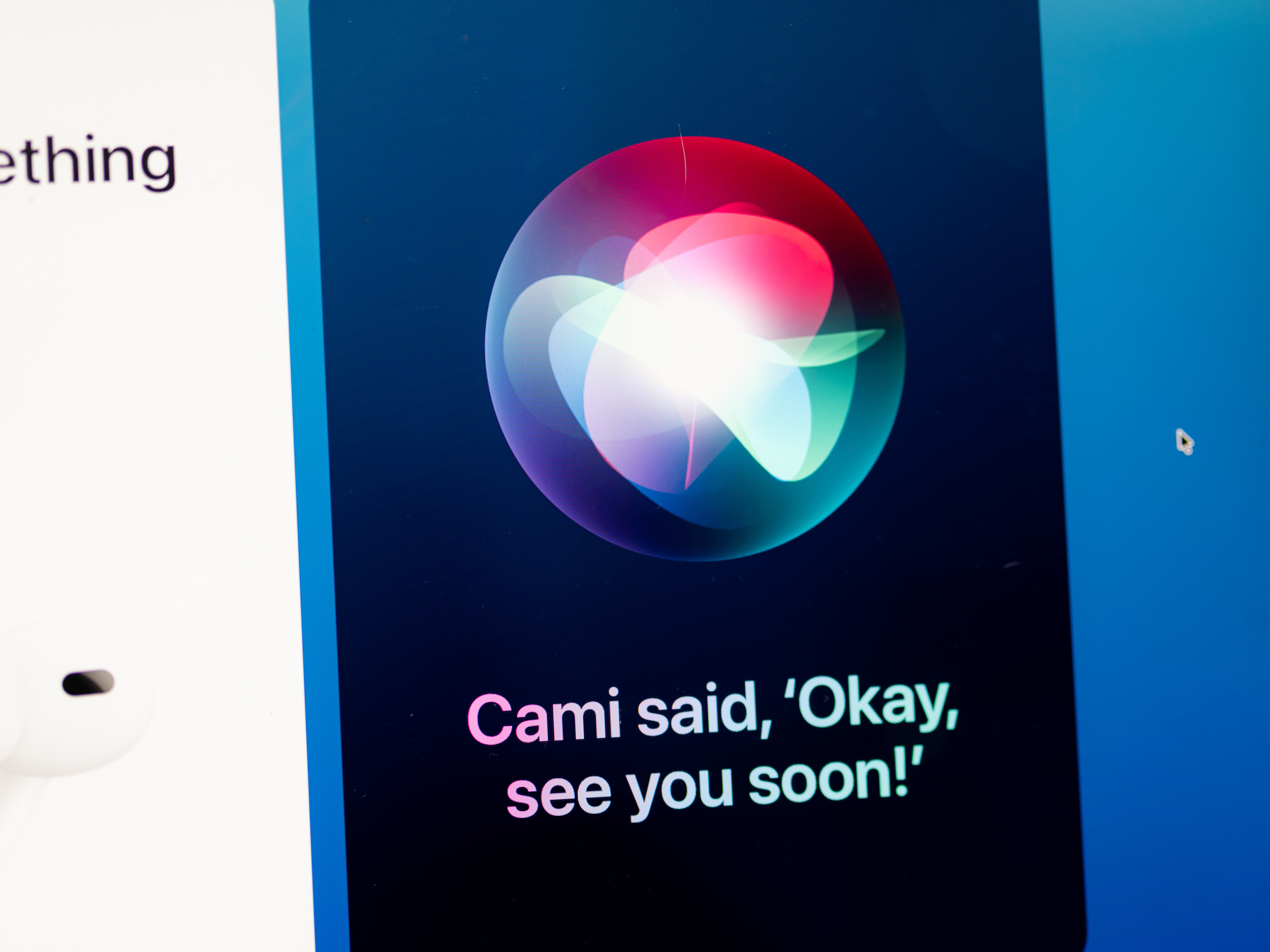
So what’s in store this year for one of the more magnificent of the Magnificent 7 big tech firms? According to Apple-watcher Mark Gurman, iOS 27, macOS 27, and a revamped Siri voice assistant that’s more chatbot-like.
It’s not all good news. The launch of the next Mac Studio and touchscreen MacBook Pro may see monthslong delays (October for the former; January for the latter) thanks to the continued global memory shortage.
The Siri changes are most intriguing. Over the last decade, Apple’s assistant moved from novel to inferior as AI chatbots lapped its capabilities. The next iteration promises to catch up by rebuilding its architecture from the ground up.
One reason Siri 2.0 has taken so long to develop? Apple prefers to run much of Siri’s activity on-device—that is, without using internet connectivity—forcing it to deliver intelligent results using local memory, local processing, and local power.
Apple is partnering with Google to tap its Gemini AI models for the next Siri; it will be interesting indeed to see how Gemini’s capabilities are integrated into the experience—and whether Siri’s progress is enough to convince investors that Apple is not a lost cause in the AI arms race. —AN
Polymarket reportedly in talks to raise $400 million
A pioneer in so-called prediction markets is reportedly in talks to raise $400 million.
Polymarket’s new valuation of $15 billion, according to The Information, is a nice leap from its previous $9 billion figure in late 2025. That’s when the parent company of the New York Stock Exchange, Intercontinental Exchange, invested $600 million in the firm and gave the company a toehold in the mainstream.
But it still hasn’t caught up to its crosstown rival, Kalshi. As of last month, that New York City company is worth about $22 billion with some 90% U.S. market share, a sign that Kalshi’s early move to seek regulatory approval from the Commodity Futures Trading Commission (CFTC) has paid off. (Polymarket, in contrast, focused early on offshore markets beyond regulation’s reach.)
Horse race aside, both firms are still maneuvering for mainstream acceptance by brokering (ahem) deals with financial data providers and forecast-friendly media companies interested in the aggregate insights of people buying and selling shares based on the probability of future events.
As Kyla Scanlon wrote in the New York Times in January: “The uncomfortable truth is that prediction machines have become infrastructure for the legitimacy of event outcomes, no matter how outlandish.” —AN
Vercel breach came via third-party AI tool
The cloud platform Vercel, used by developers to host web applications, says hackers breached its systems in an attempt to sell stolen data.
The breach came through a compromised third-party AI tool called Context.ai that was in use by a Vercel employee.
“The attacker used that access to take over the employee's Vercel Google Workspace account, which enabled them to gain access to some Vercel environments and environment variables that were not marked as ‘sensitive,’” the company wrote in a security bulletin.
Vercel added that the attacker was “highly sophisticated based on their operational velocity and detailed understanding of Vercel's systems.”
The San Francisco company says it has called in the troops to get to the bottom of the attack, including Google subsidiary Mandiant and other cybersecurity firms, industry peers, law enforcement, and Context.ai. It notified “a limited subset of customers” whose credentials were compromised.
“We continue to investigate whether and what data was exfiltrated,” the company said, “and we will contact customers if we discover further evidence of compromise.” —AN
More tech
—NSA, Pentagon using Anthropic’s Mythos model despite the company’s designation as a supply chain risk.
—App Stores are booming with new launches, possibly thanks to AI coding tools.
—Google, Marvell reportedly in talks to collab on two new AI chips.
—Palantir CEO’s book: “Hard power in this century will be built on software.”
—Fermi CEO abruptly exits, sending the data center company’s shares down 34%.
—Match Group prioritizes women in a bid to turn Tinder around.
—Germany wants to ease regulations on industrial AI.