
• Home
  • Latest
  • Fortune 500
  • Finance
  • Tech
  • Leadership
  • Lifestyle
  • Rankings
  • Multimedia
EconomyU.S. economy

Trump’s 2027 budget gambles on rosy assumptions—and if they don’t pan out, America edges closer to a fiscal crisis driven by runaway interest costs

Shawn Tully
By
Shawn Tully
Shawn Tully
Senior Editor-at-Large
Down Arrow Button Icon
Shawn Tully
By
Shawn Tully
Shawn Tully
Senior Editor-at-Large
Down Arrow Button Icon
April 9, 2026, 3:00 AM ET
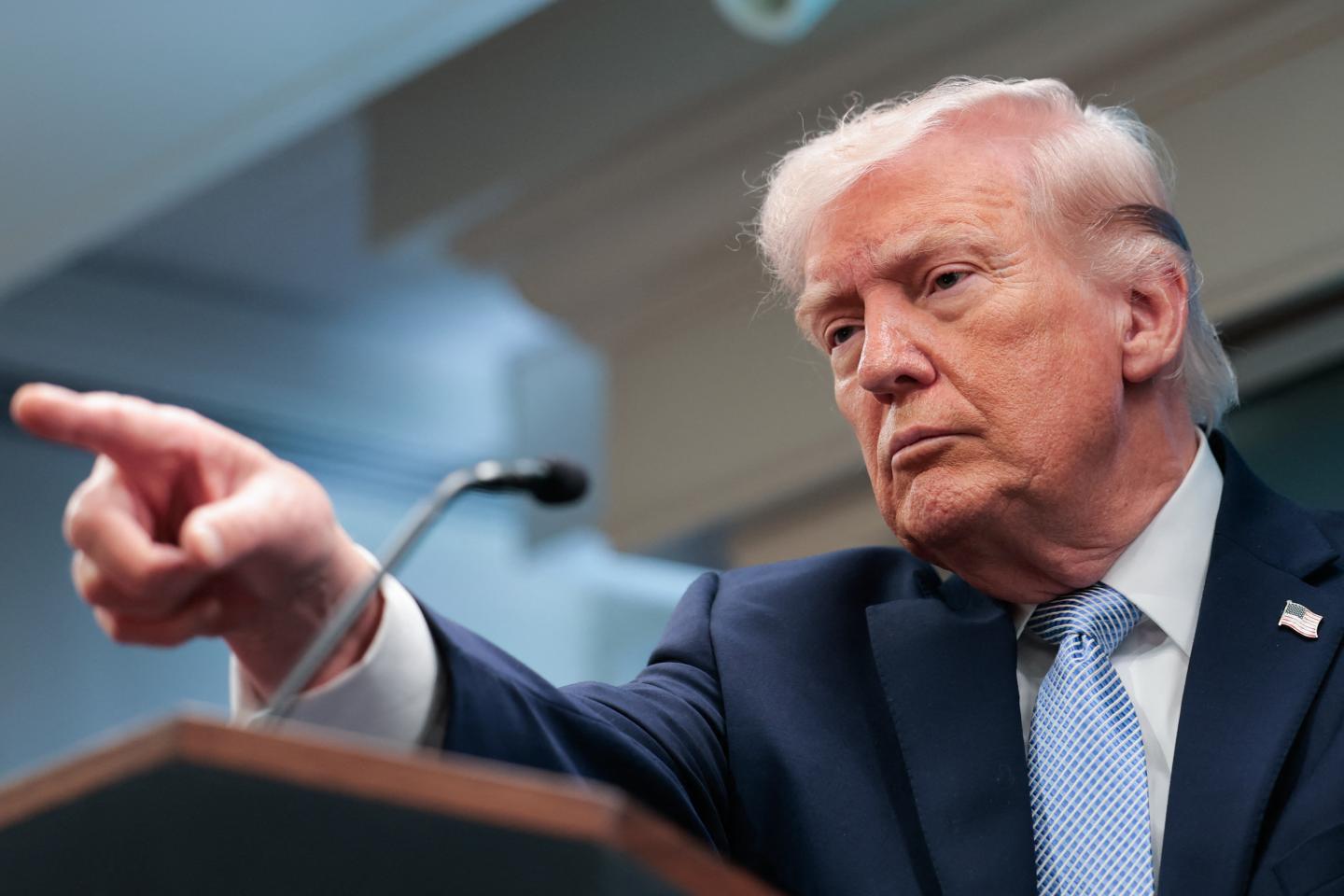
Trump’s budget contains some math that critics say is wishful thinking.
Trump’s budget contains some math that critics say is wishful thinking. Kent Nishimura—AFP/Getty Images

America’s long-term budget outlook just got a lot scarier. If the bond vigilantes are already circling, and if they’re looking for more reasons to dump U.S. bonds and push Treasury yields to crisis levels, they need do nothing more than read the newly issued Budget of the U.S. Government for Fiscal Year 2027 (starting Oct. 1, 2026). The document, compiled by the White House’s Office of Management and Budget (OMB), calls for big spending increases, chiefly for defense, and promises to finance the added outlays via revenues swelled by fantasy rates of economic growth and phantom savings. The document’s requests make an already dangerous outlook significantly riskier. The reason: If the expenditures blowout happens, and the rosy assumptions needed to offset the new outlays fail to materialize, America will edge even closer to a fiscal cataclysm prompted by a ruinous rise in interest expense.

Recommended Video

Almost all of these yearly reports take a comprehensive view of the important budget categories. Every administration appeals for new funding and proposes savings in different categories, and makes economic projections. But the OMB also offers forecasts and perspective on the trends in mandatory as well as discretionary spending, interest costs, debt, and deficits, and warns of perils ahead if the U.S. is veering into the fiscal danger zone. This edition, however, has nothing to say about Medicare and Medicaid, and in its 92 pages, never refers to federal debt or deficits. Instead, it’s highly unusual, adopting an extremely narrow focus. The report takes aim at only two major areas. The first is discretionary spending, where Trump requests big increases for the Department of War while advocating reductions in nondefense discretionary (NDD) categories. The second: projections for key metrics such as GDP and interest rates that are crucial drivers on the revenue and expense sides.

Its failure to assess the troubling big picture drew a poor review from the nonpartisan Committee for a Responsible Federal Budget (CRFB). Its president, Maya MacGuineas, wrote that the president’s budget fails at its duty to “include an actionable plan for getting our nation’s finances on a sustainable footing,” adding that the plan is “heavy on spending, light on details, and relies on an entire decade of rosy financial projections.”

The new spending would be big and baked in; the extra revenue and cuts to pay for it are imaginary

The math sounds simple, and even appears at first glance to make sense. The Trump proposal asks for a 42% jump in the defense budget for fiscal year 2027, from the current line item of $950 billion to $1.5 trillion, plus an extra $251 billion added to the annual base. All told, the line item would rise by $3.5 trillion above the current Congressional Budget Office (CBO) baseline from FY 2026 to 2036. Add another $900 billion the president wants to spend on a list of smaller, nondefense initiatives, and the total proposed increase in expenditures exceeds what is budgeted over the next decade by $4.5 trillion. The blueprint also sounds a responsible note in championing reductions in other NDD areas of $805 billion, setting the net increase in outlays at $3.62 trillion (the $4.5 trillion total spending rise minus the $805 billion in savings).

That’s an easy nut to handle, the report suggests. It projects that total revenues will reach an astounding $7.8 trillion more over the decade-long span than the CBO predicts. Since that surge would tighten yearly deficits, we’d also save $2.54 trillion in interest expenses, growing the plus column to $10.3 trillion. As a result, even though the U.S. would expand outlays by $3.62 trillion, our total deficits from here to 2036 would decline by $6.7 trillion (the $10.3 trillion in extra collections and lower interest minus the $3.62 trillion in new outlays). Although the OMB doesn’t give debt numbers, the CRFB was able to glean from other numbers in an annex to the document that in the White House view, U.S. debt would fall to 94% of GDP by 2036, far better than the CBO’s forecast of 120%.

Sounds great until you examine the assumptions. How does the OMB get that nearly $8 trillion revenue windfall? Here’s how: It foresees GDP advancing at a 3.0% annual pace. That’s hugely above the CBO and the Fed’s long-run forecasts respectively at 1.8% and 2.0%. The CRFB dismisses the OMB’s figure as “fantastical.” How about the $805 billion reduction in NDD? The CBO already has that piece rising a minuscule 10% in total over the next decade. But the Trump budget expects a never-before-seen triumph in austerity. It calls for 2% annual reductions that would bring all-in NDD down 20% by 2036. How plausible is that plan? Not very. The category waxed around 40% in the previous decade, about following inflation. Is it really possible that NASA, veterans’ health care, the Department of Homeland Security, the EPA, and sundry other agencies are spending far fewer dollars 10 years hence than today? The sober outlook says that what happened in the past decade—in other words, a substantial increase—is likely to repeat.

The second hypothetical fount, interest savings, arises from two sources: Far lower deficits hinging on those dubious GDP figures, and much more favorable than expected interest rates on the Treasuries financing our debt. The FY 2027 document sees the 10-year yield falling from today’s 4.4% to 3.4% by 2029, then stabilizing a bit below that level. By contrast, the CBO’s forecast is 100 basis points higher at 4.3% to 4.4% over the entire decade. The OMB also assumes that tariff revenues keep flowing at the same pace as before the Supreme Court ruled most of the duties unlawful.

To be fair, no one really believes the bluebird future portrayed in FY 2027. “The realistic way to read it is as an historic defense spending increase coupled with fake offsets on spending and revenues,” says Jessica Riedl, a budget and tax fellow at the Brookings Institution. Riedl says that if the War Department hike gets enacted by Congress and defense spending garners the permanent jump requested, and NDD outlays rise as in the past, the current high-wire outlook gets considerably worse. “It means that annual deficits would exceed $4 trillion by 2036,” says Riedl, citing a number that’s almost 30% higher than the $3.1 trillion the CBO sees looming today. Riedl contends that debt would reach 137% of national income, 17 points higher than the 2036 figure in the agency’s tables.

“That number is totally unsustainable,” she says, adding a warning for the congressional Republicans in support of shifting defense outlays into high gear. “They can’t be the party of endless tax cuts, historic defense spending hikes, and still not touching Social Security and Medicare. Something’s got to give,” says Riedl. It’s looking less and less likely that the “something”’ will happen via making the essential, tough choices. Instead, the failure to act will bring on the bond raiders—and unleash a crisis where no one can predict the ending, only that it will be a bad one.

The Fortune 500 Innovation Forum will convene Fortune 500 executives, U.S. policy officials, top founders, and thought leaders to help define what’s next for the American economy, Nov. 16-17 in Detroit. Apply here.
About the Author
Shawn Tully
By Shawn TullySenior Editor-at-Large

Shawn Tully is a senior editor-at-large at Fortune, covering the biggest trends in business, aviation, politics, and leadership.

See full bioRight Arrow Button Icon

Latest in Economy

Finance
Lorem ipsum dolor sit amet, consectetur adipiscing elit, sed do eiusmod tempor incididunt ut labore et dolore magna aliqua. Ut enim ad minim veniam
By Fortune Editors
October 20, 2025
Finance
Lorem ipsum dolor sit amet, consectetur adipiscing elit, sed do eiusmod tempor incididunt ut labore et dolore magna aliqua. Ut enim ad minim veniam
By Fortune Editors
October 20, 2025
Finance
Lorem ipsum dolor sit amet, consectetur adipiscing elit, sed do eiusmod tempor incididunt ut labore et dolore magna aliqua. Ut enim ad minim veniam
By Fortune Editors
October 20, 2025
Finance
Lorem ipsum dolor sit amet, consectetur adipiscing elit, sed do eiusmod tempor incididunt ut labore et dolore magna aliqua. Ut enim ad minim veniam
By Fortune Editors
October 20, 2025
Finance
Lorem ipsum dolor sit amet, consectetur adipiscing elit, sed do eiusmod tempor incididunt ut labore et dolore magna aliqua. Ut enim ad minim veniam
By Fortune Editors
October 20, 2025
Finance
Lorem ipsum dolor sit amet, consectetur adipiscing elit, sed do eiusmod tempor incididunt ut labore et dolore magna aliqua. Ut enim ad minim veniam
By Fortune Editors
October 20, 2025

Most Popular

Finance
Lorem ipsum dolor sit amet, consectetur adipiscing elit, sed do eiusmod tempor incididunt ut labore et dolore magna aliqua. Ut enim ad minim veniam
By Fortune Editors
October 20, 2025
Finance
Lorem ipsum dolor sit amet, consectetur adipiscing elit, sed do eiusmod tempor incididunt ut labore et dolore magna aliqua. Ut enim ad minim veniam
By Fortune Editors
October 20, 2025
Finance
Lorem ipsum dolor sit amet, consectetur adipiscing elit, sed do eiusmod tempor incididunt ut labore et dolore magna aliqua. Ut enim ad minim veniam
By Fortune Editors
October 20, 2025
Finance
Lorem ipsum dolor sit amet, consectetur adipiscing elit, sed do eiusmod tempor incididunt ut labore et dolore magna aliqua. Ut enim ad minim veniam
By Fortune Editors
October 20, 2025
Finance
Lorem ipsum dolor sit amet, consectetur adipiscing elit, sed do eiusmod tempor incididunt ut labore et dolore magna aliqua. Ut enim ad minim veniam
By Fortune Editors
October 20, 2025
Finance
Lorem ipsum dolor sit amet, consectetur adipiscing elit, sed do eiusmod tempor incididunt ut labore et dolore magna aliqua. Ut enim ad minim veniam
By Fortune Editors
October 20, 2025
Fortune Secondary Logo
Rankings
  • 100 Best Companies
  • Fortune 500
  • Global 500
  • Fortune 500 Europe
  • Most Powerful Women
  • World's Most Admired Companies
  • See All Rankings
  • Lists Calendar
Sections
  • Finance
  • Fortune Crypto
  • Features
  • Leadership
  • Health
  • Commentary
  • Success
  • Retail
  • Mpw
  • Tech
  • Lifestyle
  • CEO Initiative
  • Asia
  • Politics
  • Conferences
  • Europe
  • Newsletters
  • Personal Finance
  • Environment
  • Magazine
  • Education
Customer Support
  • Frequently Asked Questions
  • Customer Service Portal
  • Privacy Policy
  • Terms Of Use
  • Single Issues For Purchase
  • International Print
Commercial Services
  • Advertising
  • Fortune Brand Studio
  • Fortune Analytics
  • Fortune Conferences
  • Business Development
  • Group Subscriptions
About Us
  • About Us
  • Press Center
  • Work At Fortune
  • Terms And Conditions
  • Site Map
  • About Us
  • Press Center
  • Work At Fortune
  • Terms And Conditions
  • Site Map
  • Facebook icon
  • Twitter icon
  • LinkedIn icon
  • Instagram icon
  • Pinterest icon

Latest in Economy

Trump says a ‘final proposal’ for a taxpayer-funded takeover of Spirit Airlines is under consideration
PoliticsAirline industry
Trump says a ‘final proposal’ for a taxpayer-funded takeover of Spirit Airlines is under consideration
By Michelle L. Price, Rio Yamat and The Associated PressMay 1, 2026
47 minutes ago
trump
PoliticsIran
Trump on Iran: ‘They want to make a deal, I’m not satisfied with it, so we’ll see what happens’
By Toqa Ezzidin, Munir Ahmed, Collin Binkley and The Associated PressMay 1, 2026
5 hours ago
trump
EconomyTariffs
Trump says he’ll hike EU auto tariffs to 25%, jolting a world economy that really didn’t need it
By Josh Boak and The Associated PressMay 1, 2026
5 hours ago
male engineer working under pylon
EnergyElectricity
Utility CEOs pocket $626 million as American energy bills hit record highs
By Tristan BoveMay 1, 2026
5 hours ago
CEOs got an 11% pay raise in 2025. Workers got 0.5%
EconomyCEO salaries and executive compensation
CEOs got an 11% pay raise in 2025. Workers got 0.5%
By Marco Quiroz-GutierrezMay 1, 2026
5 hours ago
Young trade worker learning on job
SuccessHiring
Forget Big Tech: Small businesses will hire nearly 1 million grads in 2026—and some of the hottest roles are gloriously AI-proof
By Emma BurleighMay 1, 2026
8 hours ago

Most Popular

Scott Bessent on financial literacy: 'it drives me crazy' to see young men in blue-collar construction jobs playing the lottery
Personal Finance
Scott Bessent on financial literacy: 'it drives me crazy' to see young men in blue-collar construction jobs playing the lottery
By Fatima Hussein and The Associated PressMay 1, 2026
10 hours ago
China dominates the world's lithium supply. The U.S. just found 328 years' worth in its own backyard
North America
China dominates the world's lithium supply. The U.S. just found 328 years' worth in its own backyard
By Jake AngeloApril 30, 2026
1 day ago
The U.S. economy is booming — just not where 50 million Americans live
Commentary
The U.S. economy is booming — just not where 50 million Americans live
By Derek KilmerMay 1, 2026
15 hours ago
Accenture's Julie Sweet blew up 50 years of company history. She says the hardest part is still ahead
Conferences
Accenture's Julie Sweet blew up 50 years of company history. She says the hardest part is still ahead
By Nick LichtenbergApril 29, 2026
2 days ago
Apple cofounder Ronald Wayne—whose stake would be worth up to $400 billion had he not sold it in 1976—says that at 91, he has no regrets
Success
Apple cofounder Ronald Wayne—whose stake would be worth up to $400 billion had he not sold it in 1976—says that at 91, he has no regrets
By Preston ForeApril 27, 2026
4 days ago
Exclusive: America's largest Black-owned bank launches podcast with mission to unlock hidden shame holding back generational wealth
Banking
Exclusive: America's largest Black-owned bank launches podcast with mission to unlock hidden shame holding back generational wealth
By Nick LichtenbergApril 29, 2026
2 days ago

© 2026 Fortune Media IP Limited. All Rights Reserved. Use of this site constitutes acceptance of our Terms of Use and Privacy Policy | CA Notice at Collection and Privacy Notice | Do Not Sell/Share My Personal Information
FORTUNE is a trademark of Fortune Media IP Limited, registered in the U.S. and other countries. FORTUNE may receive compensation for some links to products and services on this website. Offers may be subject to change without notice.