
The gold standard may have ended in the early 1970s, but something else quietly took its place for the next 50 years: oil. The so-called “petrodollar” system wasn’t well understood for most of this time, but a secret deal between Henry Kissinger and Saudi Arabia ensured the dollar would remain the dominant reserve currency. The outbreak of war in Iran is exposing America’s Achilles Heel, though, as China positions the “petroyuan” as the obvious successor, and to top it all off, the Saudis quietly killed the petrodollar two years ago.
U.S. and Israel’s war on Iran has put a spotlight on the strength of the “petrodollar,” which makes up the cornerstone of America’s dominance over global trade, but economists warn the currency architecture has been eroding at its edges for years now.
Analysts are heralding the 2020s as the biggest chance in the word’s relationship to the dollar since 1974, and every day the Iran war continues, the cracks in the old system grow wider and wider. To be sure, the dollar is still overwhelmingly dominant, but it’s just not the only game in town anymore.
To understand this moment requires rewinding a bit to see how we got here.
Kissinger’s secret trip
In 1974, the U.S. negotiated a deal with Saudi Arabia, where the Gulf country agreed only to sell oil in U.S. dollars. In return, the U.S. would provide military aid and security. The U.S., then under President Richard Nixon, was looking to secure global demand for the U.S. dollar following the ending of the gold standard in 1971. Following the 1973 oil crisis, the U.S. was motivated to solidify its own oil supply chain.
Because oil was and is so fundamental to nearly every industry, the “petrodollar” became ubiquitous, and the dollar became the cornerstone of the global economy: Oil-rich countries needed a place to put their growing reserves of dollars and turned to U.S. treasuries. Countries buying oil did so in greenbacks.
This cycle has created a currency architecture heavily favoring the U.S. dollar that has persisted for more than 50 years. Saudi Arabia, as well as Qatar, Oman, Bahrain, and the United Arab Emirates, require an estimated $800 billion in supporting reserves as a result of having their currencies pegged to the U.S. dollar. The Gulf Cooperation Council, the sovereign wealth fund of these Gulf countries, has more than $2 trillion invested in U.S. assets.
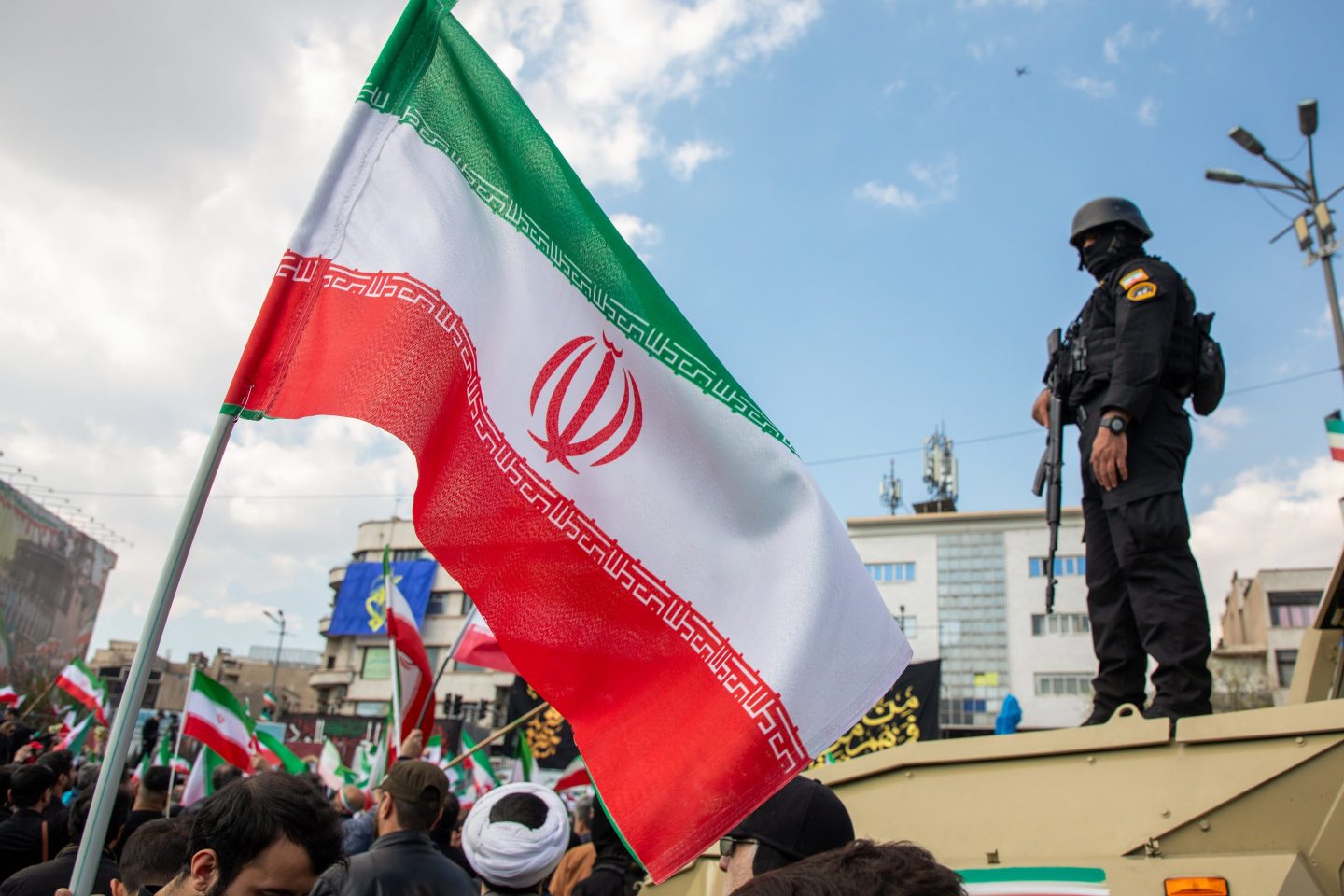
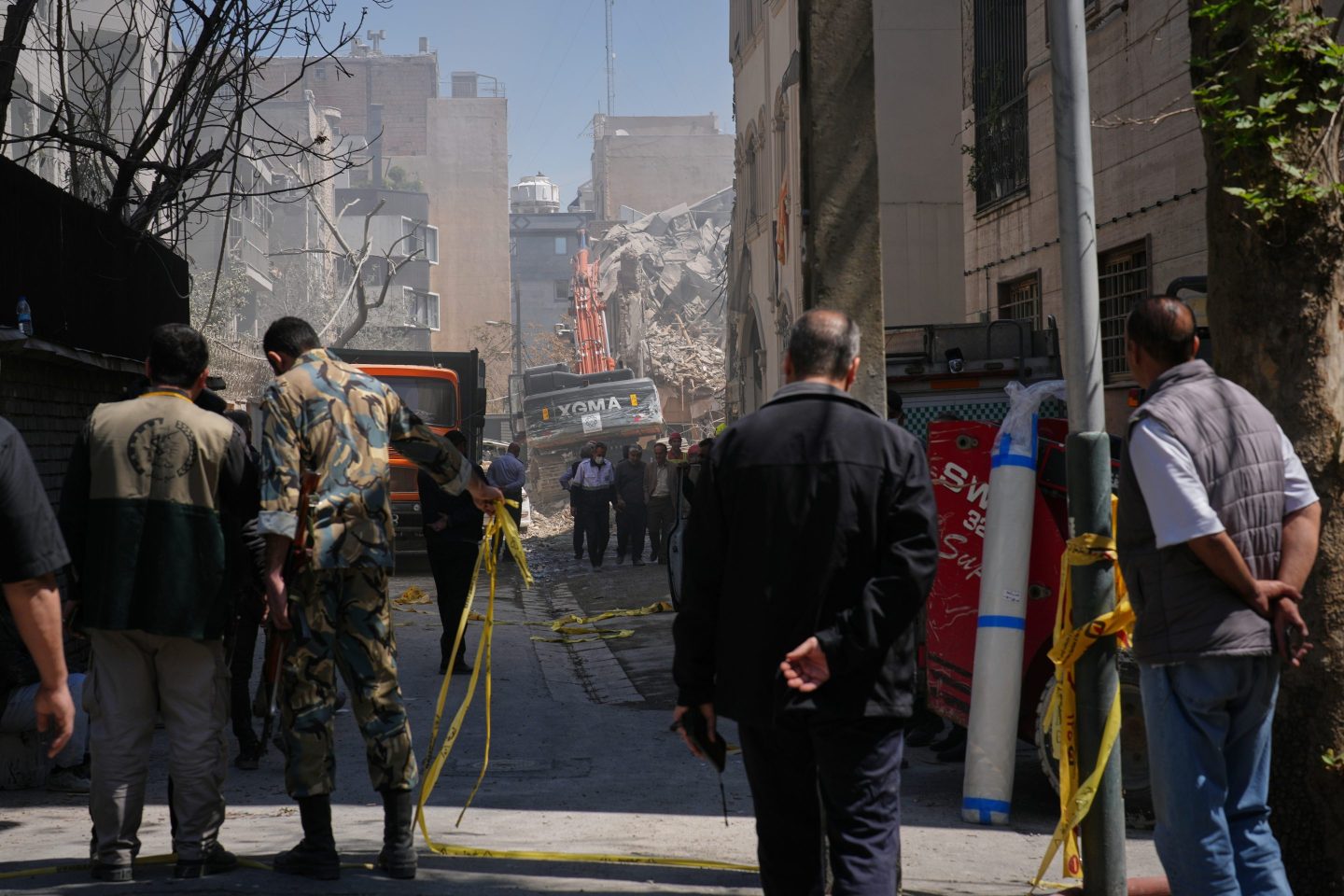
The ongoing conflict in the Gulf, however, has newly exposed the weakness of the petrodollar. Following the first U.S.-Israeli attack, Iran effectively closed the Strait of Hormuz, through which 20% of the global oil supply is traded. Industry experts have said some ships are able to pass through the chokepoint by paying in Chinese yuan.
According to economists, Gulf countries have been quietly diversifying their trade partners for years prior to the current conflict, trading oil outside the U.S. dollar and therefore definitionally destroying the principle of the petrodollar as the exclusive currency for trading oil. EBC Financial Group analyst Michael Harris wrote in a note on Monday that the dollar’s share of global foreign exchange reserves has reached a 25-year low, falling from 71% in 1999 to roughly 57% today.
Signs point to China being the big winner of a de-dollarization push. In 2024, Saudi Arabia did not formally renew its commitment to pricing oil exclusively with dollars. While the 1974 agreement was never a formal obligation and its secretive nature leaves question marks about whether it resulted in a policy change, Saudi Arabia has still made moves to diversify its trade partners. In 2023, the Kingdom and China signed a $7 billion currency swap agreement. The Central Bank of Saudi Arabia is similarly a key participant in the mBridge digital payment platform, which allows direct currency exchanges through the blockchain.
“This shift reflects a basic economic reality,” Harris wrote. “China displaced the United States as Saudi Arabia’s largest oil customer. The economic gravity pointed toward yuan while the currency arrangement pointed toward dollars.” The Saudis are largely still doing deals in dollars, even with China, but the door is now open.
Years of the petrodollar’s weakening grasp
The petrodollar’s weakness has been quietly exposed for even years prior to Saudi Arabia’s currency swap with China. The U.S. was among a handful of countries that imposed sanctions on Russia in the early 2010s following its annexation of Crimea. As a result, Russia began de-dollarizing its economy, agreeing with China to a currency swap worth 150 billion yuan, or about $25 billion. Though Iran has been selling oil to China for decades, their relationship strengthened after the U.S. reimposed sanctions in 2018 and 2019. China’s oil purchases now account for 90% of Iran’s exported oil.
“With the current war, there’s been renewed attention to the fact that Iran has, for years now, been selling much of its oil in the yuan because it doesn’t want to be tied to the United States or assisting it, and it’s trying to avoid U.S. sanctions,” David Wight, a historian at the University of North Carolina at Greensboro, told Fortune. “It’s trying to find purchasers, and that’s primarily China.”
Deutsche Bank economists warned the U.S. and Israeli attacks on Iran would continue to strengthen its ties to China, subsequently bolstering the yuan at the expense of the dollar.
“In this context, reports that the passage for ships through the Strait of Hormuz may be granted in exchange for oil payments in yuan should be closely followed,” the analysts said in a note to clients last month. “The conflict could be remembered as a key catalyst for erosion in petrodollar dominance, and the beginnings of the petroyuan.”
More broadly, Wight said, the revived spotlight on the petroyuan, as well as President Donald Trump’s persistent threats to redouble attacks on Iran, have signalled to other countries that there are instances in which the petrodollar may not be the most favored currency. While more than 90% of cross-border trade in the Americas is done through the petrodollar, according to a Deutsche Bank report, that share drops to about 70% of trade invoicing in the Asia-Pacific, and about 20% in Europe.
“That, in and of itself, is not going to cause the whole system to collapse,” Wight said, “But I think that the increasing aggressiveness of the United States in multiple fields—both in terms of sanctions and in terms of warfare—has caused more countries to kind of wonder, ‘Do we want to be completely tied or dependent on the dollar if things go sour for whatever reason?’”
How China is positioning itself to capitalize on petrodollar stumbles
China has positioned itself to capitalize on any cracks in confidence in the petrodollar, according to Fadhel Kaboub, an associate professor of economics at Denison University and president of the Global Institute for Sustainable Prosperity. China consumes about 15 to 16.6 million barrels of oil per day, making up about 15% to 16% of the world’s total oil consumption.
In 2018, China launched the Shanghai International Energy Exchange, a subsidiary of the Shanghai Futures Exchange, that provided international investors in a currency system outside the U.S. petrodollar.
From the perspective of Gulf countries, trading in the yuan “is not a geopolitical deal,” Kaboub told Fortune. “This is not a security deal. This is just logical common sense business transactions. From a Chinese perspective, this is the building block to where China wants to be in 50 years.”
China is following the U.S.’s playbook when the petrodollar was first cemented by signalling to allied countries in the Gulf that it is able to provide a “security umbrella” and currency alternative in times of geopolitical stress, Kaboub said. But China has also invested heavily in renewable energy sources—including having nearly four times the amount of operational electricity from solar power compared to the U.S.—understanding that it needs to retain economic dominance in times when the world is no longer as reliant on oil. The timing is particularly crucial as the U.S. comparatively struggles to maintain and repair its outdated grid system, which has threatened how quickly it is able to scale its AI ambitions.
“They know that they will need to be an industrial and high tech powerhouse that can impose its own currency and its own financial system on the rest of the world,” Kaboub said of China.
The fate of the petrodollar is at an inflection point during the Iran war. If Iran is able to maintain resilience against U.S. and Israeli forces, “that could be a major turning point,” Kaboub suggested. Iran is a relatively small nation, and by retaining control of the Strait of Hormuz, could signal to other countries there is a viable currency architecture outside the petrodollar. Conversely, if the U.S. gains control of the Strait of Hormuz, the petrodollar will likely retain its dominance. On Tuesday, Trump threatened to attack key Iranian power plans and infrastructure, as well as the death of “a whole civilization” unless Iran reopened the shipping channel.
To be sure, cracks in the petrodollar’s foundation is still far from the currency becoming irrelevant.
“I’m not going to say that the petrodollar is dead, because that’s wrong,” Kaboub said “It still, overwhelmingly dominates international transactions. I’m not gonna say that there is a thing called the petroyuan that’s a rising superpower. It’s not there yet.”
“It’s there as a potential alternative, but it’s got a long way to go to position itself as a dominant alternative to the dollar,” he concluded.