• Home
  • Latest
  • Fortune 500
  • Finance
  • Tech
  • Leadership
  • Lifestyle
  • Rankings
  • Multimedia
AIFortune 500: Titans and Disruptors of Industry

Sam Altman and Vinod Khosla agree: AI will break the economy. Their fix is no income tax for most Americans

Nick Lichtenberg
By
Nick Lichtenberg
Nick Lichtenberg
Business Editor
Down Arrow Button Icon
Nick Lichtenberg
By
Nick Lichtenberg
Nick Lichtenberg
Business Editor
Down Arrow Button Icon
April 7, 2026, 12:07 PM ET
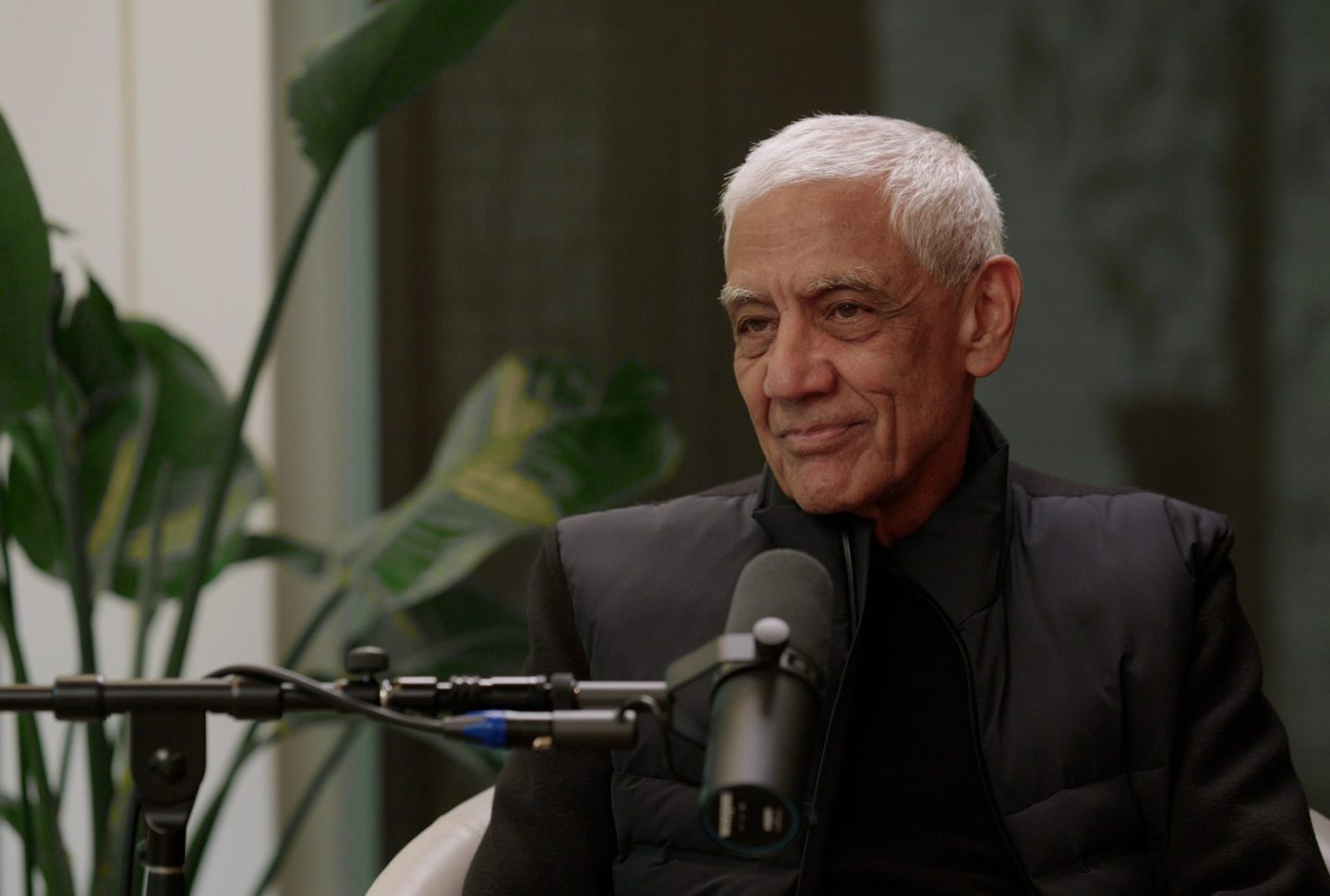
Photo of Vinod Khosla
Vinod KhoslaFortune

When Vinod Khosla sat down with Fortune editor-in-chief Alyson Shontell in March and floated the idea of wiping out federal income taxes for the roughly 100-million-plus Americans earning less than $100,000 a year, it sounded like the kind of provocation only a billionaire with nothing left to prove could get away with. “I can’t be fired. I’ve never worried about a career. I don’t need more money at age 71,” Khosla said. 

Recommended Video

A month later, OpenAI has made it clear that Khosla’s thinking may be the emerging consensus of Silicon Valley’s most powerful voices on how to prevent artificial intelligence from tearing the social fabric apart.

On Monday, OpenAI released a 13-page policy paper titled Industrial Policy for the Intelligence Age: Ideas to Keep People First, in which Sam Altman’s company laid out a sweeping blueprint for economic reform on a scale it compared to the Progressive Era of the early 1900s and Franklin Roosevelt’s New Deal of the 1930s. The central thrust: As AI systems approach superintelligence—defined as capabilities that surpass the smartest humans—the existing tax code, labor market, and social safety net are all dangerously unprepared for what’s coming.

The overlap with Khosla’s vision is hard to miss.

The tax code as a battleground

Khosla’s March proposal on Fortune’s Titans and Disruptors of Industry podcast was elegant in its simplicity: Eliminate the preferential tax rate on capital gains, tax all income—whether earned from a paycheck or an investment portfolio—at the same rate, and use the windfall to exempt everyone earning under $100,000 from federal income taxes entirely. He estimated that 40% of all capital gains taxes are paid by people earning more than $10 million annually, making the math work without increasing the overall tax burden.

OpenAI’s blueprint lands in the same territory, albeit through a slightly different door. The company’s paper calls for shifting the tax base away from payroll and labor income—the very revenue streams that AI threatens to hollow out—and toward corporate income and capital gains. It also floats what many have termed a “robot tax,” proposing levies on automated labor to capture a share of the productivity gains that would otherwise flow exclusively to capital owners.

Both Khosla and OpenAI framed the need for a major policy overhaul around the massive change arising from the implications of the exponential improvement in AI tools. OpenAI warns that as AI automates more work, the wage and payroll tax revenue that funds Social Security, Medicaid, SNAP, and housing assistance could collapse. Shifting to capital-based taxation isn’t just equitable, it argues, it’s fiscally necessary.

Both visions converge on the same uncomfortable assertion: The American tax system was designed for an economy in which most value was created by human labor. That economy is disappearing.

From one billionaire’s idea to a corporate blueprint

Khosla is not a passive observer of OpenAI’s trajectory—he was an early investor in the company. His argument that AI could automate 80% of current jobs by 2030 provides the economic backdrop against which OpenAI’s policy paper reads less like corporate positioning and more like an alarm bell.

During his Fortune interview, Khosla situated the problem in terms that go beyond tax policy. In an AI-driven economy, he argued, the traditional balance of income between labor and capital will tilt dramatically. “Capitalism was about economic efficiency,” he said, “but if the need for efficiency goes away because of extreme abundance, then why focus on efficiency?”

OpenAI’s paper echoes that logic almost beat for beat. Its most radical proposal is a nationally managed public wealth fund, seeded in part by AI companies themselves, that would invest in diversified assets across the AI economy and distribute returns directly to American citizens—a mechanism designed to give every person a stake in the technology that might otherwise render their skills obsolete.

Khosla himself has endorsed the idea of a national wealth fund, and the symmetry between his individual advocacy and OpenAI’s institutional proposal suggests that a policy framework is crystallizing within the AI industry’s upper echelons.

Critics aren’t buying it

Still, the fact that a major VC and the company he invested in are singing the same tune hasn’t silenced the skeptics. Anton Leicht, a visiting scholar with the Carnegie Endowment for International Peace, called OpenAI’s paper “comms work to provide cover for regulatory nihilism”—big ideas floated to project responsibility while the company builds at full speed. The paper landed on the same day The New Yorker published a lengthy investigation raising questions about Altman’s trustworthiness on safety issues, a timing that did not go unnoticed.

And the political headwinds are fierce. Taxing capital gains at ordinary income rates is a proposal that pushed Marc Andreessen to back Donald Trump after President Biden floated a plan to tax unrealized gains in 2024. OpenAI’s paper conspicuously avoids specifying a corporate tax rate, a diplomatic omission that suggests the company knows where the political land mines are buried.

The California experiment

The irony of Khosla’s position is that he’s making a case for bold federal tax reform while fighting a rearguard action in his home state against what he considers a catastrophically misguided local experiment. California’s proposed Billionaire Tax Act would levy a one-time 5% tax on residents worth more than $1 billion—a measure Khosla has called the behavior of “a junkie” chasing a one-time fix while permanently damaging the state’s tax base.

By some estimates, more than $1 trillion in billionaire wealth has already left California in anticipation of the ballot measure. Google cofounders Larry Page and Sergey Brin have reportedly taken steps to sever ties with the state. Even Gov. Gavin Newsom has said the measure “makes no sense.”

Khosla’s counter-vision—federal reform that taxes capital more aggressively while relieving the burden on working Americans—is designed to be a policy that billionaires can live with and workers can vote for. As he put it: “They will vote for a candidate who says no taxes if you make less than $100,000.”

The clock is ticking

Both Khosla and OpenAI agree on at least one thing: The window for action is narrowing. Khosla predicted that structural tax reform will arrive before 2040 and could become a defining issue in the next presidential campaign cycle. OpenAI’s paper calls for automatic safety-net triggers that would expand benefits when AI displacement hits preset thresholds, an acknowledgment that the disruption may arrive faster than any legislative process can handle.

Goldman Sachs research has estimated that AI is already cutting roughly 16,000 U.S. jobs per month, with younger workers bearing a disproportionate share. OpenAI itself warns of scenarios where advanced AI systems become autonomous and self-replicating—systems that, in its own words, “cannot be easily recalled.”

Against that backdrop, the question is no longer whether the tax code needs to change but whether Washington can move fast enough. Khosla, for his part, is betting the real battle will be fought in Congress, not in Sacramento. And now, with OpenAI’s 13-page document in hand, he has the most powerful company in AI essentially cosigning his thesis.

Whether that amounts to genuine policy momentum or, as critics contend, an elaborate exercise in reputation management may be the defining question of the political economy of the AI age.

For this story, Fortune journalists used generative AI as a research tool. An editor verified the accuracy of the information before publishing.


In 2001, Fortune first convened “The Smartest People We Know,” bringing together CEOs and founders, builders and investors, thinkers and doers. Since then, Fortune Brainstorm Tech has been the place where bold ideas collide. From June 8–10, we will return to Aspen—where it all began—to mark 25 years of Brainstorm. Register now.
About the Author
Nick Lichtenberg
By Nick LichtenbergBusiness Editor
LinkedIn icon

Nick Lichtenberg is business editor and was formerly Fortune's executive editor of global news.

See full bioRight Arrow Button Icon

Latest in AI

Finance
Lorem ipsum dolor sit amet, consectetur adipiscing elit, sed do eiusmod tempor incididunt ut labore et dolore magna aliqua. Ut enim ad minim veniam
By Fortune Editors
October 20, 2025
Finance
Lorem ipsum dolor sit amet, consectetur adipiscing elit, sed do eiusmod tempor incididunt ut labore et dolore magna aliqua. Ut enim ad minim veniam
By Fortune Editors
October 20, 2025
Finance
Lorem ipsum dolor sit amet, consectetur adipiscing elit, sed do eiusmod tempor incididunt ut labore et dolore magna aliqua. Ut enim ad minim veniam
By Fortune Editors
October 20, 2025
Finance
Lorem ipsum dolor sit amet, consectetur adipiscing elit, sed do eiusmod tempor incididunt ut labore et dolore magna aliqua. Ut enim ad minim veniam
By Fortune Editors
October 20, 2025
Finance
Lorem ipsum dolor sit amet, consectetur adipiscing elit, sed do eiusmod tempor incididunt ut labore et dolore magna aliqua. Ut enim ad minim veniam
By Fortune Editors
October 20, 2025
Finance
Lorem ipsum dolor sit amet, consectetur adipiscing elit, sed do eiusmod tempor incididunt ut labore et dolore magna aliqua. Ut enim ad minim veniam
By Fortune Editors
October 20, 2025

Most Popular

Finance
Lorem ipsum dolor sit amet, consectetur adipiscing elit, sed do eiusmod tempor incididunt ut labore et dolore magna aliqua. Ut enim ad minim veniam
By Fortune Editors
October 20, 2025
Finance
Lorem ipsum dolor sit amet, consectetur adipiscing elit, sed do eiusmod tempor incididunt ut labore et dolore magna aliqua. Ut enim ad minim veniam
By Fortune Editors
October 20, 2025
Finance
Lorem ipsum dolor sit amet, consectetur adipiscing elit, sed do eiusmod tempor incididunt ut labore et dolore magna aliqua. Ut enim ad minim veniam
By Fortune Editors
October 20, 2025
Finance
Lorem ipsum dolor sit amet, consectetur adipiscing elit, sed do eiusmod tempor incididunt ut labore et dolore magna aliqua. Ut enim ad minim veniam
By Fortune Editors
October 20, 2025
Finance
Lorem ipsum dolor sit amet, consectetur adipiscing elit, sed do eiusmod tempor incididunt ut labore et dolore magna aliqua. Ut enim ad minim veniam
By Fortune Editors
October 20, 2025
Finance
Lorem ipsum dolor sit amet, consectetur adipiscing elit, sed do eiusmod tempor incididunt ut labore et dolore magna aliqua. Ut enim ad minim veniam
By Fortune Editors
October 20, 2025
Fortune Secondary Logo
Rankings
  • 100 Best Companies
  • Fortune 500
  • Global 500
  • Fortune 500 Europe
  • Most Powerful Women
  • Future 50
  • World’s Most Admired Companies
  • See All Rankings
Sections
  • Finance
  • Fortune Crypto
  • Features
  • Leadership
  • Health
  • Commentary
  • Success
  • Retail
  • Mpw
  • Tech
  • Lifestyle
  • CEO Initiative
  • Asia
  • Politics
  • Conferences
  • Europe
  • Newsletters
  • Personal Finance
  • Environment
  • Magazine
  • Education
Customer Support
  • Frequently Asked Questions
  • Customer Service Portal
  • Privacy Policy
  • Terms Of Use
  • Single Issues For Purchase
  • International Print
Commercial Services
  • Advertising
  • Fortune Brand Studio
  • Fortune Analytics
  • Fortune Conferences
  • Business Development
  • Group Subscriptions
About Us
  • About Us
  • Editorial Calendar
  • Press Center
  • Work At Fortune
  • Diversity And Inclusion
  • Terms And Conditions
  • Site Map
  • About Us
  • Editorial Calendar
  • Press Center
  • Work At Fortune
  • Diversity And Inclusion
  • Terms And Conditions
  • Site Map
  • Facebook icon
  • Twitter icon
  • LinkedIn icon
  • Instagram icon
  • Pinterest icon

Latest in AI

Vinod Khosla sits in front of a microphone.
AIFortune 500: Titans and Disruptors of Industry
Sam Altman and Vinod Khosla agree: AI will break the economy. Their fix is no income tax for most Americans
By Nick LichtenbergApril 7, 2026
2 hours ago
Sad woman working in warehouse
SuccessCareers
Only 22% of people felt their jobs were safe in 2025—manufacturers, warehouse workers, and women are the most scared
By Emma BurleighApril 7, 2026
3 hours ago
So… what are we doing with AI? Innovating in an age of caution
MagazineStrategy
So… what are we doing with AI? Innovating in an age of caution
By Francesca CassidyApril 7, 2026
3 hours ago
curtin
CommentaryInfrastructure
TE Connectivity CEO: the real promise of AI is long-term transformation, not short-term efficiency gains
By Terrence CurtinApril 7, 2026
4 hours ago
AI is transforming work—and talent strategy must keep up
Partner CommentaryFortune CHRO
AI is transforming work—and talent strategy must keep up
By Nickle LaMoreauxApril 7, 2026
5 hours ago
philip
CommentaryEducation
I just became CEO of one of education’s Big 3. Here’s why AI will never replace a great teacher
By Philip MoyerApril 7, 2026
6 hours ago

Most Popular

The U.S. military set up an improvised airfield deep inside Iran to rescue the F-15 airman. Marines just practiced building one in the desert
Politics
The U.S. military set up an improvised airfield deep inside Iran to rescue the F-15 airman. Marines just practiced building one in the desert
By Fortune EditorsApril 5, 2026
2 days ago
During the rescue of the F-15 airman in Iran, the U.S. military blew up two of its own transport planes that had to be left behind
Politics
During the rescue of the F-15 airman in Iran, the U.S. military blew up two of its own transport planes that had to be left behind
By Fortune EditorsApril 5, 2026
2 days ago
Sam Altman says AI superintelligence is so big that we need a ‘New Deal.’ Critics say OpenAI’s policy ideas are a cover for ‘regulatory nihilism’
AI
Sam Altman says AI superintelligence is so big that we need a ‘New Deal.’ Critics say OpenAI’s policy ideas are a cover for ‘regulatory nihilism’
By Fortune EditorsApril 6, 2026
21 hours ago
Millions of Americans paid billions in tariffs later ruled illegal — and they won't see a dime back
Commentary
Millions of Americans paid billions in tariffs later ruled illegal — and they won't see a dime back
By Fortune EditorsApril 6, 2026
1 day ago
Current price of oil as of April 6, 2026
Personal Finance
Current price of oil as of April 6, 2026
By Fortune EditorsApril 6, 2026
1 day ago
Current price of silver as of Monday, April 6, 2026
Personal Finance
Current price of silver as of Monday, April 6, 2026
By Fortune EditorsApril 6, 2026
1 day ago

© 2026 Fortune Media IP Limited. All Rights Reserved. Use of this site constitutes acceptance of our Terms of Use and Privacy Policy | CA Notice at Collection and Privacy Notice | Do Not Sell/Share My Personal Information
FORTUNE is a trademark of Fortune Media IP Limited, registered in the U.S. and other countries. FORTUNE may receive compensation for some links to products and services on this website. Offers may be subject to change without notice.