
• Home
  • Latest
  • Fortune 500
  • Finance
  • Tech
  • Leadership
  • Lifestyle
  • Rankings
  • Multimedia
Asiageopolitics
Asia

Economist Eswar Prasad warns a ‘motley group’ of middle powers can’t stop the ‘doom loop’ threatening the global economy

Nicholas Gordon
By
Nicholas Gordon
Nicholas Gordon
Asia Editor
Down Arrow Button Icon
Nicholas Gordon
By
Nicholas Gordon
Nicholas Gordon
Asia Editor
Down Arrow Button Icon
March 6, 2026, 3:00 AM ET
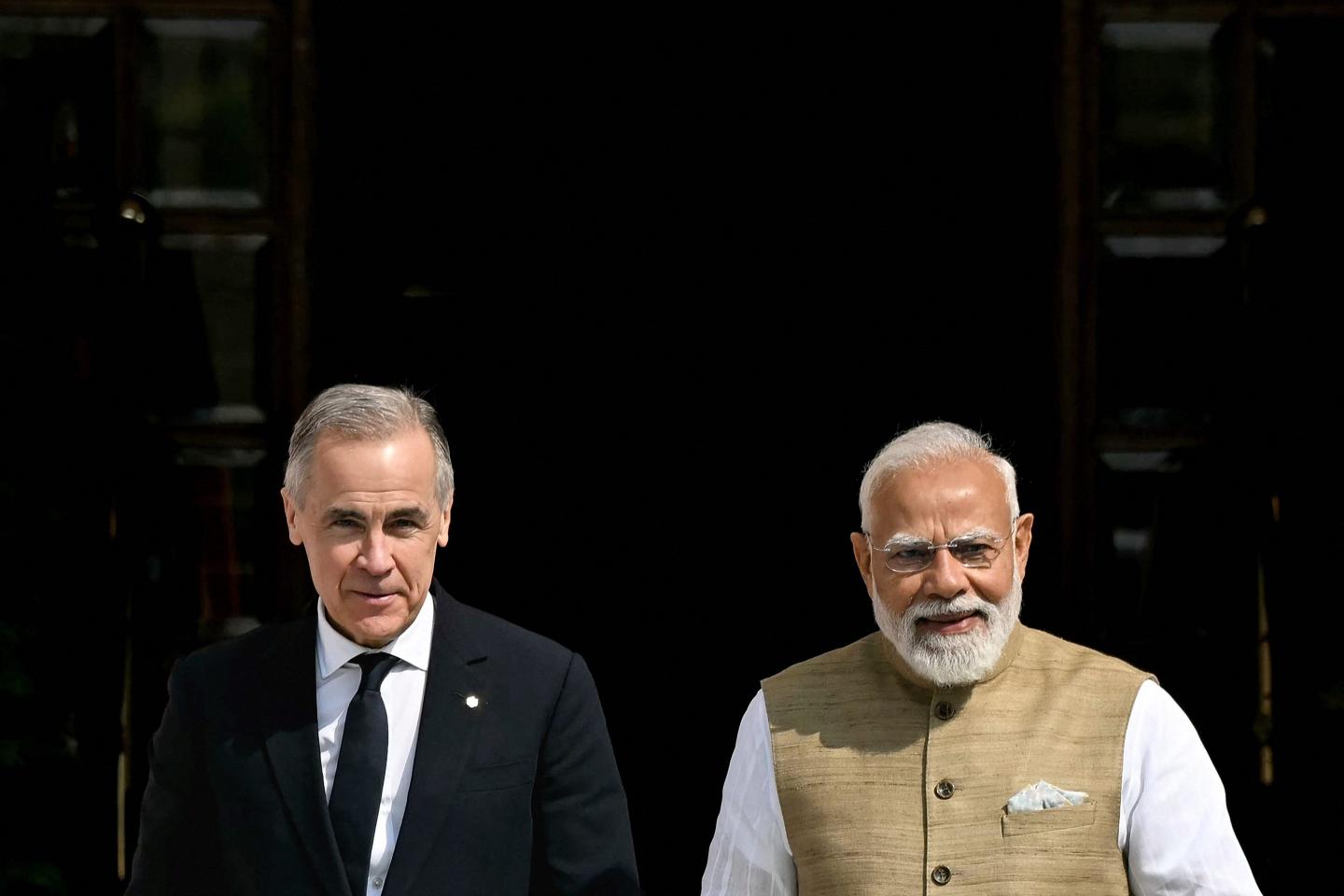
Indian Prime Minister Narendra Modi (right) with his Canadian counterpart, Mark Carney, before their meeting at Hyderabad House in New Delhi, March 2, 2026.
Indian Prime Minister Narendra Modi (right) with his Canadian counterpart, Mark Carney, before their meeting at Hyderabad House in New Delhi, March 2, 2026.Sajjad Hussain—AFP/Getty Images

Mark Carney, Canada’s prime minister, didn’t mince words when he took the stage at the World Economic Forum meeting in Davos earlier this year. In Carney’s estimation, the rules-based international order was experiencing a “rupture.” Great powers like the U.S. and China were “using economic integration as weapons, tariffs as leverage, financial infrastructure as coercion, and supply chains as vulnerabilities to be exploited.” His message to middle powers was blunt: “If we’re not at the table, we’re on the menu.” 

Recommended Video

But middle powers are a “motley group,” says Eswar Prasad, the Tolani senior professor of trade policy at Cornell University, including basically everyone outside of the U.S. and China. “They’re large and small, rich and poor, and so they’re not going to have perfectly aligned interests.”

Carney has previously called for “variable geometry,” or having governments build alliances in ways that align along certain interests. Yet Prasad cautions that such alliances are “not built on any common underlying values or fundamental trust.”

That will make Carney’s “variable geometry” a poor replacement for the global network of international institutions that helped lay down the rules of global diplomacy and commerce. “If you don’t have deep alliances built on mutual trust, it’s difficult to fashion a new rules‑based order,” Prasad says. “The underlying tensions between rich and poor countries will bubble up to the surface.”

The doom loop

Globalization as a political project has looked fragile ever since U.S. President Donald Trump first won the White House in 2016. Since then, Washington has steadily moved to “de‑risk” from China through tariffs, export controls, investment screening, and other measures, while becoming more willing to bypass multilateral forums and act unilaterally.

Prasad, who is also the author of The Doom Loop: Why the World Economic Order Is Spiraling Into Disorder, argues that the forces that were supposed to stabilize the world—globalization, multilateral institutions, the rise of emerging economies—are instead making things worse.
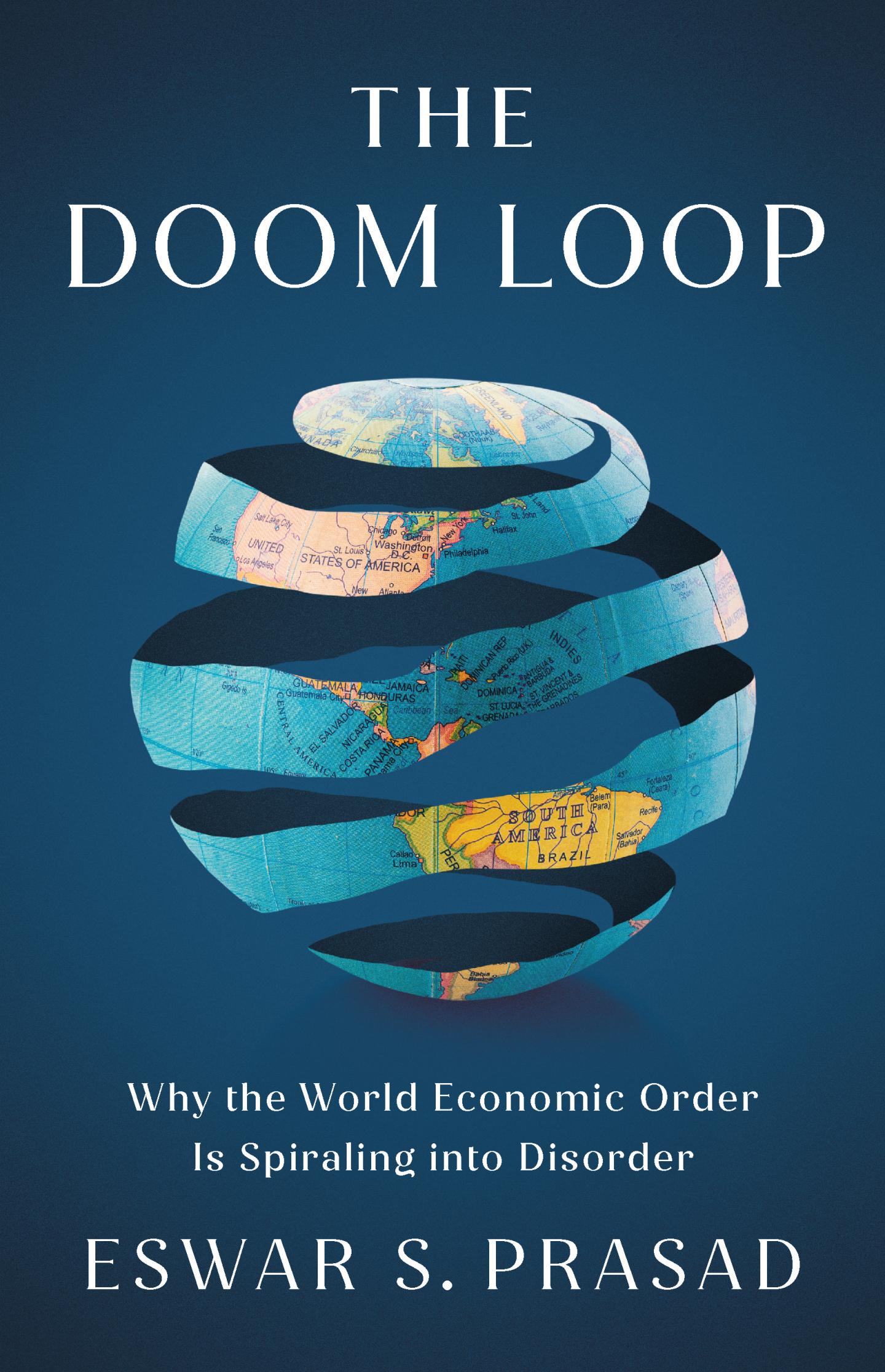
Courtesy of Basic Venture

In a conversation with Fortune, Prasad said he began the book intending to make a more optimistic case that the shift in economic power toward emerging markets would produce a more balanced and stable order. Instead, he concluded that the current form of globalization is “generating instability rather than stability.”

Voters now see globalization as a zero-sum game, with benefits that accrue to political and economic elites that “tilt the system even more in their favor.” That discontent then feeds domestic politics, producing anti-globalization policies like tariffs; that, in turn, feeds back into the international system, deepening instability.

Trade is still expanding, reaching a record value of about $35 trillion last year. But more of that trade occurs within geopolitical blocs rather than across them. “Trade and financial flows are fragmenting in a way that deepens those rifts,” Prasad says. 

Consulting firm McKinsey has found that “geopolitical distance” in trade and investment is shrinking, as countries increasingly trade with and invest in partners aligned with their security alliances.

China and India

Prasad doesn’t see much cause for optimism in Asia. 

In February, the International Monetary Fund projected that China’s economy would grow by 4.5% this year, while warning that overinvestment and industrial policy “resulted in weakening productivity, buildup of financial vulnerabilities, and excess supply in some tradable sectors.” China’s retail sales growth fell to 0.9% in December, the slowest pace since late 2022, while fixed‑asset investment shrank by 3.8% in 2025, the worst performance on record.

In its latest review, the IMF again urged Beijing to shift to a consumption‑led growth model. China’s own policymakers have also tried to encourage domestic spending, but progress has been halting at best.

China did make progress on rebalancing its economy before the COVID pandemic, Prasad says, with consumption contributing more to GDP growth than investment. But the pandemic pushed Beijing back to “its old playbook of credit‑fueled, investment‑driven growth,” he argues, amplified by regulatory crackdowns on the tech, education, and health care sectors that undermined private‑sector confidence.

“The government has tried recently to signal that the private sector is back in favor, but I don’t think private firms are confident about that turn,” Prasad adds. 

Neighboring India also seemed well-positioned to take advantage of U.S. “friendshoring,” owing to its closer relations with Washington. But outside of some high-profile shifts from companies like Apple, India remains far behind smaller emerging markets like Vietnam. 

“It seemed the stars were aligning well for India,” Prasad says. “But it looks like that opportunity will be much less great than anticipated.” 

Prasad thinks India will struggle to build a relationship with China, even if the country’s government wants to diversify its diplomatic outreach. India can’t fully open its markets to China, as its manufacturing sector will “collapse under the weight of China’s exports, which India cannot really compete with.” Then, on the global governance front, India is wary that any redistribution of power at institutions like the IMF would give China proportionally more influence—“and so in a relative sense, India loses out.”

How businesses might be making things worse

What, then, can global businesses do in this more complicated world? 

Prasad argues the era of “lean, mean, hyperefficient supply chains is over.” Now, corporate leaders talk “almost entirely about resilience,” whether it’s by diversifying suppliers, deepening ties with geopolitically friendly countries, or retreating to home markets. The economist admits that his advice to CEOs is “always unsatisfying”: Don’t take on too much debt, keep cash in reserve, and build buffers.

Yet the natural response of businesses could be making things worse. One of the strongest stakeholders against U.S.-China decoupling was the business community, which relied on China both as a manufacturer and a large consumer market. “That helped stabilize the relationship between the two countries,” Prasad says. Now as companies retreat from China and other geopolitically problematic economies, they may be “paradoxically exacerbating” the risks they are trying to avoid.

“I fear we’re going to be stuck in the doom loop until we reach a point where the system undergoes some major correction,” Prasad warns, “and that could be ugly.”

Join us at the Fortune Workplace Innovation Summit May 19–20, 2026, in Atlanta. The next era of workplace innovation is here—and the old playbook is being rewritten. At this exclusive, high-energy event, the world’s most innovative leaders will convene to explore how AI, humanity, and strategy converge to redefine, again, the future of work. Register now.
About the Author
Nicholas Gordon
By Nicholas GordonAsia Editor
LinkedIn iconTwitter icon

Nicholas Gordon is an Asia editor based in Hong Kong, where he helps to drive Fortune’s coverage of Asian business and economics news.

See full bioRight Arrow Button Icon

Latest in Asia

Finance
Lorem ipsum dolor sit amet, consectetur adipiscing elit, sed do eiusmod tempor incididunt ut labore et dolore magna aliqua. Ut enim ad minim veniam
By Fortune Editors
October 20, 2025
Finance
Lorem ipsum dolor sit amet, consectetur adipiscing elit, sed do eiusmod tempor incididunt ut labore et dolore magna aliqua. Ut enim ad minim veniam
By Fortune Editors
October 20, 2025
Finance
Lorem ipsum dolor sit amet, consectetur adipiscing elit, sed do eiusmod tempor incididunt ut labore et dolore magna aliqua. Ut enim ad minim veniam
By Fortune Editors
October 20, 2025
Finance
Lorem ipsum dolor sit amet, consectetur adipiscing elit, sed do eiusmod tempor incididunt ut labore et dolore magna aliqua. Ut enim ad minim veniam
By Fortune Editors
October 20, 2025
Finance
Lorem ipsum dolor sit amet, consectetur adipiscing elit, sed do eiusmod tempor incididunt ut labore et dolore magna aliqua. Ut enim ad minim veniam
By Fortune Editors
October 20, 2025
Finance
Lorem ipsum dolor sit amet, consectetur adipiscing elit, sed do eiusmod tempor incididunt ut labore et dolore magna aliqua. Ut enim ad minim veniam
By Fortune Editors
October 20, 2025

Most Popular

Finance
Lorem ipsum dolor sit amet, consectetur adipiscing elit, sed do eiusmod tempor incididunt ut labore et dolore magna aliqua. Ut enim ad minim veniam
By Fortune Editors
October 20, 2025
Finance
Lorem ipsum dolor sit amet, consectetur adipiscing elit, sed do eiusmod tempor incididunt ut labore et dolore magna aliqua. Ut enim ad minim veniam
By Fortune Editors
October 20, 2025
Finance
Lorem ipsum dolor sit amet, consectetur adipiscing elit, sed do eiusmod tempor incididunt ut labore et dolore magna aliqua. Ut enim ad minim veniam
By Fortune Editors
October 20, 2025
Finance
Lorem ipsum dolor sit amet, consectetur adipiscing elit, sed do eiusmod tempor incididunt ut labore et dolore magna aliqua. Ut enim ad minim veniam
By Fortune Editors
October 20, 2025
Finance
Lorem ipsum dolor sit amet, consectetur adipiscing elit, sed do eiusmod tempor incididunt ut labore et dolore magna aliqua. Ut enim ad minim veniam
By Fortune Editors
October 20, 2025
Finance
Lorem ipsum dolor sit amet, consectetur adipiscing elit, sed do eiusmod tempor incididunt ut labore et dolore magna aliqua. Ut enim ad minim veniam
By Fortune Editors
October 20, 2025
Fortune Secondary Logo
Rankings
  • 100 Best Companies
  • Fortune 500
  • Global 500
  • Fortune 500 Europe
  • Most Powerful Women
  • Future 50
  • World’s Most Admired Companies
  • See All Rankings
Sections
  • Finance
  • Fortune Crypto
  • Features
  • Leadership
  • Health
  • Commentary
  • Success
  • Retail
  • Mpw
  • Tech
  • Lifestyle
  • CEO Initiative
  • Asia
  • Politics
  • Conferences
  • Europe
  • Newsletters
  • Personal Finance
  • Environment
  • Magazine
  • Education
Customer Support
  • Frequently Asked Questions
  • Customer Service Portal
  • Privacy Policy
  • Terms Of Use
  • Single Issues For Purchase
  • International Print
Commercial Services
  • Advertising
  • Fortune Brand Studio
  • Fortune Analytics
  • Fortune Conferences
  • Business Development
  • Group Subscriptions
About Us
  • About Us
  • Editorial Calendar
  • Press Center
  • Work At Fortune
  • Diversity And Inclusion
  • Terms And Conditions
  • Site Map
  • About Us
  • Editorial Calendar
  • Press Center
  • Work At Fortune
  • Diversity And Inclusion
  • Terms And Conditions
  • Site Map
  • Facebook icon
  • Twitter icon
  • LinkedIn icon
  • Instagram icon
  • Pinterest icon

Latest in Asia

Manycore, the first of the Hangzhou ‘Little Dragons’ to go public, pushes ‘spatial intelligence’ as the next wave of AI development
AsiaHong Kong
Manycore, the first of the Hangzhou ‘Little Dragons’ to go public, pushes ‘spatial intelligence’ as the next wave of AI development
By Nicholas GordonApril 16, 2026
2 hours ago
A floating solar power plant in India
Energyfossil fuels
Trump’s war in the Middle East may end up a global boon for renewables, as think tank calls return-to-coal narrative ‘meaningless’
By Tristan BoveApril 16, 2026
5 hours ago
china
EconomyChina
China’s economy grows 5% in first quarter, surprising economists to the upside
By Chan Ho-Him and The Associated PressApril 16, 2026
9 hours ago
somali
AsiaSocial Media
American YouTuber who calls himself a ‘troll’ sentenced to 6 months in Korean prison for literally dancing on wartime graves
By The Associated PressApril 16, 2026
9 hours ago
Canva debuts a new suite of agentic tools, as the design app quietly becomes one of the world’s most used AI services
AIAI agents
Canva debuts a new suite of agentic tools, as the design app quietly becomes one of the world’s most used AI services
By Nicholas GordonApril 16, 2026
10 hours ago
trump
PoliticsIran
Trump’s leaky blockade: ship sneaks through and talks with Iran resume
By Munir Ahmed, Sam Metz and The Associated PressApril 14, 2026
2 days ago

Most Popular

Jeff Bezos pledged $10 billion for climate change. With the 2030 clock ticking, his wife, Lauren Sánchez Bezos, is leading the charge to spend it
Environment
Jeff Bezos pledged $10 billion for climate change. With the 2030 clock ticking, his wife, Lauren Sánchez Bezos, is leading the charge to spend it
By Sydney LakeApril 15, 2026
1 day ago
Billionaire philanthropist MacKenzie Scott has donated again—a week after gifting millions to a college, she's just given $70 million to Meals on Wheels America
Success
Billionaire philanthropist MacKenzie Scott has donated again—a week after gifting millions to a college, she's just given $70 million to Meals on Wheels America
By Emma BurleighApril 13, 2026
3 days ago
Current price of oil as of April 15, 2026
Personal Finance
Current price of oil as of April 15, 2026
By Joseph HostetlerApril 15, 2026
1 day ago
Germany already told its workers to ditch four-day weeks and work-life balance. Now the government wants to cut their pay for calling in sick, too
Success
Germany already told its workers to ditch four-day weeks and work-life balance. Now the government wants to cut their pay for calling in sick, too
By Orianna Rosa RoyleApril 16, 2026
16 hours ago
The billionaire Anthropic cofounder who majored in literature says knowing how to ask the right questions beats knowing how to code
Success
The billionaire Anthropic cofounder who majored in literature says knowing how to ask the right questions beats knowing how to code
By Marco Quiroz-GutierrezApril 14, 2026
2 days ago
Palantir CEO says working at his $316 billion software company is better than a degree from Harvard or Yale: ‘No one cares about the other stuff’
Success
Palantir CEO says working at his $316 billion software company is better than a degree from Harvard or Yale: ‘No one cares about the other stuff’
By Preston ForeApril 14, 2026
2 days ago

© 2026 Fortune Media IP Limited. All Rights Reserved. Use of this site constitutes acceptance of our Terms of Use and Privacy Policy | CA Notice at Collection and Privacy Notice | Do Not Sell/Share My Personal Information
FORTUNE is a trademark of Fortune Media IP Limited, registered in the U.S. and other countries. FORTUNE may receive compensation for some links to products and services on this website. Offers may be subject to change without notice.