• Home
  • Latest
  • Fortune 500
  • Finance
  • Tech
  • Leadership
  • Lifestyle
  • Rankings
  • Multimedia

Trendingnow

1

The U.S. spent $30 billion to ditch textbooks for laptops and tablets: The result is the first generation less cognitively capable than their parents

2

Peter Thiel and other tech billionaires are publicly shielding their children from the products that made them rich

3

A Trump Account could make your kid a millionaire by 45—but financial experts say the app's projections come with a catch

1

The U.S. spent $30 billion to ditch textbooks for laptops and tablets: The result is the first generation less cognitively capable than their parents

2

Peter Thiel and other tech billionaires are publicly shielding their children from the products that made them rich

3

A Trump Account could make your kid a millionaire by 45—but financial experts say the app's projections come with a catch
CommentaryAnimals

You love your dog too much. Blame the broken American Dream and loss of purpose since the pandemic

By
Margret Grebowicz
Margret Grebowicz
and
The Conversation
The Conversation
Down Arrow Button Icon
By
Margret Grebowicz
Margret Grebowicz
and
The Conversation
The Conversation
Down Arrow Button Icon
February 13, 2026, 8:40 AM ET
dog
How much do you love your dog?Getty Images
Add Fortune on Google for similar content.

Americans love dogs.

Recommended Video

Nearly half of U.S. households have one, and practically all owners see pets as part of the family – 51% say pets belong “as much as a human member.” The pet industry keeps generating more and more jobs, from vets to trainers, to influencers. Schools cannot keep up with the demand for veterinarians.

It all seems part of what Mark Cushing, a lawyer and lobbyist for veterinary issues, calls “the pet revolution”: the more and more privileged place that pets occupy in American society. In his 2020 book “Pet Nation,” he argues that the internet has caused people to become more lonely, and this has made them focus more intensely on their pets – filling in for human relationships.

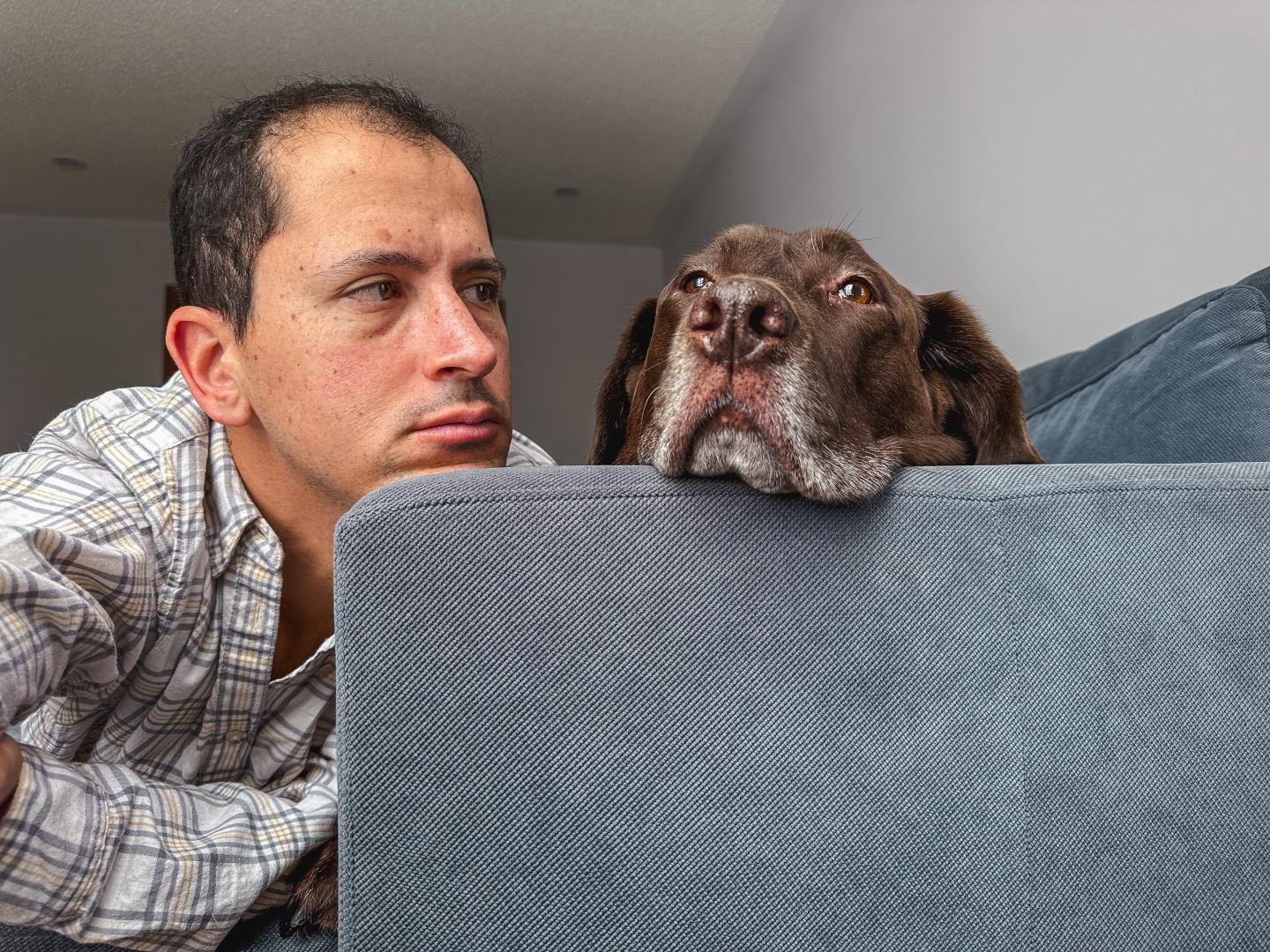
I would argue that something different is happening, however, particularly since the COVID-19 lockdown: Loving dogs has become an expression not of loneliness but of how unhappy many Americans are with society and other people.

In my own book, “Rescue Me,” I explore how today’s dog culture is more a symptom of our suffering as a society than a cure for it. Dogs aren’t just being used as a substitute for people. As a philosopher who studies the relationships between animals, humans and the environment, I believe Americans are turning to dogs to alleviate the erosion of social life itself. For some owners, dogs simply offer more satisfying relationships than other people do.

And I am no different. I live with three dogs, and my love for them has driven me to research the culture of dog ownership in an effort to understand myself and other humans better. By nature, dogs are masters of social life who can communicate beyond the boundaries of their species. But I believe many Americans are expecting their pets to address problems that they cannot fix.

Dogs over people

During the pandemic, people often struggled with the monotony of spending too much time cooped up with other humans – children, romantic partners, roommates. Meanwhile, relationships with their dogs seemed to flourish.

Rescuing shelter animals grew in popularity, and on social media people celebrated being at home with their pets. Dog content on Instagram and Pinterest now commonly includes hashtags like #DogsAreBetterThanPeople and #IPreferDogsToPeople.

“The more I learn about people, the more I like my dog” appears on merchandise all over e-commerce sites such as Etsy, Amazon and Redbubble.

One 2025 study found that dog owners tend to rate their pets more highly than their human loved ones in several areas, such as companionship and support. They also experienced fewer negative interactions with their dogs than with the closest people in their lives, including children, romantic partners and relatives.

The late primatologist Jane Goodall celebrated her 90th birthday with 90 dogs. She stated in an interview with Stephen Colbert that she preferred dogs to chimps, because chimps were too much like people. https://www.youtube.com/embed/3xGvLApNrFQ?wmode=transparent&start=0 Jane Goodall said she appreciates dogs for their “unconditional love.”

Fraying fabric

This passion for dogs seems to be growing as America’s social fabric unravels – which began long before the pandemic.

In 1972, 46% of Americans said “most people can be trusted.” By 2018, that percentage dropped to 34%. Americans report seeing their friends less than they used to, a phenomenon called the “friendship recession,” and avoid having conversations with strangers because they expect the conversation to go badly. People are spending more time at home.

Today, millennials make up the largest percentage of pet owners. Some cultural commentators argue dogs are especially important for this generation because other traditional markers of stability and adulthood – a mortgage, a child – feel out of reach or simply undesirable. According to the Harris Poll, a marketing research firm, 43% of Americans would prefer a pet to a child.

Amid those pressures, many people turn to the comfort of a pet – but the expectations for what dogs can bring to our lives are becoming increasingly unreasonable.

For some people, dogs are a way to feel loved, to relieve pressures to have kids, to fight the drudgery of their job, to reduce the stress of the rat race and to connect with the outdoors. Some expect pet ownership to improve their physical and mental health.

A woman with short brunette hair sits on the floor in front of a sliding door and balcony, as a black dog sits beside her and looks at her.
Even years after the pandemic lockdown, many people are spending more time at home – often with pets. curtoicurto/iStock via Getty Images Plus

And it works, to a degree. Studies have found dog people to be “warmer” and happier than cat people. Interacting with pets can improve your health and may even offer some protection against cognitive decline. Dog-training programs in prisons appear to reduce recidivism rates.

Unreasonable expectations

But expecting that dogs will fill the social and emotional gaps in our lives is actually an obstacle to dogs’ flourishing, and human flourishing as well.

In philosophical terms, we could call this an extractive relationship: Humans are using dogs for their emotional labor, extracting things from them that they cannot get elsewhere or simply no longer wish to. Just like natural resource extraction, extractive relationships eventually become unsustainable.

The late cultural theorist Lauren Berlant argued that the present stage of capitalism creates a dynamic called “slow death,” a cycle in which “life building and the attrition of life are indistinguishable.” Keeping up is so exhausting that, in order to maintain that life, we need to do things that result in our slow degradation: Work becomes drudgery under unsustainable workloads, and the experience of dating suffers under the unhealthy pressure to have a partner.

Similarly, today’s dog culture is leading to unhealthy and unsustainable dynamics. Veterinarians are concerned that the rise of the “fur baby” lifestyle, in which people treat pets like human children, can harm animals, as owners seek unnecessary veterinary care, tests and medications. Pets staying at home alone while owners work suffer from boredom, which can cause chronic psychological distress and health problems. And as the number of pets goes up, many people wind up giving up their animal, overcrowding shelters.

So what should be done? Some philosophers and activists advocate for pet abolition, arguing that treating any animals as property is ethically indefensible.

This is a hard case to make – especially with dog lovers. Dogs were the first animal that humans domesticated. They have evolved beside us for as long as 40,000 years, and are a central piece of the human story. Some scientists argue that dogs made us human, not the other way around.

Perhaps we can reconfigure aspects of home, family and society to be better for dogs and humans alike – more accessible health care and higher-quality food, for example. A world more focused on human thriving would be more focused on pets’ thriving, too. But that would make for a very different America than this one.

Margret Grebowicz, Distinguished Professor of the Humanities, Missouri University of Science and Technology

This article is republished from The Conversation under a Creative Commons license. Read the original article.

The Conversation
About the Authors
By Margret Grebowicz
See full bioRight Arrow Button Icon
By The Conversation
See full bioRight Arrow Button Icon
Add Fortune on Google for similar content.

Latest in Commentary

Finance
Lorem ipsum dolor sit amet, consectetur adipiscing elit, sed do eiusmod tempor incididunt ut labore et dolore magna aliqua. Ut enim ad minim veniam
By Fortune Editors
October 20, 2025
Finance
Lorem ipsum dolor sit amet, consectetur adipiscing elit, sed do eiusmod tempor incididunt ut labore et dolore magna aliqua. Ut enim ad minim veniam
By Fortune Editors
October 20, 2025
Finance
Lorem ipsum dolor sit amet, consectetur adipiscing elit, sed do eiusmod tempor incididunt ut labore et dolore magna aliqua. Ut enim ad minim veniam
By Fortune Editors
October 20, 2025
Finance
Lorem ipsum dolor sit amet, consectetur adipiscing elit, sed do eiusmod tempor incididunt ut labore et dolore magna aliqua. Ut enim ad minim veniam
By Fortune Editors
October 20, 2025
Finance
Lorem ipsum dolor sit amet, consectetur adipiscing elit, sed do eiusmod tempor incididunt ut labore et dolore magna aliqua. Ut enim ad minim veniam
By Fortune Editors
October 20, 2025
Finance
Lorem ipsum dolor sit amet, consectetur adipiscing elit, sed do eiusmod tempor incididunt ut labore et dolore magna aliqua. Ut enim ad minim veniam
By Fortune Editors
October 20, 2025

Most Popular

Finance
Lorem ipsum dolor sit amet, consectetur adipiscing elit, sed do eiusmod tempor incididunt ut labore et dolore magna aliqua. Ut enim ad minim veniam
By Fortune Editors
October 20, 2025
Finance
Lorem ipsum dolor sit amet, consectetur adipiscing elit, sed do eiusmod tempor incididunt ut labore et dolore magna aliqua. Ut enim ad minim veniam
By Fortune Editors
October 20, 2025
Finance
Lorem ipsum dolor sit amet, consectetur adipiscing elit, sed do eiusmod tempor incididunt ut labore et dolore magna aliqua. Ut enim ad minim veniam
By Fortune Editors
October 20, 2025
Finance
Lorem ipsum dolor sit amet, consectetur adipiscing elit, sed do eiusmod tempor incididunt ut labore et dolore magna aliqua. Ut enim ad minim veniam
By Fortune Editors
October 20, 2025
Finance
Lorem ipsum dolor sit amet, consectetur adipiscing elit, sed do eiusmod tempor incididunt ut labore et dolore magna aliqua. Ut enim ad minim veniam
By Fortune Editors
October 20, 2025
Finance
Lorem ipsum dolor sit amet, consectetur adipiscing elit, sed do eiusmod tempor incididunt ut labore et dolore magna aliqua. Ut enim ad minim veniam
By Fortune Editors
October 20, 2025
Fortune Secondary Logo
Rankings
  • 100 Best Companies
  • Fortune 500
  • Global 500
  • Fortune 500 Europe
  • Most Powerful Women
  • World's Most Admired Companies
  • See All Rankings
  • Lists Calendar
Sections
  • Finance
  • Fortune Crypto
  • Features
  • Leadership
  • Health
  • Commentary
  • Success
  • Retail
  • Mpw
  • Tech
  • Lifestyle
  • CEO Initiative
  • Asia
  • Politics
  • Conferences
  • Europe
  • Newsletters
  • Personal Finance
  • Environment
  • Magazine
  • Education
Customer Support
  • Frequently Asked Questions
  • Customer Service Portal
  • Privacy Policy
  • Terms Of Use
  • Single Issues For Purchase
  • International Print
Commercial Services
  • Advertising
  • Fortune Brand Studio
  • Fortune Analytics
  • Fortune Conferences
  • Business Development
  • Group Subscriptions
About Us
  • About Us
  • Press Center
  • Work At Fortune
  • Terms And Conditions
  • Site Map
  • About Us
  • Press Center
  • Work At Fortune
  • Terms And Conditions
  • Site Map
  • Facebook icon
  • Twitter icon
  • LinkedIn icon
  • Instagram icon
  • Pinterest icon

Latest in Commentary

usa
Commentary250 Years of Innovation
For 250 years, work defined American identity. That era Is ending
By Keith Ferrazzi and Wendy SmithJuly 11, 2026
2 days ago
m
Commentarymedicine
America’s bone health is quietly headed for a $19 billion crisis
By Matthew T. DrakeJuly 9, 2026
4 days ago
t
CommentaryEducation
AI is about to disrupt millions of jobs. A century ago, America’s answer was to build a new high school
By Tim KnowlesJuly 8, 2026
5 days ago
amit
CommentaryVenture Capital
Physical AI’s $50 trillion opportunity requires long-term conviction, but the payoff is huge 
By Amit ChaturvedyJuly 8, 2026
5 days ago
heat
Commentaryclimate change
McKinsey Global Institute: Climate planning has prioritized floods. Heat demands equal attention
By Sylvain Johansson, Mekala Krishnan, Kanmani Chockalingam and Annabel FarrJuly 7, 2026
6 days ago
j
CommentaryEducation
AI didn’t break higher education—It exposed the credential trap
By Jason BenedictJuly 7, 2026
6 days ago

Most Popular

The U.S. spent $30 billion to ditch textbooks for laptops and tablets: The result is the first generation less cognitively capable than their parents
Innovation
The U.S. spent $30 billion to ditch textbooks for laptops and tablets: The result is the first generation less cognitively capable than their parents
By Sasha RogelbergJuly 12, 2026
19 hours ago
Peter Thiel and other tech billionaires are publicly shielding their children from the products that made them rich
Big Tech
Peter Thiel and other tech billionaires are publicly shielding their children from the products that made them rich
By Marco Quiroz-GutierrezJuly 12, 2026
19 hours ago
A Trump Account could make your kid a millionaire by 45—but financial experts say the app's projections come with a catch
Personal Finance
A Trump Account could make your kid a millionaire by 45—but financial experts say the app's projections come with a catch
By Sydney LakeJuly 12, 2026
20 hours ago
The U.S. and Iran can't agree on fully reopening the Strait of Hormuz. The solution could be straight out of the Old Testament
Middle East
The U.S. and Iran can't agree on fully reopening the Strait of Hormuz. The solution could be straight out of the Old Testament
By Jason MaJuly 11, 2026
1 day ago
Trump’s time is running out to avoid a nightmare Strait of Hormuz scenario
Energy
Trump’s time is running out to avoid a nightmare Strait of Hormuz scenario
By Jordan BlumJuly 12, 2026
1 day ago
Wyoming officials say Meta’s 715,000-square-foot data center is responsible for contaminating its water system with a rare bacterium
Environment
Wyoming officials say Meta’s 715,000-square-foot data center is responsible for contaminating its water system with a rare bacterium
By Sasha RogelbergJuly 10, 2026
3 days ago

© 2026 Fortune Media IP Limited. All Rights Reserved. Use of this site constitutes acceptance of our Terms of Use and Privacy Policy | CA Notice at Collection and Privacy Notice | Do Not Sell/Share My Personal Information
FORTUNE is a trademark of Fortune Media IP Limited, registered in the U.S. and other countries. FORTUNE may receive compensation for some links to products and services on this website. Offers may be subject to change without notice.