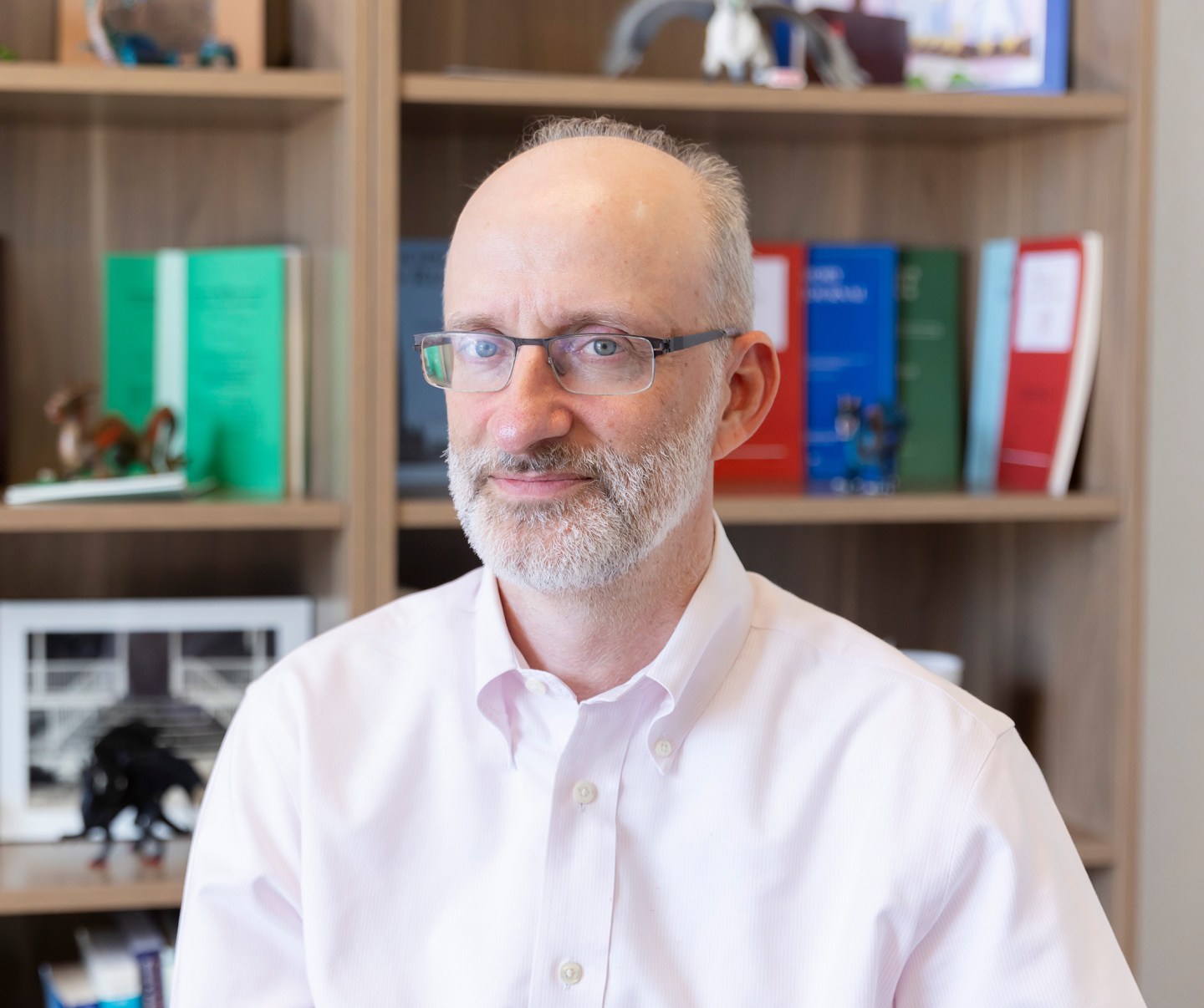
Brian Galle is not looking to ban billionaires. In fact, the tax law expert and key architect behind California’s controversial wealth tax proposal described himself as an “enthusiastic capitalist” in a recent interview with Fortune. “I think capitalism is a great system that probably has, you know, enriched the lives of billions of people,” he told Fortune over Zoom from his office in Berkeley, where he teaches courses on tax and nonprofit law. “But I’m not sure that our system is a functioning capitalist system right now.
“I’m interested in how things work,” Galle added. “And right now, it [capitalism] doesn’t seem to be working well.” Speaking to Fortune about his forthcoming new book, How to Tax the Ultrarich, Galle said one of its central arguments is that domination by a small number of families leads to “bad economies” that grow more slowly and often have crippling inflation and stagnation. (Galle’s publisher, the Roosevelt Institute, has provided a rundown of the book’s arguments.)
Galle, who recently moved to California after a decade at Georgetown Law, helped write the legislative text for the wealth tax bill introduced by Assemblymember Alex Lee to address the state’s significant budget deficit—the so-called billionaires’ tax. While previous versions of the bill received little notice, Galle said he believed this one drew intense scrutiny, especially from ultrawealthy Californians, because it actually has a “pretty good chance of passing.”
Galle has extensive experience in wealth tax legislation, having previously been involved with a wealth tax bill from Sen. Elizabeth Warren when she was a serious candidate for president, and filing an amicus brief with the Supreme Court in 2024 that was cited by Justice Ketanji Brown Jackson. He said this should give you an idea of where his beliefs lie on the political spectrum: “The fact that she was citing it probably tells you what these six Republicans would think about my argument.” This was for Moore v. United States, which upheld an international tax provision while pointedly avoiding a broad ruling on whether “unrealized” gains can be taxed as income, which just so happens to lie at the heart of wealth taxes and what to do about billionaires. “So probably,” Galle added, “the Supreme Court would say you can only tax people when they sell stuff.”
The ‘when to tax’ question and the many billionaire loopholes
This is the core problem, though, Galle said: The American tax system allows the wealthy to choose when they pay taxes, a choice they often delay indefinitely. Citing research by economist Emmanuel Saez, Galle noted that billionaires pay an all-in tax rate that is 20% lower than that of the median American household. While the American tax code may look progressive on paper, he argued, it is very much not in practice, because the ultrawealthy can choose when they sell assets and realize capital gains, triggering taxation. Until then, they can, under the practice known as “buy-borrow-die,” continuously take loans out against their assets to fund their lifestyles. “I don’t know about you,” Galle said, “but if I go into my Fidelity account, I have a little button I can click that says, ‘Do you wanna take out a loan against your savings?’ I’m pretty sure it’s even easier for billionaires.”
Critics of the California proposal, including tech billionaire Palmer Luckey, have argued that a wealth tax would force them to liquidate businesses and fire workers to pay the bill. Galle dismissed this, saying, “The idea that they would have to sell a meaningful share of their assets to pay a 1% annual tax is just nonsense.” Galle also rejected the argument that wealth taxes are doomed to fail because they have been repealed in many countries such as France, pointing instead to successful, sustained models in Switzerland and Spain that closed loopholes for privately held businesses.
Why have so many wealth taxes been rolled back globally, then? According to Galle, it’s a combination of factors, but one of them is that over time, “billionaires have learned better and better, and their lawyers have learned how to find all the loopholes to really exploit this kind of optionality: their ability to choose when to pay tax.” Galle allowed that different billionaires have different assets and some are hard to value (in the world of private art collections, as Fortune has reported, some investors develop esoteric tastes, like collecting dinosaur bones), but Galle said these obstacles are “solvable” in the forms of formulas and appraisals.
Kent Smetters, a Wharton professor and faculty director of the Penn Wharton Budget Model, told Fortune that he agreed these issues should be solvable and the buy-borrow-die model “probably is a legitimate issue,” adding that it’s “not really based on tax principles or coherent tax principles.”
Smetters, who has previously told Fortune that his own research indicates taxing billionaires wouldn’t bring in as much revenue as commonly believed, allowed that it’s a moral issue for many, and that’s justified. “My sense is that [wealth tax advocates] still believe in it just because of this principle. And it is true that sometimes the really rich billionaires, they can manage their tax rate” by borrowing against their fortune and not realizing capital gains as they accrue. The key is to tackle what’s called the “step-up in cost basis,” which is where an heir steps up to the fair market value of their parent’s fortune at the time of death. “That’s the tail that wags the dog here,” Smetters said, and eliminating that could really undermine some common ultrawealthy tax planning strategies: “You would probably satisfy some of the concerns that people have about this fairness principle.”
How to fix it with ‘FAST’
The main thrust of Galle’s book, of course, is “how” to make this actually happen. The California billionaires tax is really just a one-off, for one state with a $100 billion funding gap, he explained. He (and his coauthors) see a federal-level solution, explained in detail in his forthcoming book, called “FAST.”
Under the FAST plan, the government would wait until wealthy individuals sell their assets to tax them, complying with likely Supreme Court requirements. However, the government would charge an interest rate that retroactively eliminates the financial benefit of delaying the sale. By charging an “economically accurate rate of interest,” Galle argued, the plan removes the incentive to hoard assets to minimize tax bills, encouraging the wealthy to sell sooner (this also explains the “FAST” title). This measure would apply only to the top tier of wealth holders, likely those with more than $30 million in assets.
FAST also tackles the cost basis step-up by replacing the estate and gift tax system with an extra tax bracket for inherited property, “in effect switching to an inheritance tax and carryover basis at death, but again with extra interest charges for taxpayers who delay sale.” This would solve both problems in one fell swoop, he explained.
Galle acknowledged that the Supreme Court signaled with the 2024 Moore ruling that it may not permit taxing unrealized gains, and he explained that his proposal is designed in accordance with what is likely to be legal. But he insisted that these proposals should be seen not as a way to punish success, but as essential maintenance for a capitalist system that is currently skewed by “disproportionate billionaire power.” He argued that functioning capitalism requires a “fair, functional tax system” rather than the current setup, which allows the wealthiest to opt out of paying their share. While he admits there are no “magic wands,” Galle insisted that the current tax code is making economic inequality worse, and incremental progress is vital to restoring a healthy economy.