Football has finally done to Bill Belichick what the former New England Patriots coach did to so many others for decades: offered a cold, clinical rejection. The Pro Football Hall of Fame sent shock waves across the sports world with its decision, as reported by ESPN and The Athletic, not to induct the NFL legend—who won six Super Bowl rings as a head coach and two more as an assistant—in his first year of eligibility. Many of his former players and fans, and even his enemies, are mystified, but it turns out Belichick’s famously gruff personality was a big factor in the snub.
The hall’s decision to reject Belichick, which was conveyed to him in a Friday phone call, fell short of the 40 out of 50 votes required for first-ballot induction. The Canton, Ohio–based body has confirmed only that it does not comment on individual voting and will announce the class of 2026 at NFL Honors in San Francisco on Feb. 5.
To paraphrase the famous, maybe apocryphal, Gandhi quote about an eye-for-an-eye approach leaving the whole world blind, the decision amounts to a snub for a snub that leaves a whole sport looking smaller.
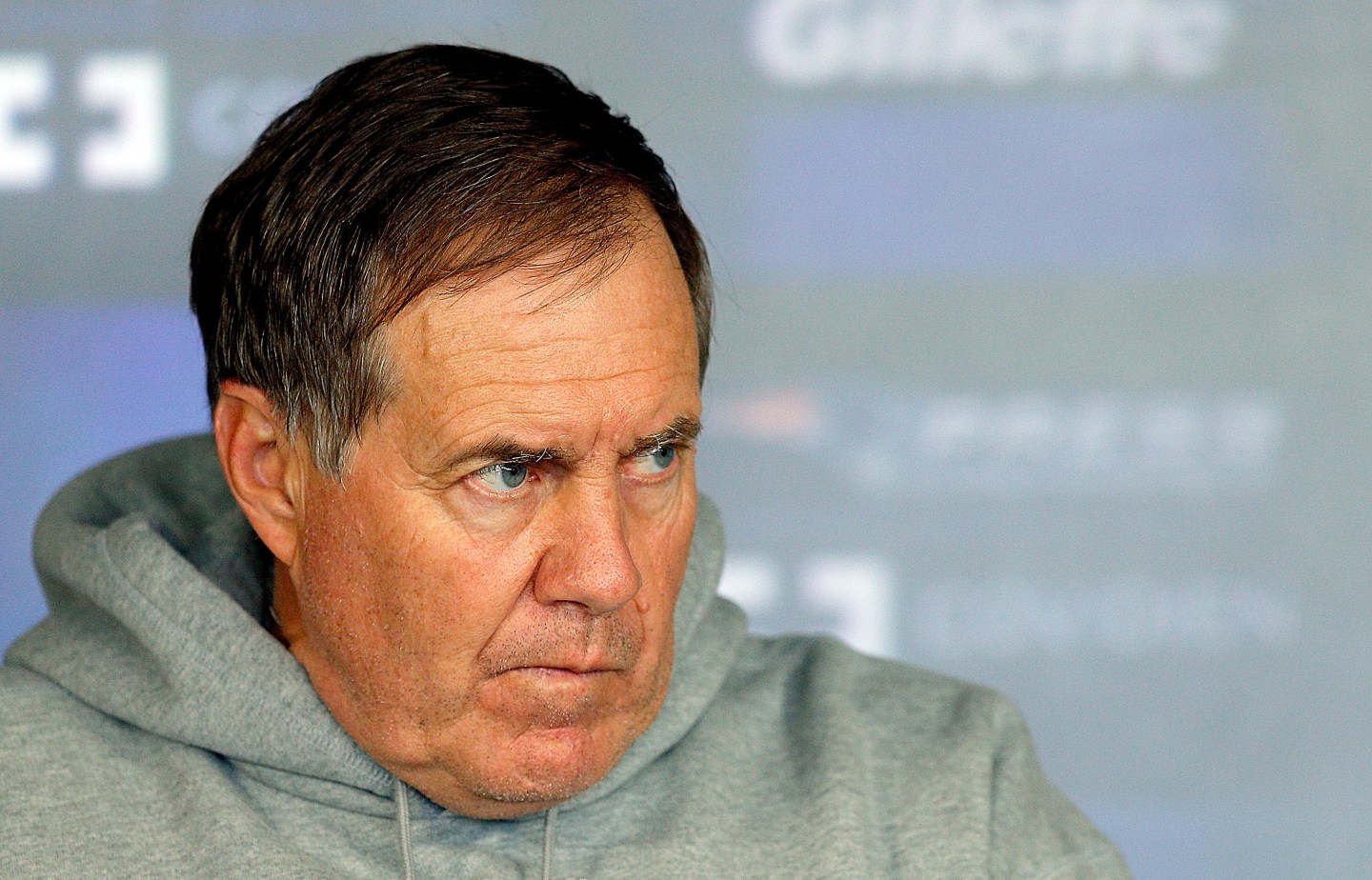
The surprise rejection also invites a case study into the leadership style of one of the most prominent sports figures of the 21st century, who became famous for his slovenly sweatshirt style, and a gruff and almost uncooperative approach with the press—not to mention his frosty relations with his own players, coaching peers, and NFL owners.
On paper, the numbers look nonnegotiable. In addition to his numerous Super Bowl victories, his teams made a total of nine appearances in the big game, and played in 13 AFC Championship Games, while capturing 17 AFC East titles. In achieving this, Belichick also turned New England into a sustained powerhouse in the salary-cap era. He also owns a record 31 postseason victories as a head coach and sits second in all-time total wins, regular season and playoffs combined.
The snub that mirrors his style
The decision not to induct Belichick immediately has been framed by some around the league as “politics,” with one source close to the coach saying he believes off-field factors influenced the vote more than his on-field record. Those off-field factors are, in many ways, part of the mythology he built. Belichick’s persona was defined by ruthless personnel calls on aging stars—with multiple Pro Bowlers and Super Bowl winners Ty Law, Richard Seymour, and Lawyer Milloy among the examples of players moved on at the cusp of their thirties—and an icy public demeanor that left many of those around him feeling expendable or belittled.
Belichick and his star quarterback, Tom Brady, emerged in the 21st century as a darker version of Bill Walsh and Joe Montana, the 1980s golden-boy coach-and-QB pairing in San Francisco that many considered the greatest of all time. The duo helped the 49ers usher in a free-flowing and majestic “West Coast offense,” with Montana displaying improvisational genius and Walsh cultivating a professorial, intellectual air. Brady and Belichick, by contrast, came across as technocrats fit for the 21st century who maximized efficiencies across the organization. That focus on efficiency included a coldly logical approach to salary-cap management, and an update of the bruising defense that Belichick had pioneered with 49ers old rivals, the 1980s iteration of the New York Giants.
Even as the Patriots soared to NFL greatness, the team’s story was marked by darkness. The franchise suffered scandals ranging from murder (the Aaron Hernandez case) to off-and-on allegations of cheating (the “spygate” and “deflategate” sagas). Through it all, Belichick emerged as a Nixonian villain, a sort of Tony Soprano of the sidelines. In this context, the Hall snub is a fitting—if unjustified—rebuke.
Belichick’s relationship with reporters could be summed up by “on to Cincinnati.” That was his response at a postgame press conference in 2014, after a tough loss, when all Belichick offered for reporters to work with was to say he was focused on the next game. The hall’s voting body consists largely of veteran media members and a handful of Hall of Famers—exactly the ecosystem that spent years on the receiving end of Belichick’s clipped answers and strategic secrecy. And now they get their chance to say back to the great coach: on to Cincinnati.
The result is a rare inversion: a coach who spent decades controlling every variable now subject to the judgment of people he often treated as obstacles. For critics of the decision, the message is troubling—that legacy in football is no longer just about winning, but about how a figure made voters feel along the way. For those who see poetic justice, the hall’s “not yet” is the sport’s way of delivering the sort of impersonal verdict Belichick once delivered to so many others.
Nothing about the vote, of course, erases what Belichick accomplished on the field. His schematic innovations, from flexible defensive fronts to matchup-driven offensive game plans, helped reshape how teams think about situational football and roster construction.
But for at least one news cycle—and likely much longer—Belichick is living a reality that countless players and assistants experienced under him: being told, in so many words, that past contributions are not enough to guarantee future security. The coach who turned detachment into a competitive advantage is now the one waiting for the call, proof that in football, no one is entirely immune to the snub.
At the same time, Belichick was arguably most successful as a coach for his obsessive attention to detail, with his mantra “Do your job” representing an approach that every single person throughout the organization had a specific duty to perform, and collective success came down to many individual contributions. Maybe the Hall of Fame isn’t a hall of great success as a leader, but about some kind of vague concept of “greatness” itself. But for voters to let personal beefs and jealousies cloud their judgment about a track record such as Belichick’s would make one coach, at least, wonder if they were really doing their job.