Business leaders awoke on Saturday to a new reality in the aftermath of the successful U.S. military capture of President Nicolás Maduro and his wife Cilia Flores, who were dragged from their bedroom in the early morning hours. The couple was asleep at their home inside the heavily guarded Fort Tiuna military complex until they were seized by a military operation composed of U.S. Marines, the U.S. Airforce and the U.S. Army’s elite Delta Force, alongside FBI agents, reinforced by 150 aircraft in a strike lasting less than 30 minutes, with no casualties.
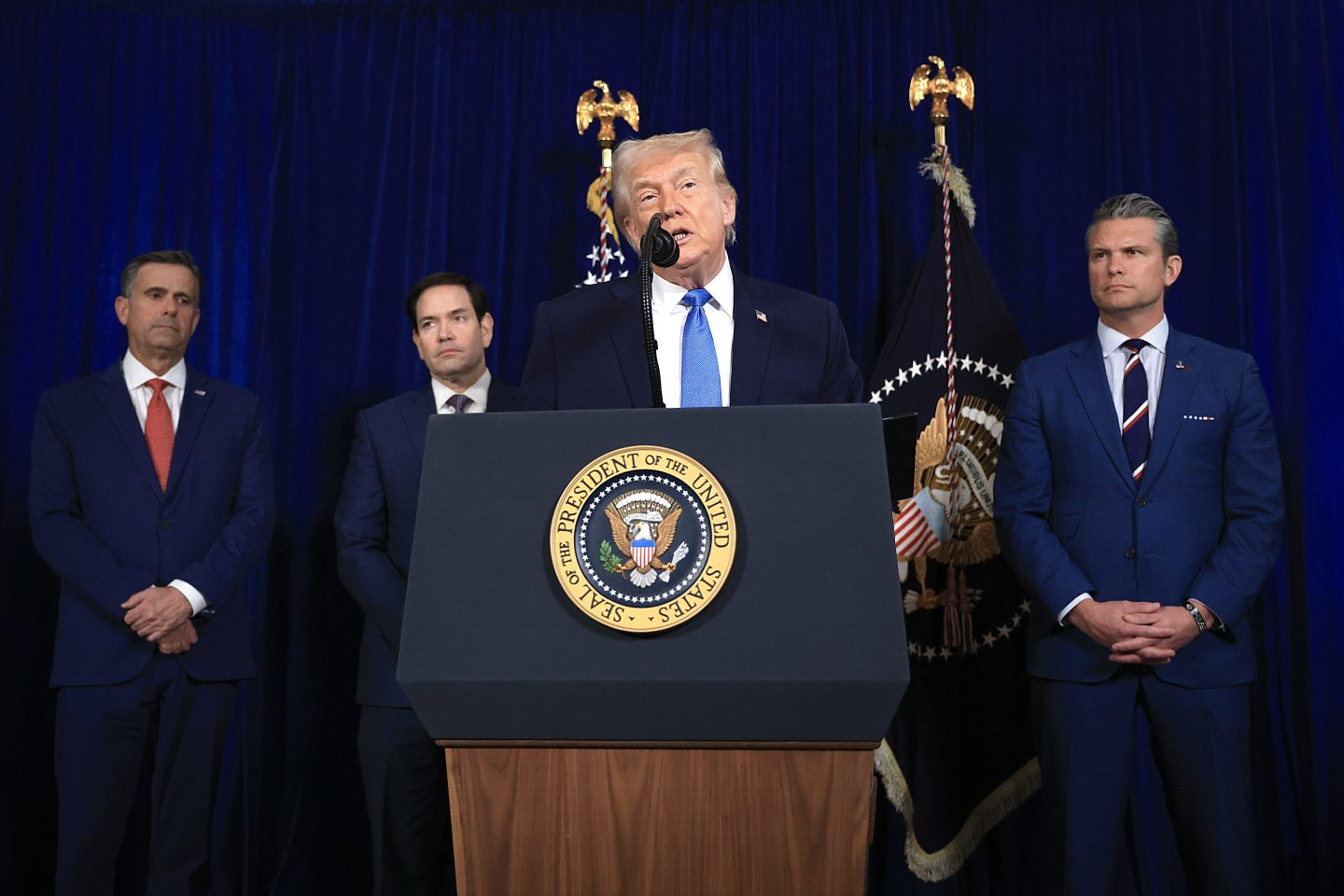
As reported laughter and joking in the hallway died down, President Trump declared with some bravado, at a press conference hailing the smooth military operation, “we’re going to be running Venezuela.” He insisted this would come at no cost to Americans, as reinstated oil reserves will pay for a U.S. occupation. But however CEOs feel about the removal of the brutal, corrupt Maduro, corporate leaders who are doing business in Latin America would be advised that a similar kind of public giddiness may not be their own best response.
I usually encourage CEOs to speak out, but here they should avoid taking sides on such a matter, other than to show the world that Trump’s invasion was not driven solely by U.S. commercial interests. The diplomatic and domestic agenda, along with the legality of such actions, should be debated, but U.S. business leaders must clarify that they were not co-conspirators in such intrigue and governmental overthrow, otherwise trust in their motives globally will be diminished.
There is little dispute that Maduro was an evil, corrupt autocrat who undermined Venezuelan elections, with his brutality leading to the flight of 8 million refugees and impoverishing his resource-rich land. However, there is little incentive for U.S. corporate leaders to gloat and be used as foils. The Bauhaus architect Ludwig Mies van der Rohe’s mantra of “less is more” may be appropriate at this stage.
Here are five key themes that every CEO should consider:
- Consider an immediate temporary moratorium on executive travel between the U.S. and Latin America and take care in lower Manhattan
- Revival of “ugly American” image and reprisals — This was actually the title of a famous 1958 novel by William Lederer and Eugene Burdick that critiqued U.S. foreign policy for its arrogance and cultural ignorance
- The term “banana republic” was historically the result of complicity in undermining democratically elected Latin American governments as well as dictators, often with CIA involvement, for instance in Honduras, Guatemala ,Brazil, Chile, and Panama 1989 as well as support for coups in the Dominican Republic and Ecuador
- Risk of being targeted outside of the U.S.
- The federal Southern District of New York, where Maduro will be tried, is in a congested business/ residential zone with many federal and financial offices and the trial will take many months
- Hold off on public statements of support or condemnations until the justice process in the U.S. unfolds, Venezuelan streets and government processes are stable, succession is clear, and public statements emerge from Latin American nations.
- The Southern District has a noted history in prosecuting foreign leaders such as Juan Orlando Hernández, the former President of Honduras, a drug lord later pardoned by President Trump despite being convicted and sentenced to 45 years in prison, and General Hugo Armando Carvajal Barrios, the former intelligence head of Venezuela and also a drug trafficker, as well as Taliban and Iranian leaders
- The SDNY benefits from the superb, measured leadership under U.S. Attorney Jay Clayton, the renowned, trusted former SEC chairman
- This military operation may be interpreted by many threatening adversaries around the world as a highly effective show of U.S. military might and it could be a major disruption and deterrent to narco-terrorism
- At the same time, many fear this U.S. aggression may be seen as a violation of international law for regional domination, giving a blueprint for Russia to eliminate Ukraine’s leadership and China to eliminate Taiwan’s leadership — as they both see those lands as governed by rogue leaders, much how Trump views Venezuela
- Questions remain over Article 2 Constitutional authorization and precedent as used against Iraq, Panama (Noriega), and Al Qaeda, with both congratulations and condemnation for overreaching with illegal military intervention without U.S. Congressional clearance or consultation
- This has only mildly broken down along party lines with Democratic critics including Betty McCollum, the ranking Democrat on the U.S; House Appropriations Subcommittee on Defense, and Senator Ruben Gallego, and GOP defenders including Senators Tom Cotton and Rick Scott
- Other voices such as former Trump supporters Marjorie Taylor Greene and Thomas Massie, along with Senators Rand Paul and even Senator Mike Lee, have been critical of Trump’s aggression against Venezuela, pointing out that a far great flow of drugs into the U.S. comes from Mexico and demanding Congressional approval for military efforts
- Prepare for prospective Latin American backlash against U.S. enterprises with major market engagement trade relations
- Risks of Latin American, European and African countries, and then UN, rallying around Nicolás Maduro and his regime
- Colombia’s President Gustavo Petro, a left-leaning leader who has who has often clashed with Trump and has also been threatened by the U.S. president, said “The Colombian government rejects the aggression against the sovereignty of Venezuela and Latin America,” while calling for an immediate meeting of the United Nations Security Council, of which Colombia is a member
- Brazil’s Luiz Inacio Lula da Silva made similar to Petro, stating: “The bombings on Venezuela’s territory and the capture of its president cross an unacceptable line”
- Chile’s outgoing President Gabriel Boric condemned the attack but President-elect Jose Antonio Kast said that the Maduro arrests was great news, and other Latin Trump allies such as Argentina’s President Javier Milei and Ecuador’s Daniel Noboa celebrated the removal of Maduro
- The street scenes are confusing, with protests both in favor and against the strikes in Venezuela have been scheduled in Buenos Aires and other cities across the region.
- European leaders have been more muted as there is little respect in the region for Maduro, who was widely scene as an illegitimate leader who stole an election from opposition leader Edmundo Gonzalez
- While Maduro has few friends in Latin America, he has good ties with Russia and China and they may exploit this U.S. intervention to gain new footholds in Latin America
- There is potential short-term risk to imports of copper, lithium, iron ore and other raw material while Latin America offers several important agricultural channels such as coffee (one-third from Brazil alone), bananas, grapes, oranges, and liquor such as rum and tequila
- Risk of exports of U.S. machinery and vehicles to Latin America, along with soybeans and corn
- U.S. petroleum companies and oil servicing companies should make a statement that with oil prices at historic low levels, this action was not to advance their interests in expanding supply
- While Venezuela posseses roughly 303 billion barrels of proven crude oil reserves, the largest total of any country in the world, this is considered “heavy oil,” which is thick, viscous and hard to move, requiring far more processing before it can be refined
- Also, Venezuela’s oil extraction equipment is almost as inefficient as Russia’s, with little tech investment, costs almost twice as much as many other OPEC members to extact
- In 2007, under then President Hugo Chavez, Maduro’s predecessor, massive government expropriations included the nationalization of heavy oil projects, forcing U.S. companies such as ExxonMobil, ConocoPhillips, and Chevron to hang on as minority partners or lose their operations, while international tribunals have award these US firms billions of dollars
- Chevron is the sole major U.S. firm operating joint ventures with state-owned PDVSA to export crude to the U.S- 150k barrels a day — down from 2 million barrels a day before sanctions
- With WTI oil prices at $57 per barrel, that’s almost half of what it was last year and a just a fraction of the $380 per barrel worst-case forecast by JP Morgan after the Russian invasion of Ukraine, so there is little incentive for this invasion to be linked to oil supply needs; in fact, with the Saudis having increased their production again by a third, there’s an oil glut on the market
- Clarification of boundaries between U.S. government intelligence and defense/war agencies and corporate activities
- This haunted United Fruit (Chiquita), Standard Fruit (Dole), ITT, Gulf & Western, W.R. Grace, and Sullivan & Cromwell, and other firms suffered a taint for decades due to extensive collaboration with democratic government overthrows and insurrection efforts
The opinions expressed in Fortune.com commentary pieces are solely the views of their authors and do not necessarily reflect the opinions and beliefs of Fortune.