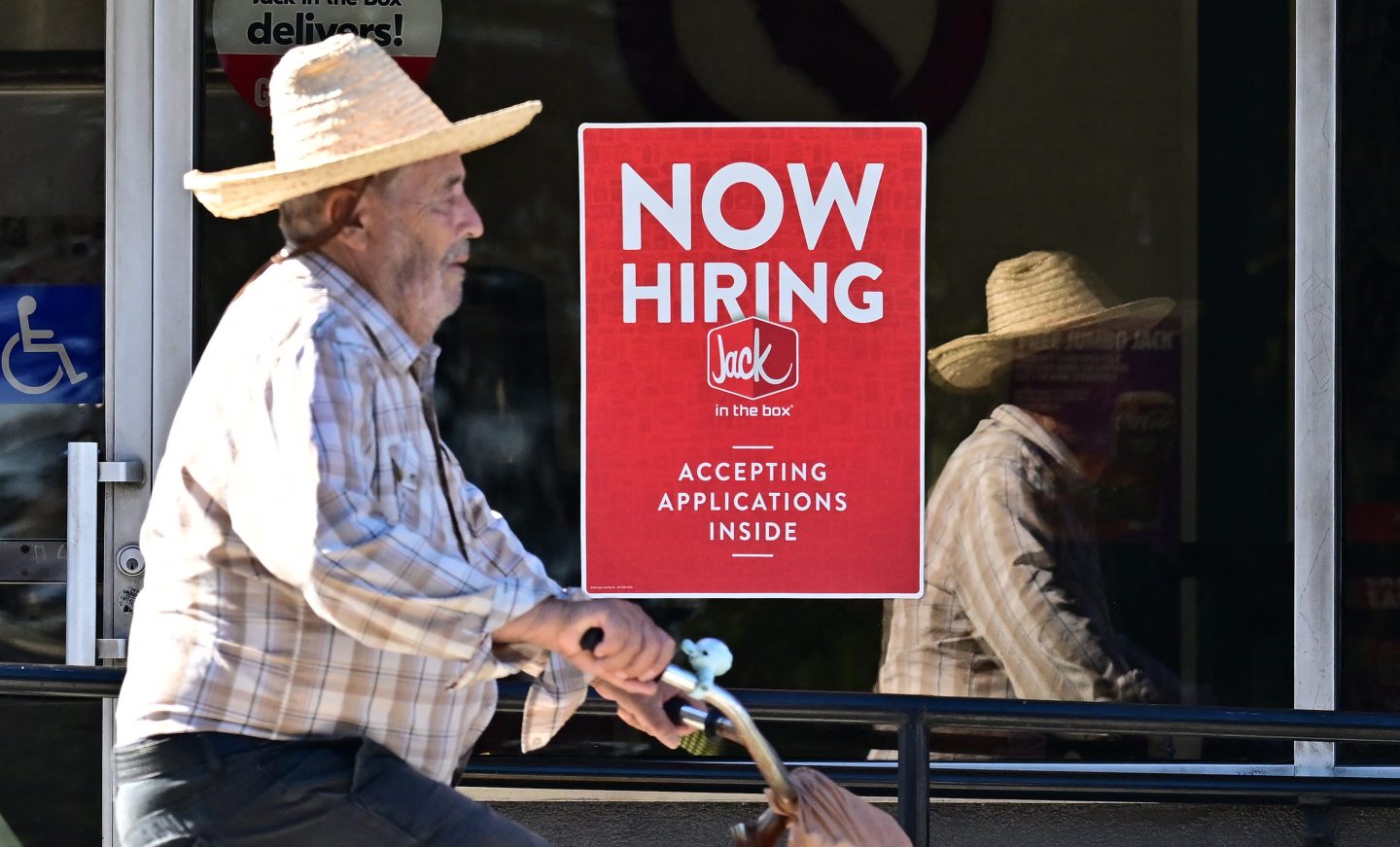
The December 16, 2025, jobs report confirms that the stall observed since spring has hardened into a structural contraction. While the public narrative remains anchored to the headline “resilience,” a closer interrogation reveals that 2025 was the year we sub-primed our own workforce. We didn’t just witness a cooling market; we oversaw a surgical, structural removal of Black women from the middle class. My proprietary analysis of BLS household data shows that this demographic’s unemployment rate spiked 21 times faster than that of white men.
While headlines celebrated a soft landing, the underlying labor market was experiencing a phantom jobs reversal. January 2025 began with a surplus of 751,000 job openings; by December, the market moved into a deficit of 131,000 jobs—an 882,000 swing in labor-market balance. With Chair Powell’s December 10 admission of a 60,000 monthly overcount, the labor market has actually been contracting by 20,000 jobs per month since April. The real-world deficit for jobseekers is closer to 611,000, representing a 1.36 million real swing in labor leverage, according to my analysis of JOLTS and CES benchmark revisions.
We are also watching the real-time collapse of household solvency. The backbone of the American economy is being pushed from stable, professional roles into low-tier service work, resulting in an immediate 49% drop in income, and then financing their children’s basic nutrition with shadow debt. This isn’t just a failure of equity; it is a strategic economic blunder. You cannot stabilize a 2026 economy if you refuse to look at the demographic where the insolvency is actually occurring.
The soft landing narrative relies on a dangerous omission. In 2025 alone, the forced exit of Black women from the workforce cost the U.S. $9.2 billion in GDP. It ignores the 177% inflation premium women are paying on essentials. And it ignores the 1.1 million foreign-born workers, one-third of whom are women, who have vanished from the labor supply. We haven’t solved our economic fragility; we have simply hidden it by erasing the people most affected.
The Mechanism of Erasure: The Barbell Migration
For years, business leaders talked about a level playing field. In 2025, we stopped even pretending to build it. The rollback of corporate DEI initiatives and federal workforce reductions were framed as efficiency, but they have produced a barbell economy.
My analysis of the BLS current population survey data shows that we are witnessing a massive 909,000-person jump in involuntary part-time work, the precarious bottom of the barbell. For Black women, the exclusion is surgical. As documented on the front page of The New York Times and in my analysis of why Black women are seeing job losses, these losses were structural.
The displacement from stable federal and professional roles into service work is eroding the economic standing of breadwinners in 52% of Black households with children, as shown by my review of Census Bureau household pulse data. Between February and July, Black women lost 319,000 jobs, while white men gained 365,000. This divergence is not a statistical anomaly; it is the mathematical result of policy. When we lose this demographic, we aren’t just losing workers; we are erasing our future C-suite.
The Solvency Signal: An Institutional Bank Run
When workers are erased from the labor force, they don’t just leave empty desks; they leave empty tax rolls, and increasingly, unpaid debts. In 2025, we witnessed the early stages of an institutional bank run that fractured the financial system from both ends.
On December 12, 2025, the Federal Reserve validated this instability by initiating a $40 billion monthly liquidity injection to stabilize the banking system. This solvency crisis is inextricably linked to labor force erasure. When you remove stable income from 300,000 Black women, the demographic most likely to be head-of-household breadwinners, you create an immediate shock to consumer credit and deposit stability. Banks rely on a stable workforce to service mortgages and maintain deposits. By erasing these workers, we are sub-priming the very assets sitting on bank balance sheets.
While the Fed bails out the banks, households are engaging in a different kind of liquidity crisis. Consumer credit reporting data shows an almost 2x increase in consumers using Buy Now, Pay Later (BNPL) services for groceries in a single year. When basic survival depends on shadow debt rather than earned income, consumption has crossed into survival debt.
This creates a public sector solvency crisis as well. The U.S. social safety net, Social Security and Medicare, relies on a growing base of contributors. But by forcing 300,000 workers to exit in just three months, we are actively shrinking that contributor base. As discussed with the World Economic Forum, erasing this labor supply hollows out the tax base that underpins the American middle class.
The Hidden Tariff: Why Erasure is Inflationary
Inflation policy in 2025 fixated on basis points while ignoring a hidden tariff: exclusion. When foreign-born workers disappear from the labor force, a decline of over 1 million in participation, or when federal funding freezes stall the participation of women, the supply is artificially constrained.
Economic analysis reveals a staggering 177% CPI gender gap. While headline inflation cooled, the specific basket of goods and services that women rely on remained stubbornly high. This is part of the gender tariff gap. By restricting the labor supply in care and service sectors, we also created a bottleneck that drove prices up. We effectively imposed a domestic tariff on our own growth. We are paying for our bias at the checkout counter, and the receipt shows that gender-blind monetary policy is failing to capture the real cost of living for half the population.
AI: The Automated Eraser
Technology now threatens to finalize what policy began. We are seeing the AI efficiency illusion play out in real-time. In 2025, the narrative was that AI would create a productivity boom. Instead, data show it was used as a blunt instrument for headcount reduction.
The elimination of 1.1 million jobs in the name of efficiency isn’t scaling; it’s stifling. Biased algorithms are beginning to erase the middle-income rungs of the economic ladder—the very administrative and operational roles that underestimated groups have historically used to gain a foothold in the middle class. Without ethical AI and inclusive design, we risk automating a cement ceiling that will stifle innovation for decades. We are liquidating human capital to juice quarterly earnings, a strategy that historically precedes long-term stagnation.
The 2026 Imperative: Infrastructure, Not Charity
The soft landing of 2025 was purchased on credit by borrowing against the $3.1 trillion gap in untapped economic potential. This figure represents the additional annual GDP the U.S. could generate by achieving gender equity. Instead of mining this gap, we spent 2025 widening it.
To sustain growth in 2026, we must stop treating equity as a social preference and start treating it as economic infrastructure. This requires three concrete shifts in strategy:
- Reinvest in Labor Supply Chains: We must treat higher education access not as a personal cost, but as supply chain security. New federal caps on graduate loans are hardening the K-shaped economy at its foundation. Combined with the federal funding freeze on education, we are creating a skilled talent bottleneck that no amount of corporate recruiting can fix downstream.
- Audit AI for Economic Impact: Companies must stop measuring AI success by headcount reduction and start measuring it by revenue per employee. Liquidating talent is a short-term accounting trick; augmenting talent is a long-term growth strategy.
- Restore the On-Ramps: Inclusive hiring is the only hedge against the demographic cliff. With an aging native-born population, the U.S. economy cannot grow without maximizing the participation of women and immigrants.
We have spent a year testing the theory that we can grow by subtraction. The results are in. The only way to fix the cracks in the economy is to stop erasing the people who hold it together. The bill is due, and in 2026, we will either pay it with investment or with stagnation.
The opinions expressed in Fortune.com commentary pieces are solely the views of their authors and do not necessarily reflect the opinions and beliefs of Fortune.