
• Home
  • Latest
  • Fortune 500
  • Finance
  • Tech
  • Leadership
  • Lifestyle
  • Rankings
  • Multimedia

Trendingnow

1

‘Take time in quiet’: Melinda French Gates says to spend at least 10 minutes a day on self-care

2

Harry and Meghan's homecoming comes with a multimillion-dollar tax catch—waiting four years could have shielded their $60 million fortune

3

Current price of oil as of August 21, 2026

1

‘Take time in quiet’: Melinda French Gates says to spend at least 10 minutes a day on self-care

2

Harry and Meghan's homecoming comes with a multimillion-dollar tax catch—waiting four years could have shielded their $60 million fortune

3

Current price of oil as of August 21, 2026
AIChips

What happens to old AI chips? They’re still put to good use and don’t depreciate that fast, analyst says

Jason Ma
By
Jason Ma
Jason Ma
Weekend Editor
Down Arrow Button Icon
Jason Ma
By
Jason Ma
Jason Ma
Weekend Editor
Down Arrow Button Icon
December 15, 2025, 12:03 PM ET
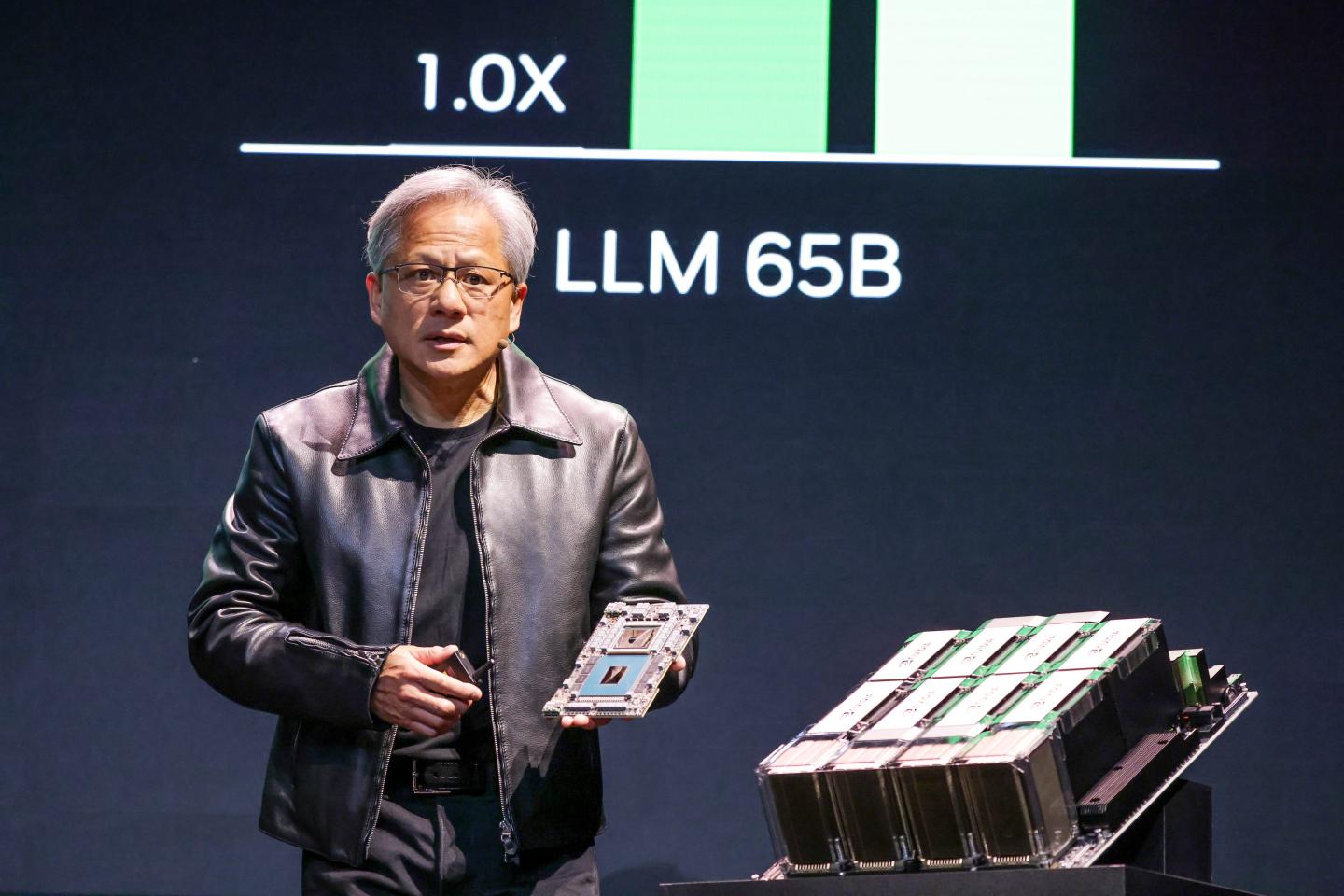
Jensen Huang, chief executive officer of Nvidia, during the Taipei Computex expo in Taiwan on May 29, 2023.
Jensen Huang, chief executive officer of Nvidia, during the Taipei Computex expo in Taiwan on May 29, 2023. I-Hwa Cheng—Bloomberg via Getty Images
Add Fortune on Google for similar content.

New AI chips seem to hit the market at a quicker pace as tech companies scramble to gain supremacy in the global arms race for computational power.

Recommended Video

But that begs the question: What happens to all those older-generation chips?

The AI stock boom has lost a lot of momentum in recent weeks due, in part, to worries that so-called hyperscalers aren’t correctly accounting for the depreciation in the hoard of chips they’ve purchased to power chatbots.

Michael Burry—the investor of Big Short fame who famously predicted the 2008 housing collapse—sounded the alarm last month when he warned AI-era profits are built on “one of the most common frauds in the modern era,” namely stretching the depreciation schedule. He estimated Big Tech will understate depreciation by $176 billion between 2026 and 2028.

But according to a note last week from Alpine Macro, chip depreciation fears are overstated for three reasons.

First, analysts pointed out software advances that accompany next-generation chips can also level up older-generation processors. For example, software can improve the performance of Nvidia’s five-year-old A100 chip by two to three times compared to its initial version.

Second, Alpine said the need for older chips remains strong amid rising demand for inference, meaning when a chatbot responds to queries. In fact, inference demand will significantly outpace demand for AI training in the coming years.

“For inference, the latest hardware helps but is often not essential, so chip quantity can substitute for cutting-edge quality,” analysts wrote, adding Google is still running seven- to eight-year-old TPUs at full utilization.

Third, China continues to demonstrate “insatiable” demand for AI chips as its supply “lags the U.S. by several generations in quality and severalfold in quantity.” And even though Beijing has banned some U.S. chips, the black market will continue to serve China’s shortfalls.

Meanwhile, not all chips used in AI belong to hyperscalers. Even graphics processors contained in everyday gaming consoles could work.

A note last week from Yardeni Research pointed to “distributed AI,” which draws on unused chips in homes, crypto-mining servers, offices, universities, and data centers to act as global virtual networks.

While distributed AI can be slower than a cluster of chips housed in the same data center, its network architecture can be more resilient if a computer or a group of them fails, Yardeni added.

“Though we are unable to ascertain how many GPUs were being linked in this manner, Distributed AI is certainly an interesting area worth watching, particularly given that billions are being spent to build new, large data centers,” the note said.

Fortune Daily breaks the traditional barrier between audience and newsroom. The show transforms Fortune’s trusted reporting into actionable, conversational, and entertaining insights for an emerging class of business leaders. Watch here.
About the Author
Jason Ma
By Jason MaWeekend Editor

Jason Ma is the weekend editor at Fortune, where he covers markets, the economy, finance, and housing.

See full bioRight Arrow Button Icon
Add Fortune on Google for similar content.

Latest in AI


Most Popular

Fortune Secondary Logo
Rankings
  • 100 Best Companies
  • Fortune 500
  • Global 500
  • Fortune 500 Europe
  • Most Powerful Women
  • World's Most Admired Companies
  • See All Rankings
  • Lists Calendar
Sections
  • Finance
  • Fortune Crypto
  • Features
  • Leadership
  • Health
  • Commentary
  • Success
  • Retail
  • Mpw
  • Tech
  • Lifestyle
  • CEO Initiative
  • Asia
  • Politics
  • Conferences
  • Europe
  • Newsletters
  • Personal Finance
  • Environment
  • Magazine
  • Education
Customer Support
  • Frequently Asked Questions
  • Customer Service Portal
  • Privacy Policy
  • Terms Of Use
  • Single Issues For Purchase
  • International Print
Commercial Services
  • Advertising
  • Fortune Brand Studio
  • Fortune Analytics
  • Fortune Conferences
  • Business Development
  • Group Subscriptions
About Us
  • About Us
  • Press Center
  • Work At Fortune
  • Terms And Conditions
  • Site Map
  • About Us
  • Press Center
  • Work At Fortune
  • Terms And Conditions
  • Site Map
  • Facebook icon
  • Twitter icon
  • LinkedIn icon
  • Instagram icon
  • TikTok icon
  • YouTube icon

    Latest in AI


    Most Popular

    © 2026 Fortune Media IP Limited. All Rights Reserved. Use of this site constitutes acceptance of our Terms of Use and Privacy Policy | CA Notice at Collection and Privacy Notice | Do Not Sell/Share My Personal Information
    FORTUNE is a trademark of Fortune Media IP Limited, registered in the U.S. and other countries. FORTUNE may receive compensation for some links to products and services on this website. Offers may be subject to change without notice.