• Home
  • Latest
  • Fortune 500
  • Finance
  • Tech
  • Leadership
  • Lifestyle
  • Rankings
  • Multimedia
Commentarycyber

The emerging threat lurking within the holiday shopping rush: ghost tapping

By
Paolo Dal Cin
Paolo Dal Cin
and
Ryan Whelan
Ryan Whelan
Down Arrow Button Icon
By
Paolo Dal Cin
Paolo Dal Cin
and
Ryan Whelan
Ryan Whelan
Down Arrow Button Icon
November 19, 2025, 9:00 AM ET
phone
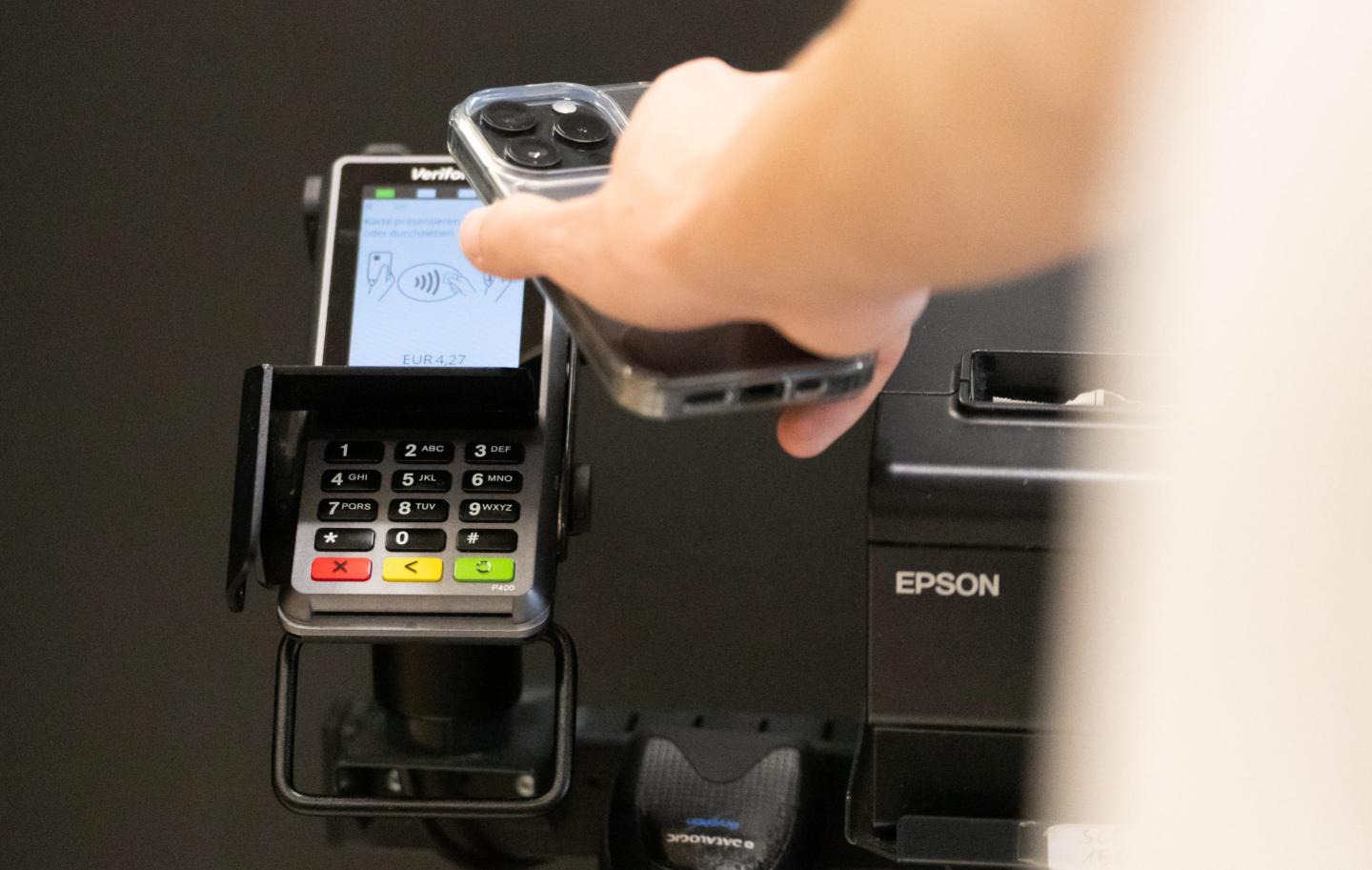
Have you been ghost tapped?Leonie Asendorpf/picture alliance via Getty Images

We’ve all been in this situation: Running around during the holidays, grabbing gifts at the first stores you find with the shortest lines. Amid the rush, you run up a list of credit card charges from places you don’t recall visiting and things you don’t remember buying. 

Recommended Video

Unfortunately, this is exactly the situation where thieves are thriving, and it’s the context surrounding an emerging cyber threat facing consumers that companies including financial institutions, retailers and payment providers should be aware of. 

Around the globe, thieves are using “ghost tapping” to steal from consumers. The method is as fast and easy to use as tap-to-pay on mobile devices, largely because it literally uses the exact same technology. The worst part? Thieves only need to be within arm’s reach to steal personal financial information their victims did not even realize was exposed. 

Indeed, ghost tapping is the newest evolution of longstanding card scam fraud. And this technique pays. Within a recent three-month window, scammers in Singapore used this method to steal nearly a million dollars from victims. 

Ahead of this holiday shopping season, let’s take a minute to explore ghost tapping, its impact on consumers, and what companies can do to safeguard their customers from this threat. 

What is ghost tapping?

Ghost tapping exploits Near Field Communication (NFC) technology used in mobile wallets, allowing fraudsters to make unauthorized transactions without physically touching the victim’s card or device. People use NFC technology every day, from tap-to-pay transactions to concert e-ticket scans to digital public transport cards.

Ghost tapping happens when NFC traffic containing payment card information is relayed from a victim’s device to a payment terminal. Cybercriminals load a small charge (e.g., $1–$100) onto a portable payment terminal and then physically bump or get close to a victim in crowded places such as subways, elevators, or busy retail stores. 

If the victim’s card or phone is unlocked and NFC is enabled, the transaction can be processed instantly and discreetly, especially if the charge is small and notifications are turned off. All of this means that a cybercriminal can steal credit card and personal information without any direct physical interaction. Unlike the card scams of previous years, this method executes a full transaction, delivering cash directly to an account controlled by the thief, kind of like a virtual pickpocket. 

Why is this threat important for businesses to address? 

If left unaddressed, ghost tapping poses significant risks to retail businesses, financial institutions, payments providers, and of course consumers. 

Trust is fundamental to consumer behavior.  If customers don’t trust their payment method is secure, they are likely to avoid the places they see as high risk. If challenges continue, they may even move away from a specific payment method or application altogether. People want to purchase in a way that protects their personal data. Trust is everything. 

That’s why it’s important for businesses and financial institutions to take ghost tapping seriously and follow a few simple steps:

  • Enhance cybersecurity measures: Default stricter authentication processes when adding cards to mobile wallets for consumers.
  • Monitor transactions: Regularly review transactions for suspicious activity, especially those involving geographically distant locations within a short timeframe, to catch the transactions before they disappear into thin air.
  • Educate customers: Inform consumers about the risks of ghost tapping and how to protect themselves, such as regularly monitoring their account activity.

And for consumers, try to do some of the following to protect yourself:

  • Use an RFID wallet to protect from NFC skimming of credit cards in wallets.
  • Set up transaction alerts for charges.
  • Monitor accounts for suspicious activity and report it immediately. This can usually be done right in your banking or credit card app.
  • If not in use, turn off tap-to-pay and mobile wallet capabilities, or require a PIN or biometric authentication before processing any mobile wallet transaction.

Ghost tapping is just one of many attack vectors 

This holiday season, as customers flock to stores and work through shopping lists, businesses should do everything they can to ensure customers are in safe and secure environments that are free from threats like ghost tapping. 

More than that, we all need to recognize the critical new reality of cybercrime and fraud: emerging technologies are aiding attacks as rapidly as they are helping to counter them. Beyond ghost tapping, cybersecurity teams are seeing a spike in mobile fraud methods that leverage social engineering and rogue apps to fool users into disclosing credit card and banking data. 

Cybercriminals are constantly creating new ways to exploit technology like generative AI and NFC for their own gain. In this environment, organizations must modernize their cybersecurity strategies, toolsets and tactics to stay ahead of these threats. However, responsibility for protecting against these risks also lies with consumers themselves. We all need to be more conscious of risk and make ourselves the hardest targets possible for thieves to steal from. 

Join us at the Fortune Workplace Innovation Summit May 19–20, 2026, in Atlanta. The next era of workplace innovation is here—and the old playbook is being rewritten. At this exclusive, high-energy event, the world’s most innovative leaders will convene to explore how AI, humanity, and strategy converge to redefine, again, the future of work. Register now.
About the Authors
By Paolo Dal Cin
See full bioRight Arrow Button Icon
By Ryan Whelan
See full bioRight Arrow Button Icon

Latest in Commentary

Finance
Lorem ipsum dolor sit amet, consectetur adipiscing elit, sed do eiusmod tempor incididunt ut labore et dolore magna aliqua. Ut enim ad minim veniam
By Fortune Editors
October 20, 2025
Finance
Lorem ipsum dolor sit amet, consectetur adipiscing elit, sed do eiusmod tempor incididunt ut labore et dolore magna aliqua. Ut enim ad minim veniam
By Fortune Editors
October 20, 2025
Finance
Lorem ipsum dolor sit amet, consectetur adipiscing elit, sed do eiusmod tempor incididunt ut labore et dolore magna aliqua. Ut enim ad minim veniam
By Fortune Editors
October 20, 2025
Finance
Lorem ipsum dolor sit amet, consectetur adipiscing elit, sed do eiusmod tempor incididunt ut labore et dolore magna aliqua. Ut enim ad minim veniam
By Fortune Editors
October 20, 2025
Finance
Lorem ipsum dolor sit amet, consectetur adipiscing elit, sed do eiusmod tempor incididunt ut labore et dolore magna aliqua. Ut enim ad minim veniam
By Fortune Editors
October 20, 2025
Finance
Lorem ipsum dolor sit amet, consectetur adipiscing elit, sed do eiusmod tempor incididunt ut labore et dolore magna aliqua. Ut enim ad minim veniam
By Fortune Editors
October 20, 2025

Most Popular

Finance
Lorem ipsum dolor sit amet, consectetur adipiscing elit, sed do eiusmod tempor incididunt ut labore et dolore magna aliqua. Ut enim ad minim veniam
By Fortune Editors
October 20, 2025
Finance
Lorem ipsum dolor sit amet, consectetur adipiscing elit, sed do eiusmod tempor incididunt ut labore et dolore magna aliqua. Ut enim ad minim veniam
By Fortune Editors
October 20, 2025
Finance
Lorem ipsum dolor sit amet, consectetur adipiscing elit, sed do eiusmod tempor incididunt ut labore et dolore magna aliqua. Ut enim ad minim veniam
By Fortune Editors
October 20, 2025
Finance
Lorem ipsum dolor sit amet, consectetur adipiscing elit, sed do eiusmod tempor incididunt ut labore et dolore magna aliqua. Ut enim ad minim veniam
By Fortune Editors
October 20, 2025
Finance
Lorem ipsum dolor sit amet, consectetur adipiscing elit, sed do eiusmod tempor incididunt ut labore et dolore magna aliqua. Ut enim ad minim veniam
By Fortune Editors
October 20, 2025
Finance
Lorem ipsum dolor sit amet, consectetur adipiscing elit, sed do eiusmod tempor incididunt ut labore et dolore magna aliqua. Ut enim ad minim veniam
By Fortune Editors
October 20, 2025
Fortune Secondary Logo
Rankings
  • 100 Best Companies
  • Fortune 500
  • Global 500
  • Fortune 500 Europe
  • Most Powerful Women
  • Future 50
  • World’s Most Admired Companies
  • See All Rankings
Sections
  • Finance
  • Fortune Crypto
  • Features
  • Leadership
  • Health
  • Commentary
  • Success
  • Retail
  • Mpw
  • Tech
  • Lifestyle
  • CEO Initiative
  • Asia
  • Politics
  • Conferences
  • Europe
  • Newsletters
  • Personal Finance
  • Environment
  • Magazine
  • Education
Customer Support
  • Frequently Asked Questions
  • Customer Service Portal
  • Privacy Policy
  • Terms Of Use
  • Single Issues For Purchase
  • International Print
Commercial Services
  • Advertising
  • Fortune Brand Studio
  • Fortune Analytics
  • Fortune Conferences
  • Business Development
  • Group Subscriptions
About Us
  • About Us
  • Editorial Calendar
  • Press Center
  • Work At Fortune
  • Diversity And Inclusion
  • Terms And Conditions
  • Site Map
  • About Us
  • Editorial Calendar
  • Press Center
  • Work At Fortune
  • Diversity And Inclusion
  • Terms And Conditions
  • Site Map
  • Facebook icon
  • Twitter icon
  • LinkedIn icon
  • Instagram icon
  • Pinterest icon

Paolo Dal Cin is the Global Cybersecurity lead at Accenture. Paolo is a seasoned cybersecurity expert and trusted C-level advisor with over 20+ years of consulting experience with G2000 clients across multiple industries on business resilience, security strategy, cyber defense, security transformation and managed services initiatives. He currently leads Accenture’s Global Cybersecurity practice and is responsible for the end-to-end cybersecurity business with $10B in revenue, 16% year-over-year growth and 30,000 cybersecurity practitioners.

Ryan Whelan is the Cybersecurity Intelligence lead at Accenture. As an executive leader in cybersecurity, threat intelligence, enterprise technology, and risk management, he is reshaping how intelligence supports security transformation and builds resilient organizations. Ryan leads a team of industry experts, threat hunters, and researchers to expose adversaries and advise security teams and leaders on the best methods to mitigate risk and defend against persistent and emerging threats.


Latest in Commentary

welti
CommentaryIran
Switzerland’s former ambassador to Iran: here’s how to end this war — and why Pakistan isn’t enough
By Philippe WeltiApril 17, 2026
4 hours ago
Anita Beveridge-Raffo is Head of Retail and Consumer Goods at Palantir Technologies
CommentaryAI agents
Palantir exec: the biggest mistake retailers are making with AI? Trying to do it all with one agent
By Anita Beveridge-RaffoApril 16, 2026
22 hours ago
wyle
CommentaryHealth
‘The Pitt’ reveals why healthcare desperately needs a new front door
By Jeremy MorganApril 16, 2026
22 hours ago
health
CommentaryHealth Care Service
Two physicians on ending the waiting-room era: bring care home
By Benjamin Kornitzer and Bill FristApril 16, 2026
24 hours ago
venezuela
Commentaryhappiness
The world’s most — and least — miserable economies in 2025, ranked
By Steve H. HankeApril 16, 2026
1 day ago
fauber
Commentarytrust
Moody’s CEO: AI has a trust problem – better models won’t fix it
By Rob FauberApril 16, 2026
1 day ago

Most Popular

Jeff Bezos pledged $10 billion for climate change. With the 2030 clock ticking, his wife, Lauren Sánchez Bezos, is leading the charge to spend it
Environment
Jeff Bezos pledged $10 billion for climate change. With the 2030 clock ticking, his wife, Lauren Sánchez Bezos, is leading the charge to spend it
By Sydney LakeApril 15, 2026
2 days ago
A world going broke: IMF says America's $39 trillion national debt is actually a global problem—and AI may be the only rescue
Economy
A world going broke: IMF says America's $39 trillion national debt is actually a global problem—and AI may be the only rescue
By Nick LichtenbergApril 16, 2026
15 hours ago
Germany already told its workers to ditch four-day weeks and work-life balance. Now the government wants to cut their pay for calling in sick, too
Success
Germany already told its workers to ditch four-day weeks and work-life balance. Now the government wants to cut their pay for calling in sick, too
By Orianna Rosa RoyleApril 16, 2026
1 day ago
MacKenzie Scott is bypassing the Ivy League and rewriting the $79 billion higher ed playbook by giving to HBCUs and community colleges
Politics
MacKenzie Scott is bypassing the Ivy League and rewriting the $79 billion higher ed playbook by giving to HBCUs and community colleges
By Sydney LakeApril 16, 2026
20 hours ago
Current price of oil as of April 16, 2026
Personal Finance
Current price of oil as of April 16, 2026
By Joseph HostetlerApril 16, 2026
23 hours ago
Billionaire philanthropist MacKenzie Scott has donated again—a week after gifting millions to a college, she's just given $70 million to Meals on Wheels America
Success
Billionaire philanthropist MacKenzie Scott has donated again—a week after gifting millions to a college, she's just given $70 million to Meals on Wheels America
By Emma BurleighApril 13, 2026
4 days ago

© 2026 Fortune Media IP Limited. All Rights Reserved. Use of this site constitutes acceptance of our Terms of Use and Privacy Policy | CA Notice at Collection and Privacy Notice | Do Not Sell/Share My Personal Information
FORTUNE is a trademark of Fortune Media IP Limited, registered in the U.S. and other countries. FORTUNE may receive compensation for some links to products and services on this website. Offers may be subject to change without notice.