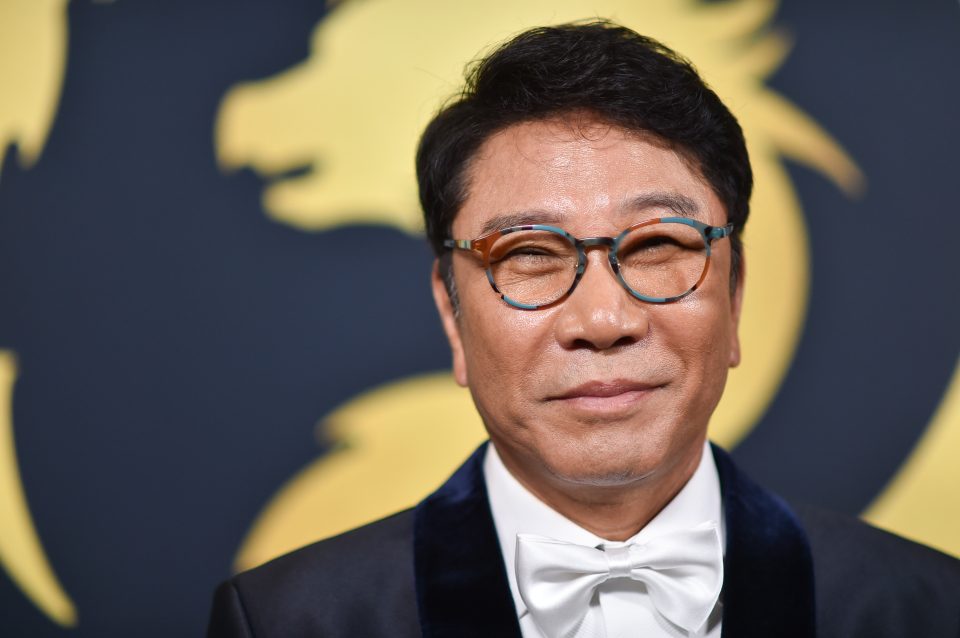
Lee Soo Man resisted the title at first. “King of K-pop” sounded too brash, too nightclub-esque — like something you’d see on a neon sign in Itaewon, a nightlife neighborhood in the South Korean capital Seoul once popular with U.S. soldiers and foreign visitors. “I asked them, ‘Couldn’t it be Father of K-pop?’” the 73-year-old recalled during a recent interview with The Associated Press.
He was discussing the title of Amazon Prime’s documentary about his career. The producers insisted the bolder moniker would resonate better with American audiences. After some back-and-forth, Lee relented. “I had to follow their decision.”
The compromise speaks to Lee’s pragmatic approach to breaking South Korean acts into the American mainstream — a three-decade quest that often required him to bend but never break his vision. Now, as the founder of SM Entertainment and widely credited as the architect of K-pop’s global expansion, Lee will be inducted into the Asian Hall of Fame on Saturday alongside basketball legend Yao Ming, Olympic figure skater Michelle Kwan, and rock icon Yoshiki, among others.
Lee remains a prominent but controversial figure in K-pop history. His label pioneered the industry’s intensive training system, recruiting performers as young as elementary school age and putting them through years of rigorous preparation. Some of his artists have challenged their contracts as unfair, sparking broader debates about industry practices.
The recognition arrives as Lee reemerges into the spotlight after a contentious, high-profile departure from the agency he founded in 1995 — a management battle that included a public feud with his nephew-in-law and a bidding war over his shares. He’s been keeping busy since, debuting a new band, A2O MAY, in both China and the U.S. He’s also investing in a boutique Chinese firm’s high-tech production technologies.
Born in South Korea, Lee studied computer engineering in the U.S. for his master’s degree. That technical background would later inform his approach to everything from visualization and cutting-edge production technologies — he said he’s been rewatching “The Matrix” to revisit filming techniques — to pioneering elaborate “worldviews” and virtual avatars for his K-pop bands.
For Lee, the Hall of Fame honor “confirms that K-pop has become a genre that the mainstream is now paying attention to” — an acceptance that came after costly lessons and years of trial and error.
When America wasn’t ready for K-pop
Lee invested about $5 million in BoA’s 2009 American debut with “Eat You Up,” one of the first songs by a South Korean artist to be primarily written and produced by Western producers — a bold early attempt to bring K-pop into the U.S. mainstream. But with few widely recognized Asian artists in American pop culture at the time, the market wasn’t ready. After nearly two years, BoA — already a megastar in Korea and Japan — decided to return home. The experience, Lee has said, left him with lasting regrets.
“When I asked the songwriter(s) to revise ‘Eat You Up,’ they refused,” Lee recalled. “If we had changed it, I believe it would have achieved much better results.”
Sourcing the world’s best songs for K-pop
That setback taught Lee that K-pop needed to source global talent while maintaining creative control to adapt songs for the worldwide market. His quest for the perfect tracks took him worldwide.
“I once heard a song that was so good I couldn’t let it go,” he said, recalling the track that would later become “Dreams Come True” for S.E.S., the late-1990s girl group. “I could’ve bought the license to the song in South Korea, Hong Kong, or Sweden. But I wanted to play it safe, so I found the Finnish address, went to meet the songwriter directly, wrote up a contract, and brought it back.”
At the time, top Western songwriters prioritized Japan, the world’s second-largest music market. “European songwriters were willing to sell to Asia,” Lee explained. “That’s how we eventually built a system where music from Europe, Asia, and America could come together.”
Fictional universes that keep fans hooked
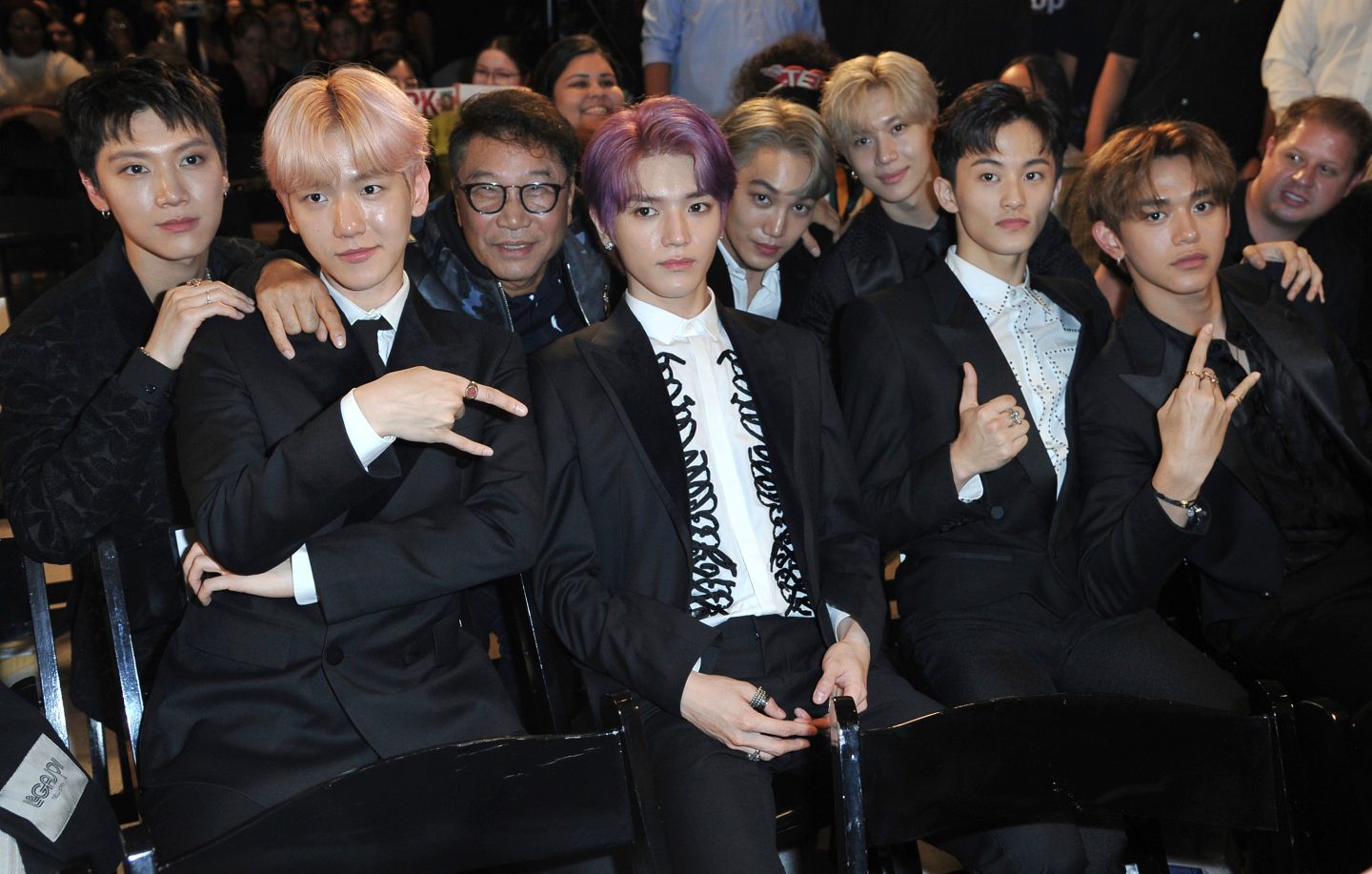
That fusion became K-pop’s signature. Lee also helped to pioneer another innovation: elaborate fictional universes, or “worldviews,” for groups like EXO and aespa — a storytelling approach that would later be adopted across the industry, including by groups like BTS.
The concept emerged during his time in the U.S., where he witnessed MTV transform music into a visual medium. “But we only have three or four minutes,” he said. “How do we express dramatic, cinematic elements in such a short time?”
Lee’s solution was to create ongoing narratives that unfold across multiple music videos and releases — think Marvel’s cinematic universe, but for pop groups.
Unable to attract established screenwriters, Lee developed the storylines himself. The strategy proved prescient: These interconnected narratives give global fans reason to follow groups across comebacks, waiting for the next chapter in an unfolding saga.
Despite K-pop’s global success, Lee remains focused on Asia’s potential. He envisions South Korea as a creative hub where international talent learns production. “Korea should become the country of producers,” he said.
With the Asia-Pacific region home to more than half the world’s population, he sees it as entertainment’s inevitable future center.
His latest venture with A2O MAY, which operates in both China and the U.S., is testing that vision in one of Asia’s most challenging markets. China’s entertainment landscape has grown increasingly restrictive, with Beijing recently cracking down on “ effeminate ” male celebrities and youth culture. Asked about potential political risks, Lee dismissed concerns.
“Political risk? I don’t really know much about that,” he said.
He said he aims to elevate South Korea’s cultural influence as a center of production while meeting China’s needs as it seeks to expand its soft power alongside economic dominance.
“Culturally, does China need what we do? I believe they do.”
The documentary also addressed darker aspects of K-pop close to Lee’s heart, including the suicides of SM Entertainment artists.
He traces the problem to anonymous and malicious online comments that often evade accountability, especially when posted on servers outside South Korea’s jurisdiction, calling it a global issue requiring international cooperation. Lee advocates for worldwide standards on user verification and mediation systems where victims could identify attackers without expensive legal battles.
But Lee resists the media’s focus on K-pop’s problems. “Should we always weigh the dark side equally with the bright side, the future?” he asked. “Media should consider whether K-pop represents more future or more past that holds us back. Rather than just discussing the dark side and dragging us down by clinging to the past, shouldn’t we talk more about the future?”
After more than three decades, Lee’s definition remains straightforward: “K-pop is a new language of communication that transcends barriers. These languages move around naturally — what you can’t stop is culture.”