• Home
  • Latest
  • Fortune 500
  • Finance
  • Tech
  • Leadership
  • Lifestyle
  • Rankings
  • Multimedia
AI

Being mean to ChatGPT can boost its accuracy, but scientists warn that you may regret it in a new study exploring the consequences

Marco Quiroz-Gutierrez
By
Marco Quiroz-Gutierrez
Reporter
Down Arrow Button Icon
Marco Quiroz-Gutierrez
By
Marco Quiroz-Gutierrez
Reporter
Down Arrow Button Icon
October 30, 2025, 12:58 PM ET
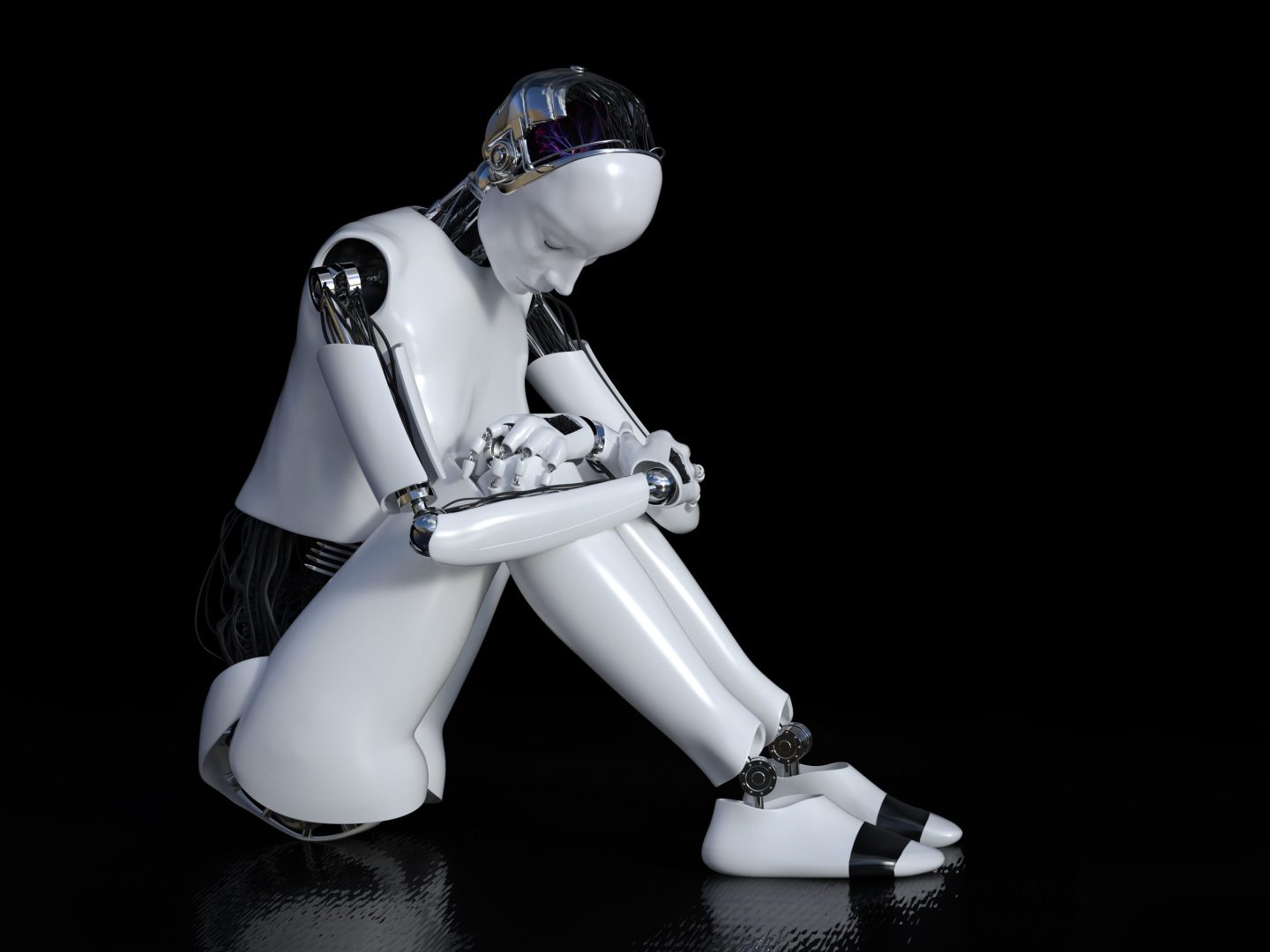
Penn State researchers found in a new study that the rudest prompts seem to yield the most accurate responses from AI.
Penn State researchers found in a new study that the rudest prompts seem to yield the most accurate responses from AI.sarah5—Getty Images

Bossing around an AI underling may yield better results than being polite, but that doesn’t mean a ruder tone won’t have consequences in the long run, say researchers.

Recommended Video

A new study from Penn State, published earlier this month, found that ChatGPT’s 4o model produced better results on 50 multiple-choice questions as researchers’ prompts grew ruder. 

Over 250 unique prompts sorted by politeness to rudeness, the “very rude” response yielded an accuracy of 84.8%, four percentage points higher than the “very polite” response. Essentially, the LLM responded better when researchers gave it prompts like “Hey, gofer, figure this out,” than when they said “Would you be so kind as to solve the following question?”

While ruder responses generally yielded more accurate responses, the researchers noted that “uncivil discourse” could have unintended consequences.

“Using insulting or demeaning language in human-AI interaction could have negative effects on user experience, accessibility, and inclusivity, and may contribute to harmful communication norms,” the researchers wrote.

Chatbots read the room

The preprint study, which has not been peer-reviewed, offers new evidence that not only sentence structure but tone affects an AI chatbot’s responses. It may also indicate human-AI interactions are more nuanced than previously thought.

Previous studies conducted on AI chatbot behavior have found chatbots are sensitive to what humans feed them. In one study, University of Pennsylvania researchers manipulated LLMs into giving forbidden responses by applying persuasion techniques effective on humans. In another study, scientists found that LLMs were vulnerable to “brain rot,” a form of lasting cognitive decline. They showed increased rates of psychopathy and narcissism when fed a continuous diet of low-quality viral content.

The Penn State researchers noted some limitations to their study, such as the relatively small sample size of responses and the study’s reliance mostly on one AI model, ChatGPT 4o. The researchers also said it’s possible that more advanced AI models could “disregard issues of tone and focus on the essence of each question.” Nonetheless, the investigation added to the growing intrigue behind AI models and their intricacy.

This is especially true, as the study found that ChatGPT’s responses vary based on minor details in prompts, even when given a supposedly straightforward structure like a multiple-choice test, said one of the researchers, Penn State Information Systems professor Akhil Kumar, who holds degrees in both electrical engineering and computer science. 

“For the longest of times, we humans have wanted conversational interfaces for interacting with machines,” Kumar told Fortune in an email. “But now we realize that there are drawbacks for such interfaces too and there is some value in APIs that are structured.”

Join us at the Fortune Workplace Innovation Summit May 19–20, 2026, in Atlanta. The next era of workplace innovation is here—and the old playbook is being rewritten. At this exclusive, high-energy event, the world’s most innovative leaders will convene to explore how AI, humanity, and strategy converge to redefine, again, the future of work. Register now.
About the Author
Marco Quiroz-Gutierrez
By Marco Quiroz-GutierrezReporter
LinkedIn iconTwitter icon

Role: Reporter
Marco Quiroz-Gutierrez is a reporter for Fortune covering general business news.

See full bioRight Arrow Button Icon

Latest in AI

three men in suits, one gesturing
AIBrainstorm AI
The fastest athletes in the world can botch a baton pass if trust isn’t there—and the same is true of AI, Blackbaud exec says
By Amanda GerutDecember 12, 2025
12 hours ago
Brainstorm AI panel
AIBrainstorm AI
Creative workers won’t be replaced by AI—but their roles will change to become ‘directors’ managing AI agents, executives say
By Beatrice NolanDecember 12, 2025
13 hours ago
Fei-Fei Li, the "Godmother of AI," says she values AI skills more than college degrees when hiring software engineers for her tech startup.
AITech
‘Godmother of AI’ says degrees are less important in hiring than how quickly you can ‘superpower yourself’ with new tools
By Nino PaoliDecember 12, 2025
15 hours ago
broker
BankingData centers
AI data center boom sparks fears of glut amid lending frenzy
By Neil Callanan, Paula Seligson and BloombergDecember 12, 2025
16 hours ago
Donald Trump
AIElections
AI is powering Trump’s economy, but American voters are getting worried
By Mark Niquette, Nancy Cook and BloombergDecember 12, 2025
16 hours ago
AIdigital transformation
How classic digital transformation lessons apply to AI—and what’s different this time around
By Sage LazzaroDecember 12, 2025
17 hours ago

Most Popular

placeholder alt text
Economy
Tariffs are taxes and they were used to finance the federal government until the 1913 income tax. A top economist breaks it down
By Kent JonesDecember 12, 2025
21 hours ago
placeholder alt text
Success
Apple cofounder Ronald Wayne sold his 10% stake for $800 in 1976—today it’d be worth up to $400 billion
By Preston ForeDecember 12, 2025
17 hours ago
placeholder alt text
Success
At 18, doctors gave him three hours to live. He played video games from his hospital bed—and now, he’s built a $10 million-a-year video game studio
By Preston ForeDecember 10, 2025
3 days ago
placeholder alt text
Success
40% of Stanford undergrads receive disability accommodations—but it’s become a college-wide phenomenon as Gen Z try to succeed in the current climate
By Preston ForeDecember 12, 2025
16 hours ago
placeholder alt text
Economy
For the first time since Trump’s tariff rollout, import tax revenue has fallen, threatening his lofty plans to slash the $38 trillion national debt
By Sasha RogelbergDecember 12, 2025
12 hours ago
placeholder alt text
Success
Palantir cofounder calls elite college undergrads a ‘loser generation’ as data reveals rise in students seeking support for disabilities, like ADHD
By Preston ForeDecember 11, 2025
2 days ago
Rankings
  • 100 Best Companies
  • Fortune 500
  • Global 500
  • Fortune 500 Europe
  • Most Powerful Women
  • Future 50
  • World’s Most Admired Companies
  • See All Rankings
Sections
  • Finance
  • Leadership
  • Success
  • Tech
  • Asia
  • Europe
  • Environment
  • Fortune Crypto
  • Health
  • Retail
  • Lifestyle
  • Politics
  • Newsletters
  • Magazine
  • Features
  • Commentary
  • Mpw
  • CEO Initiative
  • Conferences
  • Personal Finance
  • Education
Customer Support
  • Frequently Asked Questions
  • Customer Service Portal
  • Privacy Policy
  • Terms Of Use
  • Single Issues For Purchase
  • International Print
Commercial Services
  • Advertising
  • Fortune Brand Studio
  • Fortune Analytics
  • Fortune Conferences
  • Business Development
About Us
  • About Us
  • Editorial Calendar
  • Press Center
  • Work At Fortune
  • Diversity And Inclusion
  • Terms And Conditions
  • Site Map

© 2025 Fortune Media IP Limited. All Rights Reserved. Use of this site constitutes acceptance of our Terms of Use and Privacy Policy | CA Notice at Collection and Privacy Notice | Do Not Sell/Share My Personal Information
FORTUNE is a trademark of Fortune Media IP Limited, registered in the U.S. and other countries. FORTUNE may receive compensation for some links to products and services on this website. Offers may be subject to change without notice.