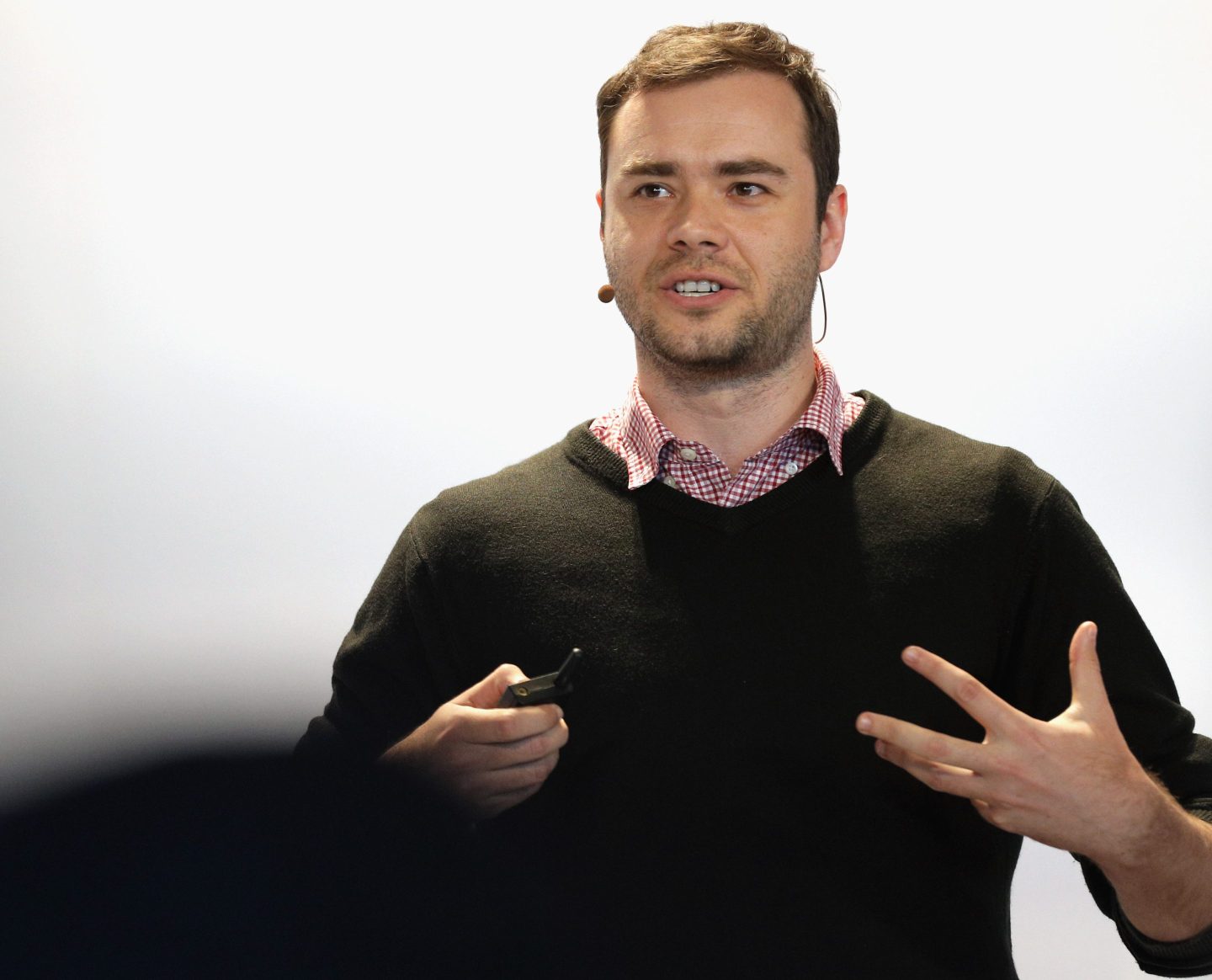
Andrej Karpathy, one of the most influential figures in modern artificial intelligence and a founding member of OpenAI, sent shockwaves through the tech world over the weekend with a sobering assessment of the industry’s progress toward artificial general intelligence (AGI).
In a widely shared interview with podcaster Dwarkesh Patel, a YouTuber with over 1 million followers, Karpathy said he believes the race to build AGI is moving significantly slower than the hype suggests.
Despite rapid advances in large language models (LLMs) over the past three years, he argued AGI remains at least a decade away, and warned that many companies are exaggerating AI’s agentic capabilities in a way that could damage the field.
“Overall, the models are not there,” Karpathy said on the podcast. “I feel like the industry is making too big of a jump and is trying to pretend like this is amazing, and it’s not. It’s slop.”
The interview triggered an immediate reaction across the tech community, where expectations for AGI have soared alongside capital investment and competition.
“If this Karpathy interview doesn’t pop the AI bubble, nothing will,” Prithvir Jhaveri, CEO of prediction markets aggregator TradeFox, wrote on X.
John Coogan, host of the tech podcast TBPN, noted that Karpathy’s interview came just weeks after AI pioneer Richard Sutton called LLMs a “dead end.”
“The general tech community is experiencing whiplash right now,” Coogan wrote on X.
Karpathy, who previously served as Tesla’s senior director of AI and helped lead OpenAI in its early years, described his AI timeline as “five to ten times pessimistic” compared to many public predictions. But he rejected the idea his prediction, that it’ll take a decade to achieve AGI, is gloomy. “Ten years,” he wrote on X after the interview, “should otherwise be a very bullish timeline for AGI.”
For Silicon Valley, it’s a slow projection. Sam Altman, Karpathy’s fellow OpenAI co-founder and current CEO, predicts artificial intelligence will surpass the intelligence of any human in any specialty by 2030. Elon Musk has predicted that AGI will come either this year or the next.
Karpathy argued that much of the confusion stems from metrics that give an inflated sense of capability. Public demos, benchmark competitions, chatbot conversations, and code-generation tests tend to reflect narrow optimizations, he said, rather than addressing the hardest unsolved problems in AI. Those include long-horizon planning, structured reasoning and, ultimately, safe system design.
Karpathy reserved his strongest criticism for AI “agents,” a concept that has exploded across the industry in recent months.
These systems, built on top of LLMs, are pitched as autonomous digital workers that can write and run code, search the internet, operate software, and execute business tasks with minimal oversight. Karpathy said the idea is promising, but the execution, at least how it stands today, is far from reliable.
“We’re at this intermediate stage,” Karpathy said. “The models are amazing. They still need a lot of work.”
Many other AI leaders are much more bullish. For example, Nvidia CEO Jensen Huang has called 2025 “the year of AI agents.” Anthropic CEO Dario Amodei recently said that by 2026 or 2027, AI systems will be “better than almost all humans at almost all things.”
But most current AI agent systems produce brittle, unpredictable results and lack basic reliability, Karpathy warned. He argued they do not possess enough reasoning ability, have limited perceptions of software environments, and struggle to use tools correctly.
“If this isn’t done well,” Karpathy said, “we might end up with mountains of slop accumulating across software, and an increase in vulnerabilities [and] security breaches.”
Still, he insisted AI remains on a long but solvable path. The technical challenges ahead are difficult, he said, but manageable with time, research, and better safety practices.
“I feel like the problems are surmountable,” he said. “But they’re still difficult.”