• Home
  • Latest
  • Fortune 500
  • Finance
  • Tech
  • Leadership
  • Lifestyle
  • Rankings
  • Multimedia
CommentaryVenture Capital

Raising $100 million is easier than $1 million — a tragedy for early-stage companies

By
Roman Axelrod
Roman Axelrod
Down Arrow Button Icon
By
Roman Axelrod
Roman Axelrod
Down Arrow Button Icon
October 8, 2025, 10:11 AM ET
Roman Axelrod
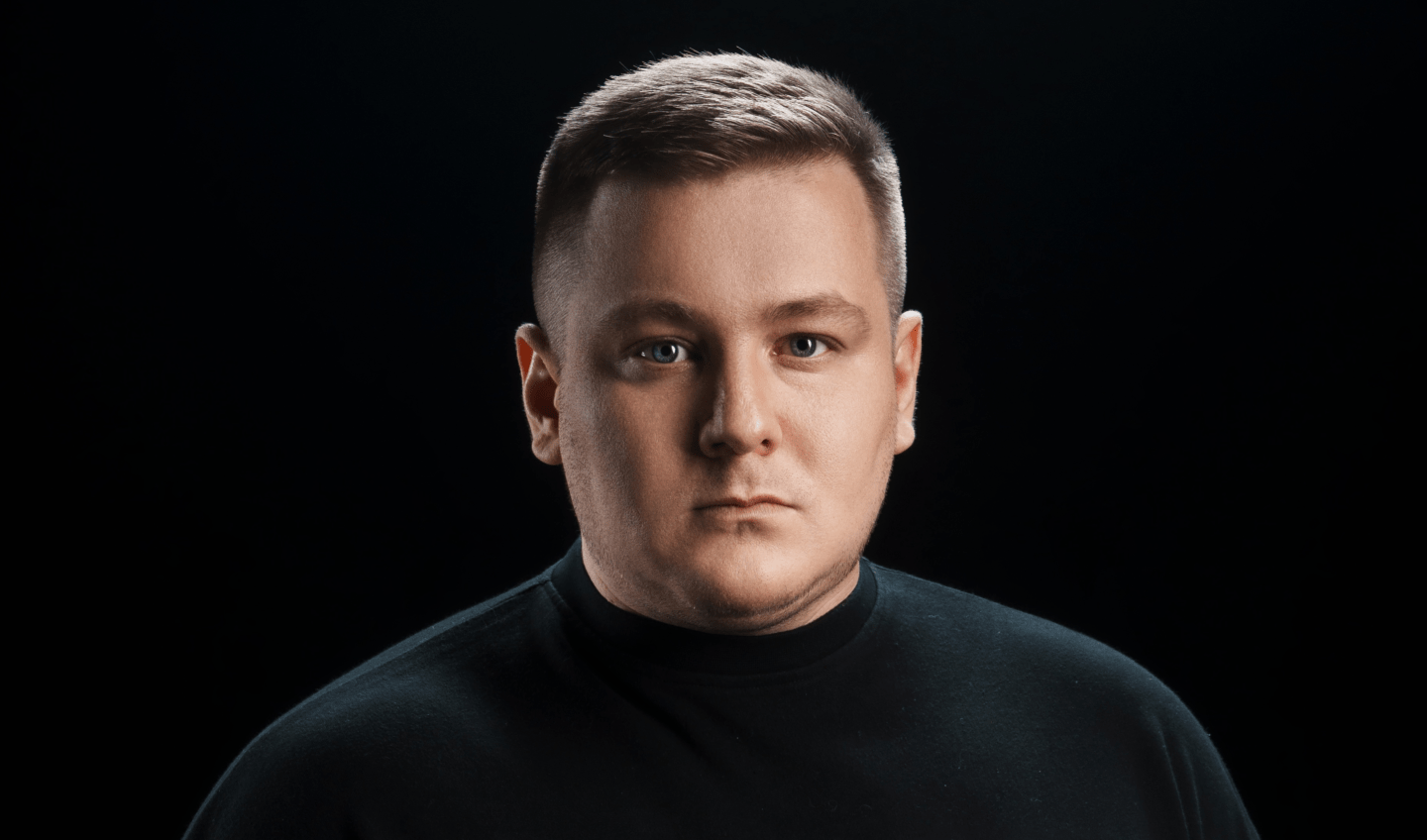
Roman Axelrod, founder of XPANCEO.courtesy of XPANCEO

Recently, my company, XPANCEO, closed a $250 million Series A round at a $1.35 billion valuation. It was the largest Series A ever raised in the MENA region, and the largest in the AR/VR and wearables spaces worldwide.

Recommended Video

But the real story here is what this round reveals about the state of venture capital today. Raising $100 million has, in many ways, become easier than raising $1 million.

Venture capital has quietly inverted. The early-stage checks that once launched bold ideas have gradually disappeared, while capital continues to flow, if you can survive long enough to earn it.

The venture capital hourglass

In the 2000s and 2010s, small funds and angel syndicates thrived. Tens of millions of dollars were freely distributed, and founders armed with a pitch deck and big dreams could walk out of a meeting with $250,000. The assumption was simple. In a fast-growing internet economy, a small bet on the right team could scale into something extraordinary.

Conviction funding is gone. Investors now expect founders, especially in deep tech, to show working hardware, patents, early traction, and a clear roadmap just to be considered. This is what I call the “hourglass effect.” At the top, massive pools of capital remain eager to back proven winners. At the bottom, scrappy individuals still chase ideas. The middle — traditionally where seed and early Series A funding helped promising startups survive the “valley of death” — has thinned out. Instead of nurturing bold concepts through this early stage, investors are now implicitly asking that entrepreneurs crawl through it alone.

From conviction to caution

Why is early-stage funding dwindling? First, the market matured. Two decades ago, a startup could add millions of new users. Today, Facebook competes with platforms like Twitch and Reddit for the same finite base. Growth now comes from stealing market share, not from adding new users. The same is true across industries — content platforms, computers, or smartphones.

Second, scandals have scarred the system. Ventures like Theranos and Nikola became shorthand for unchecked hype. Investors began to fear not only fraud, but also the “serial fund-raiser” — a founder who raises capital, lives off it, burns cash, and repeats the cycle without ever turning a profit or building durable value. 

Finally, safer, faster-growing alternatives emerged. Why wire $250,000 into a seed-stage company when it feels like a gamble and you could ride a rocket in the public markets with Tesla during COVID or with NVIDIA now? 

Market inevitability as the only proof

For deep tech founders, the stakes of this early-stage funding crunch are higher. A software startup can point to user / revenue metrics to demonstrate “product-market fit.” Deep tech ventures cannot. Their only path is demonstrating market inevitability. You need to show that the problem you are solving must be solved, and that your approach is credible enough to get there. 

Here, evidence is what gets founders through the door. Patents, prototypes, and scientific validation don’t necessarily prove that there is a market today, but they prove you can move from theory to execution. This trust and credibility have become the way into serious conversations.

The recent wave of nine-figure rounds — OpenAI, Perplexity, Anthropic — reflects this extreme filtering. Larger amounts of capital come from investors who are willing to pay a higher risk premium for a company that has already proven to have solid odds of success. This is driving the boom around AI.

The ladder of needs

These biggest players now sit at the top of what I describe as a ladder of needs, together with hardware manufacturers. Around them is XR, positioned as the interface layer for the next generation of computing. AI is treated as the foundation, so to say as a system that interacts with users through multiple interfaces.

Capital follows accordingly. Valuations in the hundreds of billions and investments in the hundreds of millions (sometimes billions) are justified by the hope that these ventures will be ultimately acquired by larger companies. 

The effects of this reach beyond the capital markets. At a recent wedding, I met several people who had moved to Los Angeles during the pandemic. Now, driven by AI FOMO, they are looking to move back, either to get jobs at firms like Google or to build their own AI ventures. At least there’s a silver lining — San Francisco’s housing market is heating up again, so now the overpriced coffee isn’t the only thing thriving.

How the companies of 2030 can survive the first ‘valley of death’

So, in this landscape, what can early-stage founders do? The fundamentals are the same, but the bar is higher. Founders must be willing to invest personal resources until the point where they can build a prototype, secure a patent, or showcase some tangible progress. The era of “we need $2 million to hire McKinsey to write a report on how to test our first hypotheses” is over. Investors want evidence, not theory.

I actually see this trend as positive. It’s a natural filter — one that rewards founders who are determined, goal-oriented, and stubborn enough to carry the load. Using your own grit and determination, your own savings, friends and family, even mortgaging apartments and cars if needed, you crawl your way to your product.

Survival depends on four pillars. Founders must articulate a clear vision of the future and how their product fits into it. Then, they need a team capable of delivering that vision. The third essential is a very clear roadmap — broken down into the maximum number of achievable milestones, with a concrete plan for what comes next at each point.  And the final — and very important one — is persistence. More than ever, entrepreneurs must have the will to keep moving, especially when momentum slows.

In the past, a company could raise capital while lacking one of these. Today, the absence of any can end the journey. The first years of a startup’s life have become a test of all four. And only after real progress do investors begin to believe.

The truth is that the most valuable companies of the 2030s won’t come from inside the system — they’ll come from the outsiders who endured long enough to earn belief. It is belief, after all, that has always driven venture capital. Every dollar raised is an act of faith in a version of the future. What has changed is the burden of proof. The first dollar is the hardest, and every subsequent milestone is a test of whether the future you describe is one the world is prepared to trust. 

The opinions expressed in Fortune.com commentary pieces are solely the views of their authors and do not necessarily reflect the opinions and beliefs of Fortune.

Join us at the Fortune Workplace Innovation Summit May 19–20, 2026, in Atlanta. The next era of workplace innovation is here—and the old playbook is being rewritten. At this exclusive, high-energy event, the world’s most innovative leaders will convene to explore how AI, humanity, and strategy converge to redefine, again, the future of work. Register now.
About the Author
By Roman Axelrod
See full bioRight Arrow Button Icon

Latest in Commentary

Finance
Lorem ipsum dolor sit amet, consectetur adipiscing elit, sed do eiusmod tempor incididunt ut labore et dolore magna aliqua. Ut enim ad minim veniam
By Fortune Editors
October 20, 2025
Finance
Lorem ipsum dolor sit amet, consectetur adipiscing elit, sed do eiusmod tempor incididunt ut labore et dolore magna aliqua. Ut enim ad minim veniam
By Fortune Editors
October 20, 2025
Finance
Lorem ipsum dolor sit amet, consectetur adipiscing elit, sed do eiusmod tempor incididunt ut labore et dolore magna aliqua. Ut enim ad minim veniam
By Fortune Editors
October 20, 2025
Finance
Lorem ipsum dolor sit amet, consectetur adipiscing elit, sed do eiusmod tempor incididunt ut labore et dolore magna aliqua. Ut enim ad minim veniam
By Fortune Editors
October 20, 2025
Finance
Lorem ipsum dolor sit amet, consectetur adipiscing elit, sed do eiusmod tempor incididunt ut labore et dolore magna aliqua. Ut enim ad minim veniam
By Fortune Editors
October 20, 2025
Finance
Lorem ipsum dolor sit amet, consectetur adipiscing elit, sed do eiusmod tempor incididunt ut labore et dolore magna aliqua. Ut enim ad minim veniam
By Fortune Editors
October 20, 2025

Most Popular

Finance
Lorem ipsum dolor sit amet, consectetur adipiscing elit, sed do eiusmod tempor incididunt ut labore et dolore magna aliqua. Ut enim ad minim veniam
By Fortune Editors
October 20, 2025
Finance
Lorem ipsum dolor sit amet, consectetur adipiscing elit, sed do eiusmod tempor incididunt ut labore et dolore magna aliqua. Ut enim ad minim veniam
By Fortune Editors
October 20, 2025
Finance
Lorem ipsum dolor sit amet, consectetur adipiscing elit, sed do eiusmod tempor incididunt ut labore et dolore magna aliqua. Ut enim ad minim veniam
By Fortune Editors
October 20, 2025
Finance
Lorem ipsum dolor sit amet, consectetur adipiscing elit, sed do eiusmod tempor incididunt ut labore et dolore magna aliqua. Ut enim ad minim veniam
By Fortune Editors
October 20, 2025
Finance
Lorem ipsum dolor sit amet, consectetur adipiscing elit, sed do eiusmod tempor incididunt ut labore et dolore magna aliqua. Ut enim ad minim veniam
By Fortune Editors
October 20, 2025
Finance
Lorem ipsum dolor sit amet, consectetur adipiscing elit, sed do eiusmod tempor incididunt ut labore et dolore magna aliqua. Ut enim ad minim veniam
By Fortune Editors
October 20, 2025
Fortune Secondary Logo
Rankings
  • 100 Best Companies
  • Fortune 500
  • Global 500
  • Fortune 500 Europe
  • Most Powerful Women
  • Future 50
  • World’s Most Admired Companies
  • See All Rankings
Sections
  • Finance
  • Fortune Crypto
  • Features
  • Leadership
  • Health
  • Commentary
  • Success
  • Retail
  • Mpw
  • Tech
  • Lifestyle
  • CEO Initiative
  • Asia
  • Politics
  • Conferences
  • Europe
  • Newsletters
  • Personal Finance
  • Environment
  • Magazine
  • Education
Customer Support
  • Frequently Asked Questions
  • Customer Service Portal
  • Privacy Policy
  • Terms Of Use
  • Single Issues For Purchase
  • International Print
Commercial Services
  • Advertising
  • Fortune Brand Studio
  • Fortune Analytics
  • Fortune Conferences
  • Business Development
  • Group Subscriptions
About Us
  • About Us
  • Editorial Calendar
  • Press Center
  • Work At Fortune
  • Diversity And Inclusion
  • Terms And Conditions
  • Site Map
  • About Us
  • Editorial Calendar
  • Press Center
  • Work At Fortune
  • Diversity And Inclusion
  • Terms And Conditions
  • Site Map
  • Facebook icon
  • Twitter icon
  • LinkedIn icon
  • Instagram icon
  • Pinterest icon

Roman Axelrod, founder of XPANCEO, a deep tech unicorn company developing the next generation of computing through smart contact lenses. 


Latest in Commentary

hormuz
CommentaryIran
With Hormuz under strain, a trade corridor built for resilience faces a real-world test
By Angela Chitkara and Samantha SuttonApril 17, 2026
11 hours ago
broker
CommentarySoftware
The 3 forces quietly dismantling the business model that made enterprise software fabulously profitable
By Michael Jacobides and Stefano PuntoniApril 17, 2026
13 hours ago
welti
CommentaryIran
Switzerland’s former ambassador to Iran: here’s how to end this war — and why Pakistan isn’t enough
By Philippe WeltiApril 17, 2026
18 hours ago
Anita Beveridge-Raffo is Head of Retail and Consumer Goods at Palantir Technologies
CommentaryAI agents
Palantir exec: the biggest mistake retailers are making with AI? Trying to do it all with one agent
By Anita Beveridge-RaffoApril 16, 2026
1 day ago
wyle
CommentaryHealth
‘The Pitt’ reveals why healthcare desperately needs a new front door
By Jeremy MorganApril 16, 2026
2 days ago
health
CommentaryHealth Care Service
Two physicians on ending the waiting-room era: bring care home
By Benjamin Kornitzer and Bill FristApril 16, 2026
2 days ago

Most Popular

Pope Leo warned the world is in ‘big trouble’ if Elon Musk becomes the first trillionaire
Success
Pope Leo warned the world is in ‘big trouble’ if Elon Musk becomes the first trillionaire
By Preston ForeApril 17, 2026
15 hours ago
A world going broke: IMF says America's $39 trillion national debt is actually a global problem—and AI may be the only rescue
Economy
A world going broke: IMF says America's $39 trillion national debt is actually a global problem—and AI may be the only rescue
By Nick LichtenbergApril 16, 2026
1 day ago
Jeff Bezos pledged $10 billion for climate change. With the 2030 clock ticking, his wife, Lauren Sánchez Bezos, is leading the charge to spend it
Environment
Jeff Bezos pledged $10 billion for climate change. With the 2030 clock ticking, his wife, Lauren Sánchez Bezos, is leading the charge to spend it
By Sydney LakeApril 15, 2026
2 days ago
Germany already told its workers to ditch four-day weeks and work-life balance. Now the government wants to cut their pay for calling in sick, too
Success
Germany already told its workers to ditch four-day weeks and work-life balance. Now the government wants to cut their pay for calling in sick, too
By Orianna Rosa RoyleApril 16, 2026
2 days ago
MacKenzie Scott is bypassing the Ivy League and rewriting the $79 billion higher ed playbook by giving to HBCUs and community colleges
Politics
MacKenzie Scott is bypassing the Ivy League and rewriting the $79 billion higher ed playbook by giving to HBCUs and community colleges
By Sydney LakeApril 16, 2026
1 day ago
Iran has reopened the Strait of Hormuz—but experts say it now holds a card that works ‘almost like a nuclear deterrent’
Energy
Iran has reopened the Strait of Hormuz—but experts say it now holds a card that works ‘almost like a nuclear deterrent’
By Eva RoytburgApril 17, 2026
9 hours ago

© 2026 Fortune Media IP Limited. All Rights Reserved. Use of this site constitutes acceptance of our Terms of Use and Privacy Policy | CA Notice at Collection and Privacy Notice | Do Not Sell/Share My Personal Information
FORTUNE is a trademark of Fortune Media IP Limited, registered in the U.S. and other countries. FORTUNE may receive compensation for some links to products and services on this website. Offers may be subject to change without notice.