• Home
  • Latest
  • Fortune 500
  • Finance
  • Tech
  • Leadership
  • Lifestyle
  • Rankings
  • Multimedia

Trendingnow

1

MacKenzie Scott alone accounted for one-third of America's $19.2 billion in megagifts last year

2

Philanthropy leader at Warren Buffett and Bill Gates’ Giving Pledge says children of billionaires are pushing them to give their wealth away faster

3

Ex-Google engineer says Larry Page, Sergey Brin and Sundar Pichai share the same trait—it's the lesson he swears by as a $7.2 billion AI CEO

1

MacKenzie Scott alone accounted for one-third of America's $19.2 billion in megagifts last year

2

Philanthropy leader at Warren Buffett and Bill Gates’ Giving Pledge says children of billionaires are pushing them to give their wealth away faster

3

Ex-Google engineer says Larry Page, Sergey Brin and Sundar Pichai share the same trait—it's the lesson he swears by as a $7.2 billion AI CEO
CommentarySemiconductors

It’s time for Intel to go private, former board members say

By
Charlene Barshefsky
Charlene Barshefsky
,
Reed Hundt
Reed Hundt
,
James Plummer
James Plummer
, and
David B. Yoffie
David B. Yoffie
Down Arrow Button Icon
By
Charlene Barshefsky
Charlene Barshefsky
,
Reed Hundt
Reed Hundt
,
James Plummer
James Plummer
, and
David B. Yoffie
David B. Yoffie
Down Arrow Button Icon
September 19, 2025, 4:22 PM ET
Lip-Bu Tan
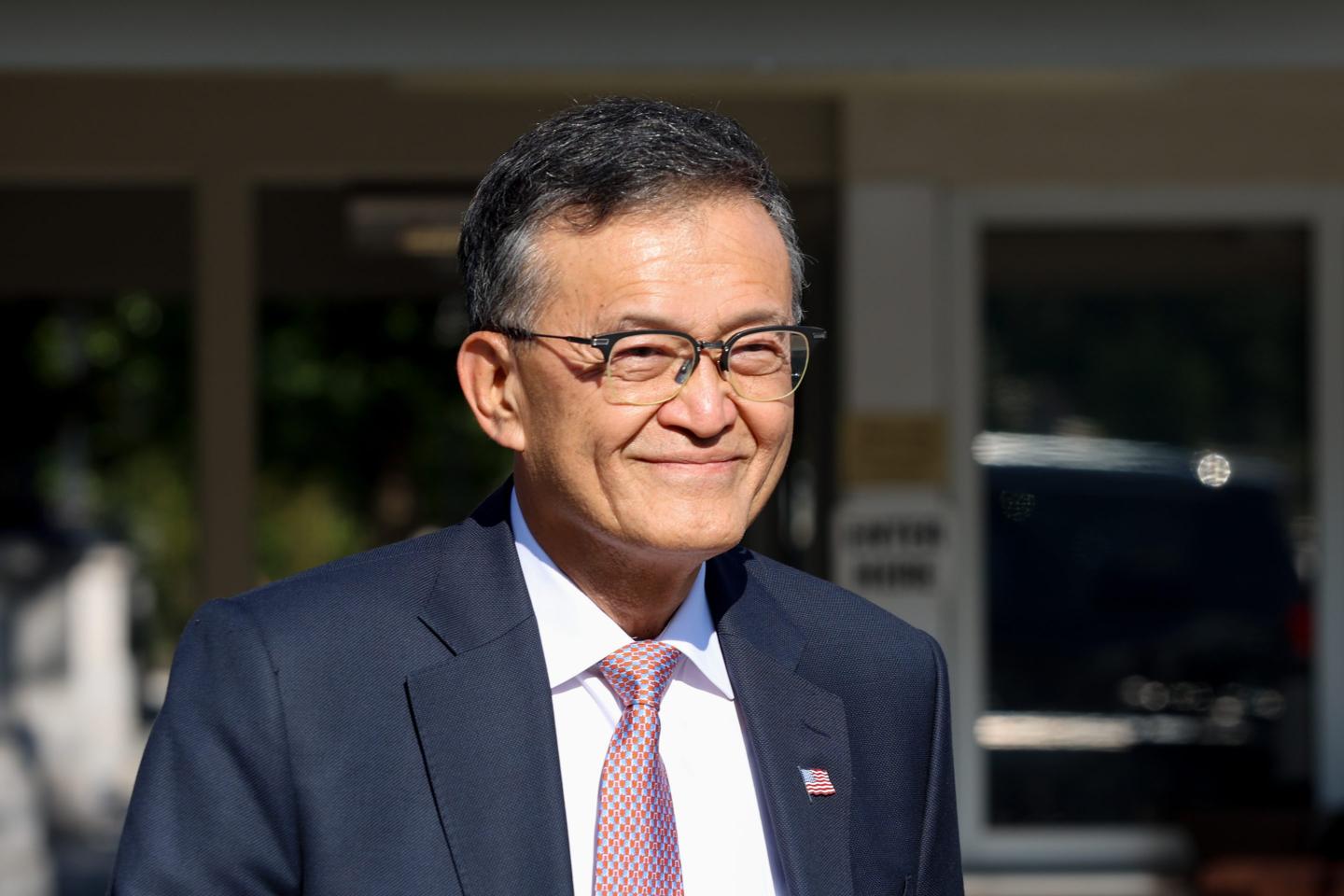
Intel CEO Lip-Bu Tan, seen leaving the White House after a meeting with President Trump on August 11, 2025.Alex Wroblewski/Bloomberg via Getty Images
Add Fortune on Google for similar content.

Despite years of troubled performance and failed strategies, the great icon of the semiconductor industry, Intel, has two new major shareholders that can give it new hope for recovery: the United States government, with a bit less than a 10% stake, and the most important design firm in the world, Nvidia, with about 5% ownership. 

Recommended Video

The next step is for the government to arrange for Intel to go private. 

Without the pressure of delivering quarterly earnings for the stockholders of today, a private Intel could divide itself into parts that no longer make sense to be conjoined.  One new company should focus on manufacturing chips for all global firms with the goal of matching or exceeding performance levels that only TSMC can provide today. The other should commit to designing chips. These are two separate objective functions, markets, and missions. Ultimately, Intel should also sell its controlling stake in the autonomous driving firm, Mobileye, as well as the company’s venture capital arm. The strategic goal is to disaggregate the conglomerate that may have served Intel well in the past but no longer meets the country’s need for an American foundry nor delivers the most value for shareholders.

It is well understood that most conglomerates suffer from the so-called conglomerate discount.  General Electric, once an icon of American industry, recognized that breaking itself up would make its constituent pieces more valuable and competitive in one of the most salient recent examples that demonstrates the sum of the parts can be greater than the whole. 

Intel’s business model of vertical integration between design and manufacturing gave Intel tremendous market power when it was the world leader in both markets. That’s the past. Trying to recreate it, as some of Intel’s recent CEOs have done, is doomed.

Here’s the plan that seems right to us, admittedly from the perspective of outsiders who left Intel’s board some time ago.

First, the government, with support from a consortium of America’s world-leading design firms, should buy all of Intel’s public stock. Nvidia’s $5 billion investment and the subsequent surge in Intel’s stock price suggest that the capital markets would welcome such a move. Some combination of Nvidia, Microsoft, Apple, Amazon, Qualcomm, Broadcom, and Google — the best and biggest product design firms on the planet — could easily afford it.  

The creation of a successful foundry, drawn from Intel’s manufacturing assets and separated from the design businesses, would be a big win for the Trump administration. It would be even bigger win for the big semiconductor design firms that are otherwise totally dependent on TSMC.

Second, the government and that consortium should find new owners for Intel’s design businesses, including servers and personal computers.  Our back-of-the-envelope calculations suggest that Intel has left a lot of value locked behind its conglomerate structure. The foundry, for example, has a book value of about $70 billion, but is currently a huge money loser. It needs up to $100 billion in new capital over the next decade to compete with TSMC. The other businesses that could thrive on their own include (1) a microprocessor design business for personal computers, worth somewhere around $100 billion; (2) the design efforts for servers and data centers, also worth potentially $100 billion; (3) the autonomous driving firm, Mobileye, valued at roughly $15. billion; and (4) the extensive venture portfolio, invested in private firms around the world.  

Unlocking this value is extraordinarily difficult for a public firm filing quarterly reports. Even in private, the surgery is operationally complicated. Presumably, the board and management cannot see a way forward. Alone, the company cannot raise the money to take the firm private. By itself, it would struggle to obtain the financial, technical and commercial assistance needed to match TSMC. Only the U.S. government would be able to orchestrate the complex, critically important disaggregation of Intel with the necessary participation of the major American design firms. 

Third, by going private, Intel can attract the best and brightest talent. With Intel’s competitors flying high on the promise of AI, Intel is suffering from a massive brain drain. As it lays off thousands of employees, the best ones inevitably bail out. The existing public company cannot effectively compete for talent and without talent it is unlikely to succeed in matching TSMC in manufacturing nor make its other units more competitive. Private companies can offer very attractive compensation packages with the promise of a big day when the companies go public again.

The result is that the entire restructuring could be accomplished in roughly a year. That is about as long as the break-up of AT&T took in the 1980s. By 2028, the segments could be sold at handsome prices or taken public with significant returns to private shareholders. Taxpayers could make hundreds of billions of dollars. Not only that, in terms of job creation and national security, the value would be immeasurable. 

Naysayers will argue that this strategy is unnecessary.  Intel could do it all before, and it can do it all again.  But hope is not a strategy, and the world around Intel is not standing still.  Naysayers may also argue that Intel should be bought by one of its competitors.  Allow Broadcom, for example, to buy Intel and fix it, like it has done with numerous other semiconductor firms.  But in today’s environment, an acquisition like this would not fly:  China, where Intel sells more than 25% of its products, would never approve it. 

Right now, the United States government and Nvidia own a problem. By taking charge of the situation, they can create a tremendous opportunity to do good for the taxpayer. Even more importantly, the break-up of Intel will go a long way to giving the United States the semiconductor ecosystem that underpins every happy scenario for software breakthroughs that benefit the American people and the world.  

The opinions expressed in Fortune.com commentary pieces are solely the views of their authors and do not necessarily reflect the opinions and beliefs of Fortune.

About the Authors
By Charlene Barshefsky
See full bioRight Arrow Button Icon
By Reed Hundt
See full bioRight Arrow Button Icon
By James Plummer
See full bioRight Arrow Button Icon
By David B. Yoffie
See full bioRight Arrow Button Icon
Add Fortune on Google for similar content.

Latest in Commentary

Finance
Lorem ipsum dolor sit amet, consectetur adipiscing elit, sed do eiusmod tempor incididunt ut labore et dolore magna aliqua. Ut enim ad minim veniam
By Fortune Editors
October 20, 2025
Finance
Lorem ipsum dolor sit amet, consectetur adipiscing elit, sed do eiusmod tempor incididunt ut labore et dolore magna aliqua. Ut enim ad minim veniam
By Fortune Editors
October 20, 2025
Finance
Lorem ipsum dolor sit amet, consectetur adipiscing elit, sed do eiusmod tempor incididunt ut labore et dolore magna aliqua. Ut enim ad minim veniam
By Fortune Editors
October 20, 2025
Finance
Lorem ipsum dolor sit amet, consectetur adipiscing elit, sed do eiusmod tempor incididunt ut labore et dolore magna aliqua. Ut enim ad minim veniam
By Fortune Editors
October 20, 2025
Finance
Lorem ipsum dolor sit amet, consectetur adipiscing elit, sed do eiusmod tempor incididunt ut labore et dolore magna aliqua. Ut enim ad minim veniam
By Fortune Editors
October 20, 2025
Finance
Lorem ipsum dolor sit amet, consectetur adipiscing elit, sed do eiusmod tempor incididunt ut labore et dolore magna aliqua. Ut enim ad minim veniam
By Fortune Editors
October 20, 2025

Most Popular

Finance
Lorem ipsum dolor sit amet, consectetur adipiscing elit, sed do eiusmod tempor incididunt ut labore et dolore magna aliqua. Ut enim ad minim veniam
By Fortune Editors
October 20, 2025
Finance
Lorem ipsum dolor sit amet, consectetur adipiscing elit, sed do eiusmod tempor incididunt ut labore et dolore magna aliqua. Ut enim ad minim veniam
By Fortune Editors
October 20, 2025
Finance
Lorem ipsum dolor sit amet, consectetur adipiscing elit, sed do eiusmod tempor incididunt ut labore et dolore magna aliqua. Ut enim ad minim veniam
By Fortune Editors
October 20, 2025
Finance
Lorem ipsum dolor sit amet, consectetur adipiscing elit, sed do eiusmod tempor incididunt ut labore et dolore magna aliqua. Ut enim ad minim veniam
By Fortune Editors
October 20, 2025
Finance
Lorem ipsum dolor sit amet, consectetur adipiscing elit, sed do eiusmod tempor incididunt ut labore et dolore magna aliqua. Ut enim ad minim veniam
By Fortune Editors
October 20, 2025
Finance
Lorem ipsum dolor sit amet, consectetur adipiscing elit, sed do eiusmod tempor incididunt ut labore et dolore magna aliqua. Ut enim ad minim veniam
By Fortune Editors
October 20, 2025
Fortune Secondary Logo
Rankings
  • 100 Best Companies
  • Fortune 500
  • Global 500
  • Fortune 500 Europe
  • Most Powerful Women
  • World's Most Admired Companies
  • See All Rankings
  • Lists Calendar
Sections
  • Finance
  • Fortune Crypto
  • Features
  • Leadership
  • Health
  • Commentary
  • Success
  • Retail
  • Mpw
  • Tech
  • Lifestyle
  • CEO Initiative
  • Asia
  • Politics
  • Conferences
  • Europe
  • Newsletters
  • Personal Finance
  • Environment
  • Magazine
  • Education
Customer Support
  • Frequently Asked Questions
  • Customer Service Portal
  • Privacy Policy
  • Terms Of Use
  • Single Issues For Purchase
  • International Print
Commercial Services
  • Advertising
  • Fortune Brand Studio
  • Fortune Analytics
  • Fortune Conferences
  • Business Development
  • Group Subscriptions
About Us
  • About Us
  • Press Center
  • Work At Fortune
  • Terms And Conditions
  • Site Map
  • About Us
  • Press Center
  • Work At Fortune
  • Terms And Conditions
  • Site Map
  • Facebook icon
  • Twitter icon
  • LinkedIn icon
  • Instagram icon
  • Pinterest icon

Charlene Barshefsky is a former U.S. Trade Representative. Reed Hundt is a former chair of the FCC. James Plummer is a former Dean of Engineering at Stanford. David B. Yoffie is a professor at Harvard Business School. Ambassador Barshefsky, Mr. Hundt, Professor Plummer, and Professor Yoffie all served as long-time directors on the Intel board.


Latest in Commentary

surman
CommentaryMozilla
Mozilla President: meet the open source ‘rebel alliance’ that could break Big Tech’s grip on AI
By Mark SurmanJune 29, 2026
2 hours ago
wendy
Commentary250 Years of Innovation
Wendy Schmidt: Three centuries of science is something to celebrate
By Wendy SchmidtJune 29, 2026
3 hours ago
a
Commentary250 Years of Innovation
Atomic Industries CEO: America spent 60 years retreating from manufacturing. The next 100 are about building it back
By Aaron SlodovJune 29, 2026
3 hours ago
Sofia
CommentaryLeadership
This CEO became 3x more productive with AI. Then she read what her daughter wrote about it at Dartmouth
By Maria Colacurcio and Sofia FreiJune 28, 2026
1 day ago
Anthony Scaramucci
Commentary250 Years of Innovation
Anthony Scaramucci on America 250: where have you gone, Joe DiMaggio?
By Anthony ScaramucciJune 28, 2026
1 day ago
family
CommentaryColleges and Universities
More than 3 million college students are raising kids. Most won’t graduate
By Enyi OkebugwuJune 28, 2026
1 day ago

Most Popular

MacKenzie Scott alone accounted for one-third of America's $19.2 billion in megagifts last year
Success
MacKenzie Scott alone accounted for one-third of America's $19.2 billion in megagifts last year
By Sydney LakeJune 25, 2026
4 days ago
Philanthropy leader at Warren Buffett and Bill Gates’ Giving Pledge says children of billionaires are pushing them to give their wealth away faster
Success
Philanthropy leader at Warren Buffett and Bill Gates’ Giving Pledge says children of billionaires are pushing them to give their wealth away faster
By Preston ForeJune 27, 2026
2 days ago
Ex-Google engineer says Larry Page, Sergey Brin and Sundar Pichai share the same trait—it's the lesson he swears by as a $7.2 billion AI CEO
Success
Ex-Google engineer says Larry Page, Sergey Brin and Sundar Pichai share the same trait—it's the lesson he swears by as a $7.2 billion AI CEO
By Orianna Rosa RoyleJune 28, 2026
1 day ago
Cristiano Ronaldo is soccer's first-ever billionaire: He went from begging for burgers outside McDonald's to landing a $400 million contract
Success
Cristiano Ronaldo is soccer's first-ever billionaire: He went from begging for burgers outside McDonald's to landing a $400 million contract
By Preston ForeJune 28, 2026
1 day ago
The retired college professor fighting a $313 trespassing ticket in Wisconsin thinks he's part of a national struggle
Environment
The retired college professor fighting a $313 trespassing ticket in Wisconsin thinks he's part of a national struggle
By Catherina GioinoJune 28, 2026
1 day ago
Iran is forcing the U.S. into an escalation trap as a 'shadow war' over the Strait of Hormuz heats up that could kill the tenuous ceasefire
Politics
Iran is forcing the U.S. into an escalation trap as a 'shadow war' over the Strait of Hormuz heats up that could kill the tenuous ceasefire
By Jason MaJune 28, 2026
20 hours ago

© 2026 Fortune Media IP Limited. All Rights Reserved. Use of this site constitutes acceptance of our Terms of Use and Privacy Policy | CA Notice at Collection and Privacy Notice | Do Not Sell/Share My Personal Information
FORTUNE is a trademark of Fortune Media IP Limited, registered in the U.S. and other countries. FORTUNE may receive compensation for some links to products and services on this website. Offers may be subject to change without notice.