• Home
  • Latest
  • Fortune 500
  • Finance
  • Tech
  • Leadership
  • Lifestyle
  • Rankings
  • Multimedia

Trendingnow

1

Now worth $200 million, Sarah Jessica Parker credits being ‘one of eight kids that struggled financially’ for her hunger, ambition, and work ethic

2

The Pentagon said Iran War costs $29 billion, but the real cost is closer to $200 billion—and counting

3

Amazon's record Prime Day masks a darker truth: Americans are spending more and getting less

1

Now worth $200 million, Sarah Jessica Parker credits being ‘one of eight kids that struggled financially’ for her hunger, ambition, and work ethic

2

The Pentagon said Iran War costs $29 billion, but the real cost is closer to $200 billion—and counting

3

Amazon's record Prime Day masks a darker truth: Americans are spending more and getting less
North AmericaAutos

From freedom to constraint: How cars boxed in American life

By
Henrietta Moore
Henrietta Moore
and
Arthur Kay
Arthur Kay
Down Arrow Button Icon
By
Henrietta Moore
Henrietta Moore
and
Arthur Kay
Arthur Kay
Down Arrow Button Icon
September 16, 2025, 7:30 AM ET
Cars
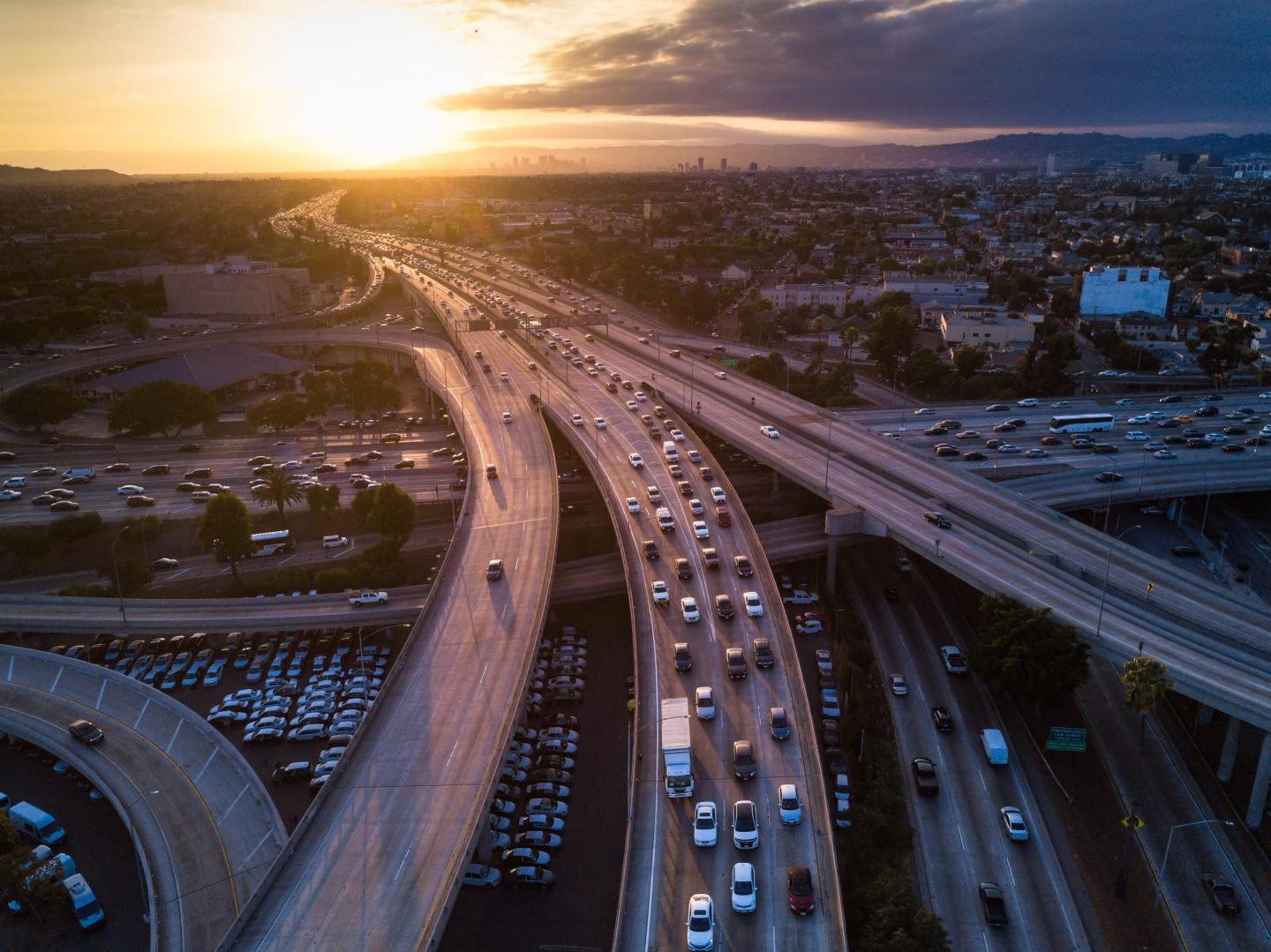
The freedom of the open road in the 21st century.Getty Images
Add Fortune on Google for similar content.

The problem isn’t just cultural mythology, though that mythology is powerful. It’s structural. Automobility has become a defining constraint on America’s economic future. It absorbs household wealth that could fuel entrepreneurship or homeownership, locks cities into sprawl that undermines productivity, and fuels political backlashes from France’s Yellow Vests to U.S. toll road fights.

Recommended Video

Cars once promised escape. Today they deliver dependency. And until we confront how profoundly they have reshaped the very meaning of freedom, we’ll remain stuck—financially, socially, and politically—on the road we built for ourselves.

For more than a century, Americans have been taught to see the car as the ultimate symbol of freedom: the open road, the roar of the engine, the ability to leave it all behind. From Kerouac’s On the Road to Ridley Scott’s Thelma and Louise, the car has been our cultural shorthand for autonomy and escape. Ask drivers why they put up with traffic, debt, and smog, and the most common answer is still: because it represents freedom.

But what if this is the greatest illusion of our age?

Freedom, or Dependency?

The imaginative life of the car has it always in motion. In reality, over a billion vehicles sit idle at any given moment, waiting in garages, parking lots, or traffic jams. Cars are trapped—and so are we. Automobility directly or indirectly causes one in 34 deaths annually, injures more than 100 million people a year, and has killed as many people as the two World Wars combined. Cars are also the single largest source of rising emissions in Europe and the United States, worsening heart disease, cognitive decline, and even fertility rates.

The harms are not evenly distributed. In the United States, crashes disproportionately kill the poor, the elderly, and Black Americans. Globally, the poorest half of the population produces just 10% of carbon emissions yet suffers the brunt of drought, flooding, and polluted air. The ability to drive may feel like liberation. But the reality is that car dependence entrenches debt, ill health, and vulnerability—forms of unfreedom smuggled in under the name of freedom.

The Narrow Road of Negative Freedom

To see why, consider the distinction made by philosopher Isaiah Berlin. Negative freedom means freedom from coercion—no one telling you what to do. Positive freedom means the ability to live the life you choose, to become the best version of yourself.

Cars fit the first story perfectly: the freedom to hit the open road, to escape obligations, to avoid being told when or how to travel. But negative freedom without positive freedom quickly curdles into dependence. You may be “free” to drive—but not free to breathe clean air, free from debt, or free from the 90 minutes you lose each day stuck in traffic.

The Debt Trap Masquerading as Liberty

The financial side of car ownership makes this illusion even starker. The average new car in the United States now costs nearly $50,000; a used one about $28,000. But the “ticket price” is just the beginning. Maintenance, fuel, insurance, parking, and repairs often double the true cost—yet drivers routinely underestimate it by half.

Over a lifetime, Americans will spend upwards of three-quarters of a million dollars just to stay on the road. That’s money not invested in housing, education, or retirement. In many countries, economists have shown that car ownership consumes such a large share of income that it effectively forecloses other life choices: whether to buy a home, start a business, or have a second child.

The industry has been ingenious at hiding this reality. From the 1920s onward, car loans became one of the most successful financial products ever devised, transforming cars from luxury items into “affordable” necessities. Today, more than 100 million Americans are in car debt—$1.6 trillion in total, larger than the economy of Saudi Arabia. Nearly half of those loans are “underwater,” meaning people owe more on their car than it’s worth.

This is not freedom. This is lock-in. Car dependency forces millions to borrow for an asset that immediately loses value, draining their wealth while binding them to a lifestyle with no real exit. It is a cycle of dependency every bit as confining as the traffic jams it produces.

Manufactured Myths

This narrowing of freedom was not inevitable. In the mid-20th century, cities offered a mix of trains, trams, buses, bikes, and walkable neighborhoods. But policy and industry choices reshaped landscapes around the automobile. Suburban sprawl, highway subsidies, and cheap loans created what researchers call a “vicious cycle of car dependency”: longer distances required more cars, which demanded more roads, which crowded out alternatives.

By the 2020s, Americans were driving 3.2 trillion miles annually—the equivalent of 17,000 round trips to the sun. And despite the rhetoric of freedom, most of that driving is compulsory: to get to work, to buy food, to access basic services.

Meanwhile, the car industry has wrapped itself in the language of liberty. Advertising sells cars not as machines but as identities—rugged individualism, sophistication, rebellion. Politicians invoke cars as stand-ins for personal choice, while subsidizing the industry to the tune of billions. The result is a myth that equates freedom with consumption, while obscuring the vast social, ecological, and economic costs imposed on everyone else.

Whose Freedom Counts?

The philosopher John Rawls argued that true fairness requires recognizing all people as moral equals. By that measure, car culture fails. We treat Kenyan farmers facing crop collapse from climate change as collateral damage of American commutes. We allow children in low-income U.S. neighborhoods to inhale more pollutants because their families live near highways. We tacitly accept that some lives are worth sacrificing for others’ convenience.

This is freedom distorted: the ability of some to speed ahead while others choke in their exhaust.

Toward a Richer Freedom

Reclaiming freedom in the 21st century means looking beyond the driver’s seat. It requires investing in mobility systems that actually expand choices: affordable public transit, walkable neighborhoods, safe cycling, shared and flexible transport. It means recognizing that electric vehicles, while useful, don’t solve the deeper problem: they keep us locked into a car-dependent system that drains wallets, sprawls cities, and degrades community.

Most of all, it requires redefining freedom itself. Freedom is not simply the absence of regulation. It is the presence of opportunity: the ability to live a healthy life, to breathe clean air, to reach work or school without bankrupting yourself or destroying the climate.

When we see cars for what they are—both a technology and a trap—we begin to ask better questions. Not: How do we make cars cleaner? But: How do we make people freer?

That shift in perspective could mark the beginning of a new American road trip: one that leaves behind the myth of freedom in a car, and rediscovers the deeper freedoms of fairness, community, and care.

Adapted with permission from the publisher, Wiley, from Roadkill: Unveiling the True Cost of Our Toxic Relationship with Cars by Henrietta Moore and Arthur Kay. Copyright © 2025 by John Wiley & Sons, Inc. All rights reserved. This book is available wherever books and eBooks are sold.

The Fortune 500 Innovation Forum will convene Fortune 500 executives, U.S. policy officials, top founders, and thought leaders to help define what’s next for the American economy, Nov. 16-17 in Detroit. Apply here.
About the Authors
By Henrietta Moore
See full bioRight Arrow Button Icon
By Arthur Kay
See full bioRight Arrow Button Icon
Add Fortune on Google for similar content.

Latest in North America

Finance
Lorem ipsum dolor sit amet, consectetur adipiscing elit, sed do eiusmod tempor incididunt ut labore et dolore magna aliqua. Ut enim ad minim veniam
By Fortune Editors
October 20, 2025
Finance
Lorem ipsum dolor sit amet, consectetur adipiscing elit, sed do eiusmod tempor incididunt ut labore et dolore magna aliqua. Ut enim ad minim veniam
By Fortune Editors
October 20, 2025
Finance
Lorem ipsum dolor sit amet, consectetur adipiscing elit, sed do eiusmod tempor incididunt ut labore et dolore magna aliqua. Ut enim ad minim veniam
By Fortune Editors
October 20, 2025
Finance
Lorem ipsum dolor sit amet, consectetur adipiscing elit, sed do eiusmod tempor incididunt ut labore et dolore magna aliqua. Ut enim ad minim veniam
By Fortune Editors
October 20, 2025
Finance
Lorem ipsum dolor sit amet, consectetur adipiscing elit, sed do eiusmod tempor incididunt ut labore et dolore magna aliqua. Ut enim ad minim veniam
By Fortune Editors
October 20, 2025
Finance
Lorem ipsum dolor sit amet, consectetur adipiscing elit, sed do eiusmod tempor incididunt ut labore et dolore magna aliqua. Ut enim ad minim veniam
By Fortune Editors
October 20, 2025

Most Popular

Finance
Lorem ipsum dolor sit amet, consectetur adipiscing elit, sed do eiusmod tempor incididunt ut labore et dolore magna aliqua. Ut enim ad minim veniam
By Fortune Editors
October 20, 2025
Finance
Lorem ipsum dolor sit amet, consectetur adipiscing elit, sed do eiusmod tempor incididunt ut labore et dolore magna aliqua. Ut enim ad minim veniam
By Fortune Editors
October 20, 2025
Finance
Lorem ipsum dolor sit amet, consectetur adipiscing elit, sed do eiusmod tempor incididunt ut labore et dolore magna aliqua. Ut enim ad minim veniam
By Fortune Editors
October 20, 2025
Finance
Lorem ipsum dolor sit amet, consectetur adipiscing elit, sed do eiusmod tempor incididunt ut labore et dolore magna aliqua. Ut enim ad minim veniam
By Fortune Editors
October 20, 2025
Finance
Lorem ipsum dolor sit amet, consectetur adipiscing elit, sed do eiusmod tempor incididunt ut labore et dolore magna aliqua. Ut enim ad minim veniam
By Fortune Editors
October 20, 2025
Finance
Lorem ipsum dolor sit amet, consectetur adipiscing elit, sed do eiusmod tempor incididunt ut labore et dolore magna aliqua. Ut enim ad minim veniam
By Fortune Editors
October 20, 2025
Fortune Secondary Logo
Rankings
  • 100 Best Companies
  • Fortune 500
  • Global 500
  • Fortune 500 Europe
  • Most Powerful Women
  • World's Most Admired Companies
  • See All Rankings
  • Lists Calendar
Sections
  • Finance
  • Fortune Crypto
  • Features
  • Leadership
  • Health
  • Commentary
  • Success
  • Retail
  • Mpw
  • Tech
  • Lifestyle
  • CEO Initiative
  • Asia
  • Politics
  • Conferences
  • Europe
  • Newsletters
  • Personal Finance
  • Environment
  • Magazine
  • Education
Customer Support
  • Frequently Asked Questions
  • Customer Service Portal
  • Privacy Policy
  • Terms Of Use
  • Single Issues For Purchase
  • International Print
Commercial Services
  • Advertising
  • Fortune Brand Studio
  • Fortune Analytics
  • Fortune Conferences
  • Business Development
  • Group Subscriptions
About Us
  • About Us
  • Press Center
  • Work At Fortune
  • Terms And Conditions
  • Site Map
  • About Us
  • Press Center
  • Work At Fortune
  • Terms And Conditions
  • Site Map
  • Facebook icon
  • Twitter icon
  • LinkedIn icon
  • Instagram icon
  • Pinterest icon

Latest in North America

nido
Commentary250 Years of Innovation
As an immigrant turned entrepreneur and college president, here is why I celebrate our nation as it turns 250
By Nido R. QubeinJune 25, 2026
1 hour ago
A college graduate in regalia rests his chin in his hand.
Future of WorkGen Z
Gen Z graduates are blaming AI for their unemployment woes when they should be looking somewhere else
By Sasha RogelbergJune 25, 2026
6 hours ago
Trump’s Iran war provoked the Senate enough to get it to symbolically vote to curb his war powers for the first time
PoliticsDonald Trump
Trump’s Iran war provoked the Senate enough to get it to symbolically vote to curb his war powers for the first time
By The Associated PressJune 24, 2026
15 hours ago
‘We are in agony’: Today Show host Savannah Guthrie begs public for help as reports surface her missing 84-year-old mom might be dead
North AmericaMedia
‘We are in agony’: Today Show host Savannah Guthrie begs public for help as reports surface her missing 84-year-old mom might be dead
By The Associated PressJune 24, 2026
15 hours ago
Wind turbines on yellow grass
Environmentwind power
California threatens to hit Trump with lawsuit if he doesn’t revive massive wind farm project off central coast
By Jennifer McDermott and The Associated PressJune 24, 2026
16 hours ago
Why Zohran Mamdani’s big night as the Democratic party’s new kingmaker matters for every Fortune 500 CEO in every city and state
PoliticsPolitics
Why Zohran Mamdani’s big night as the Democratic party’s new kingmaker matters for every Fortune 500 CEO in every city and state
By Catherina GioinoJune 24, 2026
16 hours ago

Most Popular

Now worth $200 million, Sarah Jessica Parker credits being ‘one of eight kids that struggled financially’ for her hunger, ambition, and work ethic
Success
Now worth $200 million, Sarah Jessica Parker credits being ‘one of eight kids that struggled financially’ for her hunger, ambition, and work ethic
By Orianna Rosa RoyleJune 24, 2026
1 day ago
The Pentagon said Iran War costs $29 billion, but the real cost is closer to $200 billion—and counting
Economy
The Pentagon said Iran War costs $29 billion, but the real cost is closer to $200 billion—and counting
By Jacqueline MunisJune 24, 2026
1 day ago
Amazon's record Prime Day masks a darker truth: Americans are spending more and getting less
Retail
Amazon's record Prime Day masks a darker truth: Americans are spending more and getting less
By Nick LichtenbergJune 24, 2026
22 hours ago
Ray Dalio just finished a 10-day trip to China. He says global leaders know America ‘doesn’t have what it takes to fight to maintain its empire’
Asia
Ray Dalio just finished a 10-day trip to China. He says global leaders know America ‘doesn’t have what it takes to fight to maintain its empire’
By Nick LichtenbergJune 24, 2026
23 hours ago
After forcing workers back to the office, Goldman Sachs and JPMorgan Chase are now letting their staff work remotely—but only for the World Cup
Success
After forcing workers back to the office, Goldman Sachs and JPMorgan Chase are now letting their staff work remotely—but only for the World Cup
By Orianna Rosa RoyleJune 23, 2026
2 days ago
Trump’s international student crackdown kicked off a domino effect that could shave nearly $500 billion off the economy
Economy
Trump’s international student crackdown kicked off a domino effect that could shave nearly $500 billion off the economy
By Tristan BoveJune 24, 2026
18 hours ago

© 2026 Fortune Media IP Limited. All Rights Reserved. Use of this site constitutes acceptance of our Terms of Use and Privacy Policy | CA Notice at Collection and Privacy Notice | Do Not Sell/Share My Personal Information
FORTUNE is a trademark of Fortune Media IP Limited, registered in the U.S. and other countries. FORTUNE may receive compensation for some links to products and services on this website. Offers may be subject to change without notice.