• Home
  • Latest
  • Fortune 500
  • Finance
  • Tech
  • Leadership
  • Lifestyle
  • Rankings
  • Multimedia

Trendingnow

1

Jeff Bezos wants the bottom half of earners to pay zero income tax—he says nurses making just $75K should save $12K a year

2

Jamie Dimon said the American Dream was slipping away. JPMorgan just put $40 million on the table to fix it

3

Current price of oil as of May 27, 2026

1

Jeff Bezos wants the bottom half of earners to pay zero income tax—he says nurses making just $75K should save $12K a year

2

Jamie Dimon said the American Dream was slipping away. JPMorgan just put $40 million on the table to fix it

3

Current price of oil as of May 27, 2026
TechAlphabet

Judge rules Google must share some search data and end exclusive distribution deals, but won’t force Google to sell Chrome

By
Jeremy Kahn
Jeremy Kahn
and
Alexei Oreskovic
Alexei Oreskovic
Down Arrow Button Icon
By
Jeremy Kahn
Jeremy Kahn
and
Alexei Oreskovic
Alexei Oreskovic
Down Arrow Button Icon
September 2, 2025, 4:41 PM ET
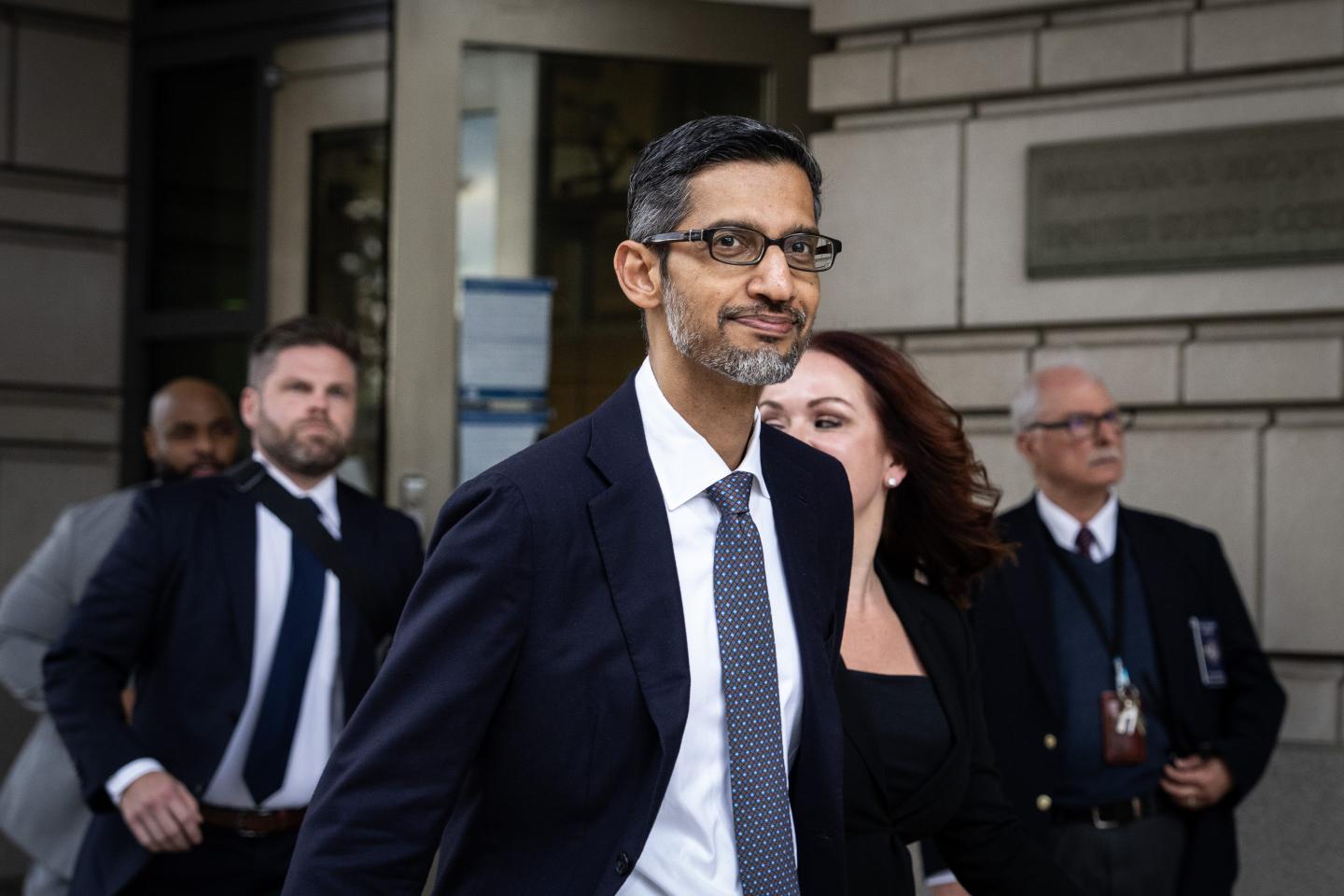
Alphabet CEO Sundar Pichai at the Google antitrust trial in 2023
Alphabet CEO Sundar Pichai at the Google antitrust trial in 2023Drew Angerer/Getty Images

A federal judge ruled that Google can no longer enter into exclusive distribution deals to make its search engine or its Gemini AI technology the default option on phones and other devices and said Google must share some of its search data with competitors, but said he would not force the $2.6 trillion company to spin off key assets like its Chrome web browser.

The ruling in the Department of Justice’s landmark antitrust case against Google-parent Alphabet, stopped short of what could have been the government’s most severe action in decades to curb the power of a monopoly—and acknowledged that rapid innovation and investment in artificial intelligence have already altered some of the market conditions the court was seeking to address.

“Plaintiffs overreached in seeking forced divesture” of Google’s Chrome web browser and a potential divestiture of the Android operating system, “which Google did not use to effect any illegal restraints,” wrote U.S. District Court Judge Amit Mehta in a 230-page ruling on Tuesday.

But, he said, the emergence of generative AI has “changed the course of this case,” which began in 2020 when the DOJ and 11 states sued Google for illegally maintaining a monopoly in the internet search market.

While Google’s dominance made the search market a “no fly zone” for venture capital investors in startups when the case was in its earlier phase, the advent of generative AI has changed the calculus, Mehta said in Tuesday’s ruling.

“The money flowing into this space, and how quickly it has arrived, is astonishing,” he wrote.

Shares of Google-parent Alphabet surged 7.5% in extended trading on Tuesday. Apple, which receives tens of billions of dollars to makes Google the default search engine on the iPhone, saw its stock increase 3.5% after the ruling.

“While in theory Google is barred from ‘exclusive deals’ for search this now lays the groundwork for Apple to continue its deal and ultimately likely double down on more AI related partnership with Google Gemini down the road,” Wedbush Securities analyst Dan Ives wrote in a note to investors on Tuesday, declaring the ruling a “monster win” for both Google and Apple.

“We now see a green light for a bigger Gemini AI partnership between Apple and Google with this DOJ case now in the rear view mirror,” Ives wrote.

Google will have to make available to certain search index and user-interaction data available “qualified competitors,” Mehta wrote in the ruling, though this does not include ads data. A special technical committee will be created to help implement and enforce the court’s remedies, which will last for six years.

In a statement released after the ruling on Tuesday, Google cheered the court’s finding that AI is creating more competition and more ways for consumers to find information, but said it had concerns about some of the other remedies. “We have concerns about how these requirements will impact our users and their privacy, and we’re reviewing the decision closely,” Google said, without specifying whether it planned to file an appeal.

The ruling is a setback for the government’s effort to rein in Big Tech, which also includes cases against Facebook-parent Meta and Amazon, as well as a separate case against Alphabet involving its advertising business.

Judge Mehta ruled in August 2024 that Alphabet has maintained an illegal monopoly in internet search. He found that the company abused its dominant market position by paying device manufacturers, such as Apple, to make Google the default search engine for their smartphones and tablets.

Mehta has been considering remedies for the case ever since, including conducting three weeks of hearings in April and May that included appearances by a number of prominent industry executives, including Alphabet CEO Sundar Pichai and executives from Apple, OpenAI, News Corp., and Perplexity.

Google has said it will appeal Mehta’s 2024 finding that it has violated antitrust law. That means it could take until 2026 or 2027 to reach a final resolution. The case could ultimately reach the U.S. Supreme Court.

Unlocking Google’s search index data

While the court declined to break up Google, it granted the plaintiffs’ request to force Google to share its search data—thought it narrowed the amount and types of data that Google must share.

“The size of Google’s index gives it a key competitive advantage over existing small GSEs [general search engines], like DuckDuckGo, and emerging companies in the GenAI space, like ChatGPT,” Mehta wrote, noting that making the data available would “narrow the scale gap created by Google’s exclusive distribution agreements and, in turn, the quality gap that followed.”

Under Mehta’s ruling, Google will have to make available its schedule for “crawling” the web pages it indexes, the unique ID and “spam score” its assigns to each page, and how mobile-friendly the web pages are. But Google will not have to share its “knowledge graph,” a massive database that shows the interconnections between people, places, and things.
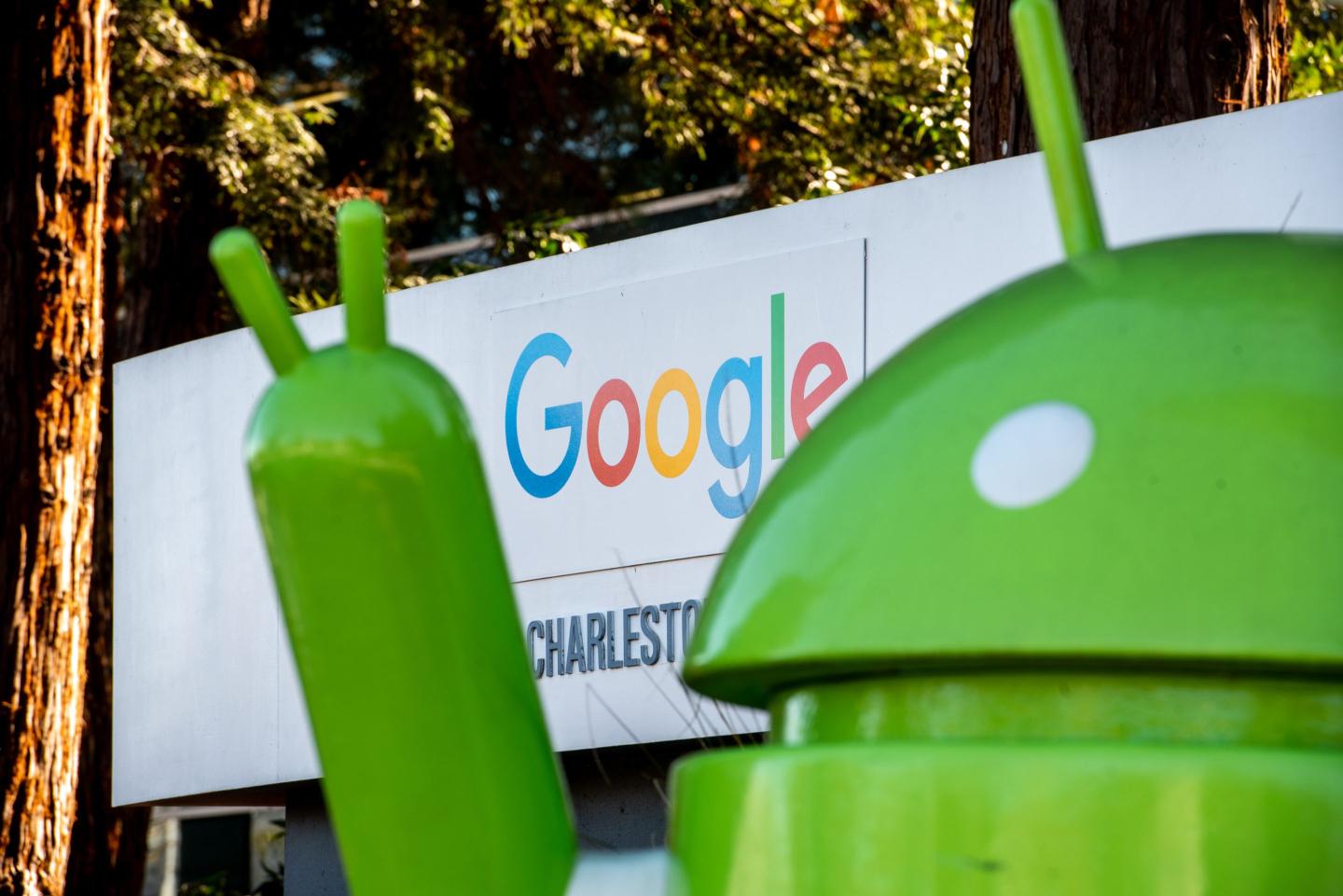
Google will not be forced to split off its Chrome web browser or its Android mobile software as a result of the court ruling.
Drew Angerer/Getty Images

The GenAI twist

Mehta’s ruling comes at what is already a fraught moment for Alphabet. The company is facing the biggest shift in the way people navigate the internet and find information since the creation of Google itself. AI chatbots from companies such as OpenAI, Anthropic, and Perplexity provide users with concise answers to questions, not lists of links.

While Google has sought to integrate chatbot-like features and AI-generated “overviews” into its core Search product, doing so potentially jeopardizes its business model, which sees it compensated for the traffic it sends to other sites and for the sponsored-links that appear at the top of search results. Search accounts for 56% of Alphabet’s $350 billion in annual revenues and even more of its profits. (The company does not break out Google’s profits by segment.)

So far, Google’s business has proved resilient to the AI threat. Overall, Alphabet’s search-related revenues were up 11% year-over-year so far in 2025, totaling $105 billion for the first two quarters. Although there is evidence that click-through rates from Google searches are being affected, with the growth in this metric slowing from high single digit percentages to low single digit percentages, according to Wall Street analysts, the company insists the overall search volumes are up.

But, during key testimony during the hearings Mehta held in May, Apple executive Eddie Cue told the judge that search volumes through Apple’s Safari browser—which uses Google’s search index—had declined for the first time in 22 years. That bombshell comment sent Alphabet’s stock tumbling 9%—although the stock price has since recovered and continued to climb.

Referring to the new crop of AI contenders in Tuesday’s ruling, Mehta wrote: “These companies already are in a better position, both financially and technologically, to compete with Google than any traditional search company has been in decades (except perhaps Microsoft).”

The “prophylactic effect”

In recognizing the changing market conditions, particularly the rise of AI, the court seemed to acknowledge a longstanding criticism by those who argue that the tech industry evolves so rapidly that legal remedies are ineffective at best, and can potentially even do more harm than good.

Indeed, previous U.S. government attempts to challenge the market dominance of leading technology companies have a mixed record of success. The government did succeed in forcing a break-up of AT&T in the mid-1980s. But its attempts to rein in IBM as a monopoly dragged on for more than a decade. The government ultimately withdrew the case in 1982, acknowledging that in the 13 years since it filed it, the market for computer equipment had changed so dramatically, its claims were largely moot.

The government took on Microsoft in the late 1990s, arguing that its bundling of its Explorer browser with its Windows operating system was anticompetitive. A lower court agreed and ruled that Microsoft should be split in two, but  this ruling was overturned on appeal and in 2001 the government and Microsoft reached a settlement that forced it to unbundle Explorer from Windows but kept Microsoft itself intact.

Mehta noted that the simple fact that Google was tried in federal court for antitrust violations has already had “a prophylactic effect,” on the company, causing it to revise its distribution agreement with various other companies. But he seemed keenly aware of the inherent challenge and perils of being overly prescriptive amid the industry’s changing landscape.

“Unlike the typical case where the court’s job is to resolve a dispute based on historic facts,” Mehta wrote Tuesday, “here the court is asked to gaze into a crystal ball and look to the future. Not exactly a judge’s forte.”


Join our exclusive webinar on May 28, featuring tech leaders from Orange, Mars, Reckitt, and Saint-Gobain. Apply to attend and receive Fortune’s editorial takeaways.
About the Authors
Jeremy Kahn
By Jeremy KahnEditor, AI
LinkedIn iconTwitter icon

Jeremy Kahn is the AI editor at Fortune, spearheading the publication's coverage of artificial intelligence. He also co-authors Eye on AI, Fortune’s flagship AI newsletter.

See full bioRight Arrow Button Icon
Alexei Oreskovic
By Alexei OreskovicEditor, Tech
LinkedIn iconTwitter icon

Alexei Oreskovic is the Tech editor at Fortune.

See full bioRight Arrow Button Icon

Latest in Tech

Finance
Lorem ipsum dolor sit amet, consectetur adipiscing elit, sed do eiusmod tempor incididunt ut labore et dolore magna aliqua. Ut enim ad minim veniam
By Fortune Editors
October 20, 2025
Finance
Lorem ipsum dolor sit amet, consectetur adipiscing elit, sed do eiusmod tempor incididunt ut labore et dolore magna aliqua. Ut enim ad minim veniam
By Fortune Editors
October 20, 2025
Finance
Lorem ipsum dolor sit amet, consectetur adipiscing elit, sed do eiusmod tempor incididunt ut labore et dolore magna aliqua. Ut enim ad minim veniam
By Fortune Editors
October 20, 2025
Finance
Lorem ipsum dolor sit amet, consectetur adipiscing elit, sed do eiusmod tempor incididunt ut labore et dolore magna aliqua. Ut enim ad minim veniam
By Fortune Editors
October 20, 2025
Finance
Lorem ipsum dolor sit amet, consectetur adipiscing elit, sed do eiusmod tempor incididunt ut labore et dolore magna aliqua. Ut enim ad minim veniam
By Fortune Editors
October 20, 2025
Finance
Lorem ipsum dolor sit amet, consectetur adipiscing elit, sed do eiusmod tempor incididunt ut labore et dolore magna aliqua. Ut enim ad minim veniam
By Fortune Editors
October 20, 2025

Most Popular

Finance
Lorem ipsum dolor sit amet, consectetur adipiscing elit, sed do eiusmod tempor incididunt ut labore et dolore magna aliqua. Ut enim ad minim veniam
By Fortune Editors
October 20, 2025
Finance
Lorem ipsum dolor sit amet, consectetur adipiscing elit, sed do eiusmod tempor incididunt ut labore et dolore magna aliqua. Ut enim ad minim veniam
By Fortune Editors
October 20, 2025
Finance
Lorem ipsum dolor sit amet, consectetur adipiscing elit, sed do eiusmod tempor incididunt ut labore et dolore magna aliqua. Ut enim ad minim veniam
By Fortune Editors
October 20, 2025
Finance
Lorem ipsum dolor sit amet, consectetur adipiscing elit, sed do eiusmod tempor incididunt ut labore et dolore magna aliqua. Ut enim ad minim veniam
By Fortune Editors
October 20, 2025
Finance
Lorem ipsum dolor sit amet, consectetur adipiscing elit, sed do eiusmod tempor incididunt ut labore et dolore magna aliqua. Ut enim ad minim veniam
By Fortune Editors
October 20, 2025
Finance
Lorem ipsum dolor sit amet, consectetur adipiscing elit, sed do eiusmod tempor incididunt ut labore et dolore magna aliqua. Ut enim ad minim veniam
By Fortune Editors
October 20, 2025
Fortune Secondary Logo
Rankings
  • 100 Best Companies
  • Fortune 500
  • Global 500
  • Fortune 500 Europe
  • Most Powerful Women
  • World's Most Admired Companies
  • See All Rankings
  • Lists Calendar
Sections
  • Finance
  • Fortune Crypto
  • Features
  • Leadership
  • Health
  • Commentary
  • Success
  • Retail
  • Mpw
  • Tech
  • Lifestyle
  • CEO Initiative
  • Asia
  • Politics
  • Conferences
  • Europe
  • Newsletters
  • Personal Finance
  • Environment
  • Magazine
  • Education
Customer Support
  • Frequently Asked Questions
  • Customer Service Portal
  • Privacy Policy
  • Terms Of Use
  • Single Issues For Purchase
  • International Print
Commercial Services
  • Advertising
  • Fortune Brand Studio
  • Fortune Analytics
  • Fortune Conferences
  • Business Development
  • Group Subscriptions
About Us
  • About Us
  • Press Center
  • Work At Fortune
  • Terms And Conditions
  • Site Map
  • About Us
  • Press Center
  • Work At Fortune
  • Terms And Conditions
  • Site Map
  • Facebook icon
  • Twitter icon
  • LinkedIn icon
  • Instagram icon
  • Pinterest icon

Latest in Tech

Jan van Hövell built the world's largest sports club where membership is just a Euro a month.
SuccessSports
He left big law, became a DJ to pay his bills, and built sports clubs inside refugee camps. Now he wants more members than Bayern Munich
By Catherina GioinoMay 28, 2026
1 hour ago
g
CommentaryTraining
We gave our 5,000 employees a week to do nothing but learn AI. We learned the biggest blockers are human ones 
By Rob GiglioMay 28, 2026
3 hours ago
robot
CryptoRobots
This professor asked his robot clone about the future: ‘I think robots will coexist with people. Robots are the mirror of human beings’
By Yuri Kageyama and The Associated PressMay 28, 2026
4 hours ago
argus
InnovationRobotics
Duke scientists create robot from your nightmares: 20 legs, eyes everywhere, no front or back
By Allen Breed, Holly Ramer and The Associated PressMay 28, 2026
4 hours ago
US President Donald Trump during a cabinet meeting at the White House in Washington, DC, US, on Wednesday, May 27, 2026.
EconomyMarkets
A moonshot to avoid a $39 trillion national debt crisis will rely on AI productivity going even better than bulls are hoping for, says JPMorgan
By Eleanor PringleMay 28, 2026
4 hours ago
penn
Investingstart-ups
Stop investing in startups. Become their customer instead
By Serguei Netessine, Valery Yakubovich, Gary Dushnitsky and Claudio GarciaMay 28, 2026
5 hours ago

Most Popular

Jeff Bezos wants the bottom half of earners to pay zero income tax—he says nurses making just $75K should save $12K a year
Success
Jeff Bezos wants the bottom half of earners to pay zero income tax—he says nurses making just $75K should save $12K a year
By Preston ForeMay 21, 2026
7 days ago
Jamie Dimon said the American Dream was slipping away. JPMorgan just put $40 million on the table to fix it
Banking
Jamie Dimon said the American Dream was slipping away. JPMorgan just put $40 million on the table to fix it
By Nick LichtenbergMay 27, 2026
1 day ago
Current price of oil as of May 27, 2026
Personal Finance
Current price of oil as of May 27, 2026
By Joseph HostetlerMay 27, 2026
1 day ago
The river that supplies 40 million Americans is down to 23% — and about to make a $25 million bet on one fish
Environment
The river that supplies 40 million Americans is down to 23% — and about to make a $25 million bet on one fish
By Dorany Pineda, Brittany Peterson and The Associated PressMay 27, 2026
1 day ago
Techlash grows in education: 'My daughter went to middle school and was sent home with a screen addiction in her backpack'
North America
Techlash grows in education: 'My daughter went to middle school and was sent home with a screen addiction in her backpack'
By Jocelyn Gecker and The Associated PressMay 26, 2026
2 days ago
Nvidia CEO Jensen Huang admits he criticizes everything his 42,000-plus employees show him: ‘You can’t go a day without some criticism’
Success
Nvidia CEO Jensen Huang admits he criticizes everything his 42,000-plus employees show him: ‘You can’t go a day without some criticism’
By Preston ForeMay 26, 2026
2 days ago

© 2026 Fortune Media IP Limited. All Rights Reserved. Use of this site constitutes acceptance of our Terms of Use and Privacy Policy | CA Notice at Collection and Privacy Notice | Do Not Sell/Share My Personal Information
FORTUNE is a trademark of Fortune Media IP Limited, registered in the U.S. and other countries. FORTUNE may receive compensation for some links to products and services on this website. Offers may be subject to change without notice.