• Home
  • Latest
  • Fortune 500
  • Finance
  • Tech
  • Leadership
  • Lifestyle
  • Rankings
  • Multimedia
PoliticsPharmaceutical Industry

Trump’s plan for hefty tax on imported drugs risks higher prices and shortages

By
Paul Wiseman
Paul Wiseman
,
Tom Murphy
Tom Murphy
, and
The Associated Press
Down Arrow Button Icon
By
Paul Wiseman
Paul Wiseman
,
Tom Murphy
Tom Murphy
, and
The Associated Press
Down Arrow Button Icon
September 1, 2025, 10:36 AM ET
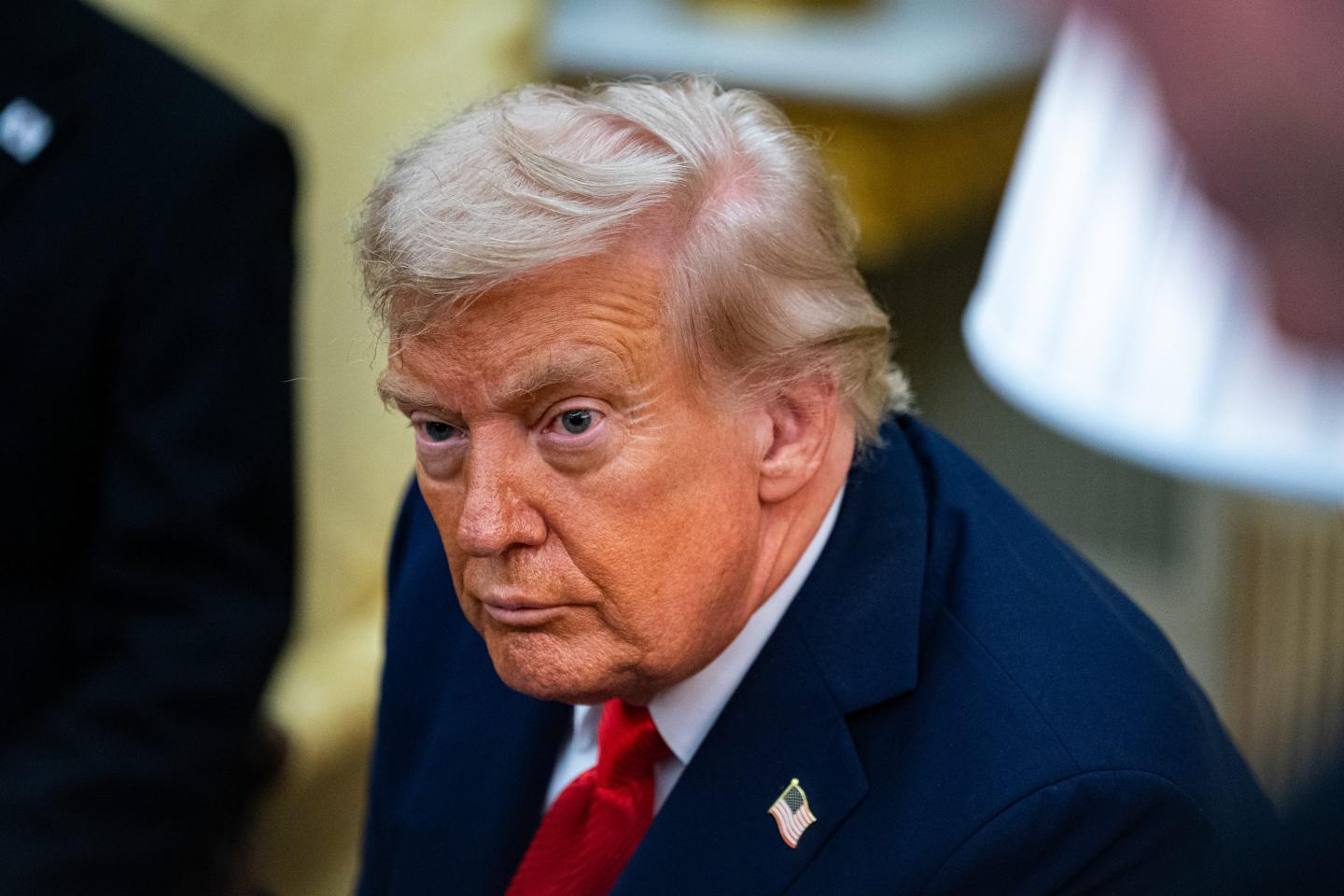
U.S. President Donald Trump in the Oval Office of the White House in Washington, DC, US, on Monday, Aug. 25, 2025.
U.S. President Donald Trump in the Oval Office of the White House in Washington, DC, US, on Monday, Aug. 25, 2025. Al Drago—Bloomberg via Getty Images

WASHINGTON (AP) — President Donald Trump has plastered tariffs on products from almost every country on earth. He’s targeted specific imports including autos, steel and aluminum.

Recommended Video

But he isn’t done yet.

Trump has promised to impose hefty import taxes on pharmaceuticals, a category of products he’s largely spared in his trade war. For decades, in fact, imported medicine has mostly been allowed to enter the United States duty free.

That’s starting to change. U.S. and European leaders recently detailed a trade deal that includes a 15% tariff rate on some European goods brought into the United States, including pharmaceuticals. Trump is threatening duties of 200% more on drugs made elsewhere.

“Shock and awe’’ is how Maytee Pereira of the tax and consulting firm PwC describes Trump’s plans for drugmakers. “This is an industry that’s going from zero (tariffs) to the potentiality of 200%.’’

Trump has promised Americans he’ll lower their drug costs. But imposing stiff pharmaceutical tariffs risks the opposite and could disrupt complex supply chains, drive cheap foreign-made generic drugs out of the U.S. market and create shortages.

“A tariff would hurt consumers most of all, as they would feel the inflationary effect … directly when paying for prescriptions at the pharmacy and indirectly through higher insurance premiums,’’ Diederik Stadig, a healthcare economist with the financial services firm ING, wrote in a commentary last month, adding that lower-income households and the elderly would feel the greatest impact.

The threat comes as Trump also pressures drugmakers to lower prices in the United States. He recently sent letters to several companies telling them to develop a plan to start offering so-called most-favored nation pricing here.

But Trump has said he’d delay the tariffs for a year or a year and a half, giving companies a chance to stockpile medicine and shift manufacturing to the United States — something some have already begun to do.

Leerink Partners analyst David Risinger said in a July 29 note that most drugmakers have already increased drug product imports and may carry between six and 18 months of inventory in the U.S.

Jefferies analyst David Windley said in a recent research note that tariffs that don’t kick in until the back half of 2026 may not be felt until 2027 or 2028 due to stockpiling.

Moreover, many analysts suspect Trump will settle for a tariff far lower than 200%. They also are waiting to see whether any tariff policy includes an exemption for certain products like low-margin generic drugs.

Still, Stadig says, even a 25% levy would gradually raise U.S. drug prices by 10% to 14% as the stockpiles dwindle.

In recent decades, drugmakers have moved many operations overseas – to take advantage of lower costs in China and India and tax breaks in Ireland and Switzerland. As a result, the U.S. trade deficit in medicinal and pharmaceutical products is big — nearly $150 billion last year.

The COVID-19 experience – when countries were desperate to hang onto their own medicine and medical supplies — underscored the dangers of relying on foreign countries in a crisis, especially when a key supplier is America’s geopolitical rival China.

In April, the administration started investigating how importing drugs and pharmaceutical ingredients affects national security. Section 232 of the Trade Expansion Act of 1962 permits the president to order tariffs for the sake of national security.

Marta Wosińska, a health policy analyst at the Brookings Institution, says there is a role for tariffs in securing U.S. medical supplies. The Biden administration, she noted, successfully taxed foreign syringes when cheap Chinese imports threatened to drive U.S. producers out of business.

Trump has bigger ideas: He wants to bring pharmaceutical factories back to the United States, noting that U.S.-made drugs won’t face his tariffs.

Drugmakers are already investing in the United States.

The Swiss drugmaker Roche said in April that it will invest $50 billion in expanding its U.S. operations. Johnson & Johnson will spend $55 billion within the United States in the next four years. CEO Joaquin Duato said recently that the company aims to supply drugs for the U.S. market entirely from sites located there.

But building a pharmaceutical factory in the United States from scratch is expensive and can take several years.

And building in the U.S. wouldn’t necessarily protect a drugmaker from Trump’s tariffs, not if the taxes applied to imported ingredients used in the medicine. Jacob Jensen, trade policy analyst at the right-leaning American Action Forum, notes that “97% of antibiotics, 92% of antivirals and 83% of the most popular generic drugs contain at least one active ingredient that is manufactured abroad.’’

“The only way to truly protect yourself from the tariffs would be to build the supply chain end to end in the United States,’’ Pereira said.

Brand-name drug companies have fat profit margins that provide flexibility to make investments and absorb costs as Trump’s tariffs begin. Generic drug manufacturers do not.

Some may decide to leave the U.S. market rather than pay tariffs. That could prove disruptive: Generics account for 92% of U.S. retail and mail-order pharmacy prescriptions.

A production pause at a factory in India a couple years ago led to a chemotherapy shortage that disrupted cancer care. “Those are not very resilient markets,” Brookings’ Wosińska said. “If there’s a shock, it’s hard for them to recover.”

She argues that tariffs alone are unlikely to persuade generic drug manufacturers to build U.S. factories: They’d probably need government financing.

“In an ideal world, we would be making everything that’s important only in the U.S.,’’ Wosińska said. “But it costs a lot of money … We have offshored so much of our supply chains because we want to have inexpensive drugs. If we want to reverse this, we would really have to redesign our system … How much are we willing to spend?”

___

Murphy reported from Indianapolis. AP Health Writer Matthew Perrone contributed to this report.

Subscribe to Fortune Gulf Brief. Every Tuesday, this new newsletter will deliver clear-eyed, authoritative intelligence on the deals, decisions, policies, and power shifts shaping one of the world’s most consequential regions, written for the people who need to act on it. Sign up here.
About the Authors
By Paul Wiseman
See full bioRight Arrow Button Icon
By Tom Murphy
See full bioRight Arrow Button Icon
By The Associated Press
See full bioRight Arrow Button Icon

Latest in Politics

Finance
Lorem ipsum dolor sit amet, consectetur adipiscing elit, sed do eiusmod tempor incididunt ut labore et dolore magna aliqua. Ut enim ad minim veniam
By Fortune Editors
October 20, 2025
Finance
Lorem ipsum dolor sit amet, consectetur adipiscing elit, sed do eiusmod tempor incididunt ut labore et dolore magna aliqua. Ut enim ad minim veniam
By Fortune Editors
October 20, 2025
Finance
Lorem ipsum dolor sit amet, consectetur adipiscing elit, sed do eiusmod tempor incididunt ut labore et dolore magna aliqua. Ut enim ad minim veniam
By Fortune Editors
October 20, 2025
Finance
Lorem ipsum dolor sit amet, consectetur adipiscing elit, sed do eiusmod tempor incididunt ut labore et dolore magna aliqua. Ut enim ad minim veniam
By Fortune Editors
October 20, 2025
Finance
Lorem ipsum dolor sit amet, consectetur adipiscing elit, sed do eiusmod tempor incididunt ut labore et dolore magna aliqua. Ut enim ad minim veniam
By Fortune Editors
October 20, 2025
Finance
Lorem ipsum dolor sit amet, consectetur adipiscing elit, sed do eiusmod tempor incididunt ut labore et dolore magna aliqua. Ut enim ad minim veniam
By Fortune Editors
October 20, 2025

Most Popular

Finance
Lorem ipsum dolor sit amet, consectetur adipiscing elit, sed do eiusmod tempor incididunt ut labore et dolore magna aliqua. Ut enim ad minim veniam
By Fortune Editors
October 20, 2025
Finance
Lorem ipsum dolor sit amet, consectetur adipiscing elit, sed do eiusmod tempor incididunt ut labore et dolore magna aliqua. Ut enim ad minim veniam
By Fortune Editors
October 20, 2025
Finance
Lorem ipsum dolor sit amet, consectetur adipiscing elit, sed do eiusmod tempor incididunt ut labore et dolore magna aliqua. Ut enim ad minim veniam
By Fortune Editors
October 20, 2025
Finance
Lorem ipsum dolor sit amet, consectetur adipiscing elit, sed do eiusmod tempor incididunt ut labore et dolore magna aliqua. Ut enim ad minim veniam
By Fortune Editors
October 20, 2025
Finance
Lorem ipsum dolor sit amet, consectetur adipiscing elit, sed do eiusmod tempor incididunt ut labore et dolore magna aliqua. Ut enim ad minim veniam
By Fortune Editors
October 20, 2025
Finance
Lorem ipsum dolor sit amet, consectetur adipiscing elit, sed do eiusmod tempor incididunt ut labore et dolore magna aliqua. Ut enim ad minim veniam
By Fortune Editors
October 20, 2025
Fortune Secondary Logo
Rankings
  • 100 Best Companies
  • Fortune 500
  • Global 500
  • Fortune 500 Europe
  • Most Powerful Women
  • World's Most Admired Companies
  • See All Rankings
  • Lists Calendar
Sections
  • Finance
  • Fortune Crypto
  • Features
  • Leadership
  • Health
  • Commentary
  • Success
  • Retail
  • Mpw
  • Tech
  • Lifestyle
  • CEO Initiative
  • Asia
  • Politics
  • Conferences
  • Europe
  • Newsletters
  • Personal Finance
  • Environment
  • Magazine
  • Education
Customer Support
  • Frequently Asked Questions
  • Customer Service Portal
  • Privacy Policy
  • Terms Of Use
  • Single Issues For Purchase
  • International Print
Commercial Services
  • Advertising
  • Fortune Brand Studio
  • Fortune Analytics
  • Fortune Conferences
  • Business Development
  • Group Subscriptions
About Us
  • About Us
  • Press Center
  • Work At Fortune
  • Terms And Conditions
  • Site Map
  • About Us
  • Press Center
  • Work At Fortune
  • Terms And Conditions
  • Site Map
  • Facebook icon
  • Twitter icon
  • LinkedIn icon
  • Instagram icon
  • Pinterest icon

Latest in Politics

Ray Dalio: the ‘heart attack’ of America’s debt crisis is just the beginning of a ‘great turbulence’ that will reshape the country
Economynational debt
Ray Dalio: the ‘heart attack’ of America’s debt crisis is just the beginning of a ‘great turbulence’ that will reshape the country
By Nick LichtenbergMay 8, 2026
2 hours ago
eisenhower office
PoliticsDonald Trump
Trump wants to repaint a historic landmark. Preservationists say it will destroy it—and cost taxpayers $7.5m
By The Associated Press and Darlene SupervilleMay 8, 2026
3 hours ago
UFOs
North AmericaPentagon
Pentagon begins releasing new files on UFOs, telling public to draw their own conclusions
By Collin Binkley, Seung Min Kim and The Associated PressMay 8, 2026
4 hours ago
trump
EconomyU.S. jobs report
U.S. economy surprises with 115,000 new jobs created in April
By Paul Wiseman and The Associated PressMay 8, 2026
4 hours ago
mamdani
Real EstateTaxes
New York is going to tax the wealthy’s second homes, but not tax wealth itself
By Anthony Izaguirre and The Associated PressMay 8, 2026
4 hours ago
Wall Street piles into ‘NACHO’ bet on looming oil shortages in June
EconomyMarkets
Wall Street piles into ‘NACHO’ bet on looming oil shortages in June
By Jim EdwardsMay 8, 2026
7 hours ago

Most Popular

California farmers must destroy 420,000 peach trees after Del Monte closes its canneries and cancels more than $550 million in long-term contracts
North America
California farmers must destroy 420,000 peach trees after Del Monte closes its canneries and cancels more than $550 million in long-term contracts
By Sasha RogelbergMay 7, 2026
21 hours ago
U.S. Treasury will have to borrow $2 trillion this year just to continue functioning—more than $166 billion every month
Economy
U.S. Treasury will have to borrow $2 trillion this year just to continue functioning—more than $166 billion every month
By Eleanor PringleMay 7, 2026
1 day ago
'Blue dot fever' plagues musicians like Post Malone, Meghan Trainor, and Zayn as a growing list of artists cancel tours due to lagging ticket sales
Arts & Entertainment
'Blue dot fever' plagues musicians like Post Malone, Meghan Trainor, and Zayn as a growing list of artists cancel tours due to lagging ticket sales
By Dave Lozo and Morning BrewMay 7, 2026
22 hours ago
A Michigan farm town voted down plans for a giant OpenAI-Oracle data center. Weeks later, construction began
Magazine
A Michigan farm town voted down plans for a giant OpenAI-Oracle data center. Weeks later, construction began
By Sharon GoldmanMay 6, 2026
2 days ago
Airbnb CEO Brian Chesky warns two types of people won’t survive the AI era: ‘pure people managers’ and workers who resist change
Success
Airbnb CEO Brian Chesky warns two types of people won’t survive the AI era: ‘pure people managers’ and workers who resist change
By Emma BurleighMay 7, 2026
1 day ago
Current price of oil as of May 7, 2026
Personal Finance
Current price of oil as of May 7, 2026
By Joseph HostetlerMay 7, 2026
1 day ago

© 2026 Fortune Media IP Limited. All Rights Reserved. Use of this site constitutes acceptance of our Terms of Use and Privacy Policy | CA Notice at Collection and Privacy Notice | Do Not Sell/Share My Personal Information
FORTUNE is a trademark of Fortune Media IP Limited, registered in the U.S. and other countries. FORTUNE may receive compensation for some links to products and services on this website. Offers may be subject to change without notice.