• Home
  • Latest
  • Fortune 500
  • Finance
  • Tech
  • Leadership
  • Lifestyle
  • Rankings
  • Multimedia
Commentaryintellectual property

Former Trump officials: Strong intellectual property protections are crucial to America’s national security

By
Kenneth Braithwaite
Kenneth Braithwaite
and
Andrei Iancu
Andrei Iancu
Down Arrow Button Icon
By
Kenneth Braithwaite
Kenneth Braithwaite
and
Andrei Iancu
Andrei Iancu
Down Arrow Button Icon
August 29, 2025, 9:00 AM ET
Kenneth Braithwaite is the former U.S. secretary of the Navy and U.S. ambassador to the Kingdom of Norway. Andrei Iancu served as the undersecretary of Commerce for intellectual property and director of the U.S. Patent and Trademark Office from 2018 to 2021. He is co-founder and co-chairman of the Council for Innovation Promotion.
Kenneth Braithwaite
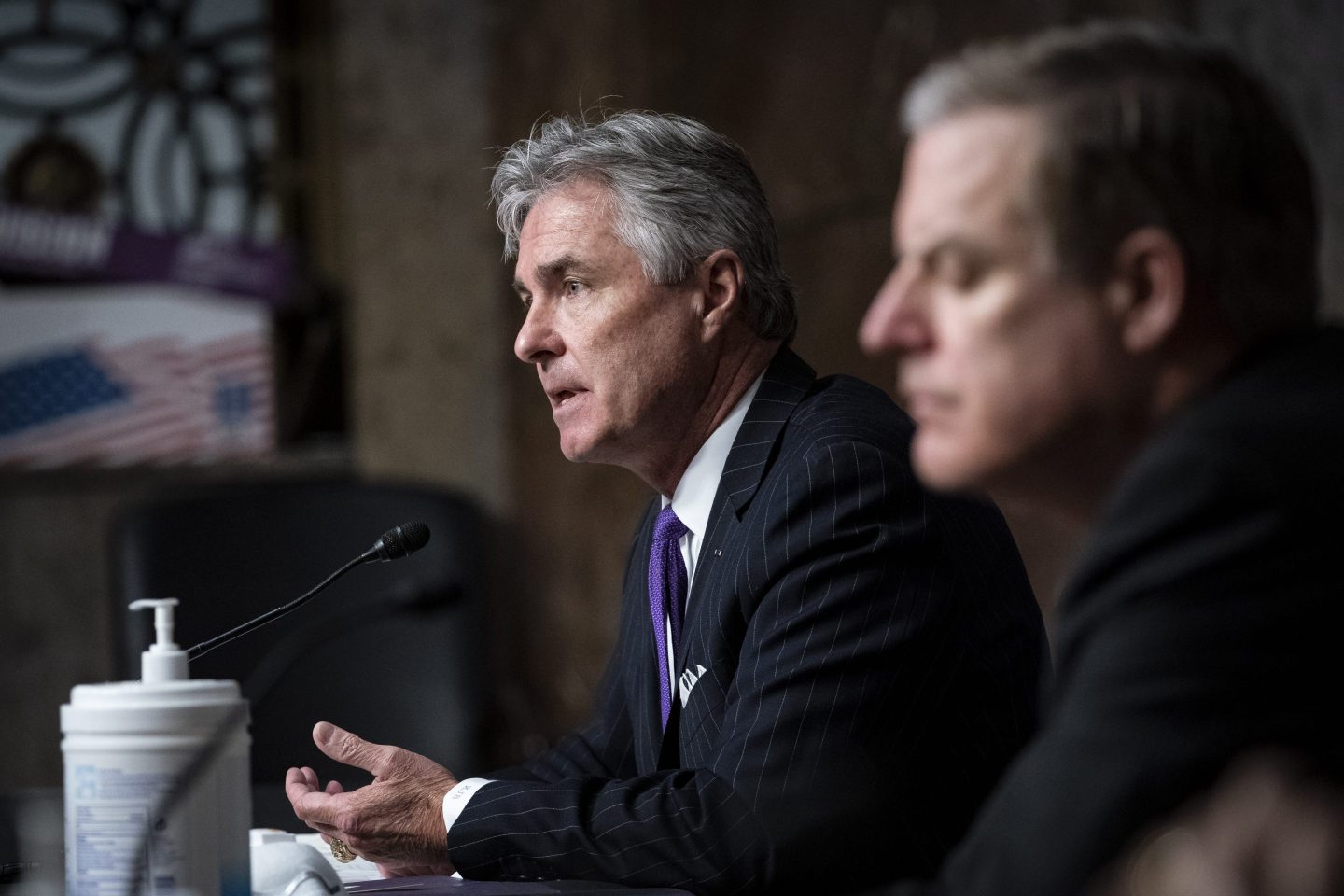
Kenneth Braithwaite, then he was nominee for navy secretary, speaking during a Senate Armed Services Committee confirmation hearingMay 7, 2020 in Washington, D.C. Al Drago-Pool/Getty Images

If America loses its next war, the reason won’t be enemy firepower. It will be our failure to protect the intellectual property (IP) rights that fuel groundbreaking innovation.

Recommended Video

Experts warn that to counter rising threats from China and other adversaries, the United States must stay ahead in defense-critical fields like artificial intelligence, drones, and quantum computing. But innovation requires investment, and investors won’t bet on new technology unless they’re confident their IP is secure. Put simply, without strong, enforceable IP rights, we risk crippling the R&D that keeps America safe.

Developing breakthrough technologies routinely takes years — sometimes decades — and billions of dollars. Success stories grab headlines, but most efforts end in failure. Patents provide a crucial incentive by giving creators exclusive rights to their inventions for a set period, ensuring that others cannot simply copy and profit from their hard work.

The importance of IP protections isn’t theoretical. Patents directly boost business growth, job creation, and technological advancement. A study reported on by the National Bureau of Economic Research found that a firm’s approval of its first patent leads to a 36% jump in employment growth and a 51% surge in sales over five years. Startups that win that first patent also innovate more, producing 49% more patents down the road.

These findings aren’t surprising. Without patent rights, an innovator could spend years developing a novel technology only to have a competitor swoop in and steal their invention at the eleventh hour. As a result, most startups would struggle to raise the outside investment necessary to bring promising — yet early-stage — ideas to fruition.

However, with a patent in hand, everything changes. Strong IP protections provide security, making investors more willing to support risky R&D efforts. The proof is in the numbers: Startups with patents secure, on average, almost 75% more funding from venture capital deals than those without, empowering them to refine and scale their innovations.

Our world-class patent system has fueled the development of countless life-enhancing, even life-saving, products ranging from medicines and renewable energy technologies to weapons-grade materials and powerful computer software. Strengthening it is the surest way to ensure that America leads in the technologies that will define the geopolitical landscape of the 21st century.

Trouble brewing

But there’s trouble brewing on the horizon. Instead of strengthening this proven system, some activists want to weaken it under the guise of “lowering prices.” Proposals to seize patents from universities and hand American-made technology to foreign competitors have undermined the private sector’s confidence in patents. Similarly, legal loopholes and outdated patent eligibility rules have made it harder for disruptive startups to protect their ideas from theft.

Meanwhile, China is taking the opposite approach, strengthening its system to gain a strategic advantage in mission-critical fields. Beijing has established specialized patent courts and tweaked eligibility rules to encourage investment in critical areas where U.S. patent law is lagging. They’ve also made a number of reforms to make it easier for inventors to assert their IP rights. By prioritizing innovation-friendly policies, China is positioning itself to outpace the U.S. in emerging technologies.

The consequences are clear. China now leads the United States in 57 of 64 key technology fields, according to a State Department-funded study from the Australian Strategic Policy Institute. Defense analysts warn that, if war broke out today, America’s technological disadvantage could be catastrophic.

Strengthening IP rights isn’t just about national security — it’s about economic security. IP-intensive industries drive 41% of U.S. economic output and account for 63 million jobs.

President Trump’s first-term national security strategy put it plainly: “A growing and innovative economy allows the United States to maintain the world’s most powerful military and protect our homeland.” More recently, he’s called for “reviv[ing] our Industrial Base, with priority on Defense-critical industries.”

President Trump is right: America’s ability to deter war — or win one, if a fight becomes inevitable — depends on regaining and then maintaining a technological edge.

His administration has the power to drive investment in new technologies that safeguard our national security. To do so, the administration must ensure that the United States issues strong, reliable, and enforceable IP rights and that companies can keep those rights once issued.

To do that, we must strengthen our patent system. That means stronger protections for inventors, fairer enforcement, and a renewed commitment — both in word and in deed — to promoting innovation. Our national security depends on it.

The opinions expressed in Fortune.com commentary pieces are solely the views of their authors and do not necessarily reflect the opinions and beliefs of Fortune.
Join us at the Fortune Workplace Innovation Summit May 19–20, 2026, in Atlanta. The next era of workplace innovation is here—and the old playbook is being rewritten. At this exclusive, high-energy event, the world’s most innovative leaders will convene to explore how AI, humanity, and strategy converge to redefine, again, the future of work. Register now.
About the Authors
By Kenneth Braithwaite
See full bioRight Arrow Button Icon
By Andrei Iancu
See full bioRight Arrow Button Icon

Latest in Commentary

Finance
Lorem ipsum dolor sit amet, consectetur adipiscing elit, sed do eiusmod tempor incididunt ut labore et dolore magna aliqua. Ut enim ad minim veniam
By Fortune Editors
October 20, 2025
Finance
Lorem ipsum dolor sit amet, consectetur adipiscing elit, sed do eiusmod tempor incididunt ut labore et dolore magna aliqua. Ut enim ad minim veniam
By Fortune Editors
October 20, 2025
Finance
Lorem ipsum dolor sit amet, consectetur adipiscing elit, sed do eiusmod tempor incididunt ut labore et dolore magna aliqua. Ut enim ad minim veniam
By Fortune Editors
October 20, 2025
Finance
Lorem ipsum dolor sit amet, consectetur adipiscing elit, sed do eiusmod tempor incididunt ut labore et dolore magna aliqua. Ut enim ad minim veniam
By Fortune Editors
October 20, 2025
Finance
Lorem ipsum dolor sit amet, consectetur adipiscing elit, sed do eiusmod tempor incididunt ut labore et dolore magna aliqua. Ut enim ad minim veniam
By Fortune Editors
October 20, 2025
Finance
Lorem ipsum dolor sit amet, consectetur adipiscing elit, sed do eiusmod tempor incididunt ut labore et dolore magna aliqua. Ut enim ad minim veniam
By Fortune Editors
October 20, 2025

Most Popular

Finance
Lorem ipsum dolor sit amet, consectetur adipiscing elit, sed do eiusmod tempor incididunt ut labore et dolore magna aliqua. Ut enim ad minim veniam
By Fortune Editors
October 20, 2025
Finance
Lorem ipsum dolor sit amet, consectetur adipiscing elit, sed do eiusmod tempor incididunt ut labore et dolore magna aliqua. Ut enim ad minim veniam
By Fortune Editors
October 20, 2025
Finance
Lorem ipsum dolor sit amet, consectetur adipiscing elit, sed do eiusmod tempor incididunt ut labore et dolore magna aliqua. Ut enim ad minim veniam
By Fortune Editors
October 20, 2025
Finance
Lorem ipsum dolor sit amet, consectetur adipiscing elit, sed do eiusmod tempor incididunt ut labore et dolore magna aliqua. Ut enim ad minim veniam
By Fortune Editors
October 20, 2025
Finance
Lorem ipsum dolor sit amet, consectetur adipiscing elit, sed do eiusmod tempor incididunt ut labore et dolore magna aliqua. Ut enim ad minim veniam
By Fortune Editors
October 20, 2025
Finance
Lorem ipsum dolor sit amet, consectetur adipiscing elit, sed do eiusmod tempor incididunt ut labore et dolore magna aliqua. Ut enim ad minim veniam
By Fortune Editors
October 20, 2025
Rankings
  • 100 Best Companies
  • Fortune 500
  • Global 500
  • Fortune 500 Europe
  • Most Powerful Women
  • Future 50
  • World’s Most Admired Companies
  • See All Rankings
Sections
  • Finance
  • Leadership
  • Success
  • Tech
  • Asia
  • Europe
  • Environment
  • Fortune Crypto
  • Health
  • Retail
  • Lifestyle
  • Politics
  • Newsletters
  • Magazine
  • Features
  • Commentary
  • Mpw
  • CEO Initiative
  • Conferences
  • Personal Finance
  • Education
Customer Support
  • Frequently Asked Questions
  • Customer Service Portal
  • Privacy Policy
  • Terms Of Use
  • Single Issues For Purchase
  • International Print
Commercial Services
  • Advertising
  • Fortune Brand Studio
  • Fortune Analytics
  • Fortune Conferences
  • Business Development
About Us
  • About Us
  • Editorial Calendar
  • Press Center
  • Work At Fortune
  • Diversity And Inclusion
  • Terms And Conditions
  • Site Map
  • Facebook icon
  • Twitter icon
  • LinkedIn icon
  • Instagram icon
  • Pinterest icon

Most Popular

placeholder alt text
Economy
Elon Musk warns the U.S. is '1,000% going to go bankrupt' unless AI and robotics save the economy from crushing debt
By Jason MaFebruary 7, 2026
1 day ago
placeholder alt text
Success
Gen Z Patriots quarterback Drake Maye still drives a 2015 pickup truck even after it broke down on the highway—despite his $37 million contract
By Sasha RogelbergFebruary 7, 2026
2 days ago
placeholder alt text
Success
Even with $850 billion to his name, Elon Musk admits ‘money can’t buy happiness.’ But billionaire Mark Cuban says it’s not so simple
By Preston ForeFebruary 6, 2026
2 days ago
placeholder alt text
Future of Work
Anthropic cofounder says studying the humanities will be 'more important than ever' and reveals what the AI company looks for when hiring
By Jason MaFebruary 7, 2026
1 day ago
placeholder alt text
AI
AI can make anyone rich: Mark Cuban says it could turn 'just one dude in a basement' into a trillionaire
By Sydney LakeFebruary 7, 2026
1 day ago
placeholder alt text
Real Estate
We may be looking at the housing affordability crisis all wrong. Higher earners are driving home prices, not lack of supply, researchers say
By Jason MaFebruary 7, 2026
1 day ago

© 2026 Fortune Media IP Limited. All Rights Reserved. Use of this site constitutes acceptance of our Terms of Use and Privacy Policy | CA Notice at Collection and Privacy Notice | Do Not Sell/Share My Personal Information
FORTUNE is a trademark of Fortune Media IP Limited, registered in the U.S. and other countries. FORTUNE may receive compensation for some links to products and services on this website. Offers may be subject to change without notice.


Latest in Commentary

CommentaryHealth
Patient private capital is needed to help Asia plug its healthcare gaps
By Abrar MirFebruary 8, 2026
58 minutes ago
nfl
CommentaryTV
The Super Bowl was made for TV and instant replay was made for visual AI. Here’s how it could be better and what it would look like
By Jason CorsoFebruary 8, 2026
10 hours ago
tipping
CommentaryTipping
I’m the chief growth officer at a payments app and I know how America really tips. Connecticut, I’m looking at you
By Ricardo CiciFebruary 8, 2026
11 hours ago
heacock
CommentaryLeadership
I’m a CEO who grew a ‘boring’ air filter business into a $260 million company, and AI is going to help blue-collar, everyday people just like me
By David HeacockFebruary 8, 2026
11 hours ago
broker
CommentaryRecession
We studied 70 countries’ economic data for the last 60 years and something big about market crashes changed 25 years ago
By Josh Ederington, Jenny Minier and The ConversationFebruary 8, 2026
12 hours ago
birthday
CommentaryAmerican Dream
America marks its 250th birthday with a fading dream—the first time that younger generations will make less than their parents
By Mark Robert Rank and The ConversationFebruary 8, 2026
13 hours ago